Many baking recipes today recommend using instant yeast. In this article, we'll explore in detail what it is, the main differences between instant yeast and regular (fresh, active) and dry (fast-acting) yeast, and how to convert the yeast content to substitute one type of yeast for another in a baking recipe.
Baker's yeast, its types and characteristics
Yeast is a living microorganism of the Saccharomycetes family that has the ability to process sugar and, as a result of its vital activity, release ethyl alcohol and carbon dioxide.
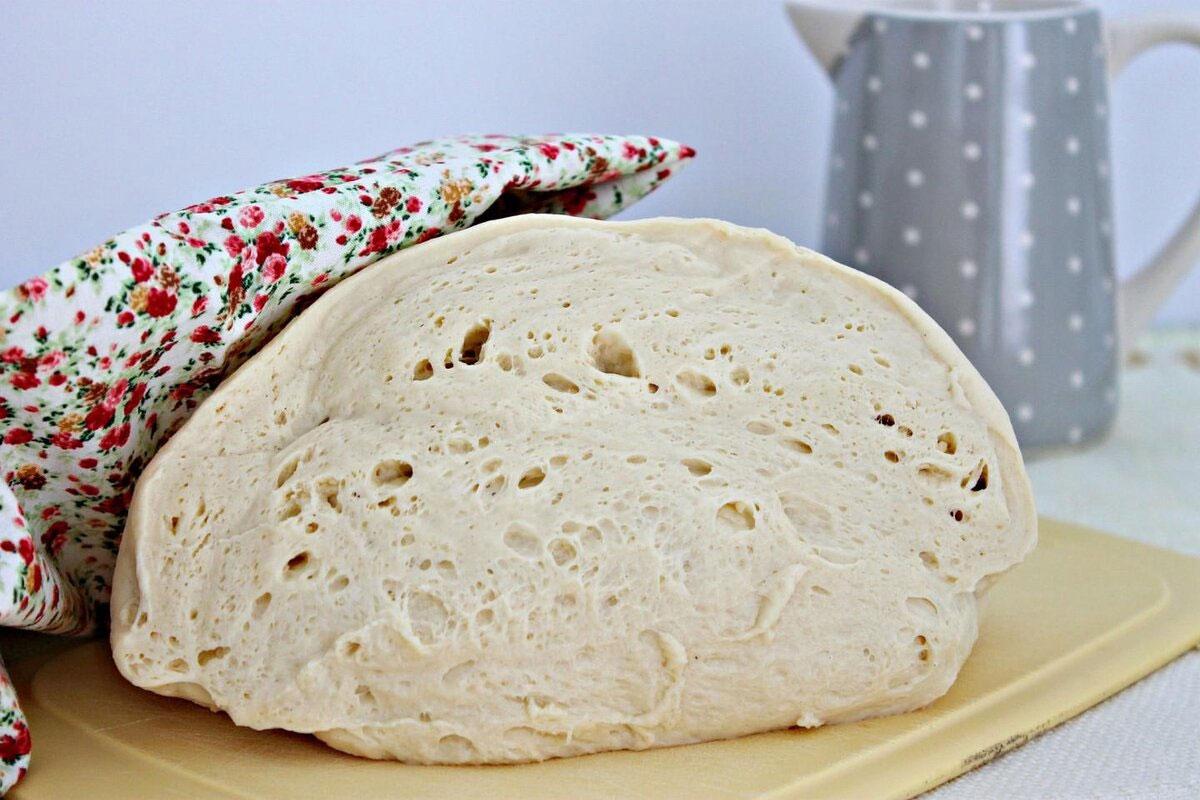
It is precisely due to the saturation of yeast dough with carbon dioxide bubbles that the rising process and the formation of the characteristic porous texture during baking occur.
The first recipes for making yeast dough in Rus' were written down at the turn of the 9th and 10th centuries, although scientists believe that so-called "live yeast" for baking was used by our ancestors even in the times of Ancient Rus.
With the development of the food industry, various types of yeast have been invented, which are now available to housewives for preparing baked goods at home.
Compressed yeast
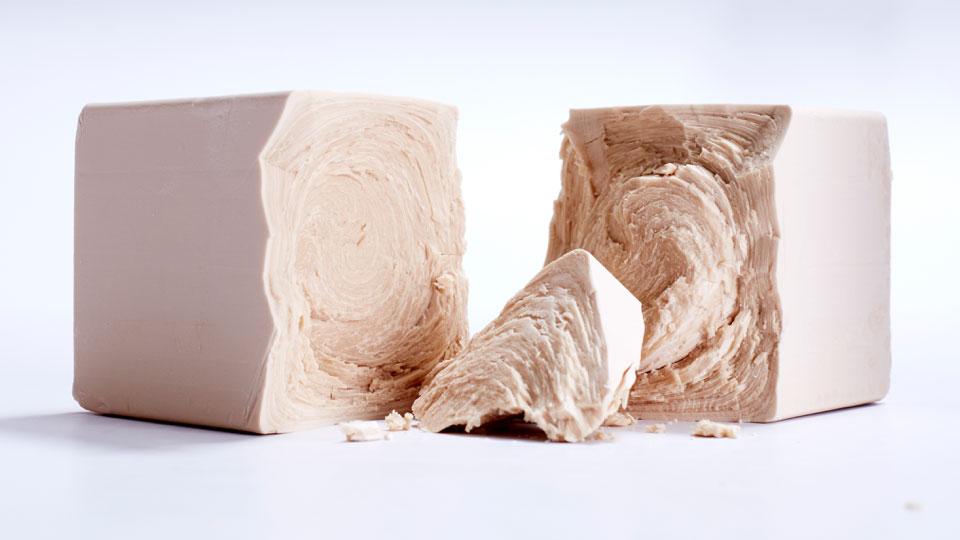
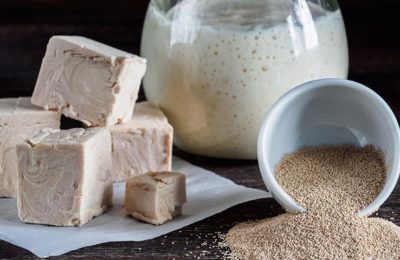
This type of yeast is also called "live" or "fresh." Pressed yeast is sold in briquettes (the weight of a package can vary from 100 grams to 1 kg).
Peculiarities:
release form – briquettes;
shelf life – 14-30 days;
recommended proportions: 100 grams of yeast per 2 kg of flour;
method of use – requires preliminary activation (preparation of dough).
Dry active yeast
Such yeast is produced by drying the classic yeast culture with a hot air stream to a moisture content of 8-10% (sometimes 4%), so its efficiency is lower than that of pressed or instant yeast.
Peculiarities:
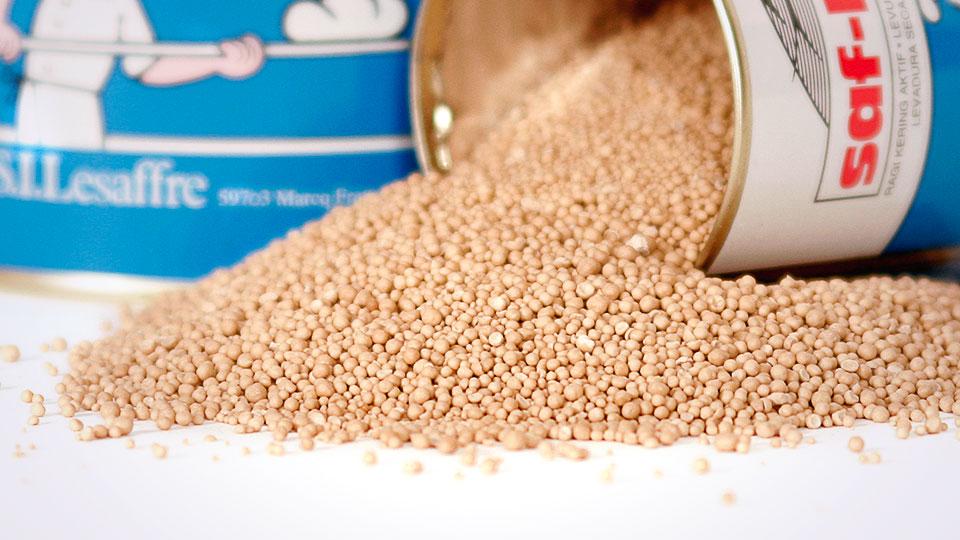
release form – round granules of a yellow-brown hue (size is uneven, can vary from small to quite large);
shelf life – 5-6 months (after opening the package up to 7 days in an airtight container and in the refrigerator);
recommended proportions: 30-40 grams of yeast per 2 kg of flour;
method of use – requires preliminary activation (preparation of dough).
Instant yeast
The production process is quite complex and involves cultivating yeast cultures in sterile laboratory conditions, followed by purification and drying.
Dry fast-acting yeast is called “instant” due to the English word “instant”, which indicates the higher efficiency of the product in comparison with the classic (slow) types described earlier.
Instant yeast is also often called "instant" yeast because of its ability to dissolve instantly in a liquid medium.
Peculiarities:
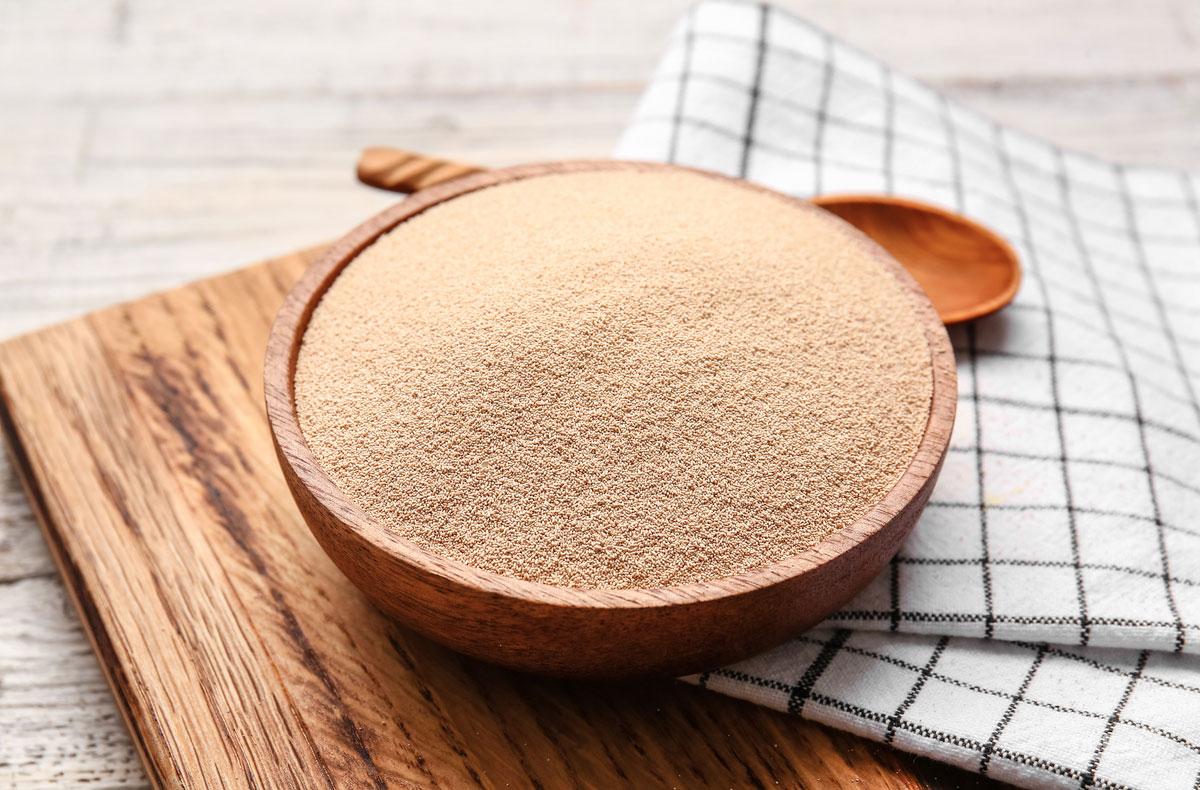
release form – very small round yellow-brown granules;
shelf life – 1-2 years (after opening the package 1-2 days at room temperature or up to 7 days in the refrigerator, provided the packaging is sealed);
recommended proportions: 0.6-1.0% of the amount of flour (12-20 grams per 2 kg of flour);
Method of use – no pre-activation required.
Please note! Foreign (instant) yeast is different in that it does not require pre-activation (preparing a dough). It is recommended to simply mix fast-acting yeast with flour before kneading the dough.
Using this type of yeast is much easier, and dough preparation is faster, as you don't have to wait for the yeast culture to activate. Moreover, in almost all yeast dough recipes, high-activity instant yeast can be substituted for compressed or slow-acting dry yeast. The key is to choose the correct ratio and adjust the amount of liquid and flour based on the specific recipe.
However, if you're unsure of the quality of your yeast, you can always make a pre-dough starter using instant yeast. If after 10-15 minutes the yeast isn't active enough, it's too old and shouldn't be used for dough.
Yeast Interchangeability Table
You can recalculate the required amount of yeast in grams using the ratio of live (pressed) yeast and dry varieties (slow or instant) given in the table.
Amount of flour
Pressed
Dry active
Dry instant
300 g
18 g
8 g
7 g
500 g
25 g
12 g
10 g
750 g
30 g
14 g
12 g
1 kg
50 g
24 g
20 g
1.5 kg
75 g
36 g
30 g
2 kg
100 g
48 g
40 g
10 Questions About Using Instant Yeast
1. What happens if you make a dough using instant yeast?
If you're new to instant yeast (what it is and how to use it), there's nothing wrong with making the starter. It just adds extra time to the dough, but otherwise, there shouldn't be any issues.
2. Where should I add instant yeast, to flour or to liquid?
Due to the rapid dissolution of its fine granules, this type of yeast is recommended to be mixed with flour before kneading dough. Adding it to water will activate the yeast too quickly, which is not desirable.
3. Does dough rise quickly with instant yeast?
Activity depends on the freshness of the culture. It's also worth keeping in mind that different manufacturers' products may vary in their growth rates. If you use warm liquid (30-35°C) when mixing the dough, the growth process in warm, humid conditions takes 40 to 60 minutes.
4. Why might the dough not rise?
The reasons may be different: 1. Old yeast. 2. The liquid temperature is too high (at 40°C the culture may die). 3. A cold room or draft reduces yeast activity (the dough will rise, but much worse).
5. What is the shelf life of instant yeast?
When purchasing a package, it's important to check the production date and expiration dates specified by the manufacturer. Once opened, this type of yeast remains active at room temperature for only 1-2 days. If used in an airtight container, it can be stored in the refrigerator for up to 14 days, but it's still best to test this yeast for its potency before use by activating it with a starter, just like regular yeast.
6. Which manufacturers produce instant yeast?
In Russia, you can buy instant yeast from the following manufacturers: • Saf-Moment (Russia); • Angel (Russia); • Saf-Instant (France); • Dr. Oetker (Russia); • DCL (Russia); • Nevada (France); • Lesaffre (France); • Pakmaya (Türkiye).
7. Can instant yeast be replaced with pressed yeast in the recipe?
A recipe calling for high-potency "instant" yeast isn't always possible to substitute with a "slow" alternative! Recalculating the quantities isn't difficult, but a significant difference in dough mixing technique can play a key role. For example, all baked goods prepared in home bread machines require the use of "instant" dry yeast.
8. Do the health benefits and harms of pressed and instant yeast differ?
The principle of operation of these products is the same; it is based on the process of yeast releasing carbon dioxide and alcohol by living microorganisms during the processing of sugars. During the baking process, the temperature inside the dough always reaches 95°C (150°C and higher near the surface), killing all yeast cells, leaving only a trace of protein in the finished product. Therefore, the yeast culture cannot cause any harm to the human body.
9. Is yeast bad for your figure?
The calorie content of yeast dough is primarily due not to the presence of yeast culture, but to the use of premium wheat flour. If you want to reduce the calorie content of baked goods and mitigate their negative impact, you should consider baking with wholemeal flour or alternative varieties.
10. Why do some recipes recommend adding yeast to the dough at the end of kneading?
In recipes requiring long kneading, as well as with so-called "otsdobka" (a large amount of dough, the addition of which is carried out in two stages), it is possible to add yeast in such a way that it does not activate too early.