Isomalt lollipops: a homemade recipe, design ideas, potential mistakes, and storage guidelines

Content
Isomalt is a colorless, odorless natural sweetener. Its taste is similar to sucrose, as it is a derivative of sucrose. Confectioners often make isomalt candies, which are used both as a cake decoration and as a stand-alone dessert.
You can read more about isomalt and working with it in this article.
How to make isomalt lollipops at home
Isomalt lollipops are easy to make at home. All you need to do is gather all the necessary ingredients and strictly follow the cooking instructions. Below, we'll look at some of the most common recipes for these sweets.
Clear lollipops made according to the classic recipe
To make clear lollipops according to the classic recipe, you will need: 85 g of isomalt and a couple of drops of food coloring.
Stages:
- First, you need to melt the isomalt by placing the raw material in a saucepan and placing the container on the fire.
- Wait until the mixture is completely dissolved and becomes transparent.
- Then remove the pan from the stove, add the prepared food coloring to the melted isomalt and stir.
- Next, I recommend immediately pouring the hot mixture into molds or forming lollipops with a spoon, placing the pieces on a silicone mat, since after 30-40 seconds it will begin to thicken.
- After this, insert a stick into each candy to hold it in place. This won't be difficult.
After 5-10 minutes, the isomalt candies should be removed from the molds or removed from the mat.
How to make frosted lollipops
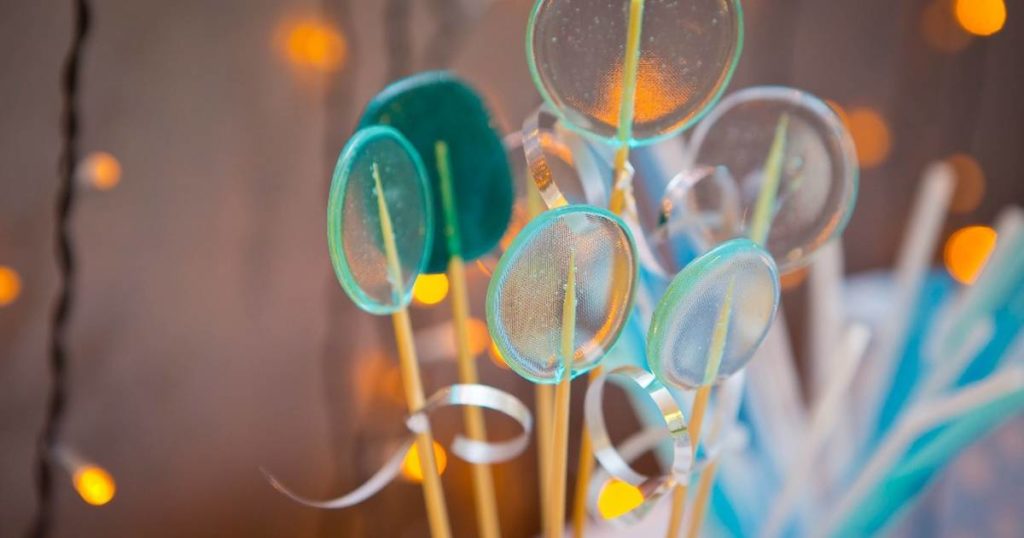
To make matte isomalt lollipops you need to prepare:
- 4 – 6 g titanium dioxide;
- 90 – 100 g sweetener;
- a couple of drops of food coloring.
Stages:
- To begin, place the isomalt in a thick-bottomed saucepan or saucepan and place the container on the stovetop.
- The product must be heated until the grains are completely dissolved.
- After this, remove the dish from the heat and add the dye, previously mixed with the bleach in a ratio of 1:4, to the hot mixture.
- Then I recommend immediately starting to form the lollipops on a fat-free silicone mat, which, thanks to the additional ingredient, acquire a matte whitish hue.
- Next, insert a stick into each candy and leave until completely cool (7–12 minutes), they should turn white.
Once the opaque lollipops have cooled, you can safely remove them from the mat and begin decorating the dessert (if necessary).
Isomalt lollipops with glucose syrup on a stick
Necessary components:
- 115 g isomalt or granulated sugar;
- 45 ml filtered water;
- 60 ml glucose syrup;
- 1 – 2 drops of food coloring of the desired shade.
Stages:
- First, pour the sweetener into a saucepan, add syrup, water and stir.
- Then place the pan over medium heat until the ingredients are completely melted.
- Next, add a few drops of dye and mix until a uniform shade is achieved.
- Cook the isomalt until it reaches 160°C, without increasing the heat.
- After this, I recommend immediately starting to shape the candies so the melted mixture doesn't have time to harden. To do this, pour the hot mixture into prepared molds or spoon it onto a grease-free silicone mat.
- Insert a stick into the center of each lollipop. To create the desired lollipop shape, you can use a toothpick or spoon to stretch the edges of the lollipops.
The cooled pieces should be removed from the molds.
Lollipops with a picture inside
To make lollipops with a picture inside, you need to prepare:
- 85 g isomalt;
- 1 – 2 drops of food coloring;
- waffle pictures.
Stages:
- Before heating the isomalt, I recommend cutting out the images first.
- Then lay them face down on a silicone mat, which I recommend degreasing beforehand by wiping with a napkin soaked in lemon juice or an alcohol solution.
- Next, pour the main ingredient into a saucepan or saucepan and place the container on the fire.
- Wait until the grains are completely dissolved at medium heat.
- Once the isomalt caramel has melted, carefully spread it over the prepared figures with a spoon, slightly extending beyond their outlines. If desired, you can also coat the front of the figures with the candy mixture.
- Then immediately insert the stick into each piece, twisting it slightly to ensure a secure "stick." Be careful not to touch the image to avoid wrinkling it.
Once the lollipops have cooled, you can safely remove them from the mat.
How to make rattle candies
To make rattle candies you will need:
- 85 g isomalt;
- 5 g of clean water;
- water-soluble food coloring (optional);
- explosive caramel;
- sprinkle.
Step by step process:
- To begin, I recommend pouring the ingredients into a saucepan or small pot, adding water and placing the pan on the fire.
- Melt the mixture until completely translucent. The isomalt for candy should be at 160°C.
- Then remove the container from the heat and mix in the food coloring (if desired).
- Wait until the product stops bubbling, and begin forming the candies by spooning the melted isomalt onto a grease-free heat-resistant mat or filling prepared silicone molds.
- After this, immediately insert a stick into each piece, twisting it slightly.
- Next, add the popping caramel and sprinkles and wait until the candies have completely set.
If necessary, treat the product with a gas torch.
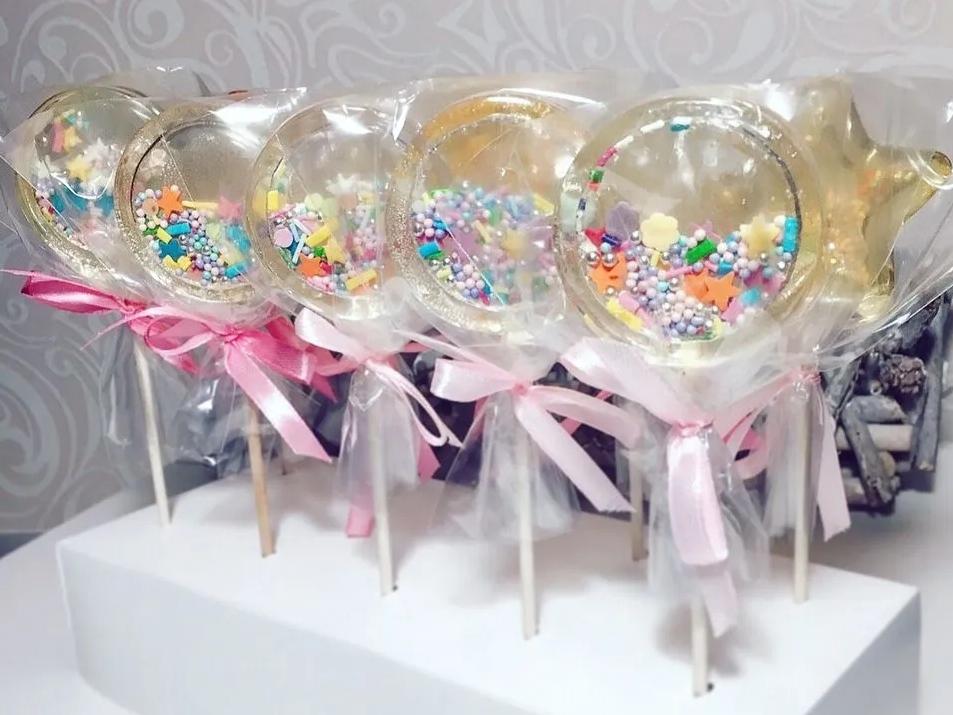
What to cover lollipops with and design ideas
After the isomalt lollipops have set, I recommend coating them with a food-grade varnish to create a water-repellent film. This is especially important if you're using them as cake decorations, to ensure the lollipops retain their appearance when in contact with surfaces.
There are many options for decorating these candies. Below, we'll look at the most common ones. One of them is decorating the lollipops with edible sprinkles.
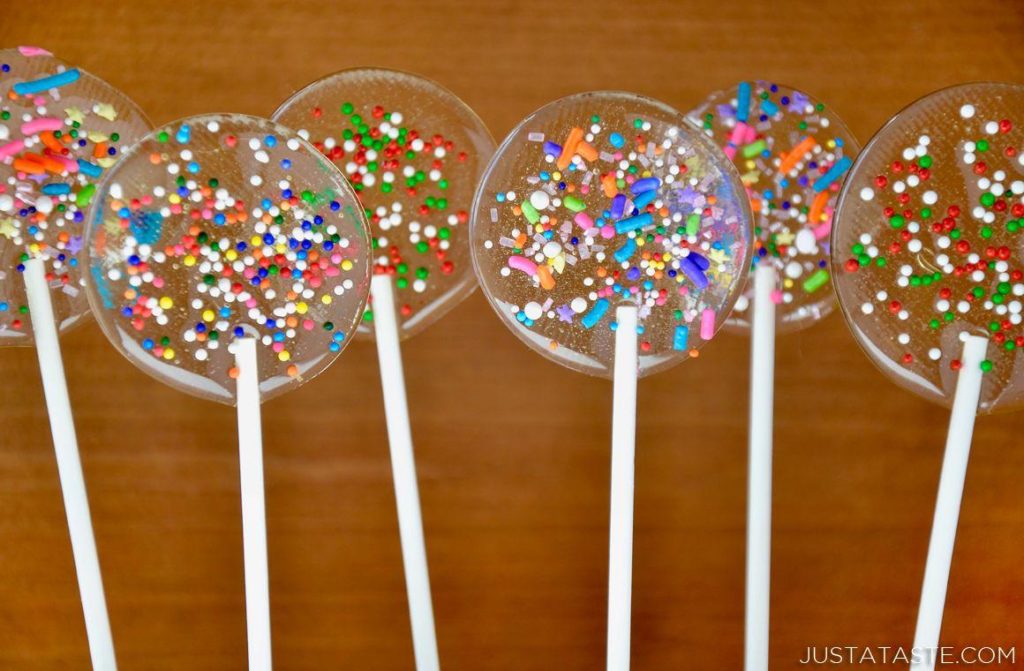
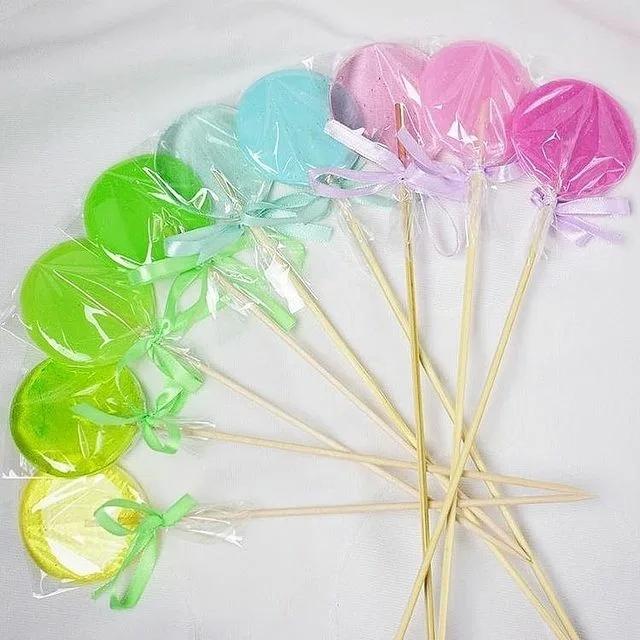
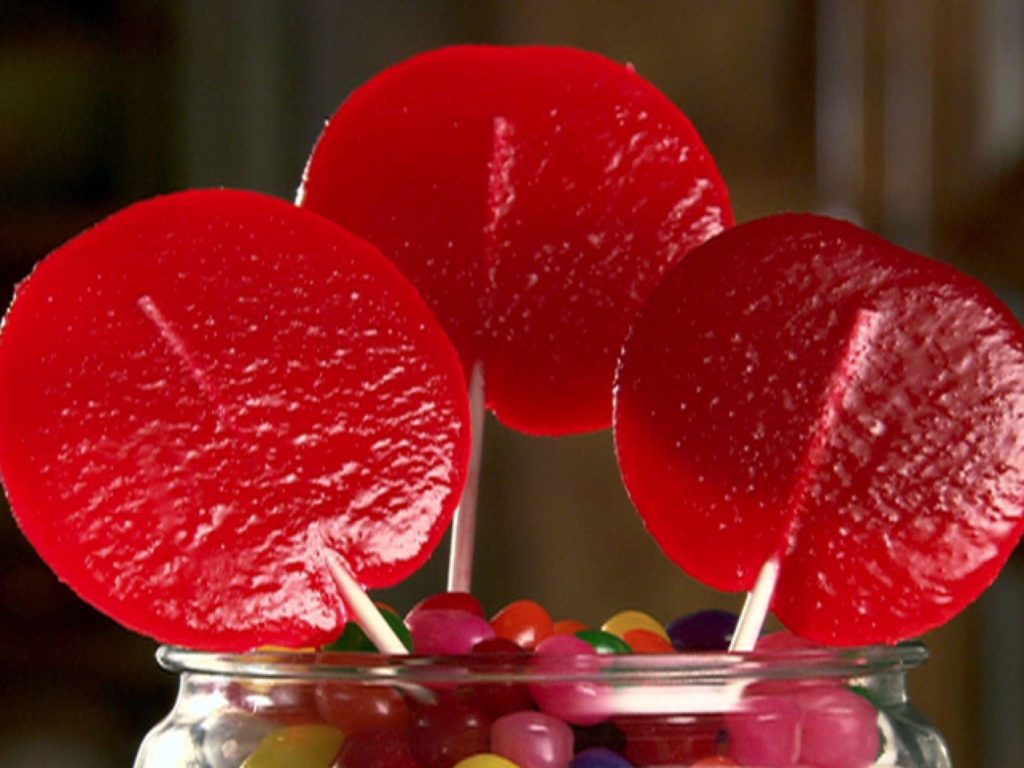
Isomalt candies can be colored any color you like, or you can mix several at once (optional). For this, I recommend using water-soluble food coloring, which should be added to the melted candy mixture. One or two drops will be enough. The photo below shows just such candies.
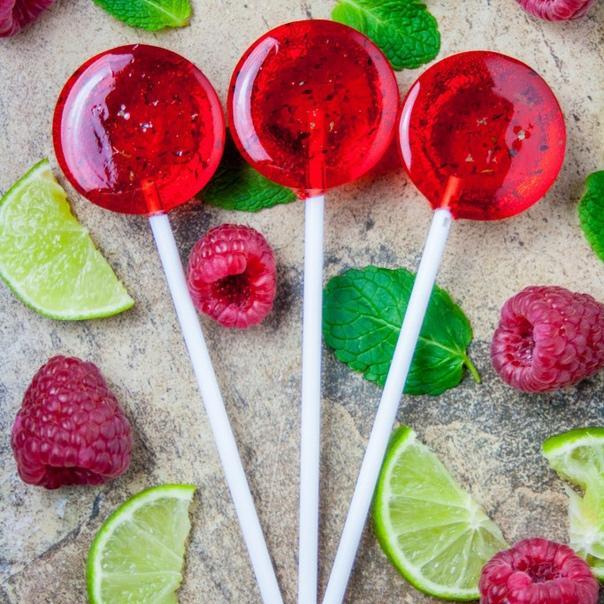
A more original design is presented below – isomalt lollipops with fruit. To make these, place a thin slice of fruit in each lollipop, adding another layer of syrup if necessary. You can replace the fruit with a wafer-style image.
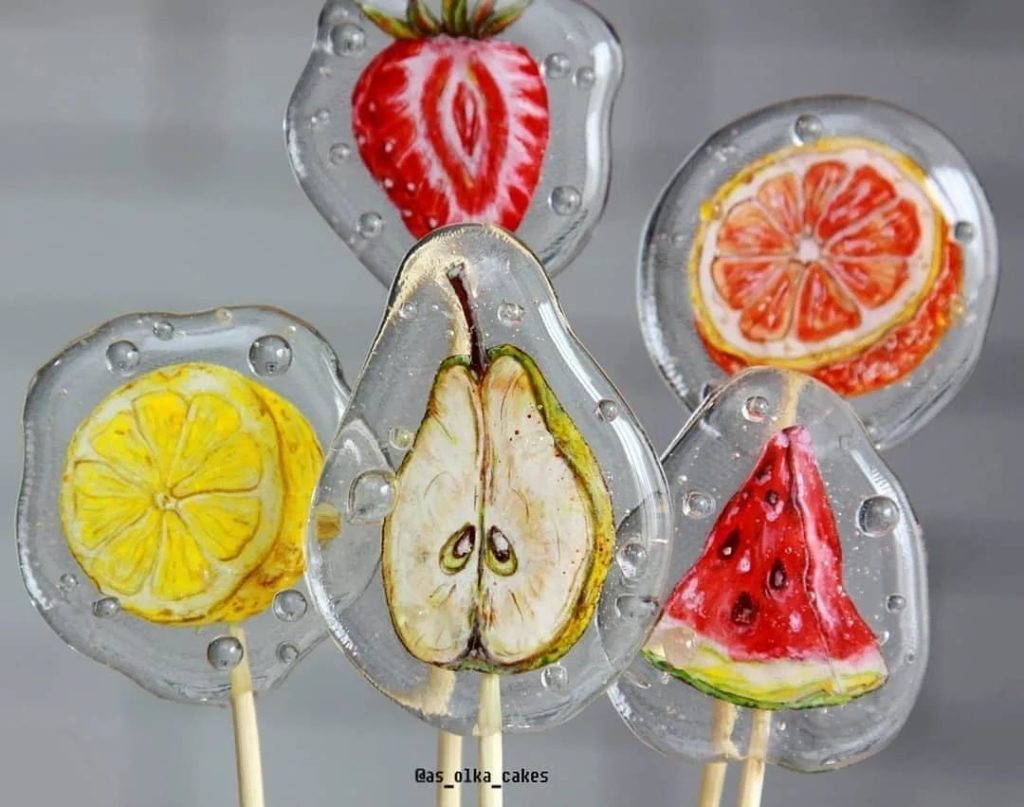
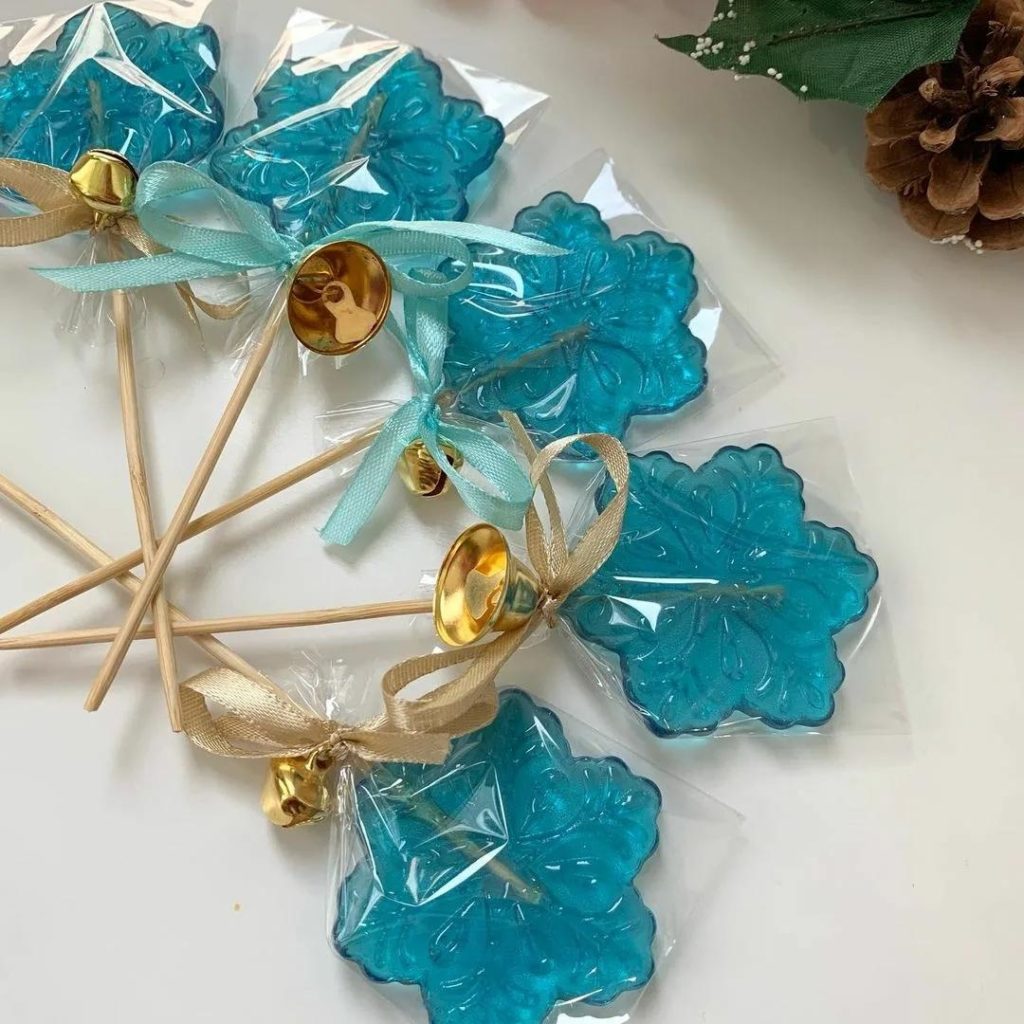
Isomalt candies can be made not only in a variety of colors but also in unusual shapes using special molds. You can also cut them into your desired size and shape yourself using a toothpick or fork.
Common errors and problems
Beginner confectioners often encounter mistakes and problems when making isomalt candies. Improper storage and failure to follow the preparation instructions can cause the candies to become cloudy, sticky, or melt. Below, we'll take a closer look at each of these potential mistakes for beginners.
If the lollipops melt or leak
The lollipops may melt if exposed to moisture. Therefore, avoid preparing them in humid areas or handling them with wet hands.
To prevent the lollipops from leaking, I recommend using dry gloves. These candies should be stored in dry, tightly sealed containers.
Lollipops should be used as decoration just before serving the dessert. It's a good idea to treat them with a lollipop varnish beforehand to preserve their appearance.
If the lollipops stick
Isomalt lozenges may become sticky due to moisture, direct sunlight, condensation, or storage in a humid environment. Therefore, it's important to strictly adhere to storage guidelines for these products: wrap them in baking paper or place them in a dry cardboard box.
If the lollipops become cloudy
Candies may become cloudy due to insufficient heating, continuous stirring during cooking, or the presence of foreign impurities. It's also important to ensure the syrup doesn't overheat, otherwise it will become darker and cloudier. If the isomalt starts bubbling and becomes cloudy after pouring into the molds, I recommend treating the surface with a gas torch. This will help revive the candies and make them clear.
How to store isomalt candies
I recommend storing isomalt cake lollipops in a dry place at room temperature, away from direct sunlight. I recommend placing them in a cardboard box or airtight plastic container, separating each lollipop with parchment paper to prevent them from sticking together. It's best to place each lollipop in an individual bag and tie it tightly. The maximum shelf life of these lollipops is two months. Avoid storing them near spices or foods with strong odors.
To make isomalt candies correctly, I recommend strictly following the proportions and cooking technique, following the recipe. Before decorating cakes or desserts, I recommend varnishing the candies. Also, be careful when storing them, otherwise they may melt or become sticky.