Choosing the best condensed milk: what should and shouldn't be on the label, rating condensed milk manufacturers based on consumer reviews

Content
How to choose condensed milk
Condensed milk is a favorite among adults and children, often used in confectionery. Waffles, creams, candies, and other desserts are incomplete without it. Condensed milk is a common ingredient in pancake and cake recipes.
Adherence to a standard recipe is one of the most important criteria when choosing the right option. The best condensed milk is a tasty, high-quality product that meets a number of criteria, determined both by the information on the packaging and by the contents itself.
What is condensed milk?
Condensed milk (or, as it's commonly known, "sgushchenka") is a product consisting of concentrated milk containing sugar. It is used in the making of various confectionery products or enjoyed as a standalone dessert alongside pancakes, syrniki, and other desserts.
Real condensed milk has a sweet taste and the aroma of pasteurized milk or cream. The finished product appears as a homogeneous white mass with a viscous texture.
Compound
According to GOST, the composition of condensed milk requires the use of cow's milk or cream and sugar. This product is considered tasty and completely safe to consume due to the natural ingredients used.
However, finding condensed milk with this composition is quite difficult these days. In an attempt to reduce production costs, companies are replacing natural milk with palm or coconut milk. Furthermore, modern versions of condensed milk often contain palm fat, milk powder, starch, sweeteners, and other additives.
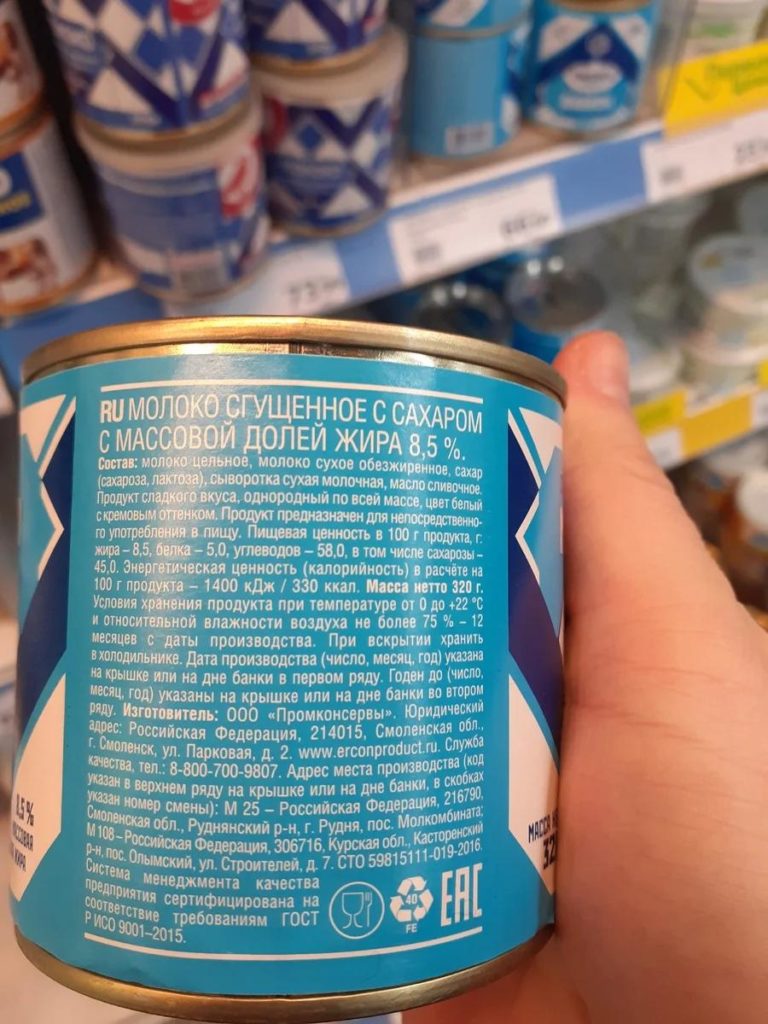
Proper condensed milk should contain the following BJU values per 100 grams:
- 8.5 grams of fat;
- 7.2 grams of protein;
- 56 grams of carbohydrates.
Condensed milk contains 339 kilocalories per 100 grams. The amount of sugar (sucrose) in condensed milk should not exceed 43.5-45 grams. It contains not only proteins, fats, and carbohydrates, but also fatty acids, cholesterol, and saccharides. It also contains a number of vitamins found in milk, such as C, E, H, B vitamins, and others. The fat content of classic, non-skim condensed milk should be 8.5%.
What are the benefits of condensed milk?
A truly high-quality product contains no additional food additives, preservatives, or other chemicals, and therefore its consumption can have a beneficial effect on the body. The beneficial properties of condensed milk include the following:
- improving brain function;
- strengthening bones;
- normalization of metabolic processes;
- strengthening the immune system;
- normalization of hormonal levels;
- increased vigor and energy.
However, the consumption of condensed milk is recommended in limited quantities, as excessive amounts can be harmful to health, negating any positive effects.
The benefits of consuming condensed milk for women are especially noteworthy. This natural, high-quality product will help women:
- Preserve beauty. Thanks to the vitamins included in the composition, the body maintains the condition of the skin and hair, preventing hair loss, loss of shine and deterioration of the hair structure.
- Prevent dry skin. B vitamins, which are part of milk, combat the occurrence of peeling, cracks and help the skin heal.
- Strengthen the nervous system. Women who regularly consume condensed milk report no disturbances in the central nervous system, a stable emotional background without mood swings or depressive tendencies.
- Prevent the appearance of wrinkles. Condensed milk contains selenium, which is essential for collagen production. This protein is responsible for preventing age-related changes in the skin.
Despite its significant number of beneficial properties, condensed milk can also be harmful to the body if consumed in excess, which manifests itself in:
- development of caries;
- rapid weight gain;
- increased blood sugar;
- the appearance of allergies.
Also, condensed milk should be excluded from the diet of people who suffer from diabetes and pancreatitis.
How condensed milk is made
To understand what condensed milk is made of, it's important to take a detailed look at the production stages. The entire production process is as follows:
- Reception and purification of milk. The quality of the product is checked simultaneously with its cleaning and cooling.
- Milk normalization in accordance with GOST. The dry matter content and fat content are adjusted according to current standards. If an increase in fat content is required, cream is added; if a decrease is required, it is diluted with skim milk.
- Pasteurization. Milk produced according to standards undergoes pasteurization at 90-95°C, which eliminates harmful microorganisms and stabilizes the product's properties. After this, the milk may thicken.
- Cooling finished product to 75°C.
- Storage before the thickening procedure.
- Adding sugar. At this point, sugar is added to the finished product in the form of a syrup containing 70% sugar, or in solid form.
- Thickening procedure. The prepared mixture is placed in a special unit, where the contents are actively mixed, brought to a boil, and the moisture then evaporates.
- Cooling the finished product. At this point, the hot milk is cooled to 20°C. During cooling, it is constantly stirred, ensuring the homogeneity of the final product.
- Adding a seed. Lactose is added to condensed milk to ensure that there are no large crystals in the finished product.
- Packaging of condensed milk. Ready-to-drink condensed milk is packaged in tin or plastic cans.

Who invented condensed milk?
Frenchman Nicolas Appert was the first to attempt to find a way to preserve milk for a long time without dramatically altering the properties of the finished product. His experiments began in 1810, but the problem was only solved in practice in 1856 by American Gail Borden. In 1858, the world's first condensed milk factory was built in the United States.
How to choose the best condensed milk
There are several key criteria to consider when purchasing genuine condensed milk. These include the following:
- packaging - the appearance of the product;
- compliance with established standards and regulations;
- engraving;
- expiration date and storage duration;
- actual weight and volume.
Each of the presented criteria is important when choosing condensed milk, as their combination allows you to choose a high-quality, original product.
Package
The appearance of the packaging in which condensed milk is sold is the first thing that consumers pay attention to.
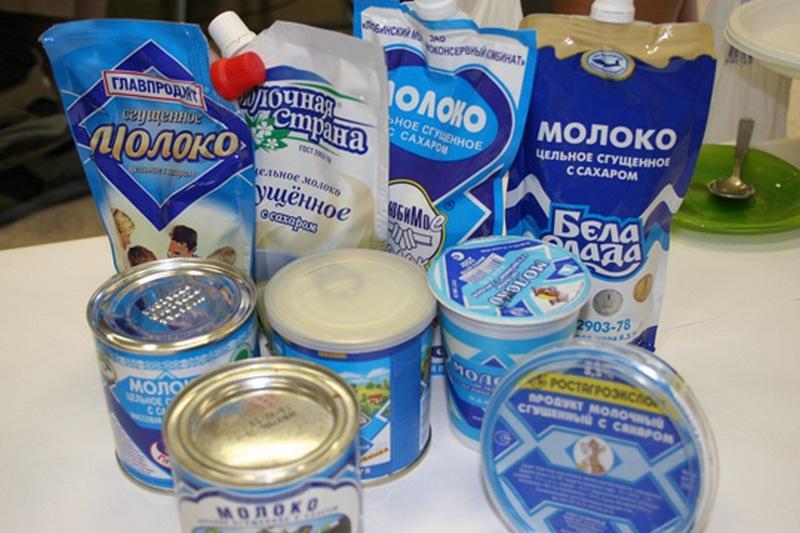
There are several types of condensed milk, differentiated by the container used. The classic metal can is the most common option, as it reliably protects the contents from damage.
However, recently, manufacturers have begun using plastic packaging for condensed milk. Small portions of condensed milk are sold in tubes or bags. The taste of the product remains the same in all cases. The main thing is to read the label and carefully examine the information provided.
If the container is dented, has visible damage, or rust, this indicates the product was improperly stored or was deformed during transportation. This situation is a reason to avoid purchasing the condensed milk, as the product inside may be spoiled.
Crushed metal and cracked plastic can ruin the taste of milk and leave metal particles or plastic shards in it. The presence of rust indicates that a batch of condensed milk was poorly packaged using unsuitable containers. This ultimately affects the taste of the product.
When inspecting the packaging, you should also pay attention to the label. If it's poorly printed or missing entirely, it's a sign of a careless manufacturer. Skimping on such details also suggests poor product quality.
For subsequent cooking of condensed milk, you can choose a product in any packaging, since the taste of condensed milk does not depend on the container.
GOST or TU
GOST is a symbol demonstrating the authenticity of a product, guaranteeing that it was made from natural ingredients. According to GOST, condensed milk must meet the following requirements:
- condensed milk is poured into tin cans;
- the name of the product begins with the word "milk", for example, "whole condensed milk with sugar";
- The composition of condensed milk contains whole cow's milk or cream and sugar.
TU is an abbreviation that stands for "technical conditions," which is the basis for the manufacturer's recipe. A product made this way can include various additives and packaging made from any container. The product name can also be anything, such as "condensed milk" or "condensed milk."
The best condensed milk in Russia is produced in accordance with GOST standards. This national standard is indicated by the following marking on the packaging: "GOST 31703-2012," which corresponds to the category "canned condensed milk with sugar." Soviet condensed milk was produced according to different standards, but these have been regularly revised since then. The latest GOST standard was issued in 2013.
According to current changes, in addition to the classic recipe of milk, cream, and sugar, canned goods may now contain vegetable fats, dry milk, and preservatives. This is intended to allow manufacturers to reduce product costs. Therefore, even if a product is labeled "GOST," it's important to carefully examine the ingredients.
Engraving
Engraving, which consists of numbers applied to the packaging, plays a key role in assessing the quality of a purchased product. These numbers provide valuable information that helps identify the specifics of the container's contents.
So, the first letter on condensed milk should be "M." Its presence indicates that the milk in front of the customer is condensed. This is followed by two numbers, which represent the manufacturer's code. These numbers vary depending on the company and carry no significant information.
Next comes a two-digit code. This is the product range. Choose a product engraved with 76 to guarantee condensed milk without additives.
What should NOT be in condensed milk
| Ingredient | Display on packaging | Purpose of adding | Harm when used |
| Palm oil | Palm oil, palm fat or palm fat | Used as a plant-based substitute for cow's milk to add extra fat content. | It is not broken down and promotes cholesterol deposition. |
| Starch | Starch | It is used as a cheap thickener for milk, intended to improve the appearance of the product. | Affects the taste of condensed milk |
| Titanium dioxide | E 171 | It is used to color the product white. | It remains in the body, settling on the walls of blood vessels |
| Carboxymethylcellulose (CMC) | E 466 | It is used to create a viscous and thick final product. | Causes allergic reactions, which is especially common in small children |
| Sweeteners | E 950 and E 951 | They are used to increase the sweetness of condensed milk and enhance the flavor. | May cause allergies |
Shelf life
This indicator is another important criterion that must be included on the packaging. The marking is usually located at the top of the container. Shelf life varies for each type of packaging:
- metal can - 1 year;
- plastic packaging - from 2 months to 1 year;
- packaging with a lid - 2-3 months.
Once opened, condensed milk can be stored for about 5 days.
The purchased product should be stored at a temperature of 0-10°C.
Weight and volume
According to current GOST standards, the volume of a can of condensed milk should be 325 ml. The weight of a can of condensed milk is 400 g.
For boiled condensed milk, in accordance with the technical specifications, the permitted weight is 380 g.
If these parameters in a classic metal can do not correspond to the stated values, it is possible that the manufacturer has not produced the product reliably. Natural ingredients may be replaced with cheaper alternatives containing flavor enhancers and flavorings.
How to determine the quality of condensed milk by its appearance
The most delicious condensed milk The color should be uniformly white. If it's more of a snow-white color, it may contain titanium dioxide, making the product unsuitable for high-quality, natural products. A creamy yellow tint is also acceptable for condensed milk.
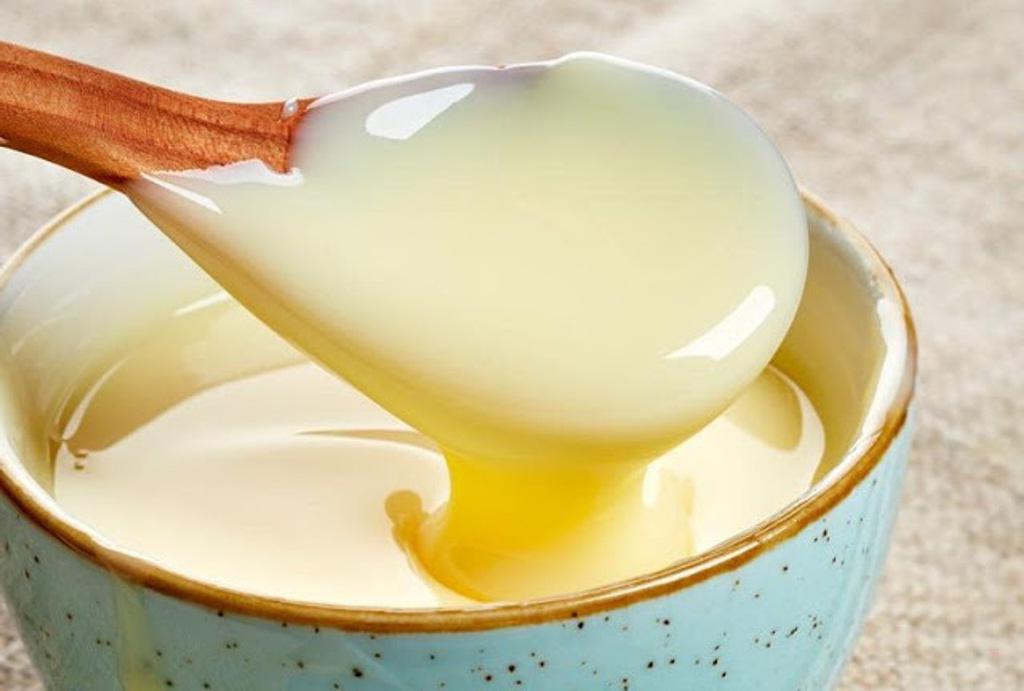
The product's texture should be thick and smooth. There should be no lumps or sugar crystals in the condensed milk. Their presence indicates improper condensed milk preparation. A small amount of sediment may be present at the bottom of the container.
To check the fluidity, watch how the condensed milk flows from a spoon. The thread should stretch evenly and smoothly. If the condensed milk is of poor quality, the consistency will be slimy and the texture will be uneven. Condensed milk should taste creamy, with a moderate amount of sugar. A milky aroma is acceptable.
It's quite difficult to detect additives in condensed milk at home. The easiest way to test is with iodine. Drop it onto the condensed milk, and if it turns blue, it indicates the presence of a thickener. It's used to make the product more viscous and thick.
Condensed milk producers rating
To determine which boiled condensed milk is best, you need to examine not only the specific characteristics of the product but also the options offered by manufacturers. Currently, there are numerous brands of condensed milk on the market. Each has its own production technology, but they consistently maintain high quality standards, confirmed by consumer reviews.
The list of manufacturers and brands of condensed milk in Russia is as follows:
- Rogachev

The manufacturer offers several varieties of condensed milk in addition to the classic variety: with coffee, vanilla and cream, and nuts, among others. The product's ingredients are completely natural: cow's milk and granulated sugar. The finished product has a pleasant light yellow color, a thick consistency, and a distinctly creamy flavor. Several packaging options are available, from a tin can to a plastic container.
- ChocoLife

This premium-quality condensed milk is made from natural ingredients with the addition of additional products. For example, in addition to classic milk and sucrose, it may contain Belgian chocolate, coconut, and other ingredients. This gives the condensed milk a refined and rich flavor, making it perfect even as a standalone dessert, thanks to its delicate and unique taste.
- Prostokvashino

This option features an all-natural composition and a distinctive creamy flavor reminiscent of classic condensed milk. It comes in a flexible packaging with a lid, allowing for easy opening without the need for additional tools. The product is characterized by a relatively high milk protein content, which contributes to its thick consistency and nutritional value.
- Milk Country

A pleasant-tasting, natural condensed milk, whose production technologies have been preserved since the Soviet era. It has a relatively high milk protein content, resulting in a thick consistency. Condensed milk dissolves easily in hot drinks and has a smooth consistency, making it suitable for use in confectionery.
- The Cow from Korenovka
This condensed milk is made from natural ingredients and contains no unnecessary additives like starch, colorings, or vegetable oils. It has a higher calcium content than similar products. Condensed milk is available in a variety of container sizes, making it a convenient option for both individuals and large families.
Pastry Chef's Checklist
To ensure you don't miss the most important criteria when choosing condensed milk, let's briefly review all the items on the checklist:
- Appearance of the packaging. The jar must be intact, without damage, with a well-printed label.
- Name. The name must include the word "milk" and have variations such as "condensed milk with sugar," etc. If the packaging simply says "condensed milk," the manufacturer is offering a milk-containing product.
- Compound. The composition should not contain unnecessary ingredients such as flavor enhancers, thickeners, or preservatives.
- Texture. Condensed milk should be thick and smooth. The consistency should be a delicate creamy color, but not snow-white.
- Taste. Condensed milk tastes sweet and has the aroma of milk or cream without any additional additives.
Conclusion
Classic condensed milk is made exclusively from cow's milk or cream and sugar. It should not contain any additional ingredients, colorings, or preservatives. When choosing the right product, pay attention to the packaging, ingredients, and name. It's important to pay attention to even the smallest details, such as the integrity of the label and engraving on the container. By following all these rules, you can easily make the right choice and select a high-quality, natural product.