How to beat egg whites to stiff peaks without a mixer?

Content
- 1 How to quickly beat eggs without a mixer?
- 2 How to beat eggs without a mixer and create a thick foam?
- 3 Rules for whipping into a thick foam
- 4 Tips for preparing egg whites and choosing eggs
- 5 When and how to add sugar to properly beat egg whites?
- 6 How to separate egg whites from yolks
- 7 How to properly add egg whites to the dough?
- 8 What is the best utensil for whipping foam?
- 9 What to do if you can’t beat the egg whites?
The rules for whipping eggs into a thick foam, separating the white from the yolk, the optimal egg white temperature, the best bowl for whipping, how to create a thick foam without a mixer using a fork, whisk, or blender, and how to whip egg whites with and without sugar—all of this is covered in the article.
How to quickly beat eggs without a mixer?
To prepare such a wonderful baking base, you need to make some preparations:
- take the eggs out of the refrigerator and let them warm up;
- take a copper or glass container, wash it thoroughly and dry it with a paper towel;
- Wash the warmed eggs very well with soap and then dry them;
- separate the whites from the yolks and pour the former into a bowl;
- beat with a whisk clockwise, gradually increasing the intensity from low to high;
- If you need to add sugar, do so when the whites become thick but still flow off the whisk;
- The eggs are beaten when they hold their shape and do not run.
Important: don't let even a drop of water or yolk get into the mixture. Otherwise, everything will be ruined. You can add a little salt before whisking to speed up the process.
How to beat eggs without a mixer and create a thick foam?
Beating eggs has several stages and textures, each with its own characteristics:
| Whipping stage | Texture | How to achieve | What tools are needed? |
| homogeneous mass without foam | a yellow homogeneous mixture of yolks and whites without foam or fluffiness | mix the egg ingredients with a fork or whisk | forks, whisk, knife with a sharp tip |
| light foam | light yellow, slightly thickened mass with foam bubbles | vigorous whisking with a whisk or mixer | whisk or mixer |
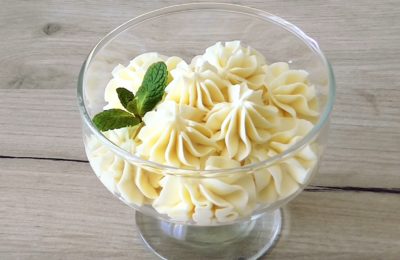
| thick foam | a thick, foamy mass of light cream color | vigorous continuous beating with a whisk or mixer | whisk or mixer |
With a fork or two
When a recipe calls for lightly beaten eggs, you can do so with a regular fork. Simply add the eggs to the bowl and whisk vigorously until the whites and yolks are combined into a smooth mixture. Lightly beaten eggs are suitable for scrambled eggs or can be used in a number of baking recipes.
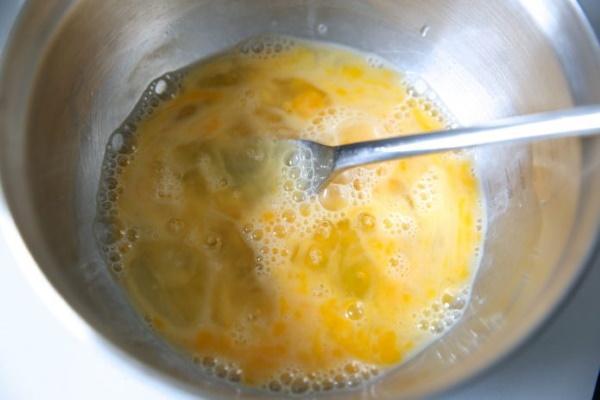
The purpose of lightly whisking with a fork is simply to ensure that the whites and yolks do not separate. This is especially important when preparing doughs and batters that require thorough mixing.
With a whisk
A foamy consistency is achieved by whisking the egg yolks and sugar for about 3 minutes. The mixture will form tight spirals as it drips from the bowl. A hand whisk doesn't require electricity, but beating the eggs with one can take some time.
Beating eggs into a foamy consistency using a whisk is done as follows:
- You need to mix the eggs (and individual yolks, if desired) and sugar in a saucepan, heat over low heat, stirring constantly, until the mixture reaches 45°C, and immediately remove from the stove.
- After this, whisk the mixture vigorously until it turns light brown and at least doubles in volume. Its consistency should become foamy and fluffy.
With a blender
Beating eggs without a mixer is difficult, and some believe that an immersion blender can be used as a suitable substitute. This is suitable for beating whole eggs, particularly for adding to batter. It produces a fluffy and foamy consistency that can then be mixed with other ingredients. A stand blender can also be used to beat whole eggs.
To do this, pour the product into the blender's bowl and blend on high speed for at least 4 minutes. Turn off the blender when the desired texture is achieved. An immersion blender is also suitable for blending whole eggs. When using an immersion blender, ensure the blades reach the bottom of the blender. If the blender only blends the surface layers of the product, the result will be uneven and runny.
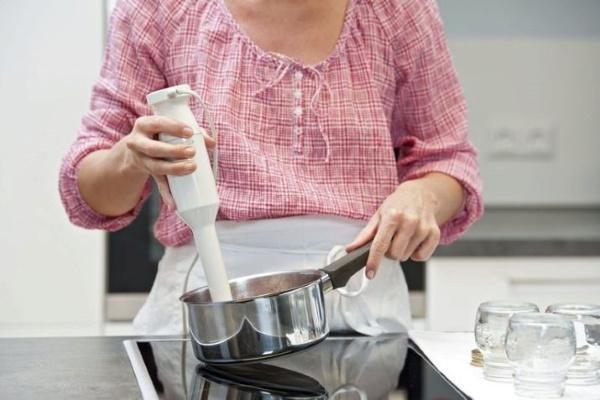
However, blenders (of any configuration) are not recommended for whipping egg whites. This is because the blades in these devices are almost always very sharp, cutting the mixture rather than whipping it to a desired consistency. When processing egg whites, the process should be as gentle as possible, which can only be achieved with a mixer with variable speeds.
Rules for whipping into a thick foam
For making desserts, baked goods, and other confectionery. To achieve the desired flavor and fluffiness, whip the mixture into a thick foam, either by hand or mechanically. This won't be a problem if you know how to do it correctly and choose the right eggs and utensils.
The eggs must be fresh.
When choosing the main product, it's important to find the right balance. Egg whites that haven't yet cooled will rise poorly and won't form stiff peaks. It should be at least 3-4 hours after the egg was laid, and it should be refrigerated during this time.
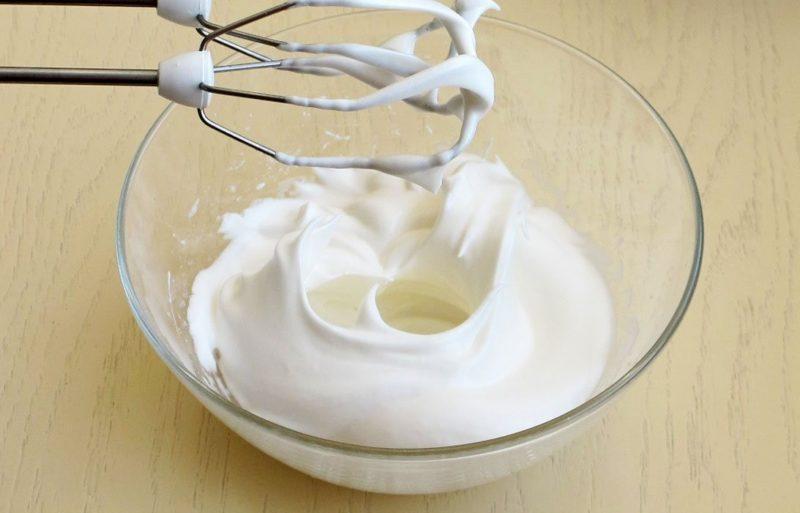
Old eggs that have been refrigerated for several days are not suitable for creating a thick foam. Even if the whites are raised to the desired height, they will soon begin to bubble and return to their original state. Ideally, the eggs should be between 5 hours and 7 days old.
It's important not only to choose the right main ingredient but also the right bowl. First and foremost, it should be deep, as the foam can rise up to 4 centimeters during the process. The second important rule is the material. It's recommended that the bowl be made of glass or metal. If you beat the egg whites in aluminum or plastic, there's a high risk that the foam will turn gray.
Carefully separate the whites
The first step to quickly whipping egg whites without a mixer is to carefully separate the yolk from the white using one of three methods. To do this:
- Crack the shell with a sharp knife and pour the entire egg into a bowl. The yolk will be immediately visible amid the clear liquid; carefully scoop it out with a spoon or your hand, being careful not to break it or dissolve it in the white.
- Make a small hole in the top of the shell with the tip of a knife. Pour the egg whites through the hole into a bowl. If the liquid doesn't flow easily, make a larger hole or create a similar one on the opposite side.
- Crack the shell right in the center over a plate, allowing some of the clear liquid to fall to the bottom of the bowl. Next, carefully pour the yolk from one shell half to the other, ensuring all the white is poured out.
Don't allow even a single drop of yolk to end up in the mixture, as this will prevent the whites from whipping properly without a mixer. Carefully scoop out this drop with one half of the eggshell.
Tips for preparing egg whites and choosing eggs
You can beat almost any kind of egg, but if you have eggs that have been sitting for several days or fresh ones, it's better to use the older ones. The whites' consistency decreases over time, making them much easier to beat, but they should be used almost immediately. Fresh eggs are much more difficult to beat, but the thick foam lasts much longer, so choosing eggs in this case is crucial.
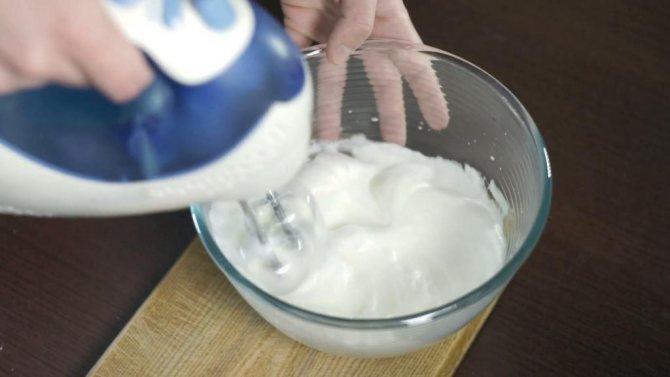
There's a common misconception that egg whites need to be chilled before whipping them to stiff peaks. However, this isn't true. In fact, warm egg whites have significantly lower surface tension, so bubbles form much faster.
When and how to add sugar to properly beat egg whites?
Sugar is what helps whip egg whites to stiff peaks. But it needs to be done correctly and at the right stage.
- We've already concluded that sugar is added when the mixture isn't just lighter, but whiter and already stretches slightly behind the whisk. If you add sugar at any other time, the egg whites won't work. For example, you could add sugar to unbeaten egg whites right at the beginning. The problem is that sugar competes with the whites for moisture from the very beginning: it doesn't produce foam at all, but simply creates a thick mixture.
- If you add sugar too late, that is, when the egg whites are already set, you will cause them to settle again.
But many cooks make this mistake: they add sugar to the center of the mixture. This risks the height of your foam. Sugar is added only along the edges of the bowl. We add it gradually—literally 1 spoon at a time, while continuing to beat the whites. By the way, it's ideal to use powdered sugar rather than sugar. After all, small crystals dissolve faster and are easier to whip.
Important:
Finally, a few words about incorporating the egg mixture into the batter! This should be done gradually and carefully. You can use a spoon, fork, or even a whisk; it's even easier. Take 1/4 of the egg white mixture and transfer it to the batter, gently mixing it in the same motion as you're whisking. Repeat this process with each addition. It's crucial to do everything smoothly and gently to prevent the whites from settling!
Beating egg whites takes skill. But with these simple rules, you'll easily achieve a fluffy, thick, and stable foam!
How to separate egg whites from yolks
This is a whole science, necessary to avoid having to remove the shells from your mouth later. A sharp knife, preferably one with a large blade, is essential for this procedure. A miniature knife may not be able to handle this job effectively. Using a sharp motion of the hand, use the knife to break the egg in half, so that one half contains the yolk and the other contains the pure white.
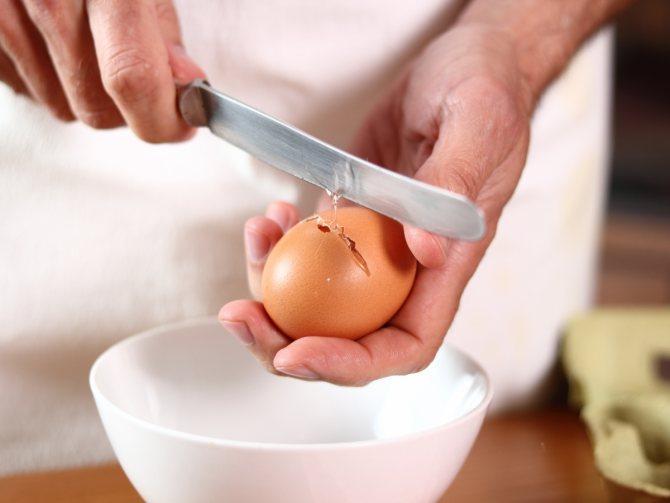
The white is immediately poured into a clean bowl, and the yolk is carefully transferred from one half to the other several times, thus completely removing the white. This procedure is performed with extreme caution to prevent the thin film of the yolk from being damaged by the sharp edges of the shell.
Avoid doing this near the bowl with the egg whites, to avoid the yolk getting into it. If this does happen, pick up the shell and try to remove the yolk from the bowl.
How to properly add egg whites to the dough?
Even if you've beaten the egg whites well, they need to be folded into the batter correctly. Otherwise, everything you've done so far will be for nothing. Use a silicone spatula for this process. The entire process of folding the egg whites should be done with minimal movements, as each time you fold them, the bubbles will be eliminated.
First, add 25% of the egg white mixture to the dough and mix it thoroughly with the other ingredients. There will likely be no more bubbles, but the remaining 75% will be much easier to add because the dough will be more fluid. Mix with a spatula from the bottom up, trying to use as few movements as possible.
What is the best utensil for whipping foam?
A regular bowl or small saucepan is suitable for preparing the product. The first thing to pay attention to is its size. When stirring, the chicken product can expand two to four times in size. It's important that the foam does not spill over the edges of the container.
The second rule is to choose a suitable material for your bowl. Glass, ceramic, or metal are ideal. It's not recommended to beat egg whites in a plastic container or plate. This material is highly absorbent, and there's a risk of fat residue seeping into the rest of the mixture. It's also best to avoid using plastic bowls, as they can cause the whites to turn gray.
What to do if you can’t beat the egg whites?
If you can't find fresh, high-quality eggs and need to whip them quickly, you can add a few drops of citric acid or lemon juice to the whites, along with a pinch of salt. For a fluffy foam, it's recommended to use fine-grained sugar, or ideally, powdered sugar.
Sources:
- https://www.wday.ru/dom-eda/soh/sposobyi-vzbivaniya-masla-i-yaits-venchikom-ili-vilkoy-chem-vzbivat-esli-net-miksera/
- https://culinarya.ru/kak-vzbit-yaytsa-bez-miksera
- https://sgushhenka.ru/poleznye-sovety/vzbit-belki-bez-miksera.html
- https://GelNedelya.ru/recepty/kak-bystro-vzbit-belki-s-saharom.html
- https://profter.ru/deserty/kak-vzbit-belki.html
- https://moscowwebstudio.ru/kak-vzbit-belki-v-krepkuyu-penu-bez-miksera/