Dyeing Easter eggs with hibiscus tea – 5 simple recipes

Content
Tea, including hibiscus tea, is known to have excellent coloring properties. However, the color obtained from dyeing the petals of the Sudanese rose is almost always a surprise. Hibiscus tea can color the eggshells in various shades, from soft lilac to blue-violet. Everything depends on the type of tea, its quality, and the length of time the eggs are soaked in the tea.
Contrary to expectations, the color of the dyed eggs differs significantly from the color of the tea itself. When you remove them from the tea, something magical happens, and they gradually transform from pink to lilac. Let's learn how to dye eggs with hibiscus at home for a beautiful holiday decoration.
How to dye eggs with hibiscus?
- Proteins: 12.8 g
- Fats: 11.6 g
- Carbohydrates: 0.7 g
- Total time:
-
Complexity:
It's easy and straightforward to prepare, but it does require some experience. Not everyone can do it right the first time.
- Number of servings: 7
Ingredients
-
Egg C17 pcs
-
Hibiscus tea40 G
-
Water500 ml
-
Sunflower oil1 tbsp
Preparation

Boil the eggs until done.

Pour boiling water into a deep container and add the hibiscus tea. Wait until the water takes on a rich color.

One by one, drop the eggs into the hot tea mixture.

We make sure that the eggs are completely covered with water or petals.

Place the bowl with the hibiscus and eggs in the refrigerator for 8 hours. Here are the eggs after a night in the refrigerator.

We take out the eggs and place them on a napkin or paper towel.

Brush the eggs with sunflower oil. Our krashenki are ready!
Marbled egg coloring with hibiscus tea and vinegar
Here's another original recipe for dyeing Easter eggs using natural ingredients. In this recipe, vinegar is added to hibiscus tea, which will make the dye more permanent and also affect the final hue (the eggs will be gray-blue, without a purple tint). The saturation and vibrancy of the color will depend on the amount of time the eggs soak in the hibiscus tea. So, you can experiment and achieve the hue you desire. And Sudanese rose petals will provide the marbled effect.
Ingredients
- Eggs - 5 pcs.
- Hibiscus tea – 40 g
- Table vinegar 9% - 1 tbsp.
- Water - 1 l
- Sunflower oil - 1 tbsp.
Cooking time: from 1 to 12 hours
Servings: 5
Step-by-step recipe
Step 1
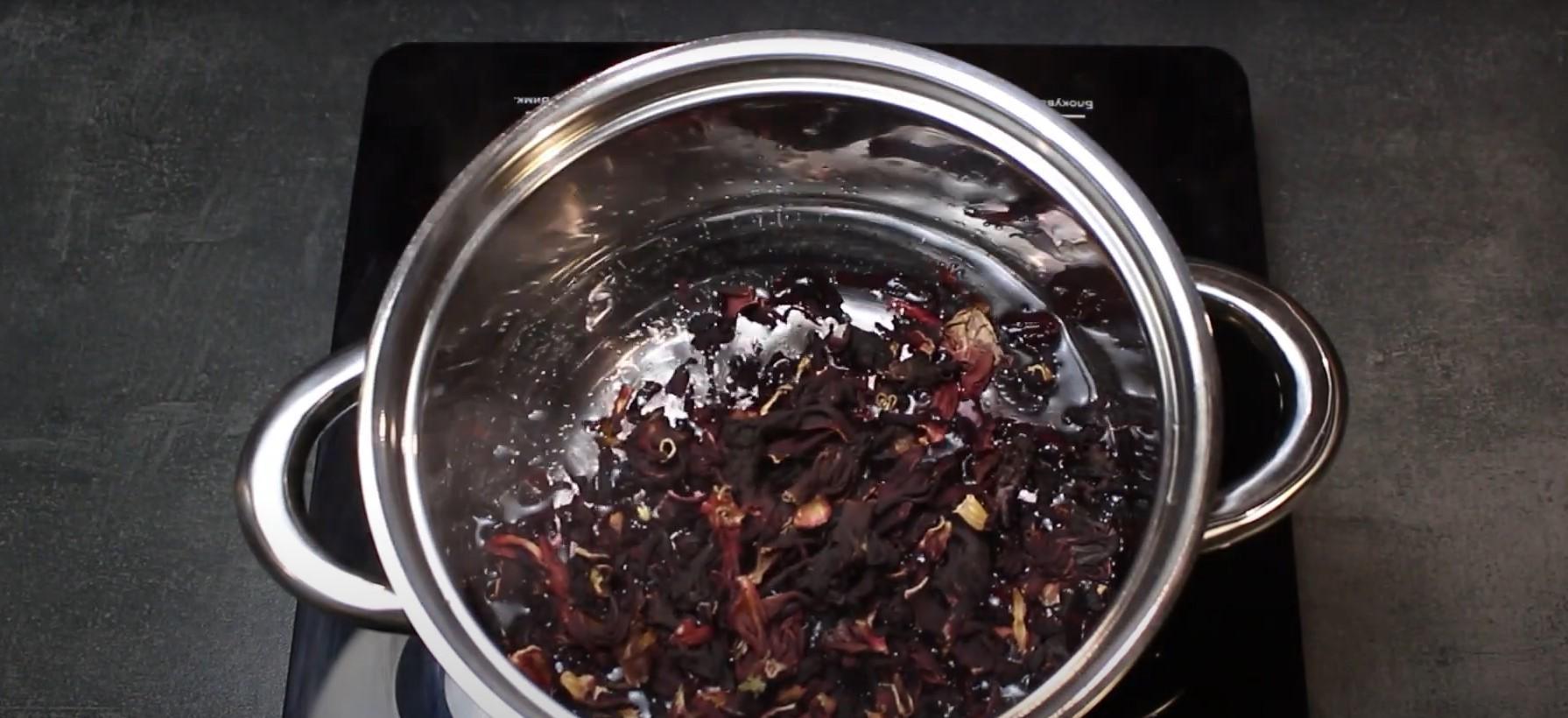
Pour hibiscus tea into boiling water and cook for 10 minutes.
Step 2
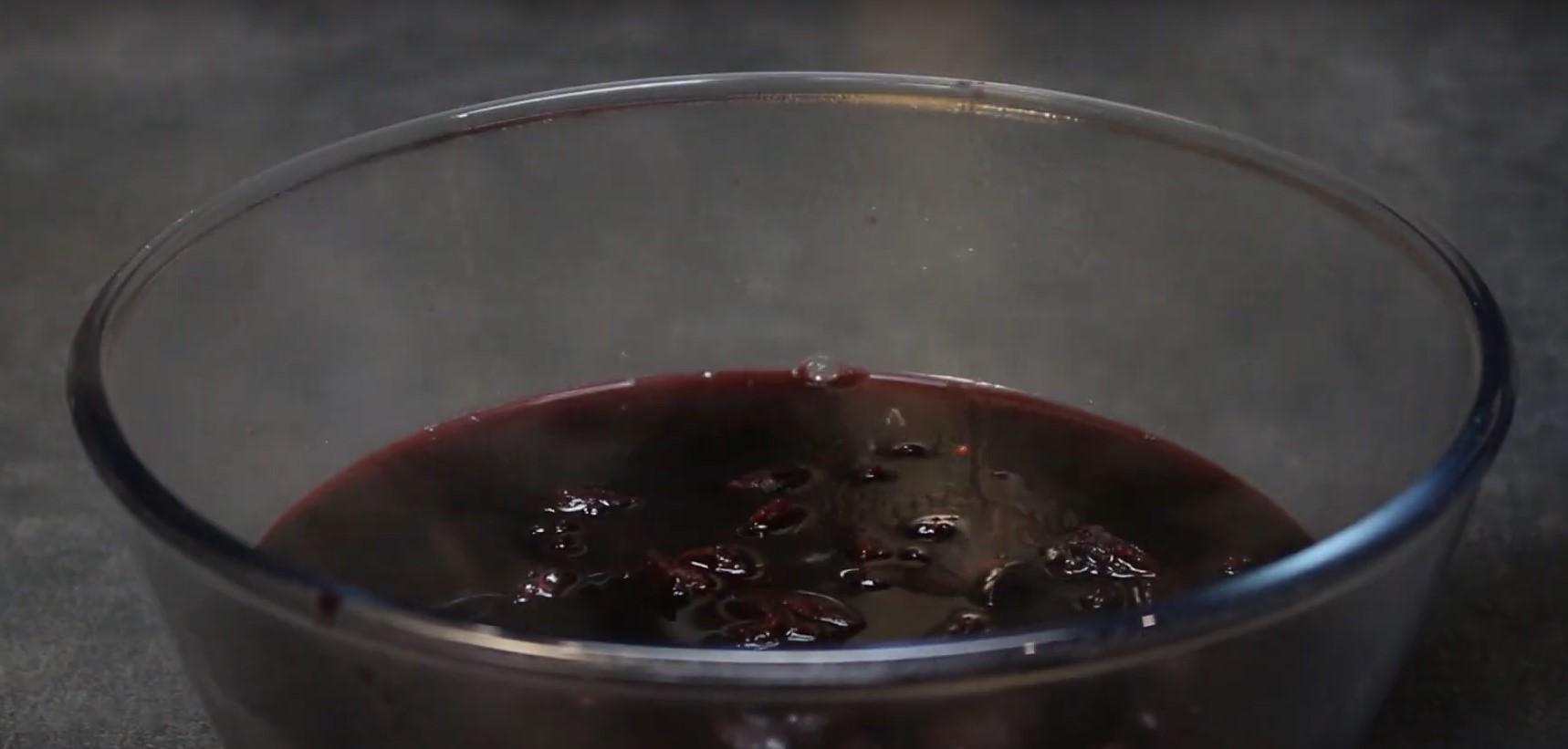
Remove from the stove and pour the hot tea into a deep bowl.
Step 3
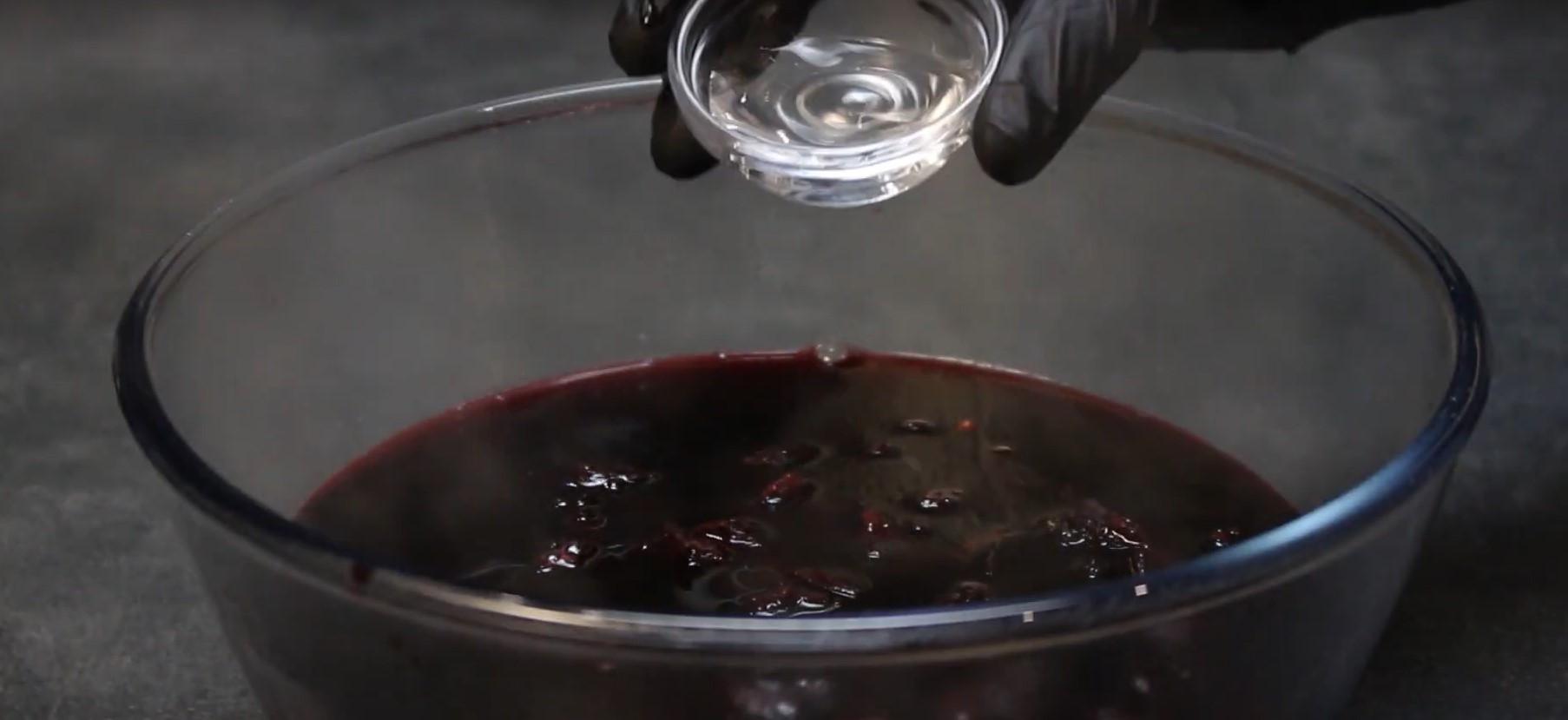
Add vinegar to the hot broth.
Step 4
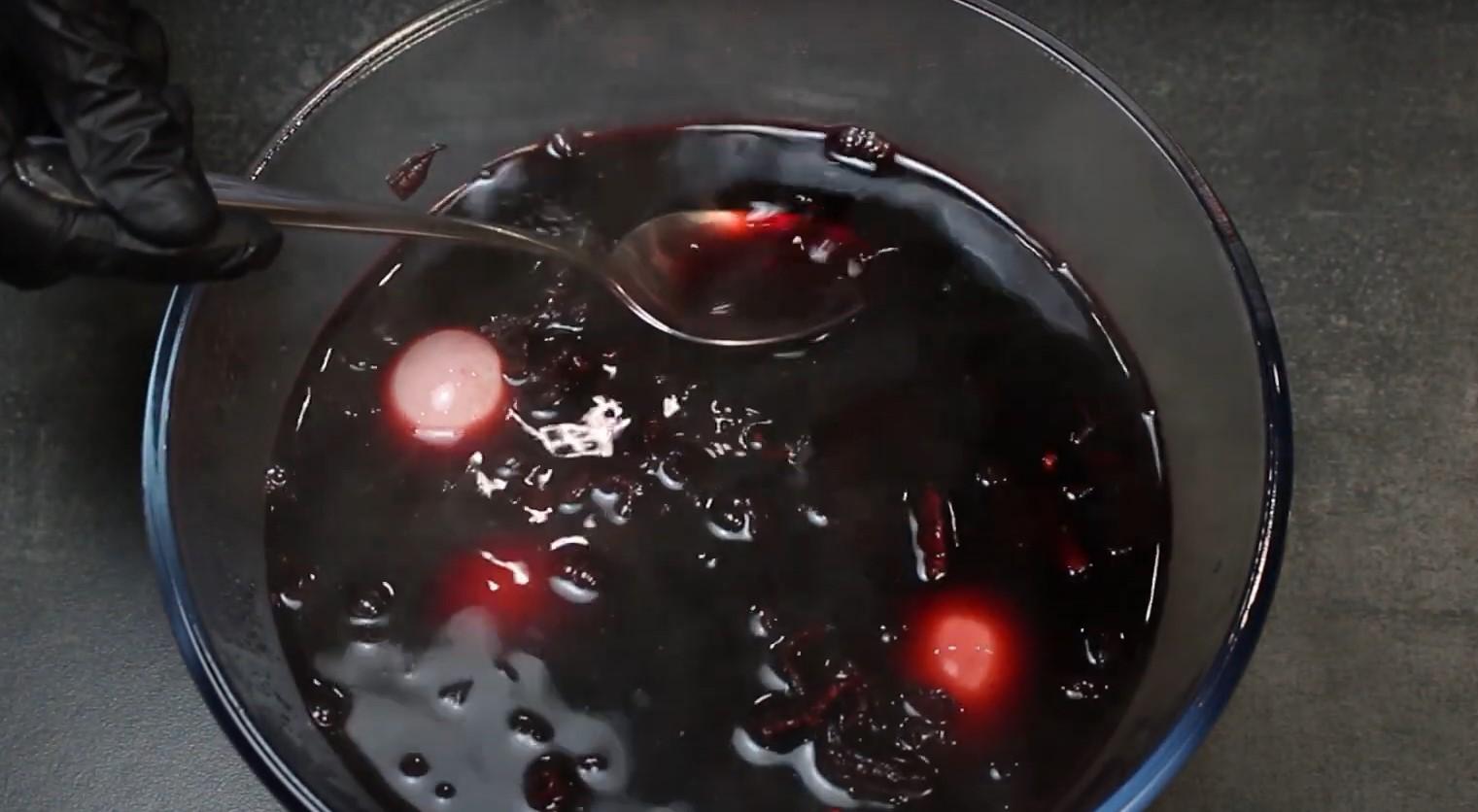
Place the eggs in the broth, making sure the eggs are completely covered with liquid or petals.
Step 5
Soak the eggs in the broth for 1 to 12 hours. The intensity of the coloring depends on the time. The photo shows eggs soaked in hibiscus tea for 1, 2, 3, 5, and 12 hours.
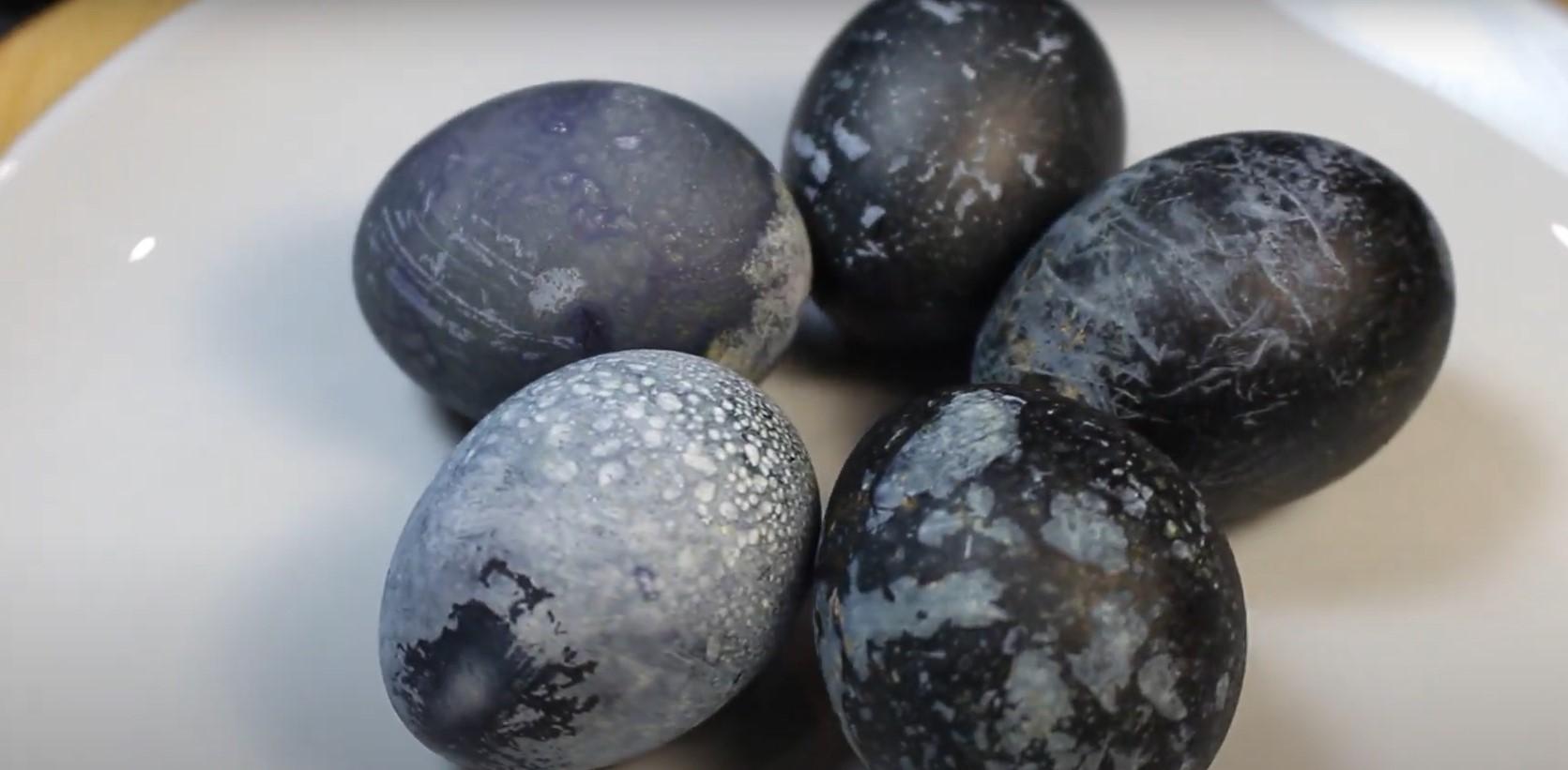
Step 6
Rinse the eggs with water and grease with odorless vegetable oil.
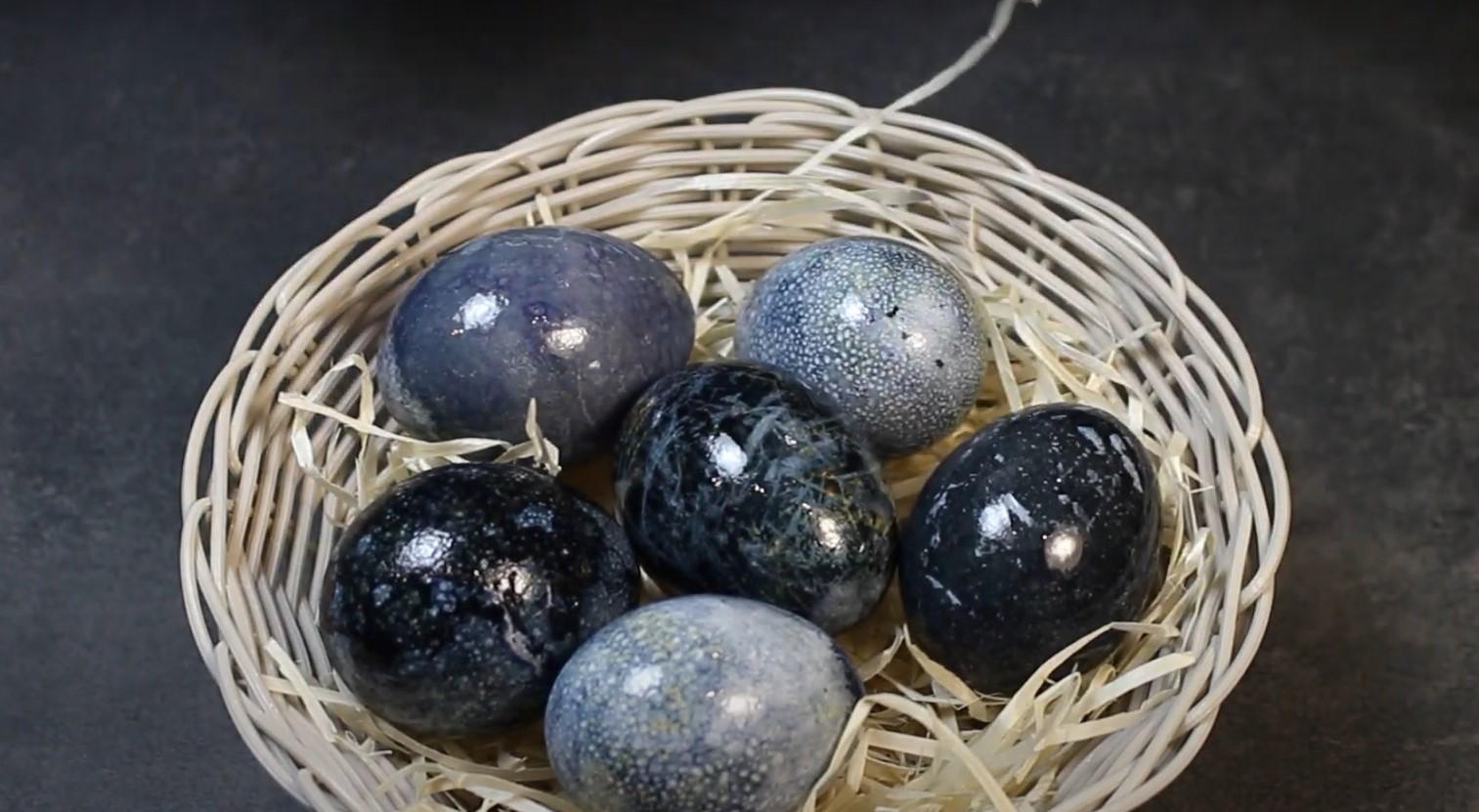
To prevent eggs from cracking while boiling, follow a few rules. First, remove the eggs from the refrigerator and let them warm to room temperature. Place them in a small saucepan filled with cold, salted water. Use plenty of salt – 2 tablespoons per 1 liter of water. Bring the eggs to a simmer over low heat and cook for 10 minutes. Be careful not to boil them too vigorously, as this prevents the eggs from breaking into each other or the sides of the saucepan.
Dyeing Easter eggs with hibiscus and turmeric
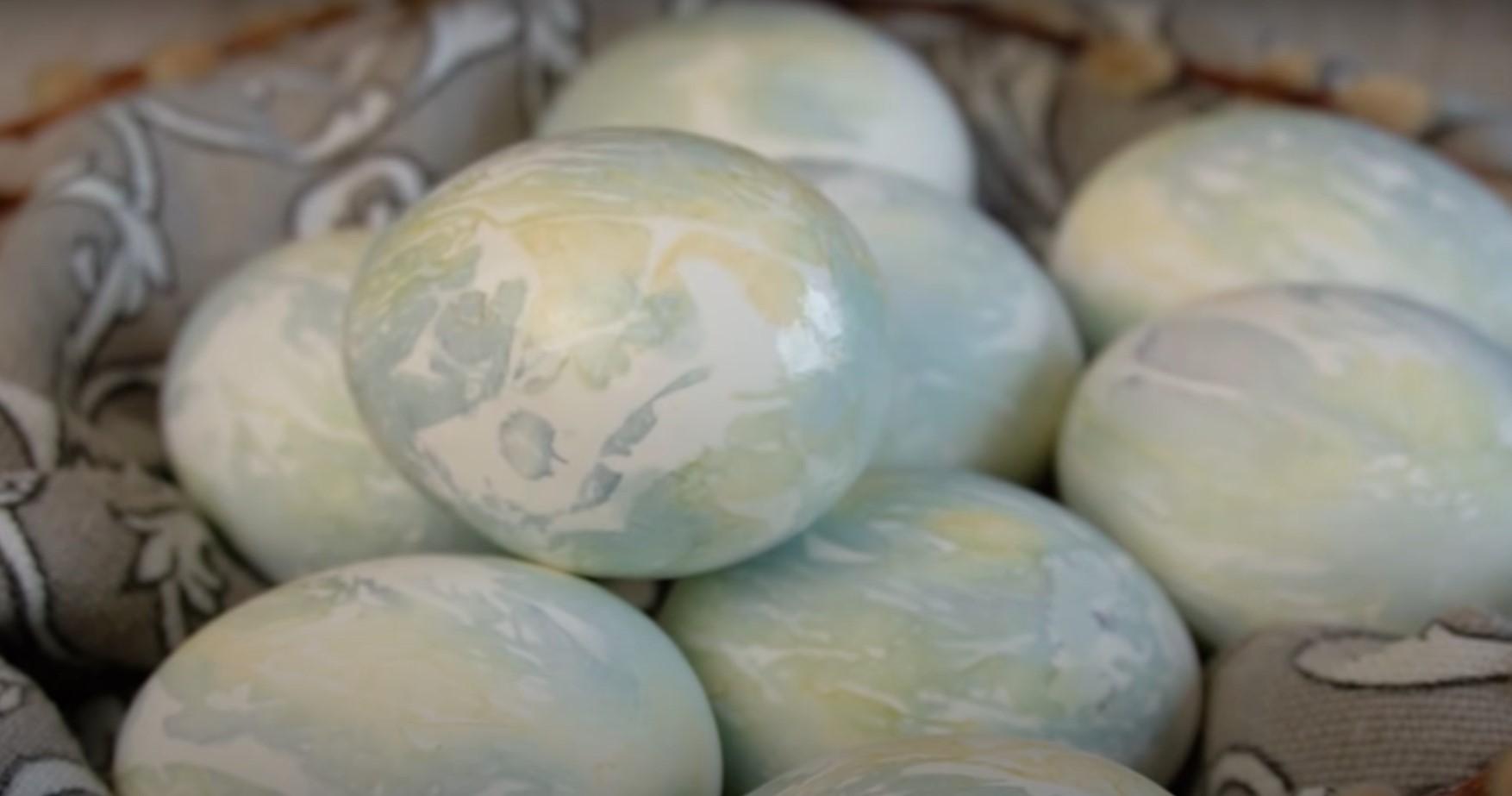
In this recipe, I'll show you how to make delicate, neat, three-colored Easter eggs using natural ingredients – hibiscus and turmeric. The resulting eggs will acquire a blue-yellow-green hue, looking elegant and unique. And the dyeing process won't take much time. Let's experiment.
Ingredients
- Hibiscus tea - 1 tbsp. l.
- Turmeric - 1 tbsp. l.
- Water - 1 glass
- Sunflower oil - 1 tbsp.
Cooking time: 20-30 minutes
Servings: 10
Step-by-step recipe
Step 1
Wash the eggs thoroughly. Boil them in salted water for 8-10 minutes.
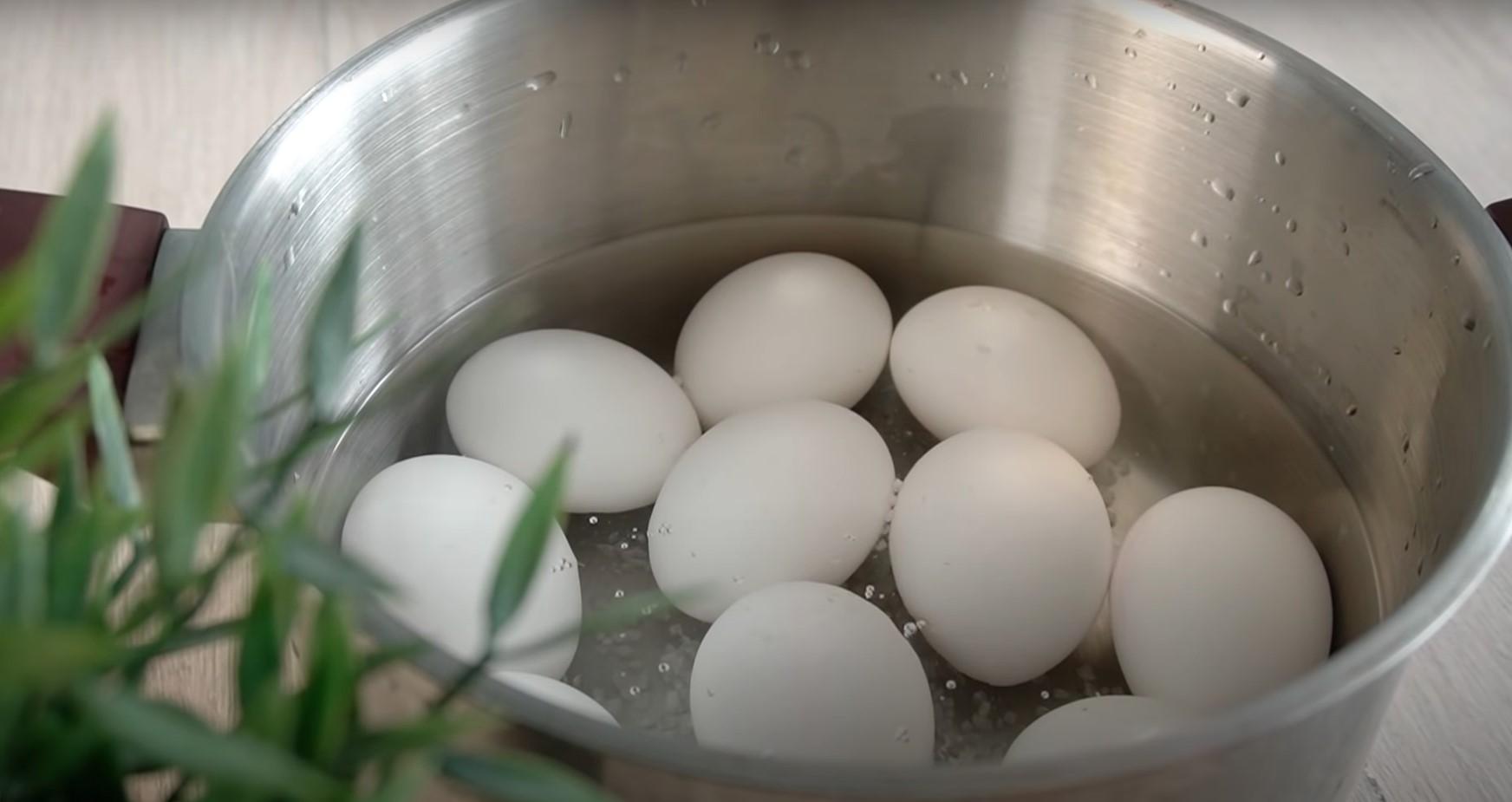
Step 2
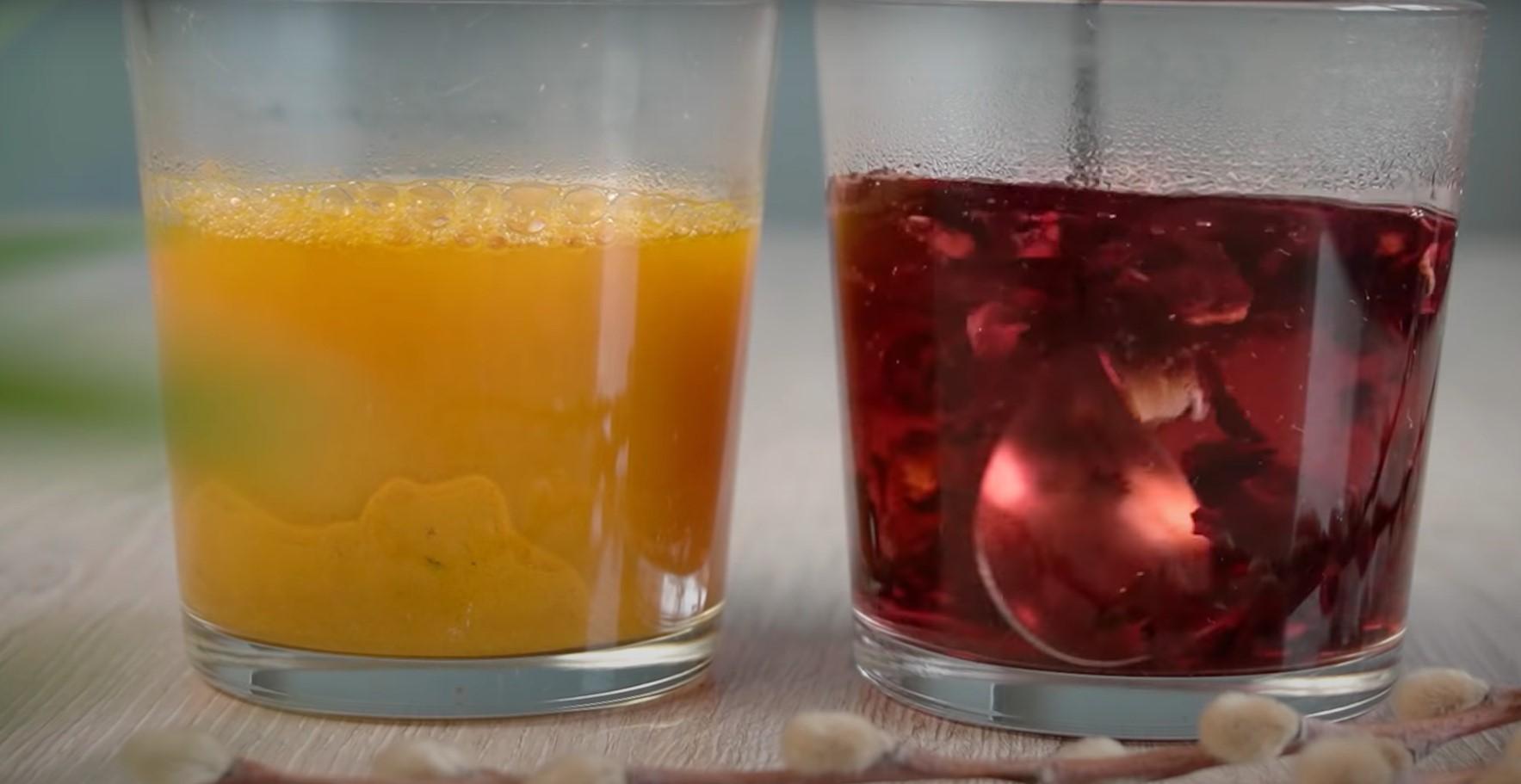
Pour hibiscus into one container and turmeric into another.
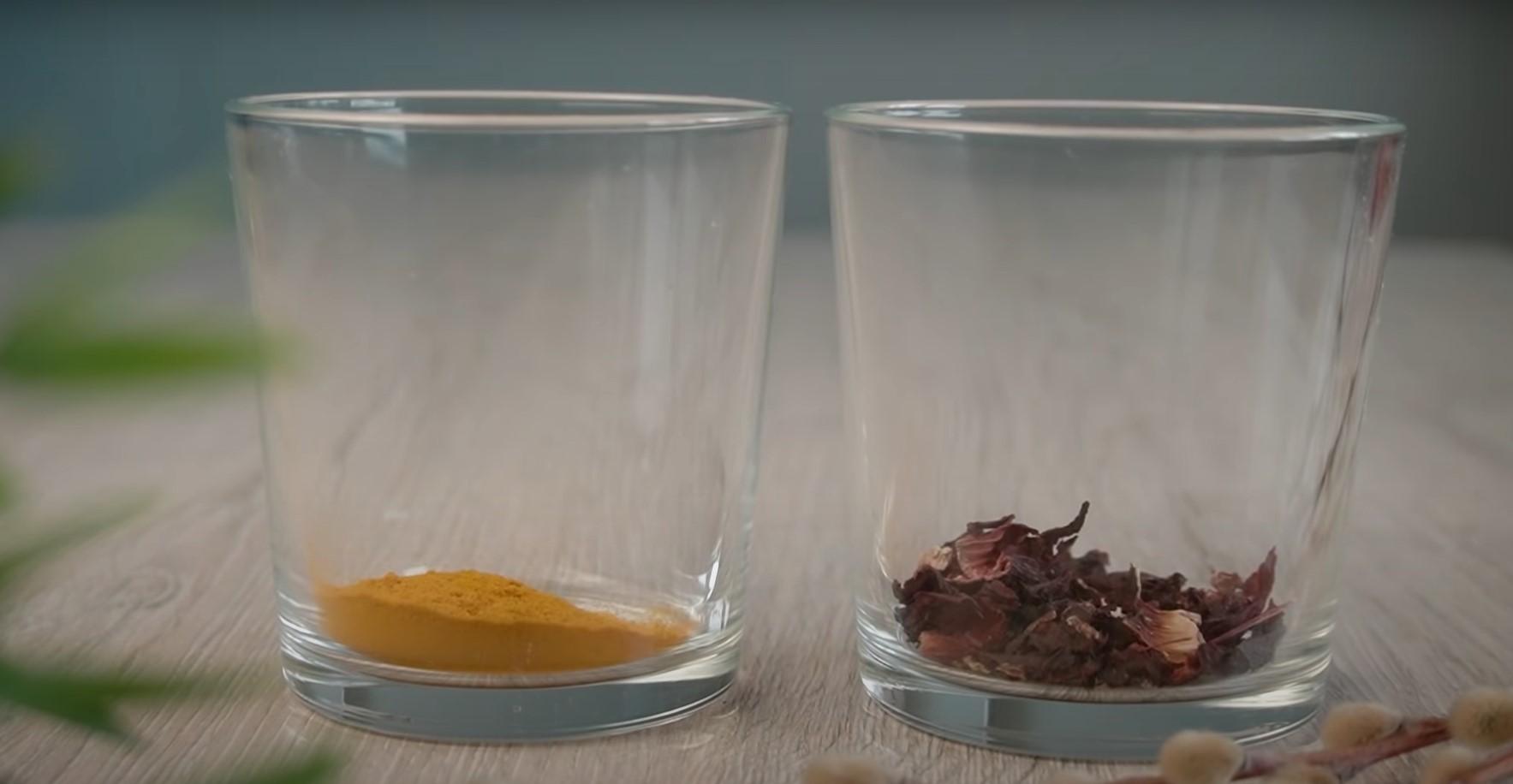
Step 3
Pour boiling water over, stir and let steep for 5-10 minutes.
Step 4
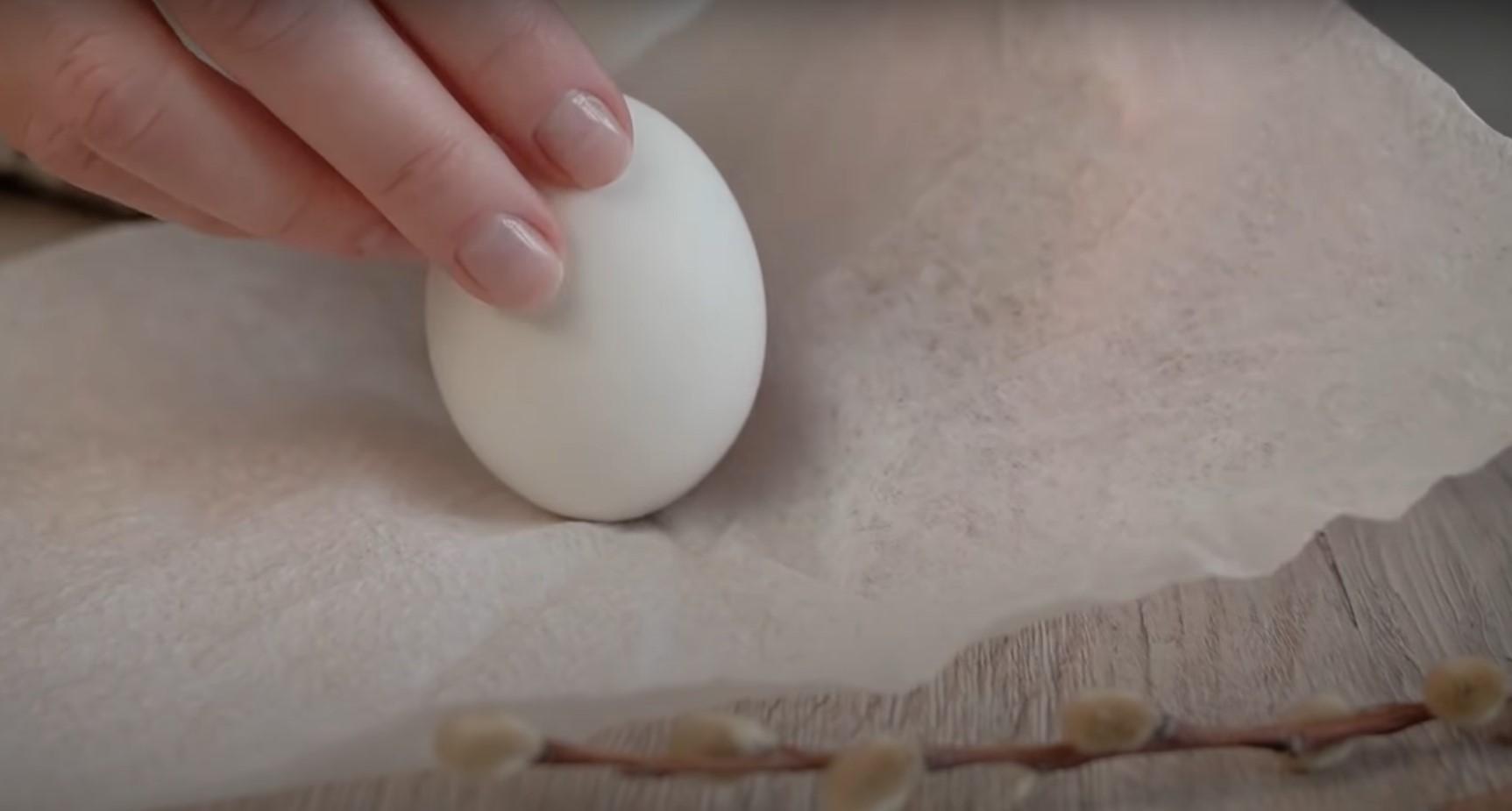
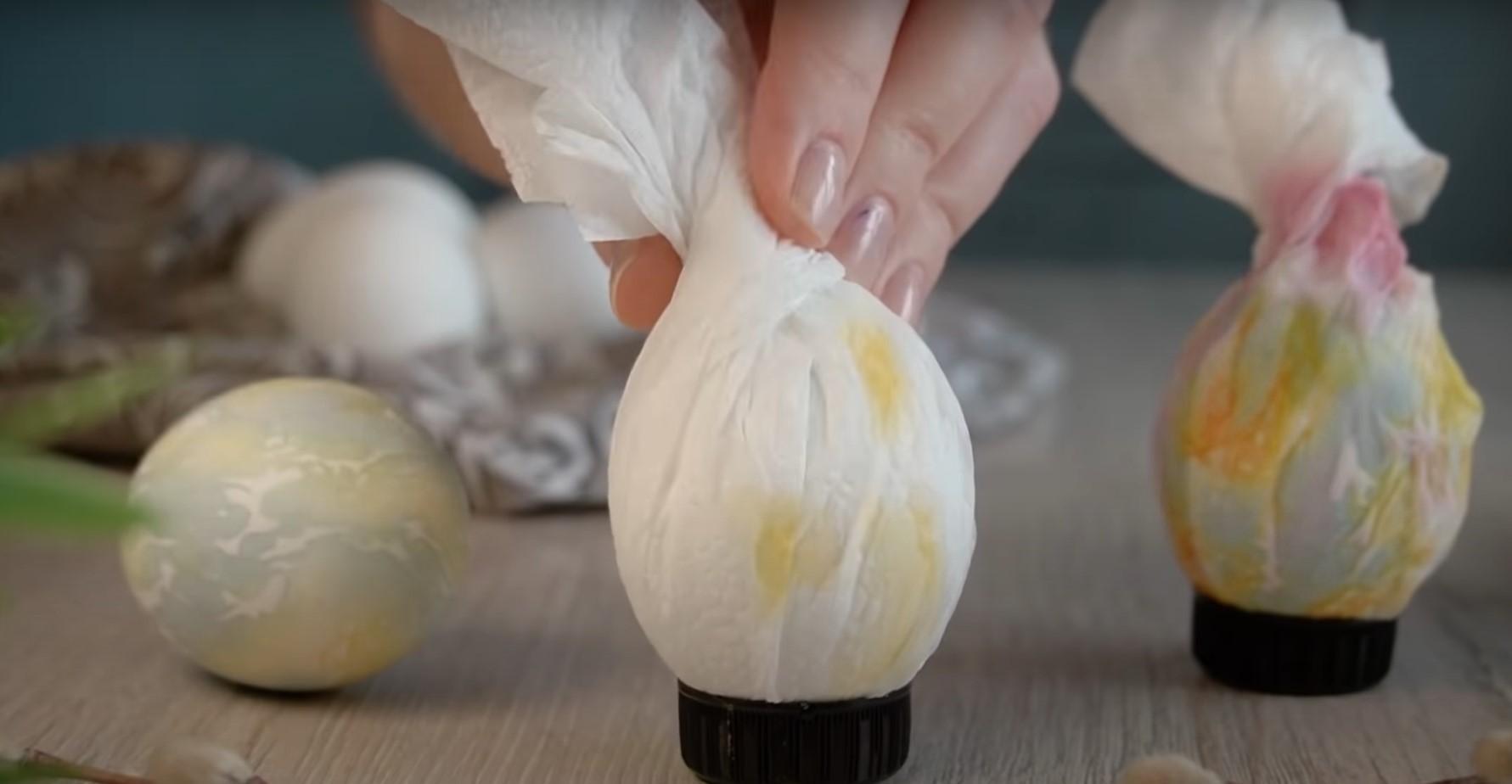
You can dye the eggs while they're still hot. Wrap the egg in a napkin.
Step 5
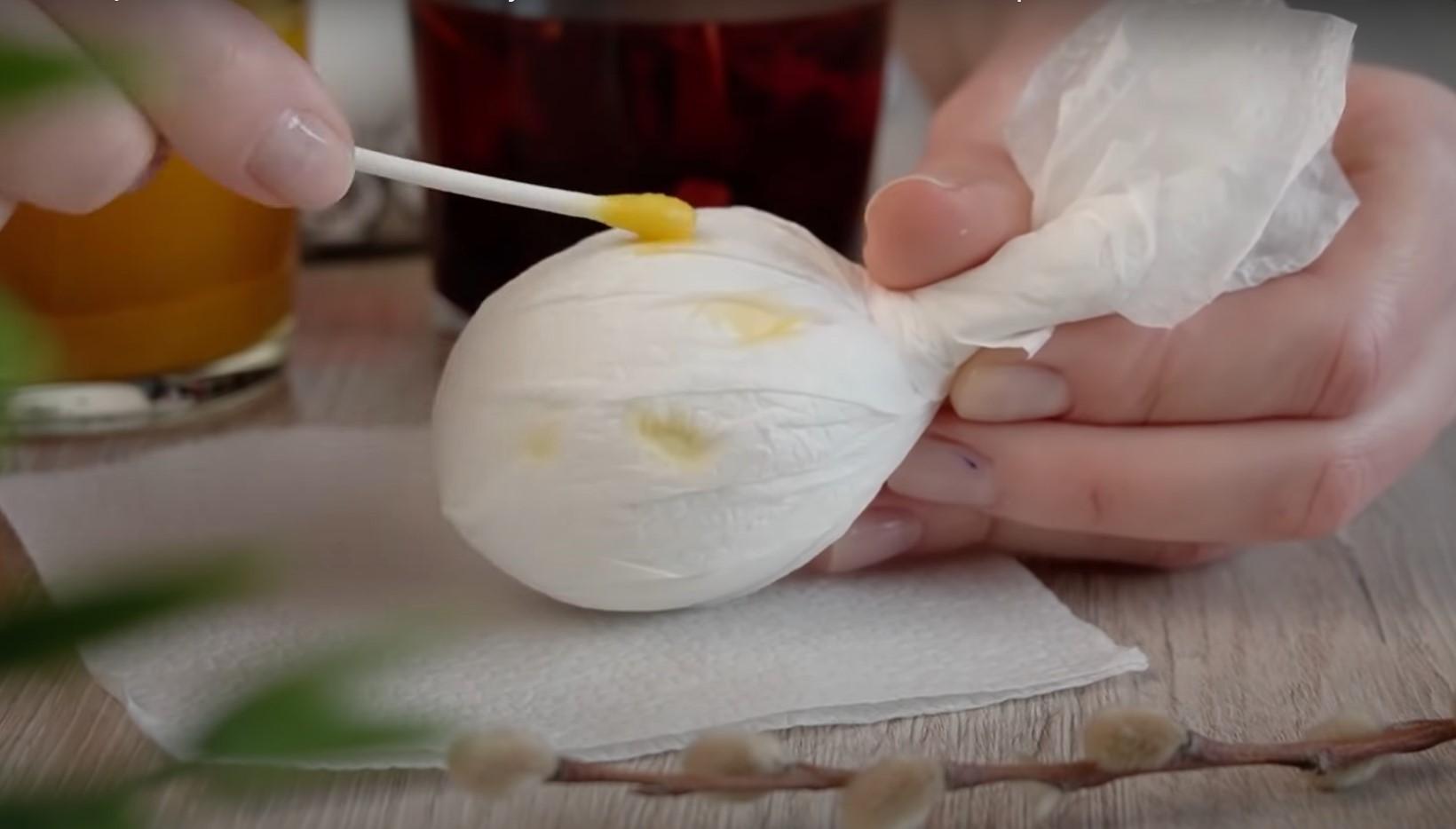
Use a cotton swab to dye the egg, dipping it in one color, then another. Repeat this process with all the eggs.
Step 6
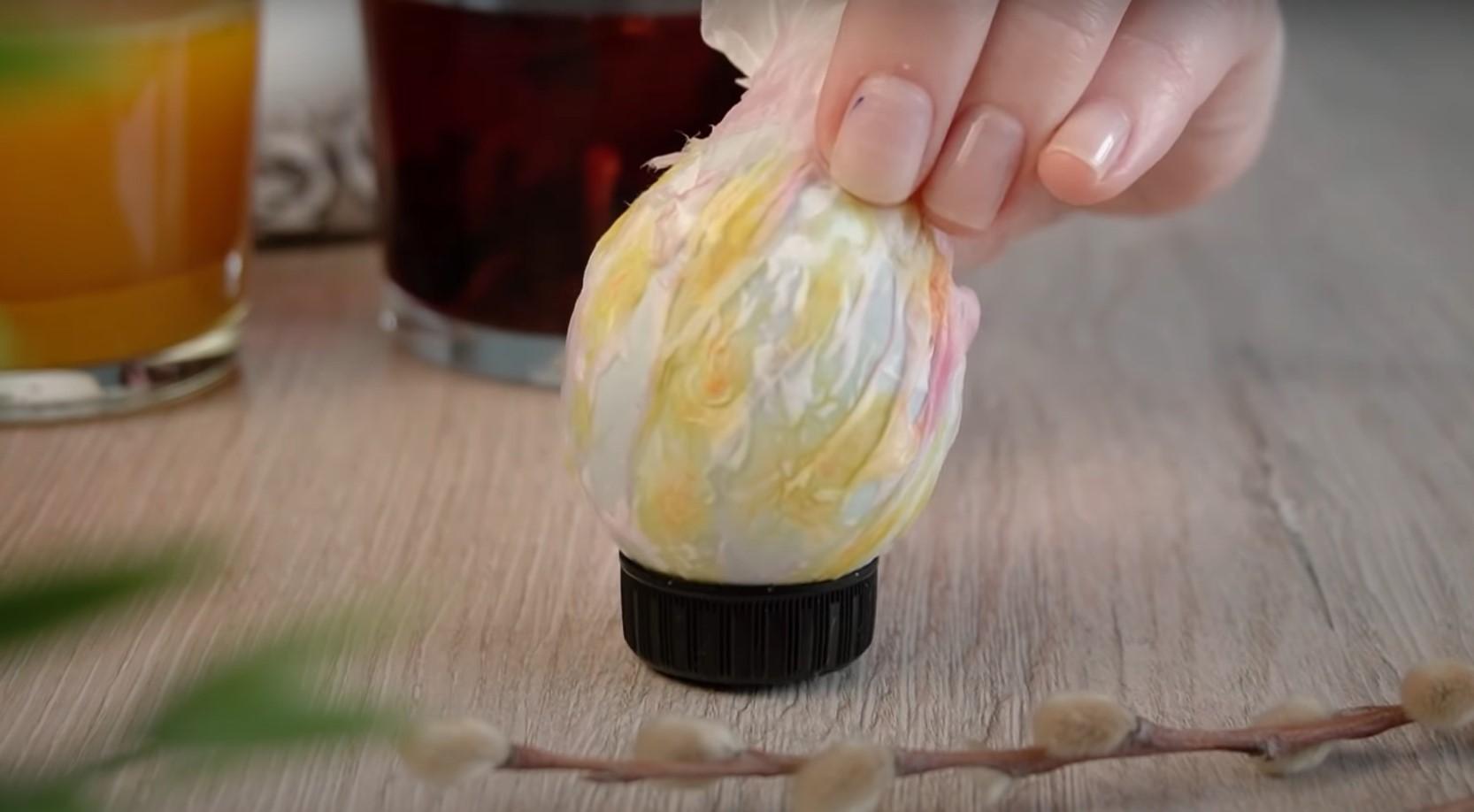
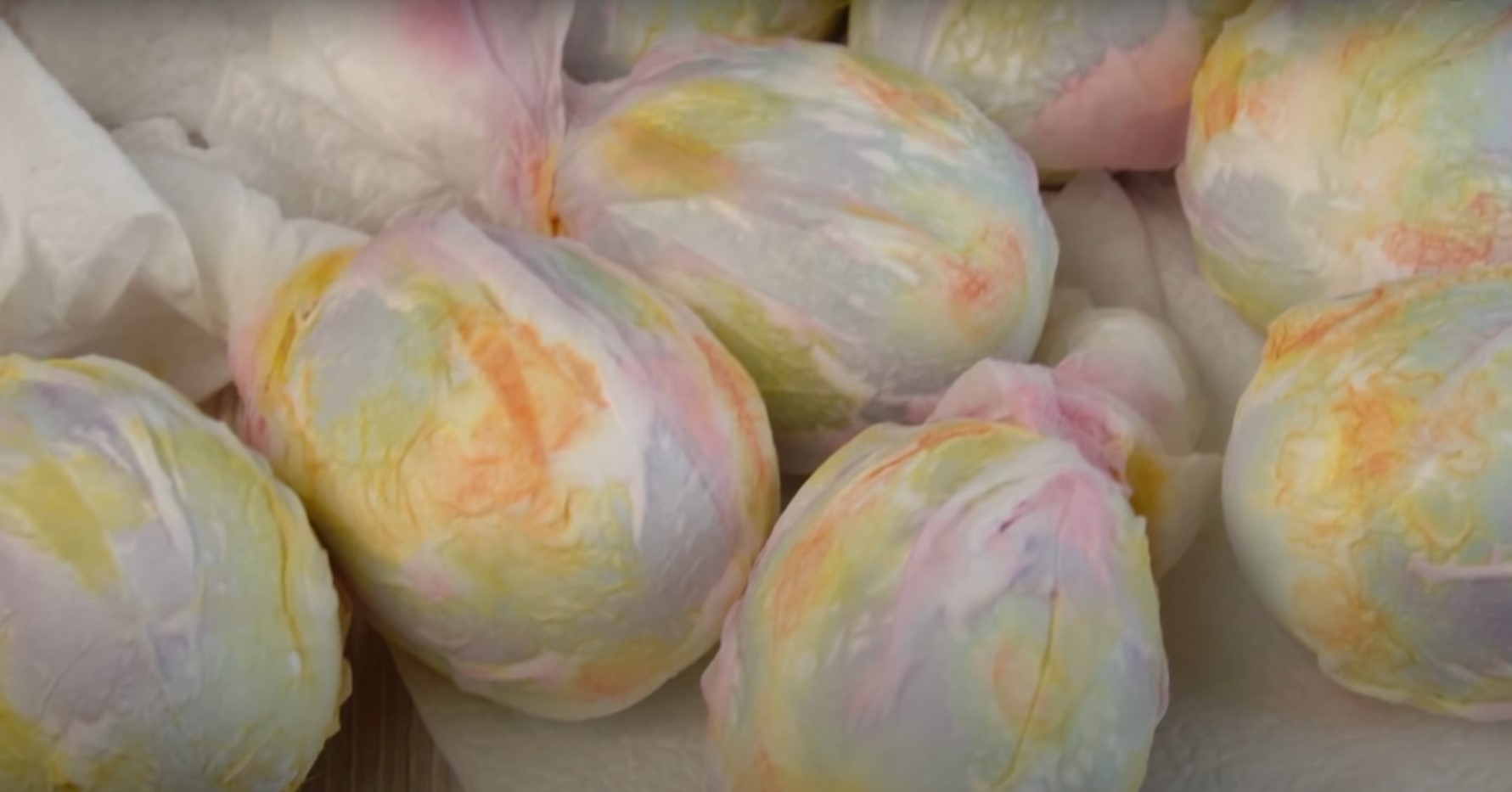
Leave the eggs in the napkins for 5 minutes. Then you can unwrap them.
Step 7
Coat the eggs with sunflower oil.
Golden eggs dyed with hibiscus
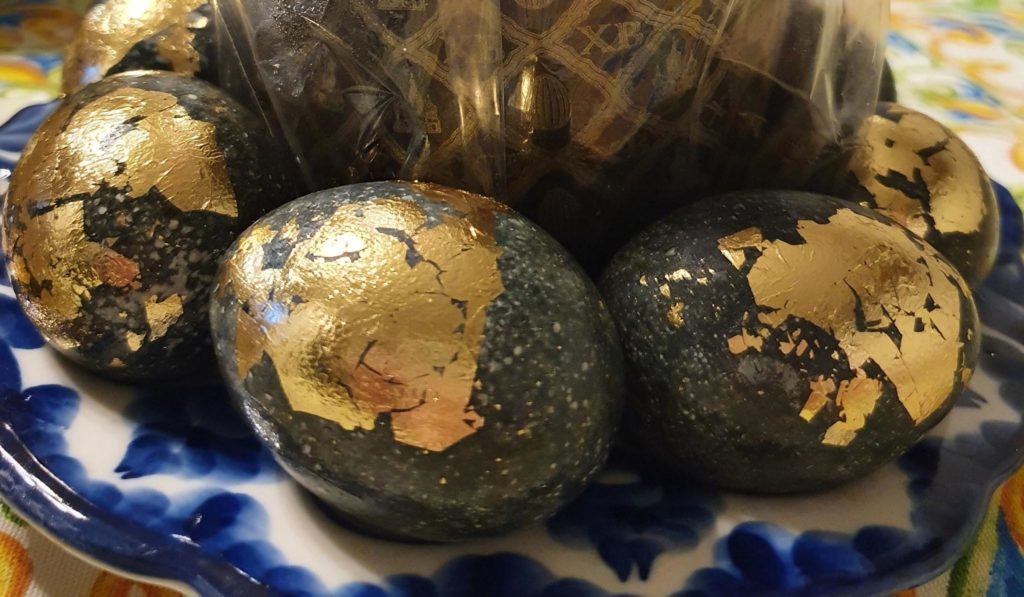
If you believe Easter eggs should look not only beautiful and original, but also rich, you'll love this hibiscus tea dyeing option. Besides the cosmic pattern created with hibiscus tea, we'll also decorate them with gold leaf. The shimmer of gold will not only add charm to your painted eggs but also make them truly festive and festive.
Ingredients
- Eggs - 6 pcs.
- Hibiscus tea – 80 g
- Vinegar - 3 tbsp.
- Garlic - 4-5 cloves
- Potal (gold leaf)
Cooking time: 2-10 hours
Servings: 6
Step-by-step recipe
Step 1
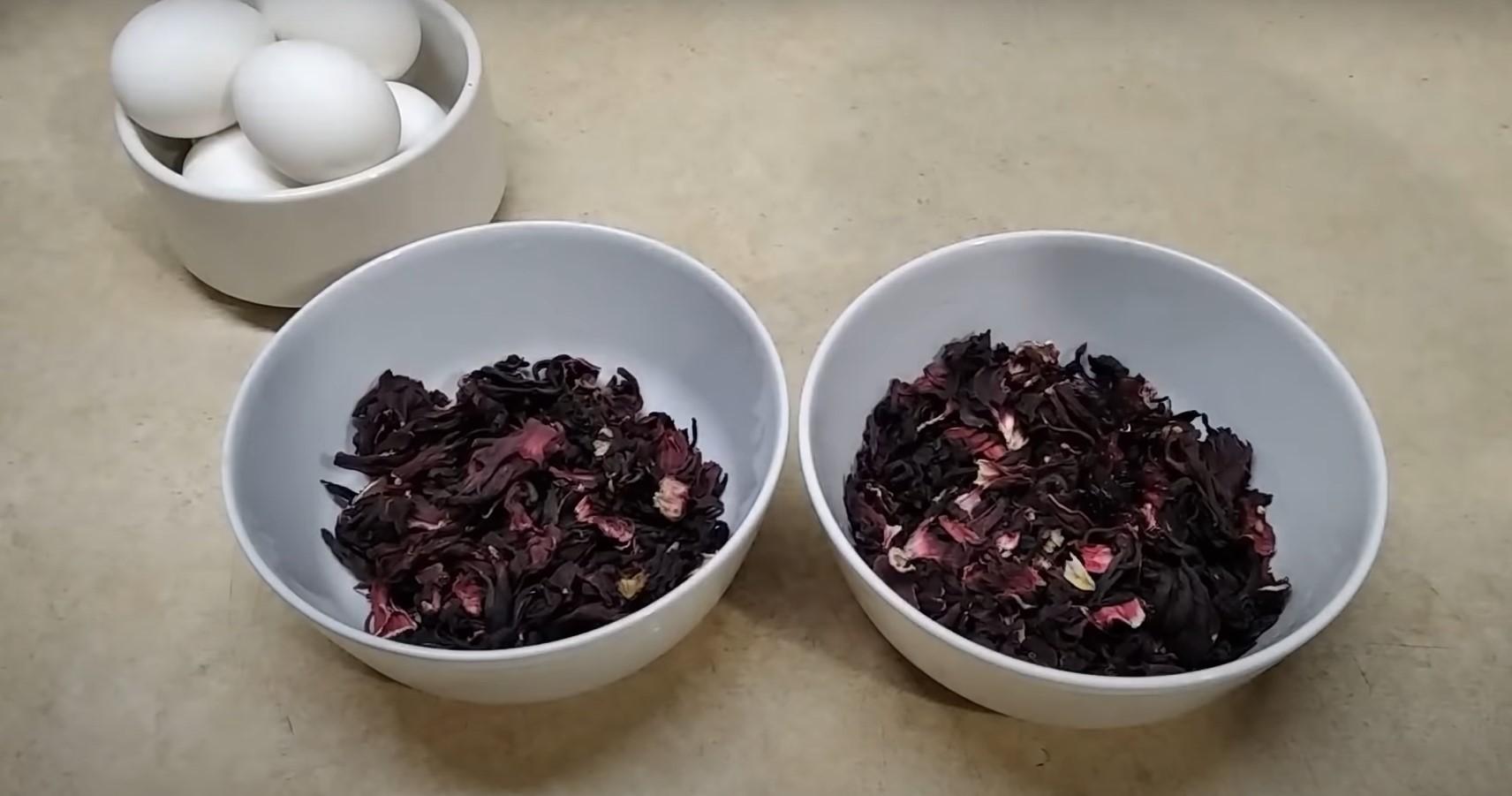
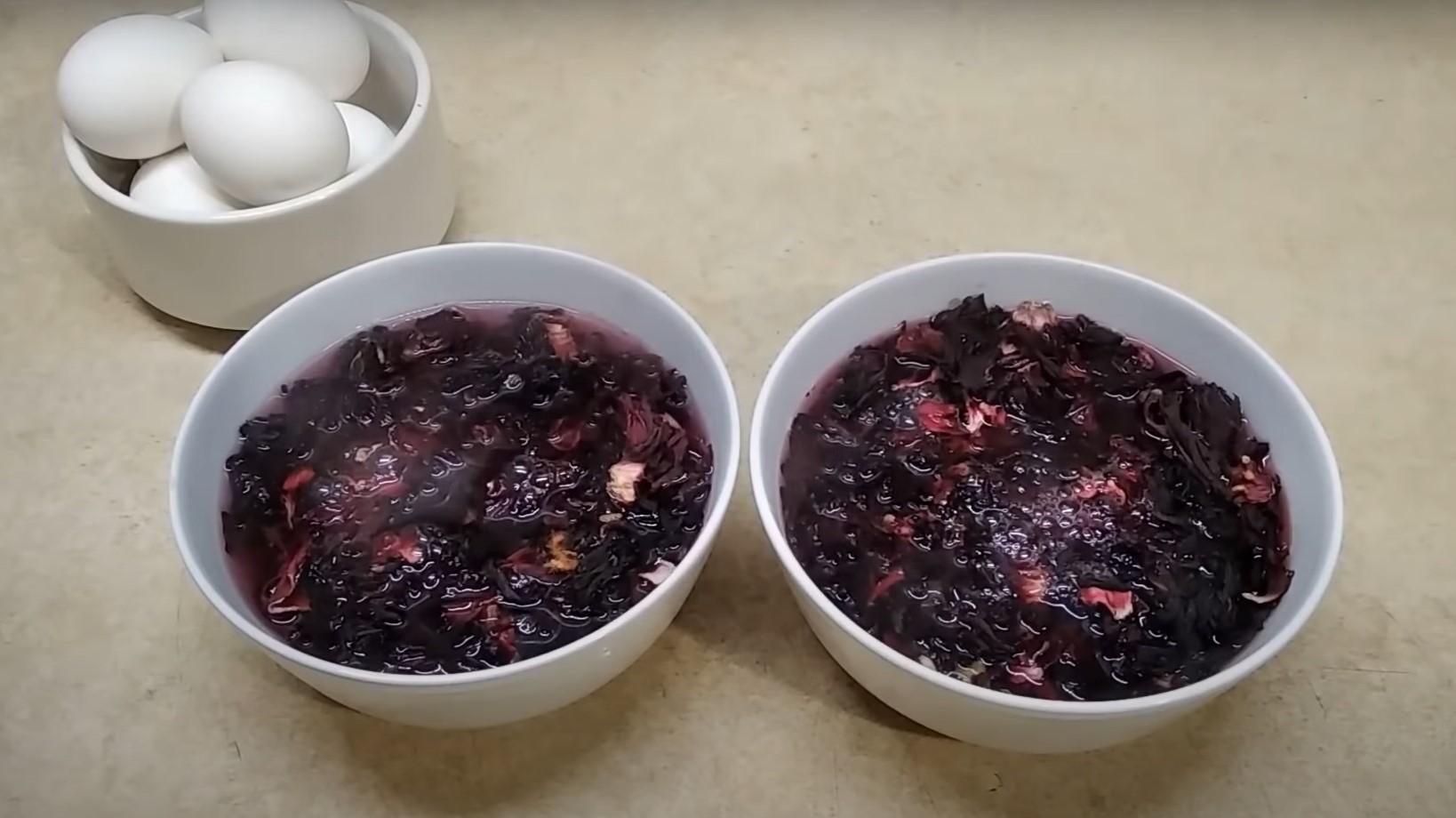
Boil the eggs until done. Divide the tea equally into two containers.
Step 2
Pour boiling water over the tea.
Step 3
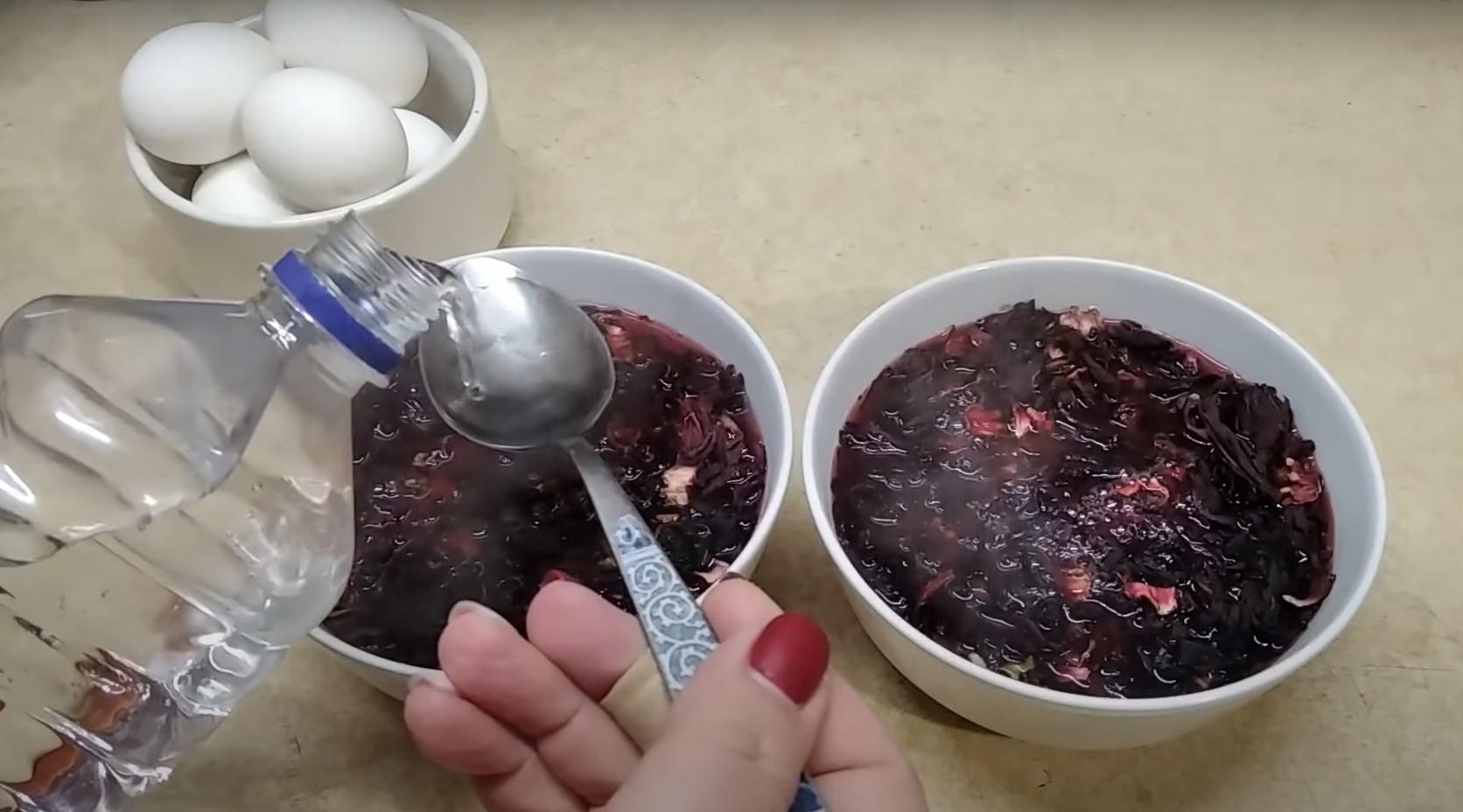
Add vinegar to one of the containers. Stir.
Step 4
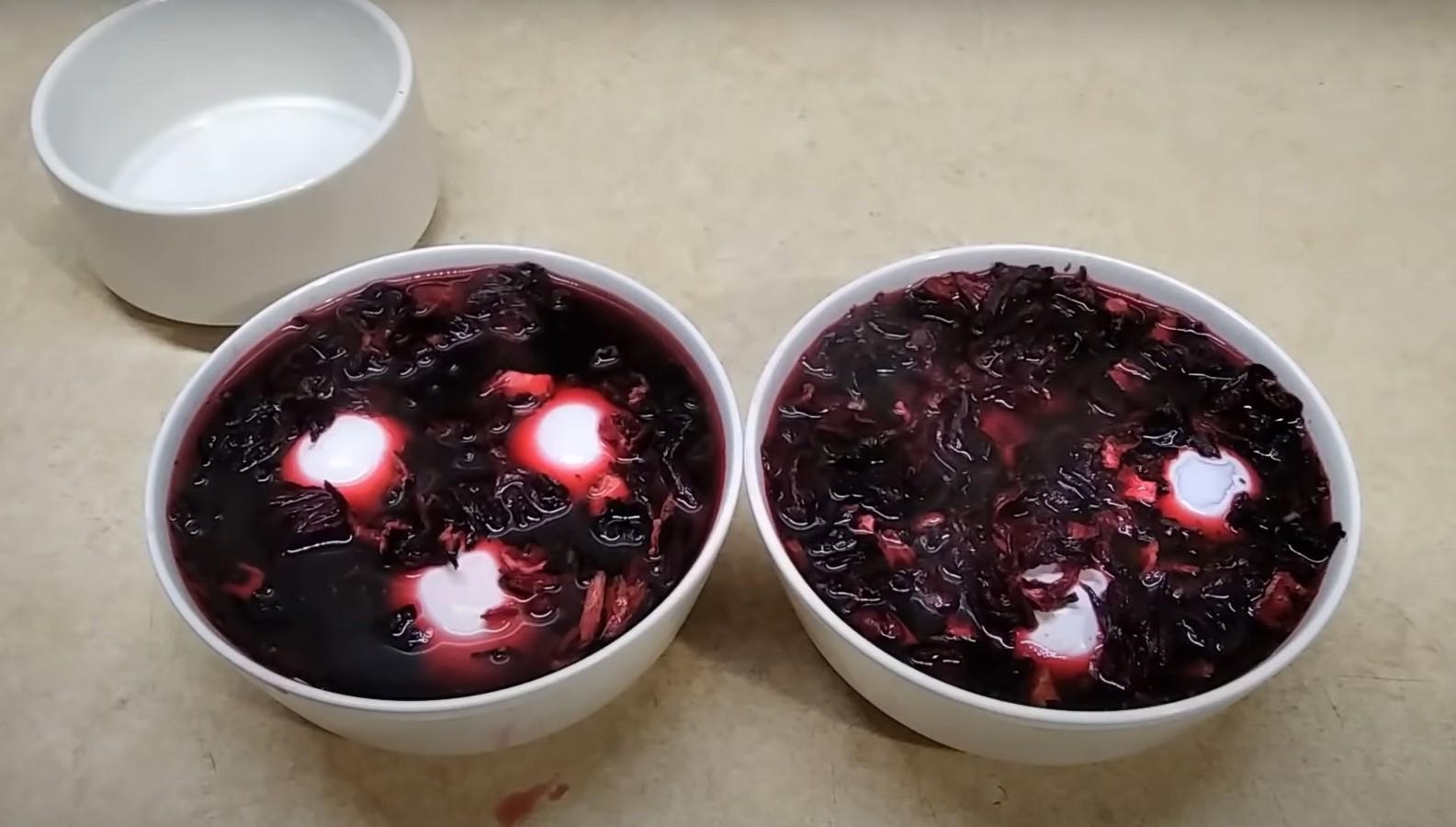
Place the eggs in the broth. Three in one, three in the other. Remove one egg at a time after two hours, the rest after eight hours.
Step 5
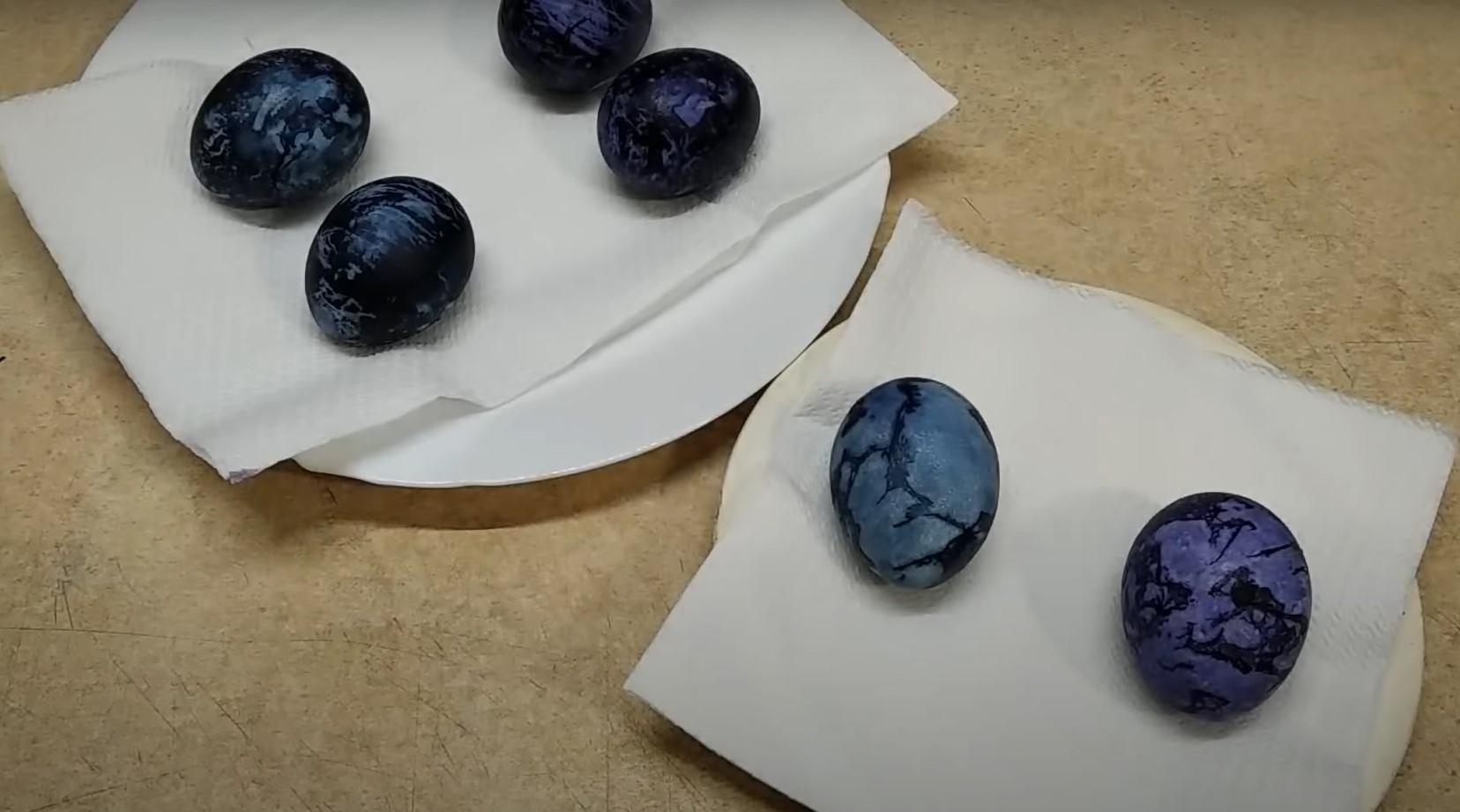
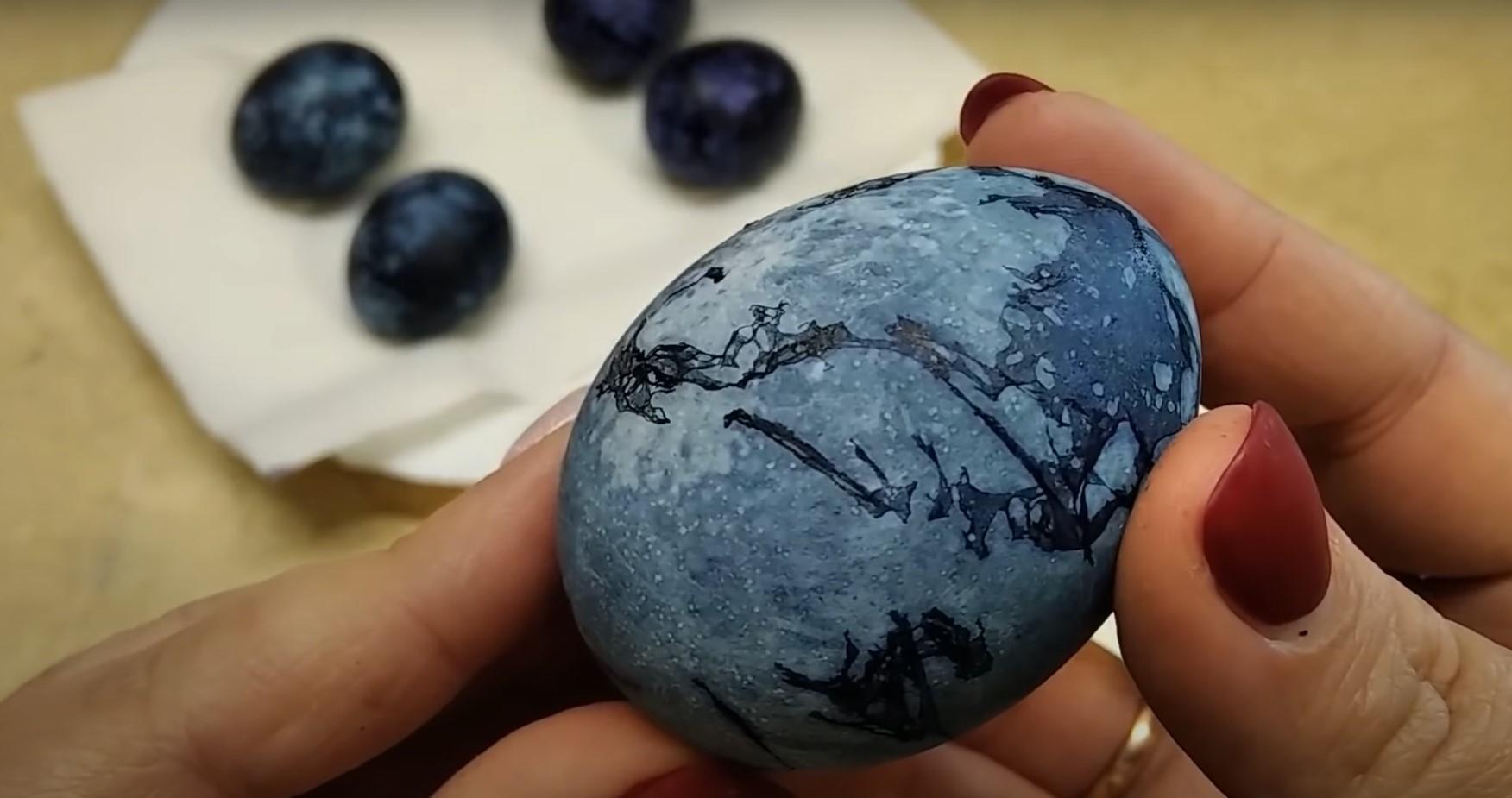
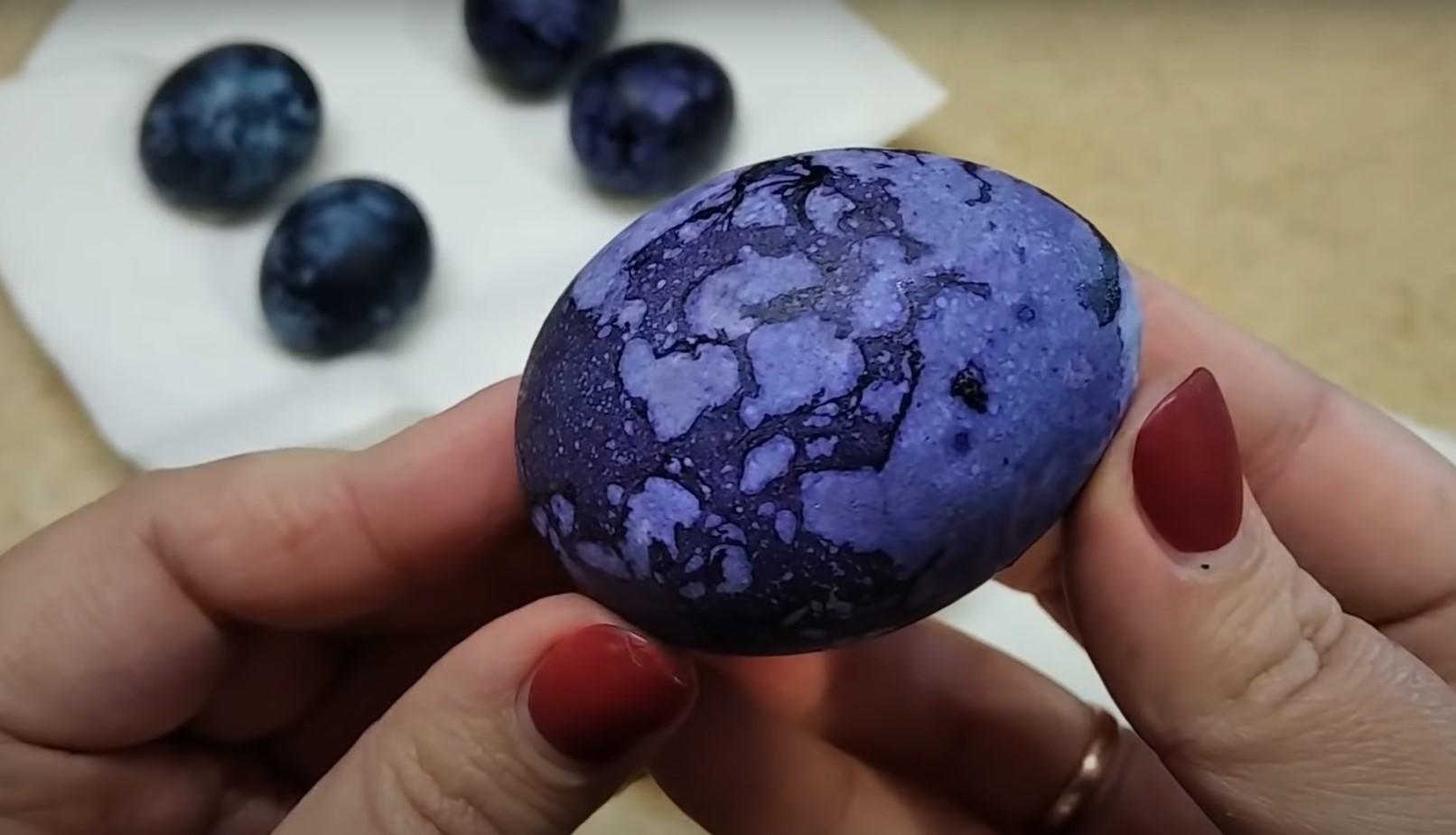
Dry the eggs on paper towels. The photo shows that the coloring of the eggs that sat for two hours is less intense and not as vibrant.
Step 6
This is how eggs differ in color. In a vinegar-based broth, they turn blue. In a broth without vinegar, they turn slightly purple.
Step 7
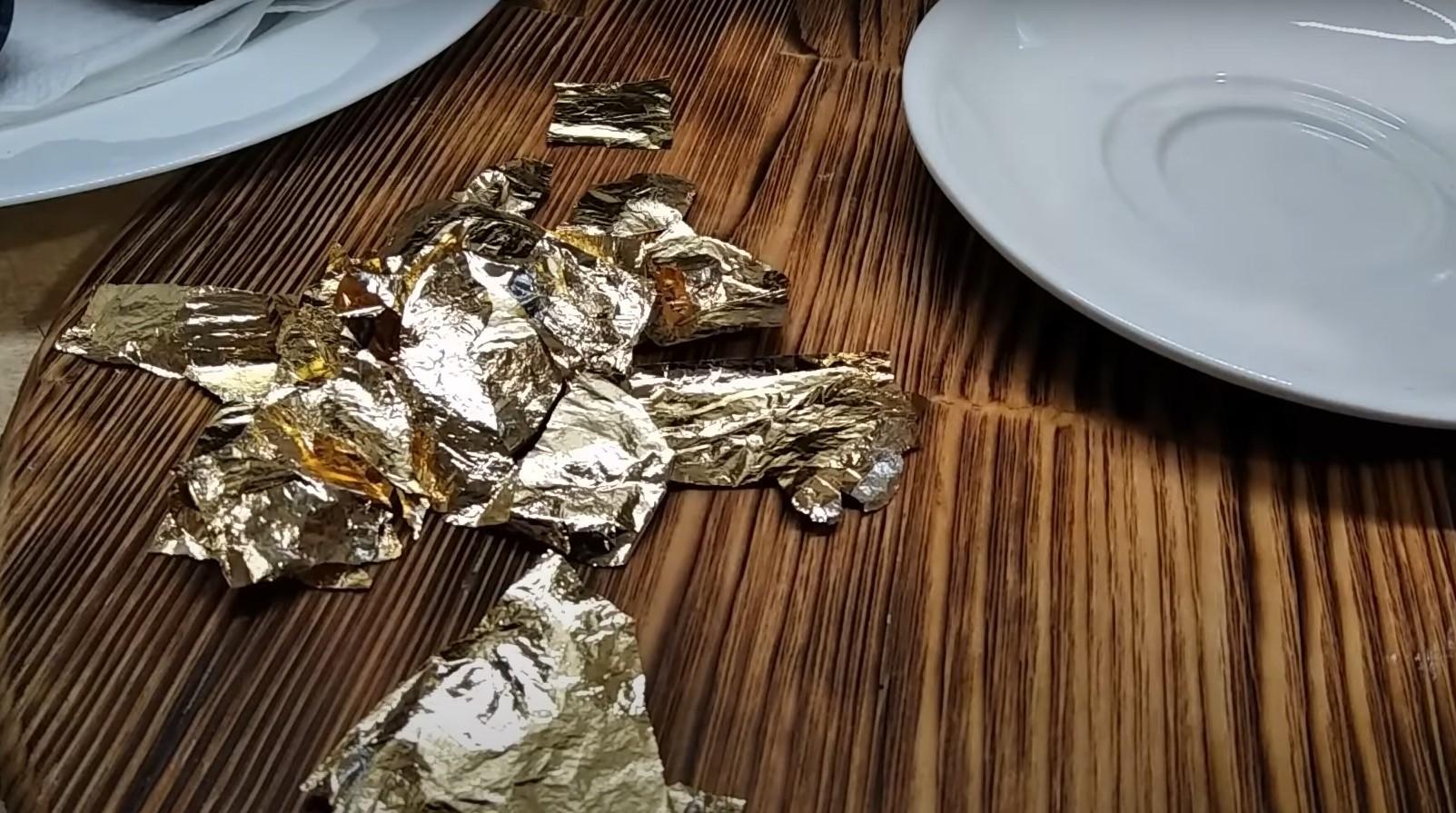
We grind the gold leaf.
Step 8
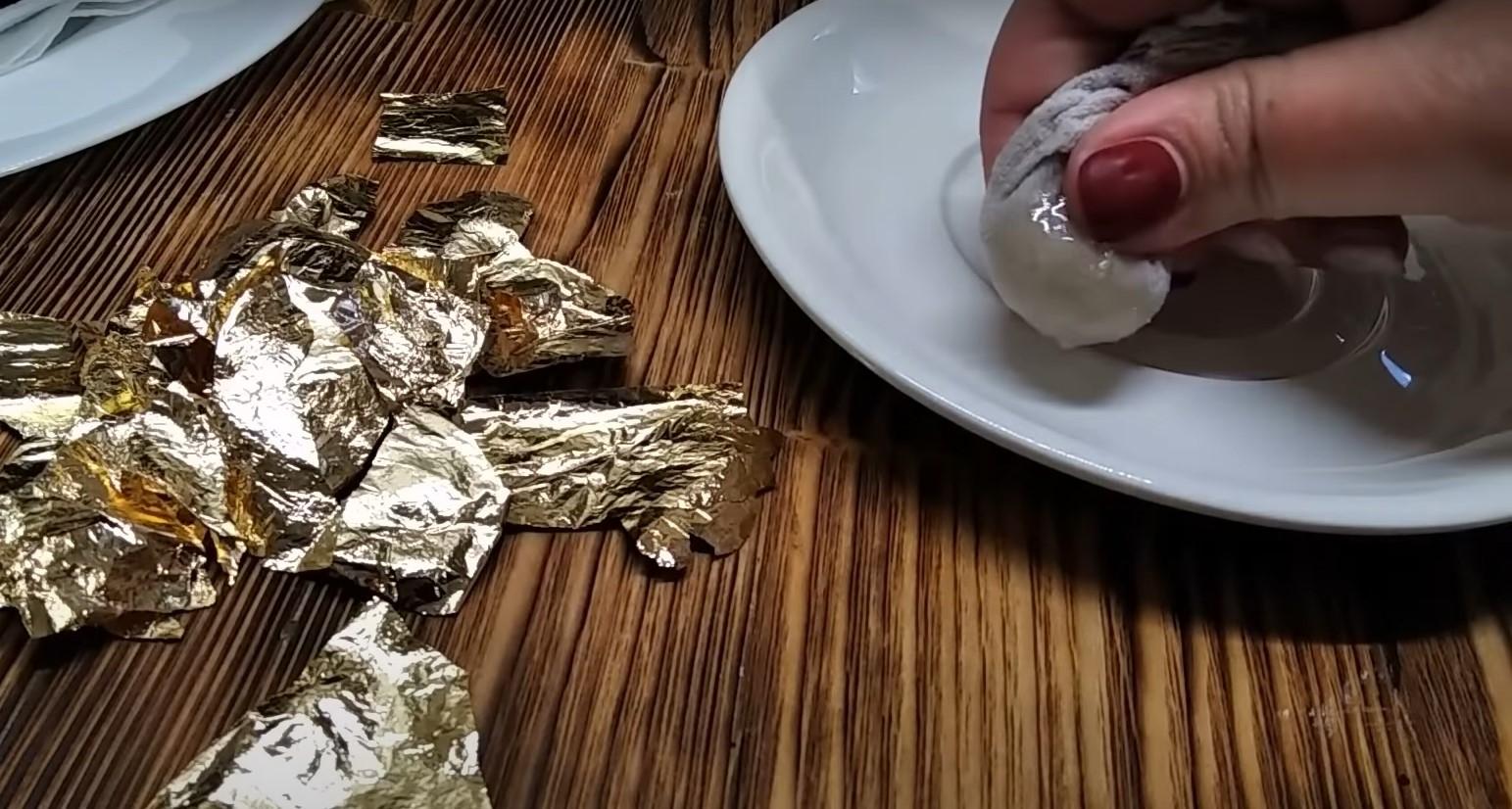
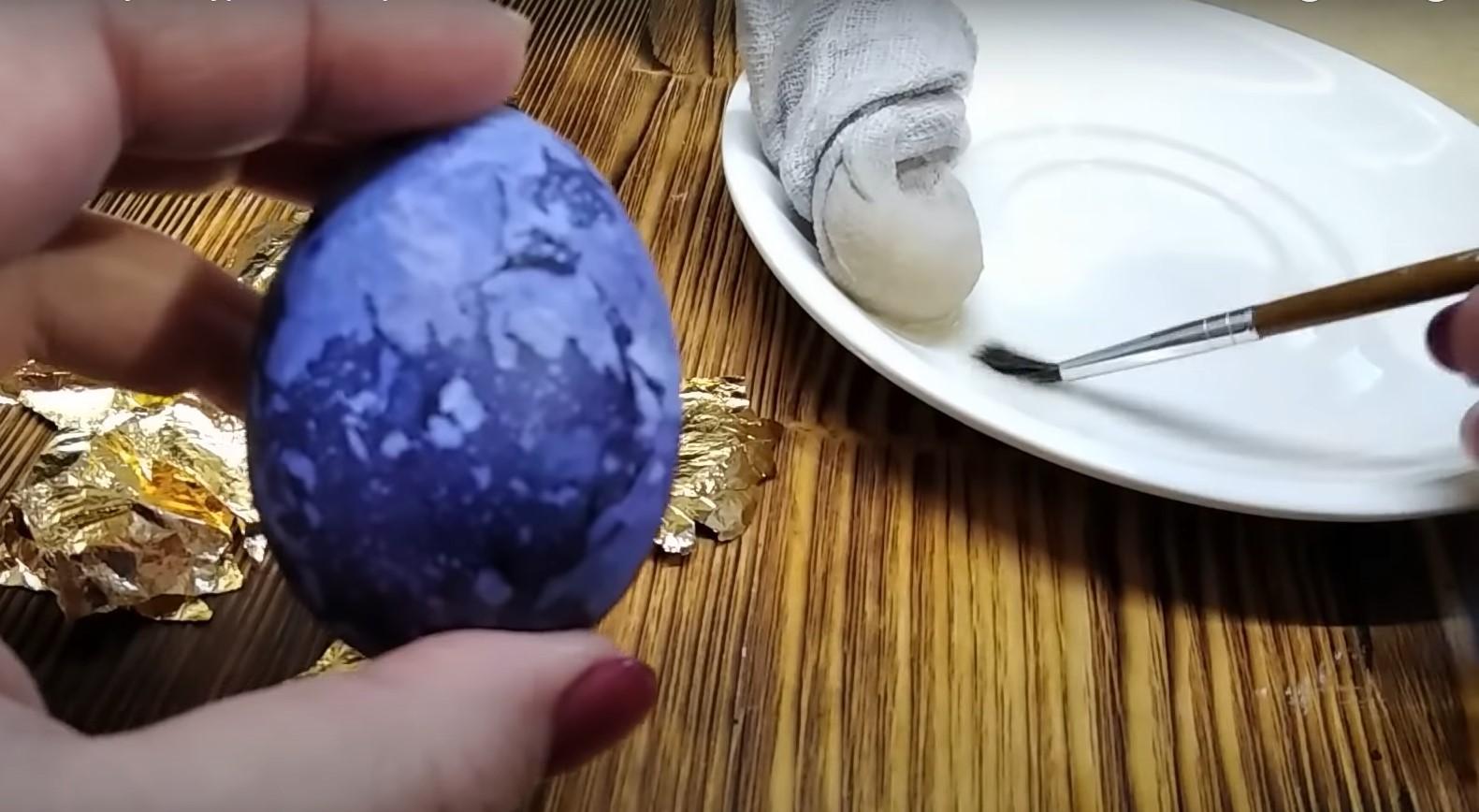
Place the garlic in cheesecloth folded in several layers and, twisting it, squeeze out the juice.
Step 9
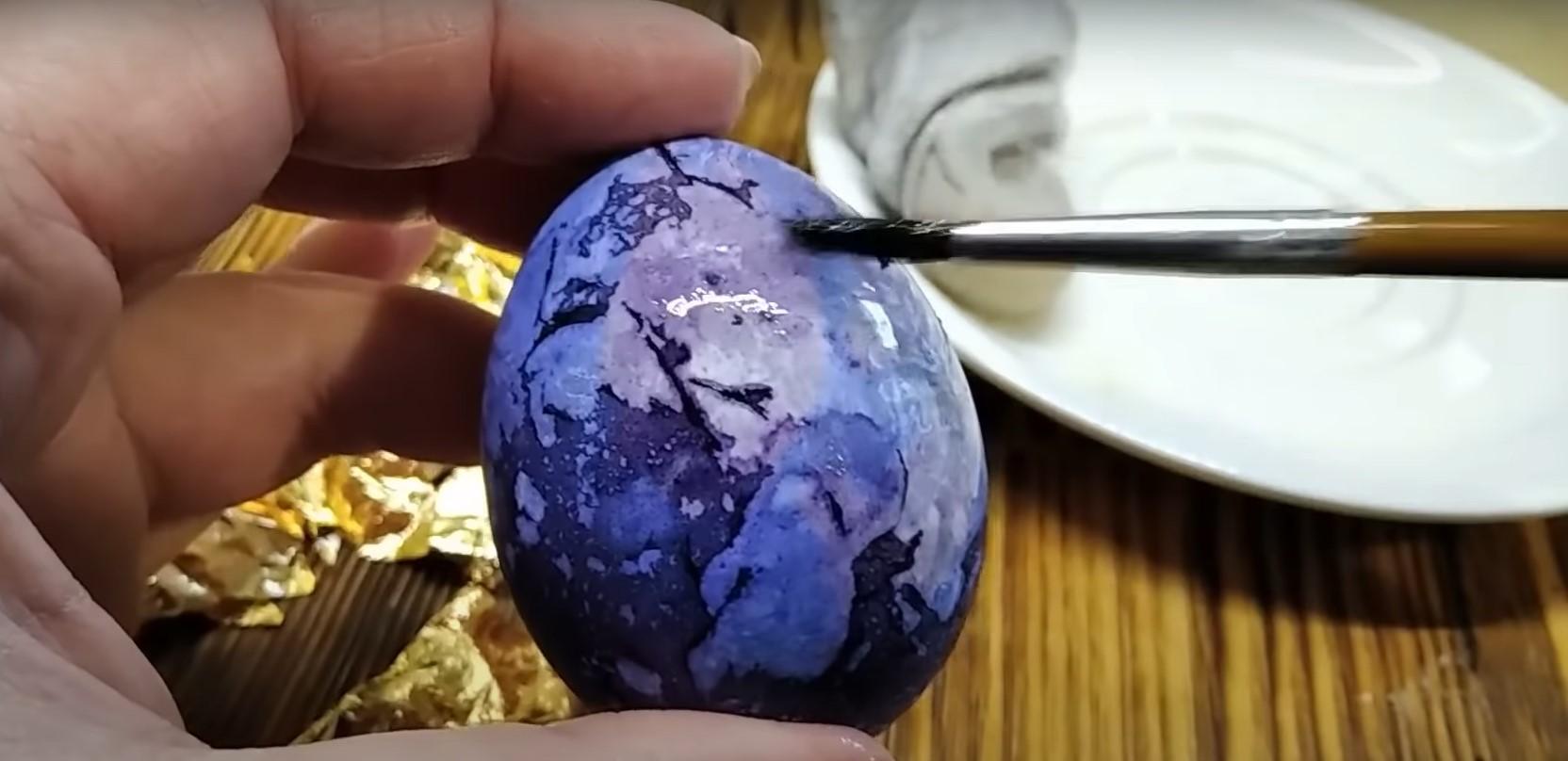
Dip a brush into garlic juice and randomly coat the egg with the juice.
Step 10
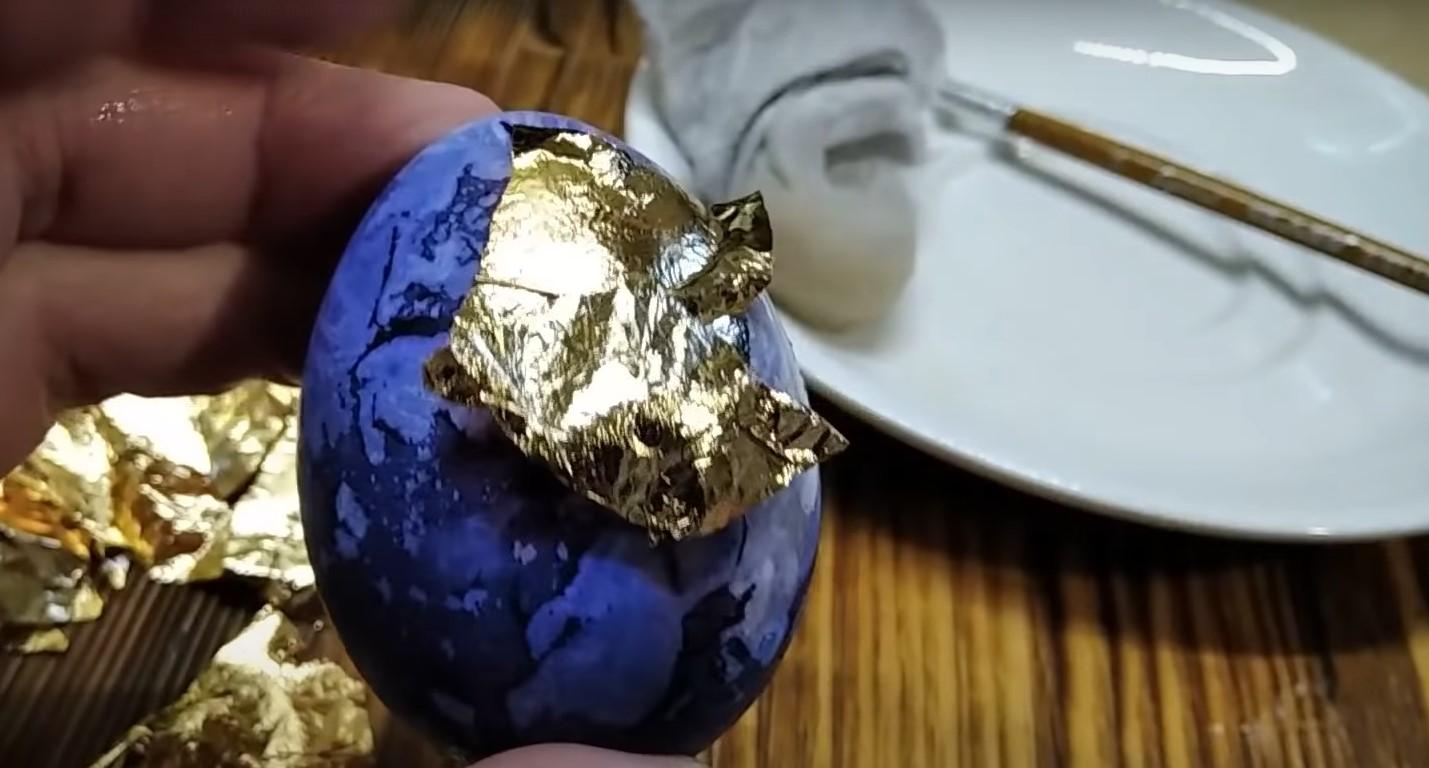
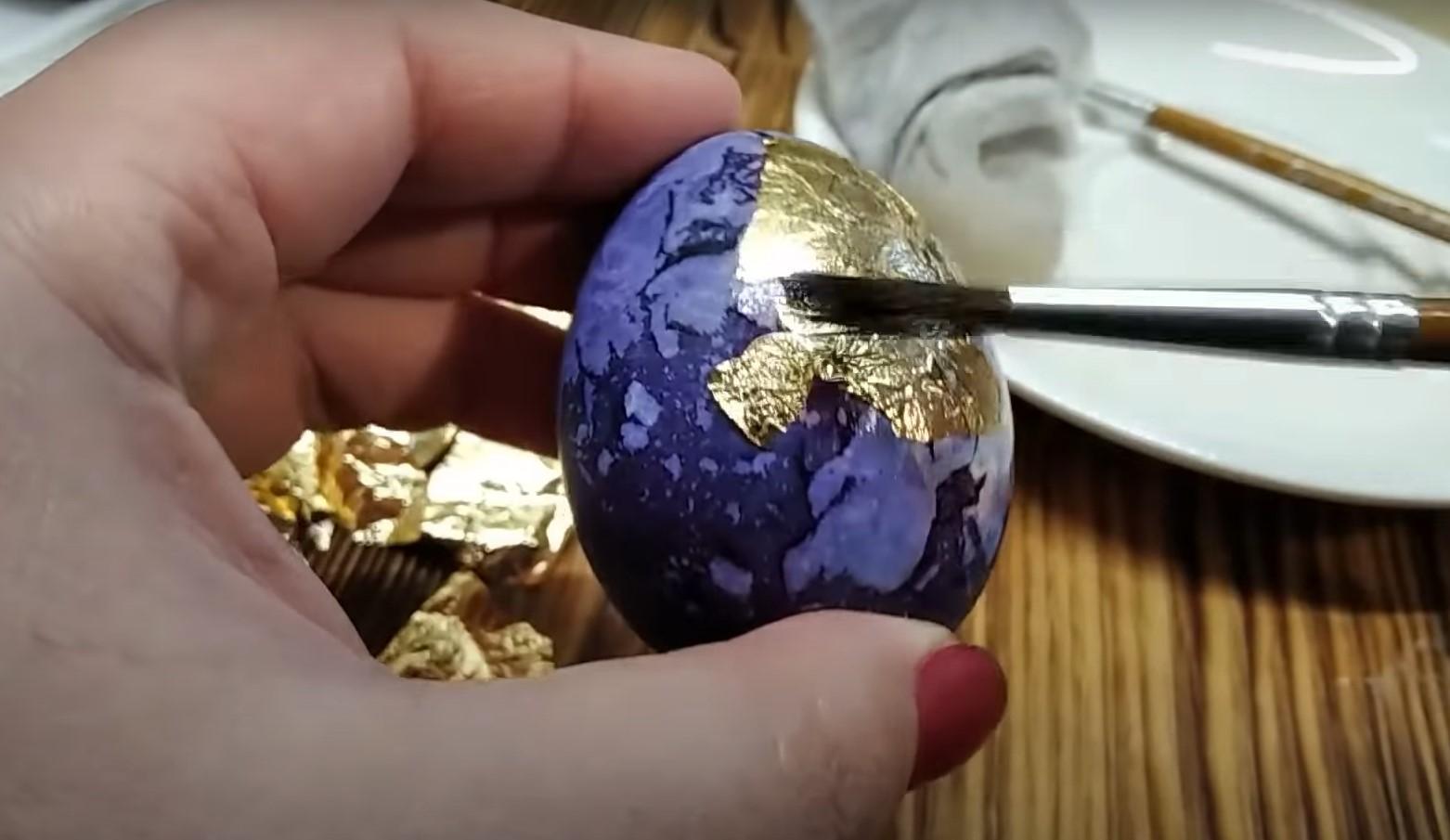
Take the gold leaf and apply it to the areas where the garlic juice was applied. Using a clean brush, smooth out the "gold," brushing away any excess pieces.
Step 11
We do the same with all the eggs. Here are the beautiful Easter eggs we got.
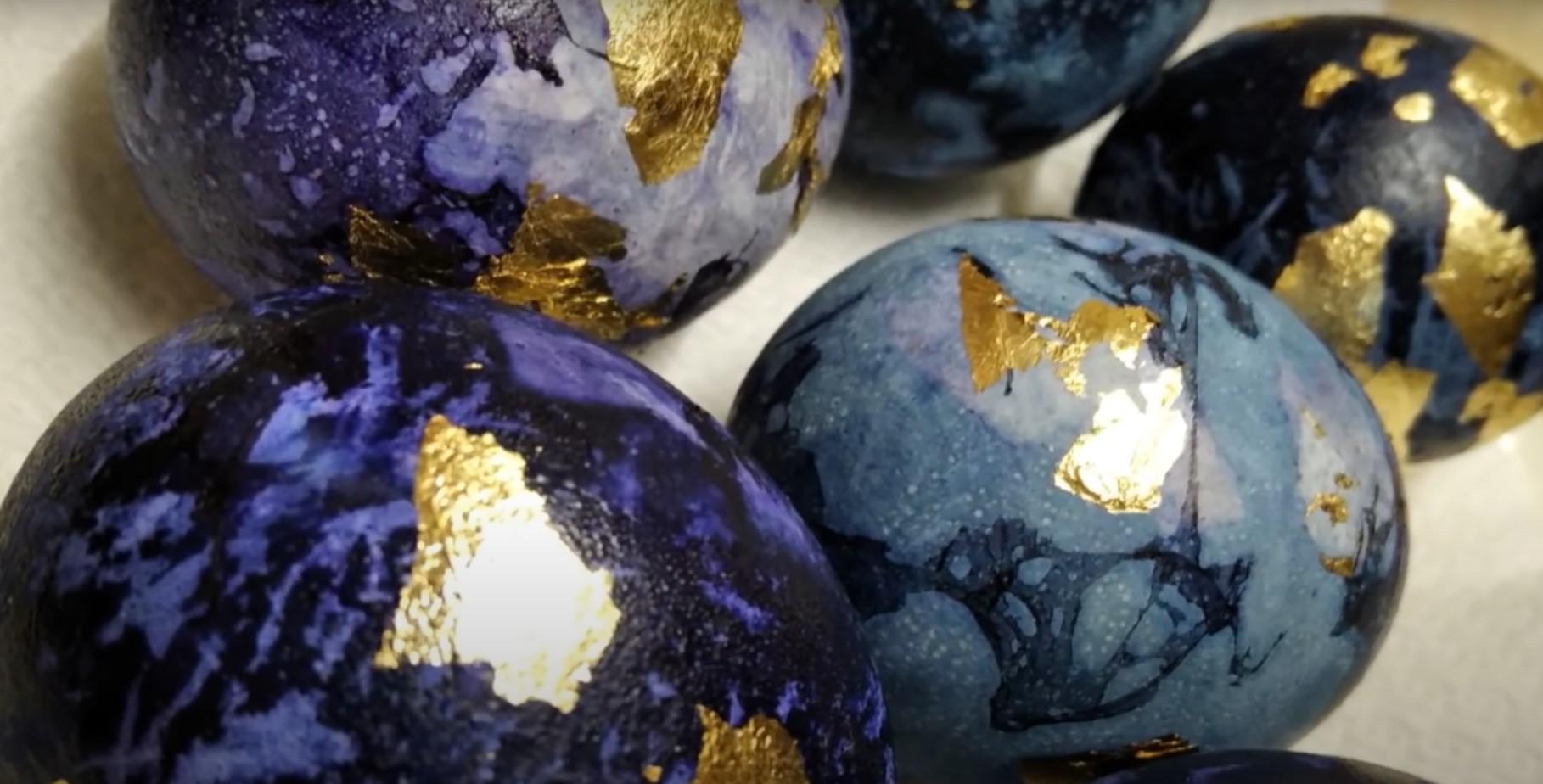
Beautiful photos of space eggs dyed with hibiscus tea
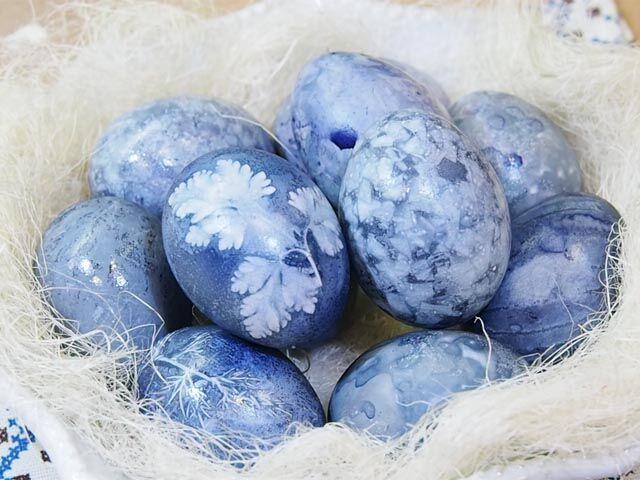
As you can see, hibiscus tea can be used to create original and beautiful Easter eggs. By varying the type of tea petals (large or small), the length of time you soak the eggs in the infusion, and using additional decorative elements and techniques, you can achieve a unique result every time. I've compiled a selection of beautiful photographs of cosmic eggs created using hibiscus tea. Perhaps some of them will inspire you to experiment with something new.
- These different, beautiful, and unusual patterns can be achieved if, before dipping the eggs in the hibiscus tea, you wrap them in twine, cover them with dill or parsley leaves, and place them in a nylon stocking.
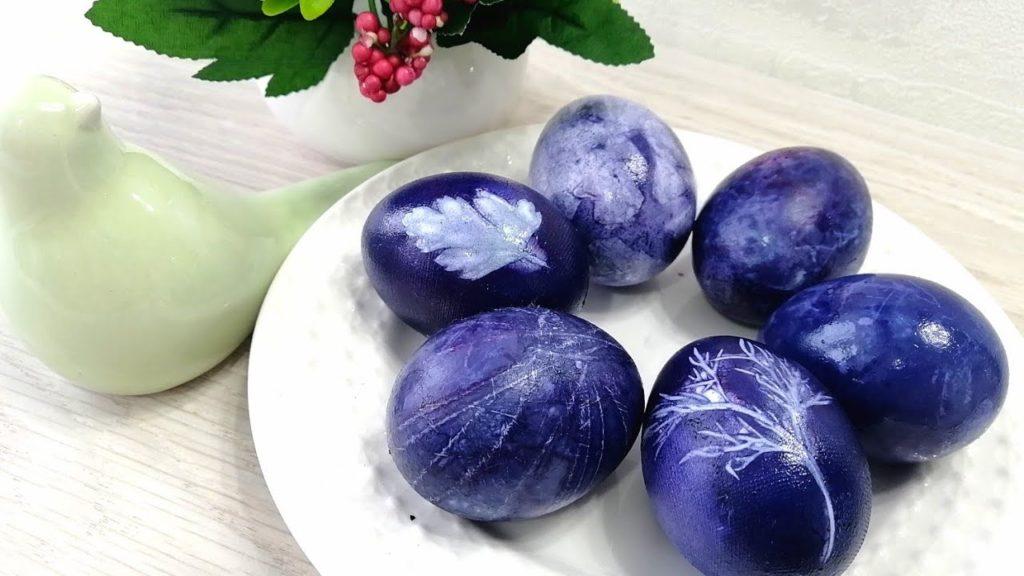
- This is what the eggs will look like if you dye them with finely ground hibiscus tea. In this case, the petals are smaller, so the pattern is less pronounced.
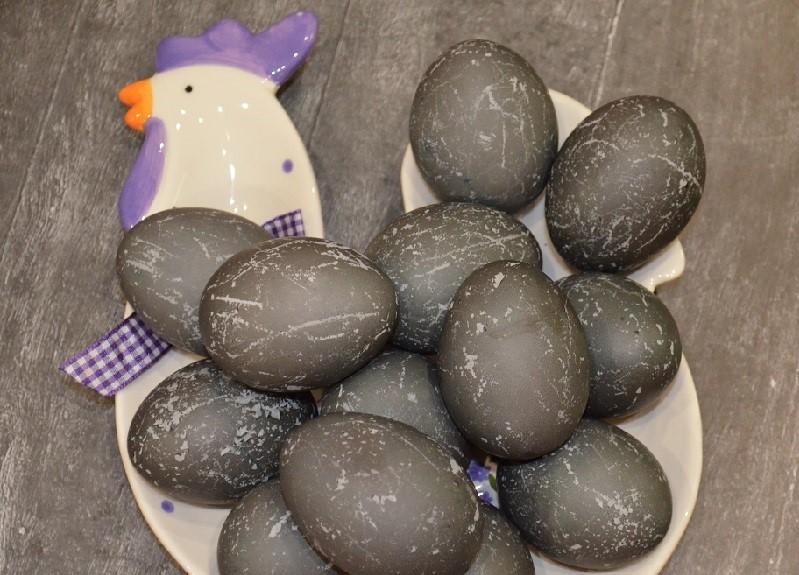
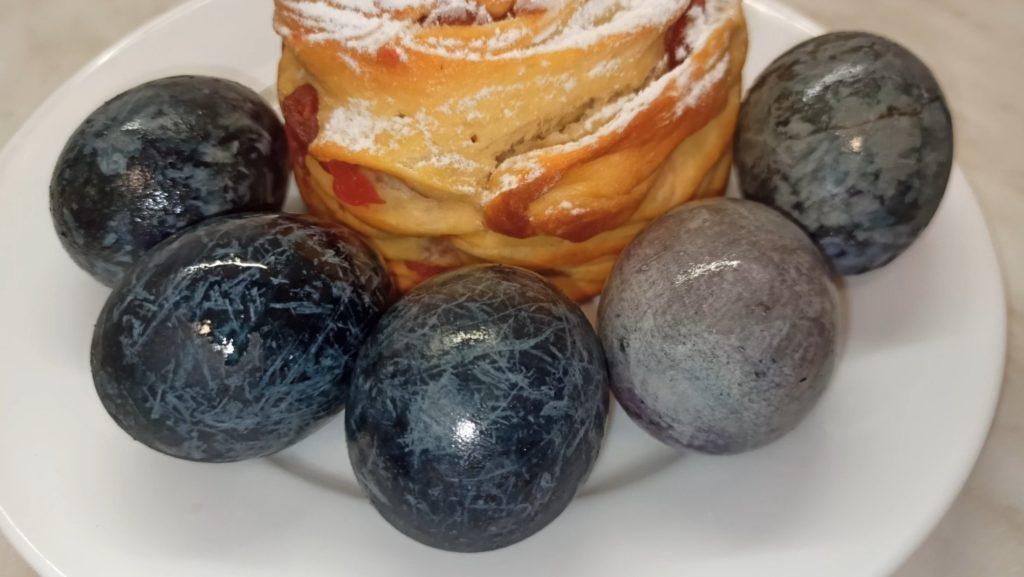
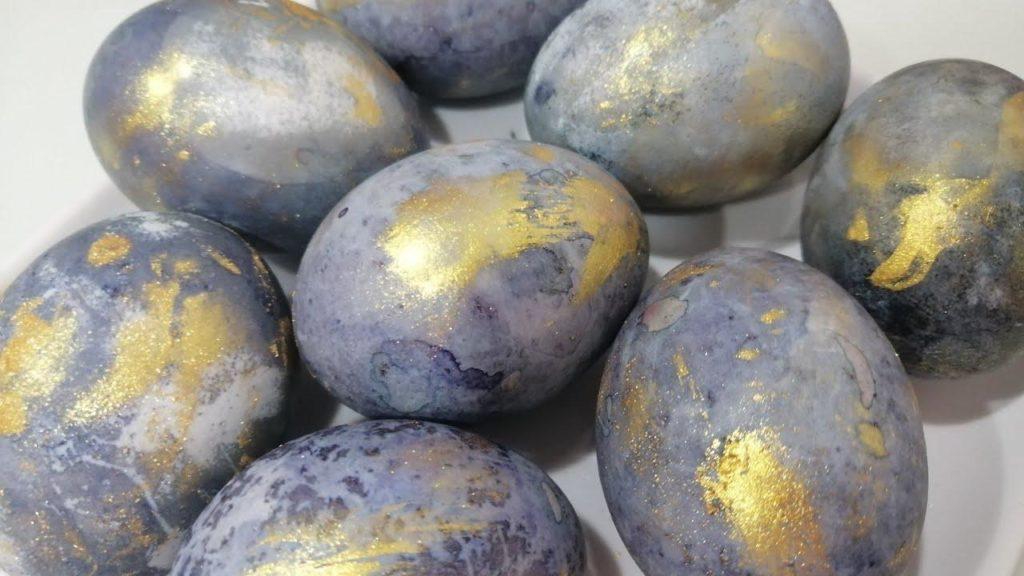
- A more subtle purple hue can be achieved by removing the eggs from the tea within the first 1-2 hours.
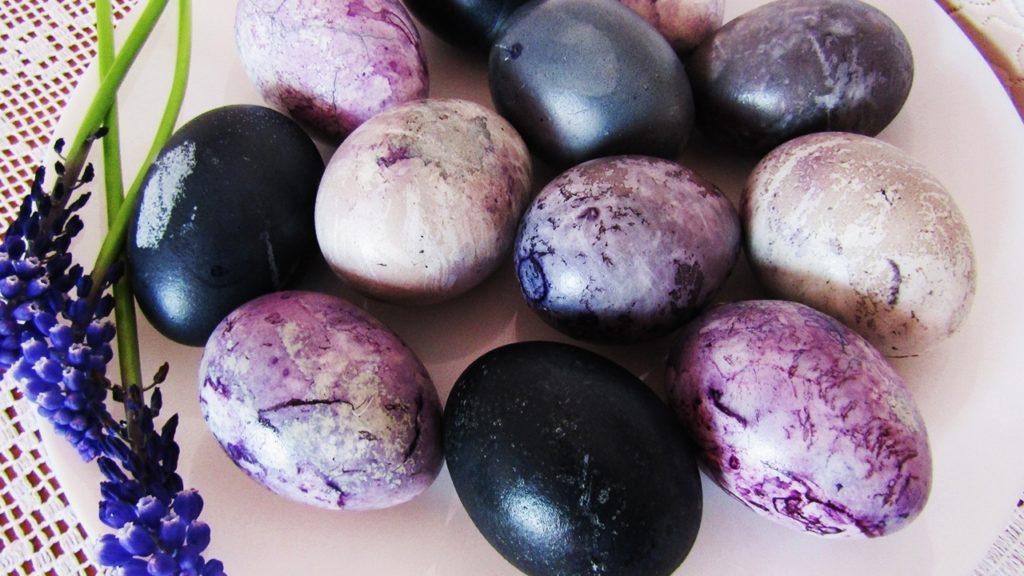
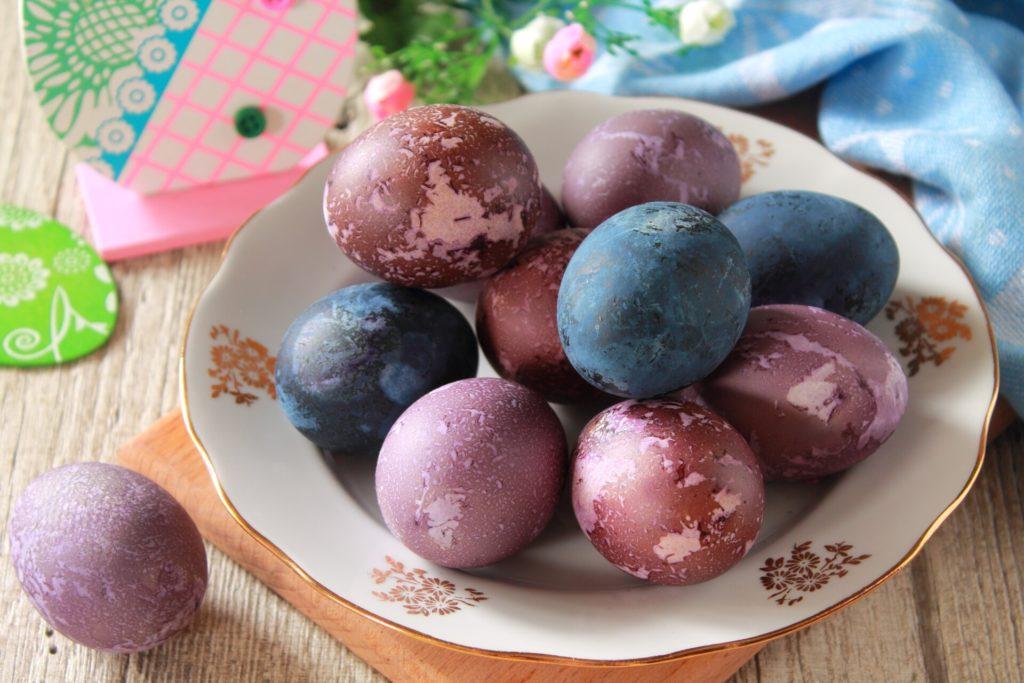
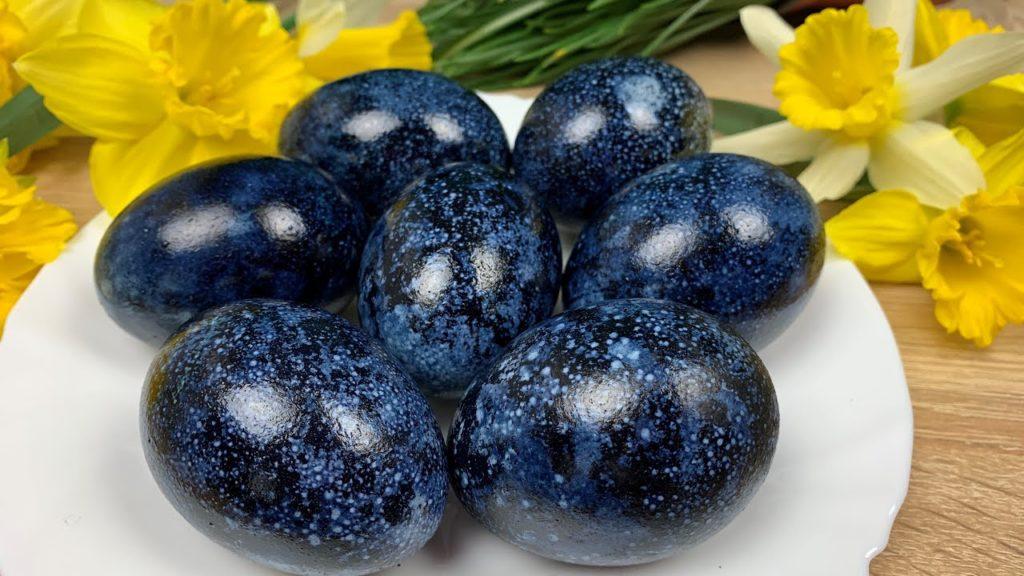
- You can get real cosmos by leaving eggs in a tea decoction for 10-12 hours.
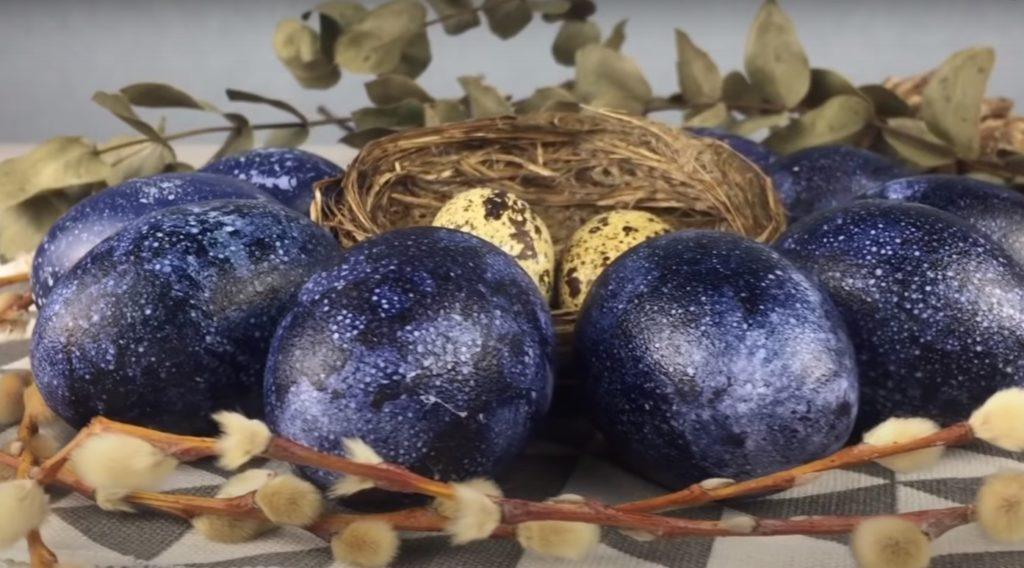
- Luxury and wealth are exuded by eggs dyed with hibiscus and decorated with gold elements.
These incredible painted eggs can be made using hibiscus tea. If you haven't tried this yet, be sure to give it a try. If you have similar egg dyeing experiences, please share them in the comments.
Video: How to Dye Easter Eggs with Hibiscus and Onion Peels
This method of dyeing eggs using hibiscus and onion peels is a little more labor-intensive than the previous one. However, the results are worth it. Your painted eggs will acquire a fashionable marbled pattern, which is very popular among homemakers today.
The Easter egg dyeing method presented in the video is completely natural. The ingredients used are inexpensive and likely found in any home.
If you want to create bright, original, and simply fantastic painted eggs without using chemicals, be sure to check out the recipe below. The video's author explains every step in detail. I guarantee you'll want to dye eggs this way, and you'll definitely succeed!