How to Dye Eggs with Turmeric – Tips and Recipes for Easter Preparation

Content
Dyeing Easter eggs in vibrant colors is one of the oldest traditions of this holiday. Most often, amber is the preferred color, which has long symbolized prosperity and a bountiful harvest, making it a must-have in any Easter basket. To achieve the desired hue, you can dye eggs at home with turmeric. This natural pigment is widely used in cooking to achieve a deep and lasting hue.
Features of turmeric dyeing
Turmeric is a powdered spice made from the root of a perennial herb. The powder is a bright golden color. The color is used in the food and pharmaceutical industries.
The main properties of turmeric as a natural dye:
- harmlessness to health;
- bright yellow color;
- affordable price;
- ease of use.
The coloring powder must be of good quality, otherwise the shells won't fully absorb the color. Fresh spice has a bright aroma. Products with a mild odor should be left on the shelf. Turmeric should be purchased loose. This spice produces a more vibrant hue.
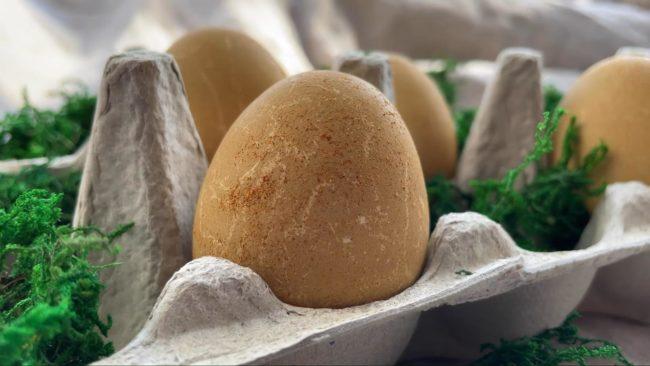
The color produced by turmeric dyeing is deep amber or muted yellow. Its intensity on the Easter egg shells depends on the ratio of the ingredient to water or another liquid. It's worth noting that the spice doesn't completely dissolve in water. Therefore, the eggs need to be turned periodically to ensure even coloring.
Eggs with white shells are best for dyeing with turmeric. They are boiled raw in the dye, so they should be at room temperature to prevent cracking. It's also a good idea to add 1 teaspoon of salt to the water. This will prevent the whites from leaking, even if the shell breaks. To ensure the dye adheres more securely to the surface of the egg, you can wipe them with rubbing alcohol and baking soda. It's best to place the dyed eggs in cold water. Adding a couple of milliliters of apple cider vinegar or lemon juice to the dye solution will help the dye adhere better.
Finished Easter eggs should be allowed to cool to room temperature, then polished with a sponge and vegetable or olive oil.
How to dye eggs with turmeric
- Proteins: 0 g
- Fats: 0 g
- Carbohydrates: 0 g
- Total time:
-
Complexity:
It will work even if you're making it for the first time. Not just this dish, but your first time ever.
- Number of servings: 1
Ingredients
-
Water1 l
-
Turmeric10 G
Preparation

Add ground turmeric.

Stir.

Place on the heat. Bring to a boil. Cook for 15 minutes.

Let the broth steep. Place the raw eggs in the saucepan.

Light the stove. Bring the egg mixture to a boil. Cook for 5–7 minutes.

Let them sit for 1–1.5 hours to allow the shells to absorb more color. Remove the eggs.

We take out the painted eggs.
Recipe for dyeing Easter eggs with turmeric and paprika
Paprika combined with turmeric will produce a pleasant brick color. You can also achieve a unique and unusual pattern for each painted egg.
Ingredients
Water – 1 l
Paprika – 2 tbsp. l.
Turmeric – 1 tbsp. l.
Cooking time: 5 minutes
Servings: 1 liter
Step-by-step recipe
Step 1
Pour cold water into a saucepan.

Step 2
Add turmeric powder.
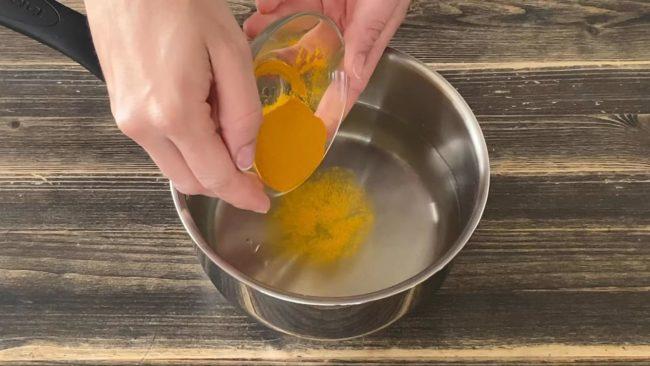
Step 3
Add ground paprika and stir.
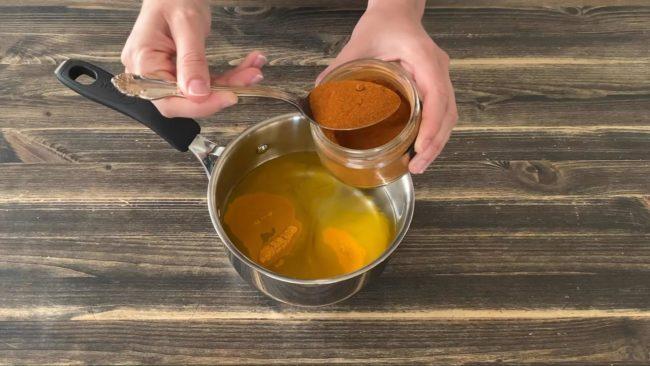
Step 4
Place the eggs in a saucepan.

Step 5
Place on the stove for 20 minutes until it boils. Then turn off the heat and let it steep for another 30 minutes.
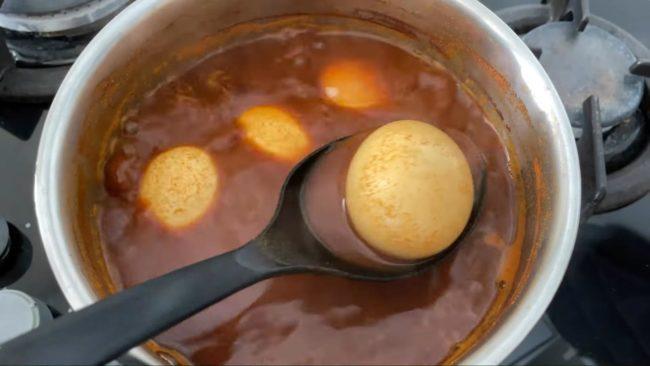
Step 6
Remove the eggs from the dye and let any remaining liquid drain.
Video: Dyeing Easter Eggs with Turmeric and Hibiscus Tea
The YouTube channel "PaprikA" creates incredibly aesthetically pleasing and, importantly, eco-friendly Easter eggs. The beautiful pastel pink and blue pattern on the shells looks unusual. This effect can be achieved using turmeric and hibiscus tea leaves.
The video explains in detail how to properly mix the ingredients and the order in which to dip the eggs into the liquid. The presenter shares her own culinary life hacks for keeping eggs intact while boiling, smoother transitions in the pattern, and longer-lasting designs.
Try dyeing Easter eggs with turmeric – you'll be pleasantly surprised by the results!