How to dye eggs with beets – 3 simple recipes for dyeing at home

Content
Today, housewives are increasingly abandoning synthetic dyes in favor of natural ones. Today, I'll tell you how to dye Easter eggs using beetroot broth or juice.
This collection features the most successful photo and video recipes. They'll help you create a variety of egg hues, from light pink to deep brown. You'll also learn what effects you can achieve with white or brown-shelled eggs.
Properties of beetroot as a natural dye
Beets are widely used by home cooks as a natural dye to impart the desired hue to various baked goods. The coloring properties of this root vegetable can also be used to create Easter eggs.
Eggs can be dyed with beetroot broth or beetroot juice. Depending on how long the shells are in contact with the dye, the color of the eggs can vary from a soft pink to a rich brown.
Here are some general recommendations on how to dye eggs with beets so that they turn out beautiful and elegant:
- to get a pink color, use beetroot juice and white eggs; for a richer brown shade, color with beetroot broth and use eggs with brown shells;
- Give preference to sweet beetroot varieties (dark on the outside and deep red on the inside);
- When dyeing, use a small amount of vinegar; it will help the pigment penetrate the shell and make the coloring brighter and more durable.
How to dye Easter eggs with beets?
- Proteins: 12.7 g
- Fats: 11.5 g
- Carbohydrates: 0.7 g
- Total time:
-
Complexity:
A simple recipe.
- Number of servings: 10
Ingredients
-
Eggs (brown and white)10 pcs
-
Beet800 G
-
Sunflower oil1 tsp
-
Water800 G
Preparation

Wash the eggs and beets thoroughly. You can use baking soda to clean the eggshells.

Cut the beets, skin on, into small cubes; you can grate them on a coarse grater.

Place the beets in a saucepan and cover with water. Cook until soft.

Place the eggs in a saucepan, add room temperature water and cook over low heat until done (8-10 minutes).

Once the eggs and beets are cooked, we begin coloring. We'll be using both the pure broth and the broth with diced beets. Therefore, we strain part of the broth through a sieve.

Place the eggs in the prepared broths. Let the broths cool completely, then refrigerate for 24 hours.

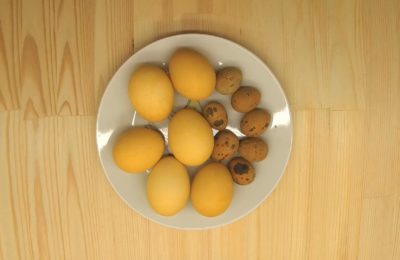
After the required time, remove the eggs from the broth and place them on a napkin. This is what the eggs looked like after being dyed in pure broth without the beetroot cubes. They acquired a uniform brown hue. The darker eggs were those with brown shells. The lighter ones were those with white shells.

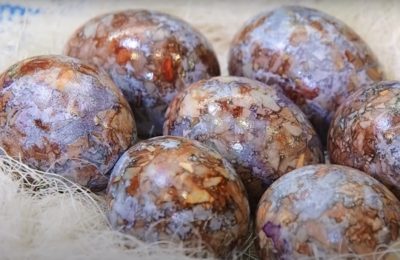
We remove the eggs from the broth with the beet pieces. They are darker, with the white egg practically indistinguishable from the brown ones. The beet cubes have given the shells a noticeable marbled pattern.

Dry the eggs and rub them with sunflower oil.
Dyeing eggs with beetroot juice
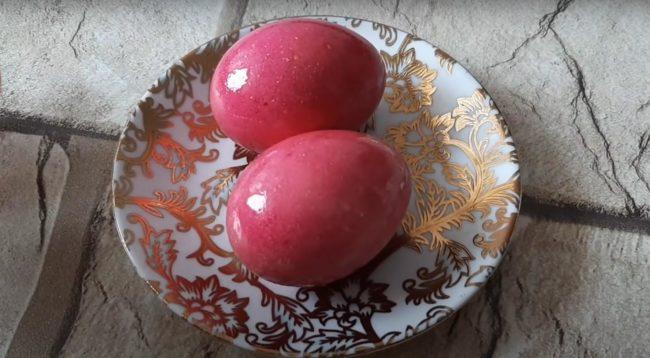
To give your eggs a pinkish tint rather than a brown one, we recommend replacing the beetroot broth with beetroot juice. This will produce a less intense, but no less striking, color. If you haven't tried this natural coloring method yet, be sure to experiment.
Ingredients
- Beetroot (medium) - 1 pc.
- Eggs - 2 pcs.
- Vinegar 9% - 1.5 tbsp.
Cooking time: 20-30 minutes
Servings: 2
Step-by-step recipe
Step 1
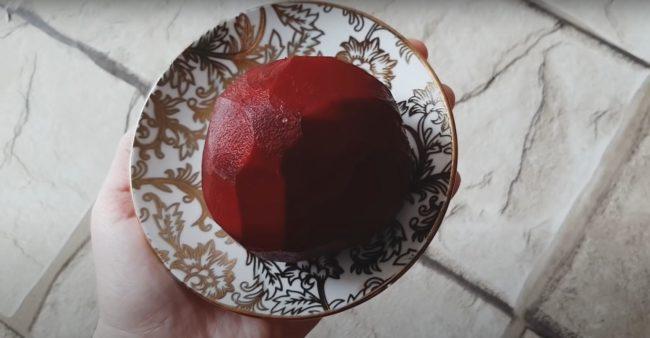
Peel the beets.
Step 2
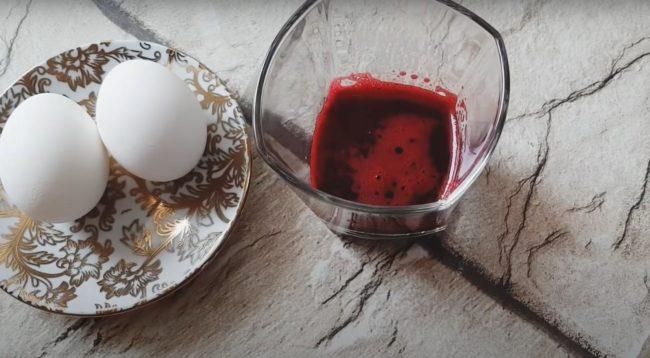
Grate on a fine grater and squeeze out the juice.
Step 3
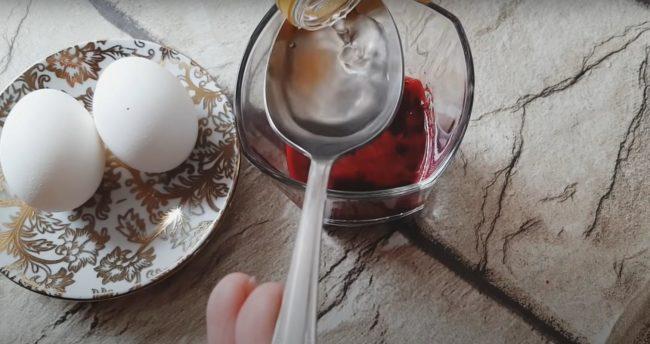
Add vinegar and stir.
Step 4
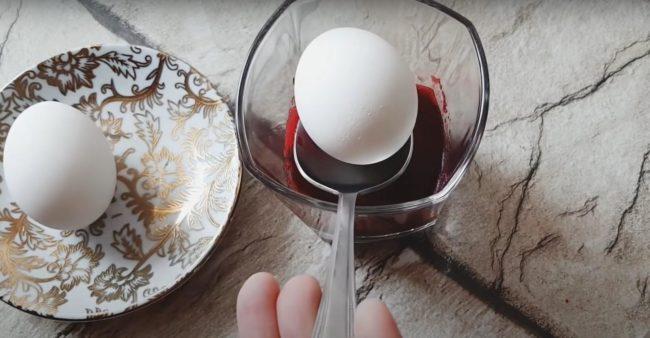
Boil the eggs in advance until done. Place them one by one in the beetroot juice.
Step 5
Let the eggs sit for no more than 5 minutes. Otherwise, the color will become more brown.
Video: Beautiful Easter Eggs: Dye from Beets and Onion Peels
If you're dying eggs and are desperately short on onion skins, beetroot can help. A beetroot-onion infusion will give the eggshells a rich, beautiful brown hue, as well as an attractive marbled pattern. Working with this natural dye doesn't take much time or effort, and you're sure to be pleased with the results.
The author of this recipe explains in detail the specifics and rules for preparing beetroot and onion broth. By carefully following the video instructions, you're sure to get beautiful Easter eggs.
These beautiful Easter eggs are made using the coloring properties of ordinary beets. Experiment with different dyeing methods and drying times. Share your results in the comments!