Easter cake with dry and fresh yeast - 7 yeast dough recipes for Easter cake

Content
- 1 Easter cake with dry yeast
- 2 Easter cake with fresh yeast
- 3 Yeast dough for Easter cakes
- 4 Viennese dough for Easter cakes with live yeast
- 5 Curd Easter cake with fresh yeast
- 6 Easter cake with kefir and yeast
- 7 Proportions of dry and live yeast
- 8 Video: Fluffy Easter cake with yeast (based on Grandma's recipe)
Every year at Easter, housewives compete in kulich baking. Each wants their baked goods to be not only the most beautiful but also the most delicious. Some bake according to one tried-and-true recipe their entire lives, while others constantly search for something new and interesting, constantly perfecting their recipes.
In this collection, I've compiled recipes for tender, moist, and airy (perfect) Easter cakes, which can be made with dry or fresh yeast, sour cream, cottage cheese, or kefir. I think you'll find the recipe you've been dreaming of!
Easter cake with dry yeast
- Proteins: 9 g
- Fats: 7 g
- Carbohydrates: 26 g
- Total time:
-
Complexity:
It's easy and straightforward to prepare, but it does require some experience. Not everyone can do it right the first time.
- Number of servings: 4
Ingredients
-
Flour2.5 kg
-
Egg C115 pcs
-
Milk500 ml
-
Butter400 G
-
Sour cream 15%200 G
-
Sugar450 G
-
Vanilla sugar16 G
-
Salt1 tsp
-
Dry yeast22 G
-
Raisin80 G
Preparation

Crack the eggs into a large saucepan (at least 8 liters). Whisk. Do not beat.

Pour in room temperature milk, melted and cooled butter or margarine, and sour cream. Add salt, sugar, and vanilla sugar.

Mix the yeast with the flour.

Gradually add the flour and yeast to the liquid mixture, stirring each time with a spoon or spatula.

Add the washed raisins with the last portion of flour. Mix with a spoon.

Knead the dough with your hands for 2-3 minutes.

Cover the container with a lid or a towel. Let it rise. When the dough has risen, push it down and let it rise again. Repeat this process twice.

Prepare baking pans.

Grease your hands with sunflower oil and place the dough into the molds.

Fill the form halfway with dough.

Cover the molds with a towel and leave to rise.

Once the dough has risen, place the pans in the oven. Bake at 160-180 degrees Celsius for about 40 minutes.

Remove the finished kulichi from the oven, let them rest for 5 minutes, and then remove them from the pans. Leave them to cool. Decorate as desired.
Easter cake with fresh yeast
Easter kulichi can be made using both dry and fresh yeast. In this case, the latter will be used. This recipe has been honed over several years to perfect the proportions and ratio of ingredients. I hope you'll appreciate these delicious, fluffy, and moist kulichi.
Ingredients
- Flour - 1 kg
- Milk - 500 ml
- Live yeast - 60 g
- Eggs - 7-8 pcs.
- Sour cream (20%) – 80 g
- Butter (82%) - 100 g
- Sunflower oil - 50 ml
- Sugar - 250 g
- Salt - 1/2 tsp.
- Dried fruits (raisins, dried cranberries) - 200-250 g
- Vanilla sugar - 10-20 g
- Zest of 1 lemon
Cooking time: 3-4 hours
Servings: 4 small and 3 large.
Step-by-step recipe
Step 1
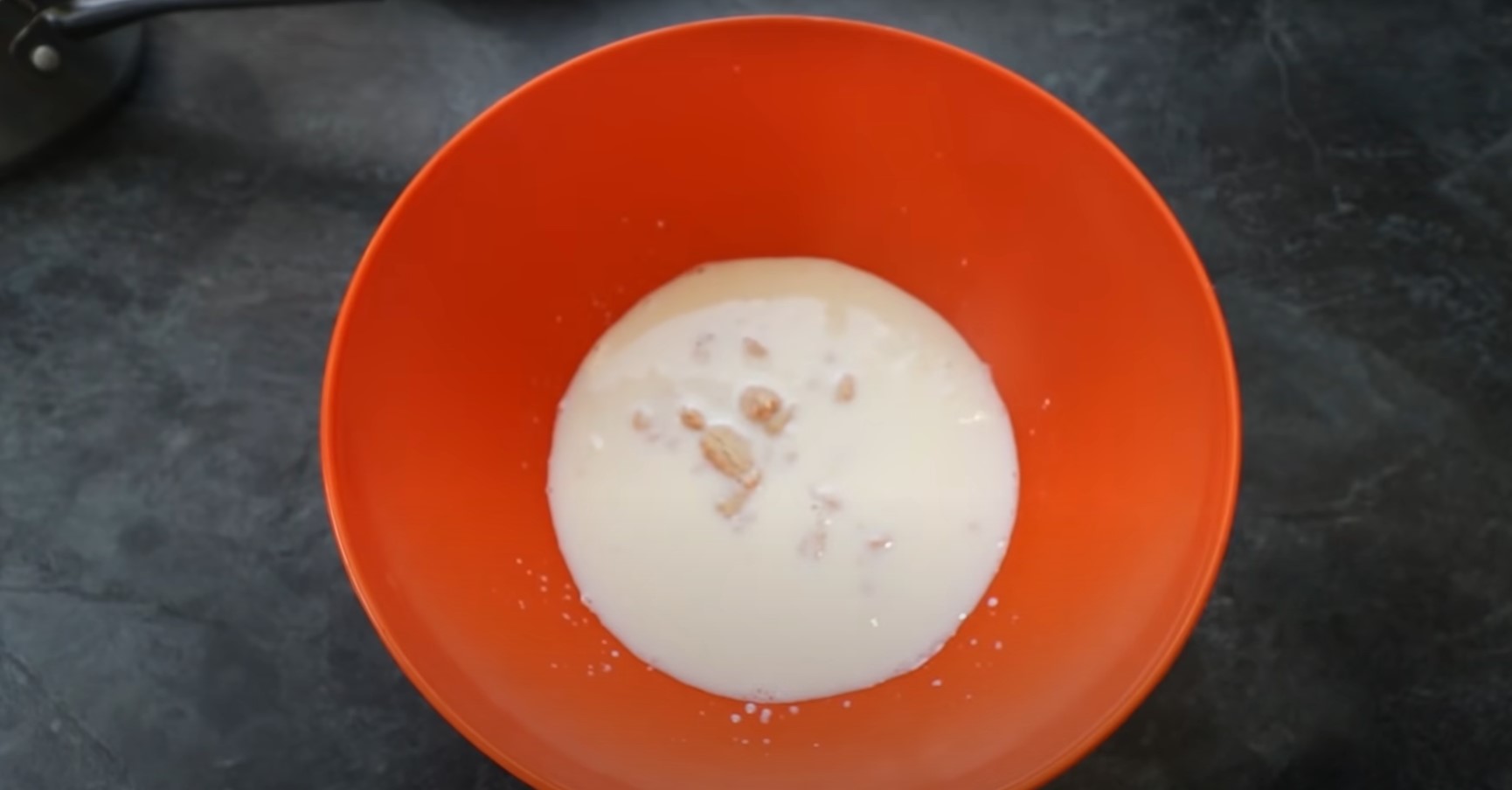
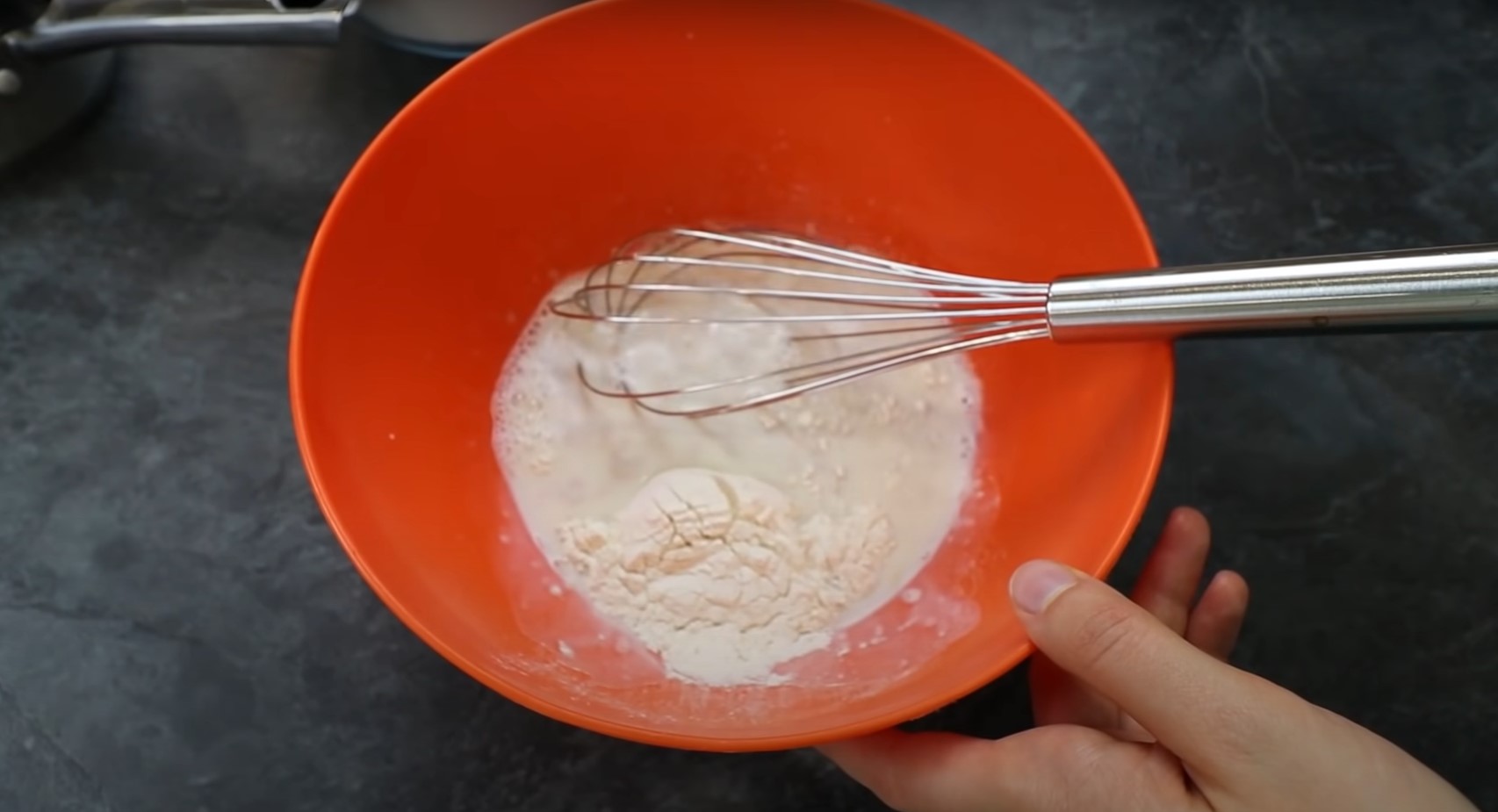
Prepare the dough. Mix sugar (1 tablespoon of the total amount), a small amount of warm milk (30-35 degrees Celsius), flour (2 tablespoons of the total amount), and yeast. Stir.
Step 2
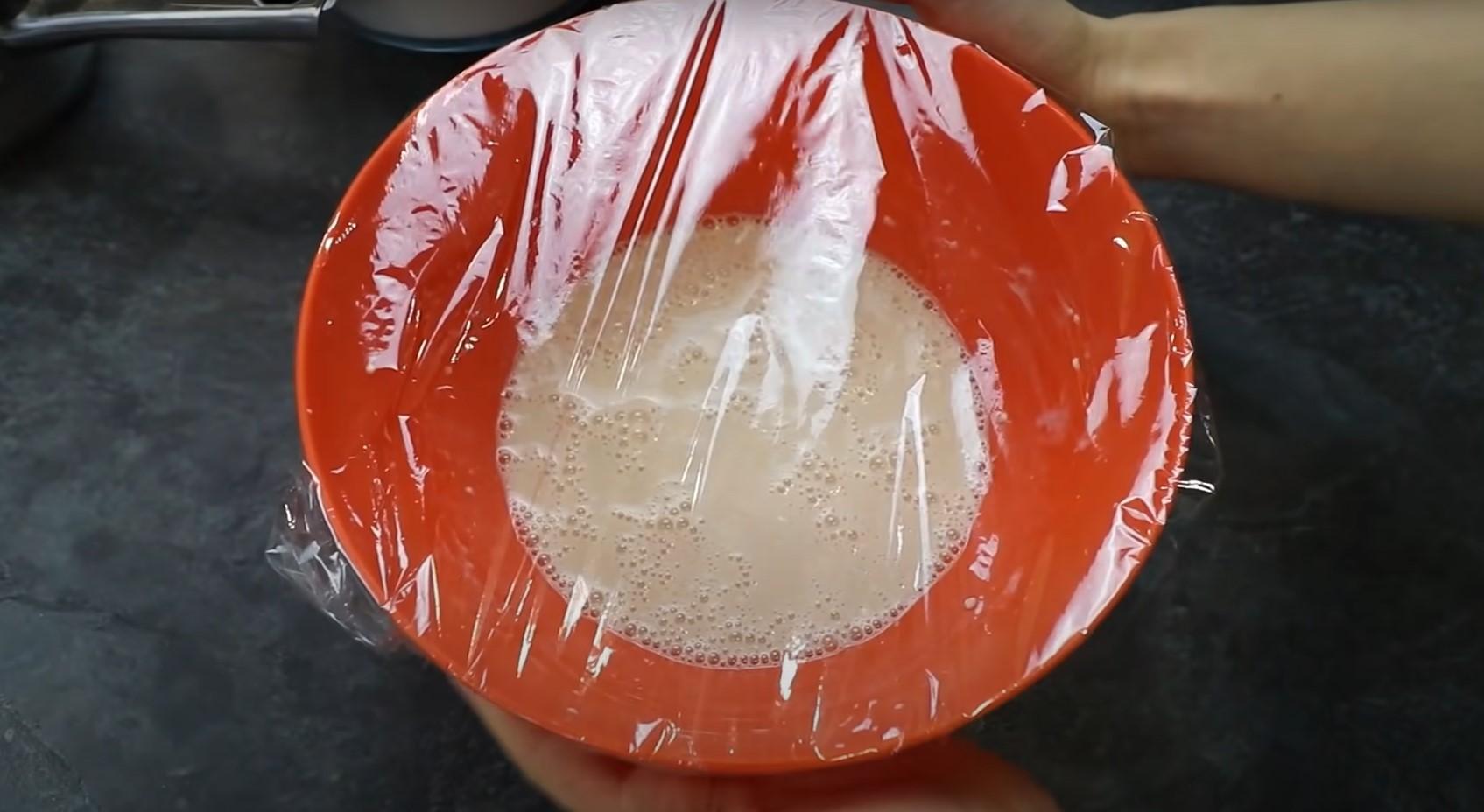
Cover with cling film or a towel and wait for the yeast to start working (usually 15-20 minutes).
Step 3
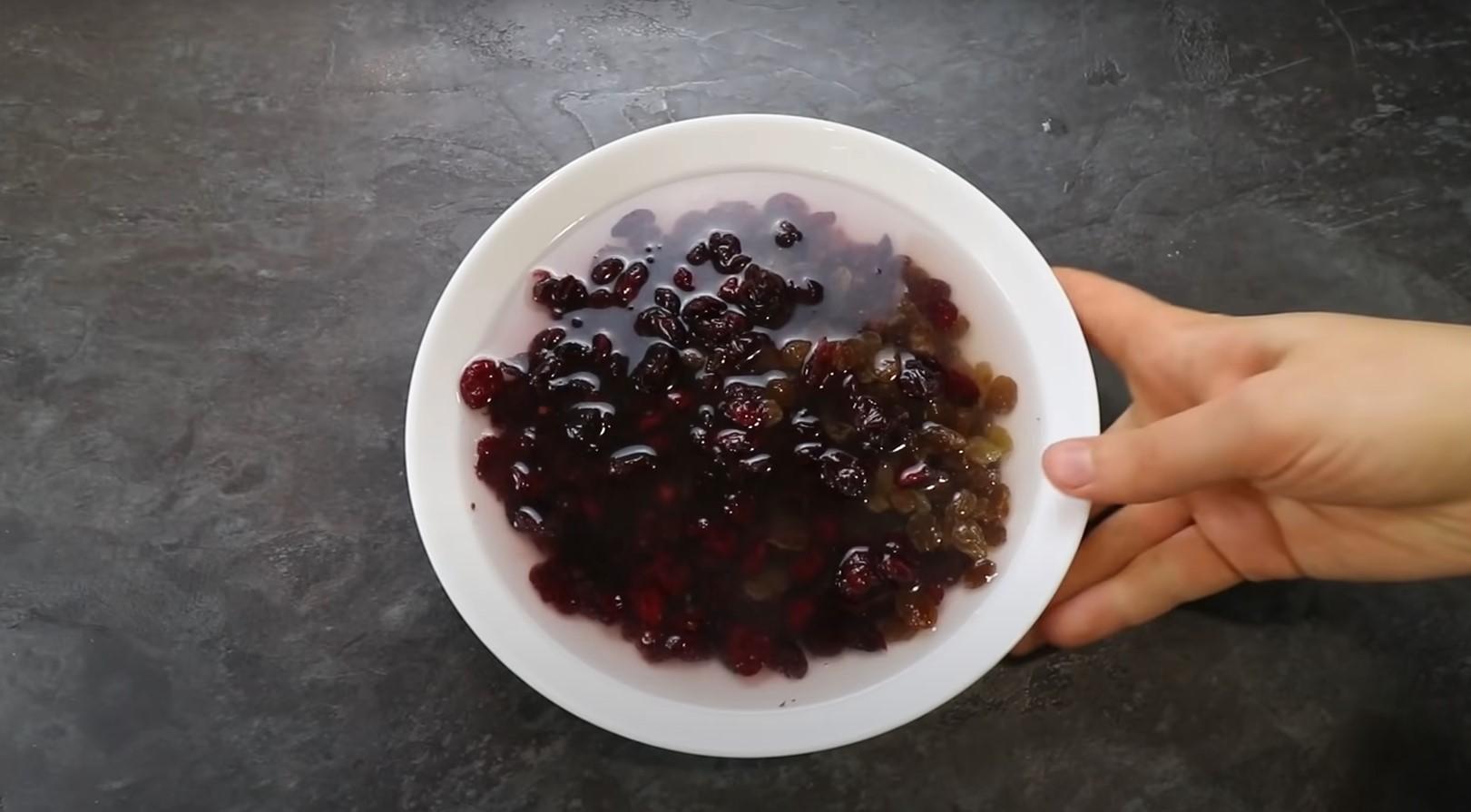
Prepare the dried fruit. Place it in a deep container and pour boiling water over it. Let it sit for 15 minutes. Then drain the water and dry the fruit on a towel or napkin.
Step 4
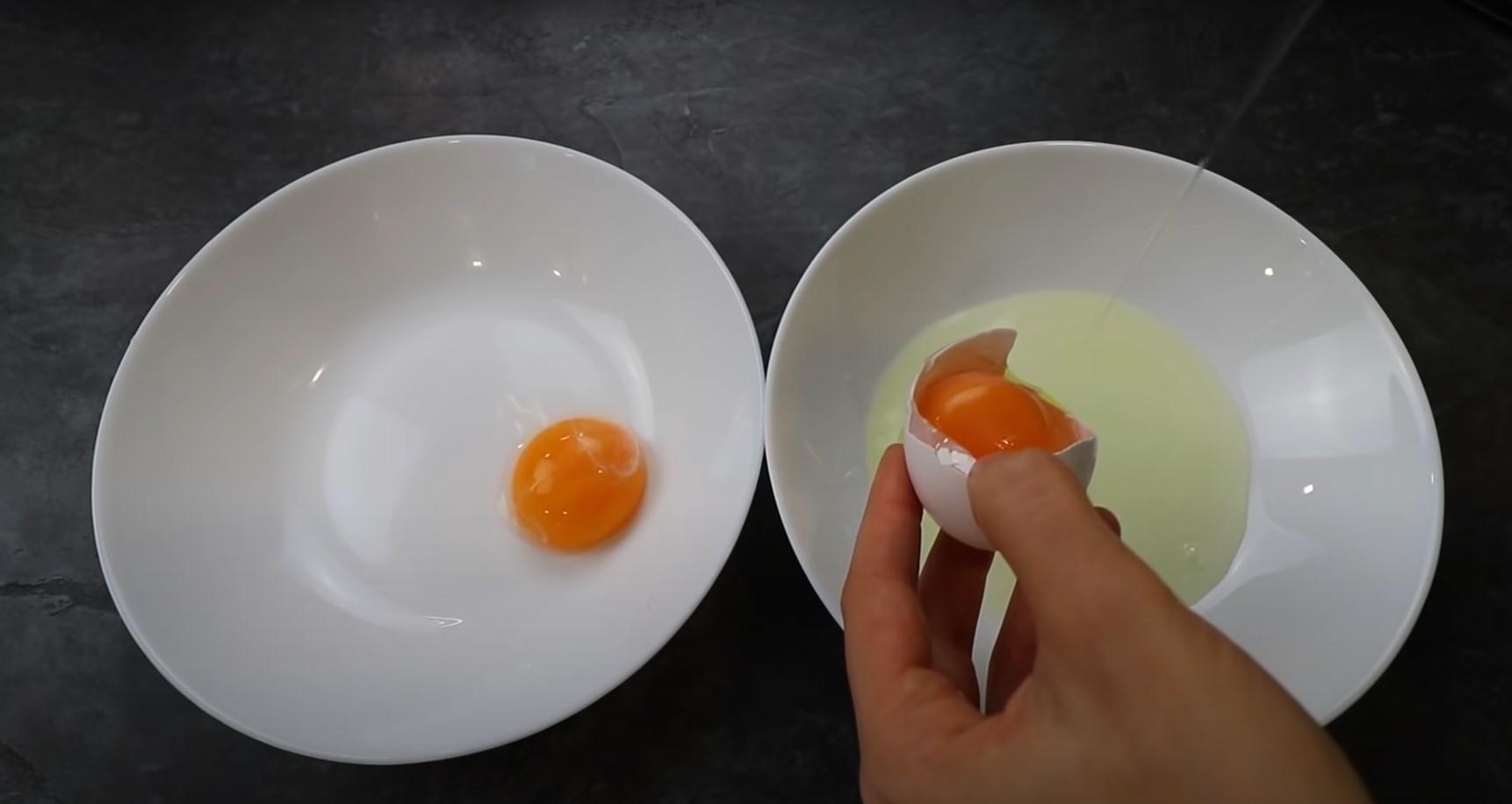
Separate the yolks from the whites.
Step 5
Place the prepared dough into a deep bowl.
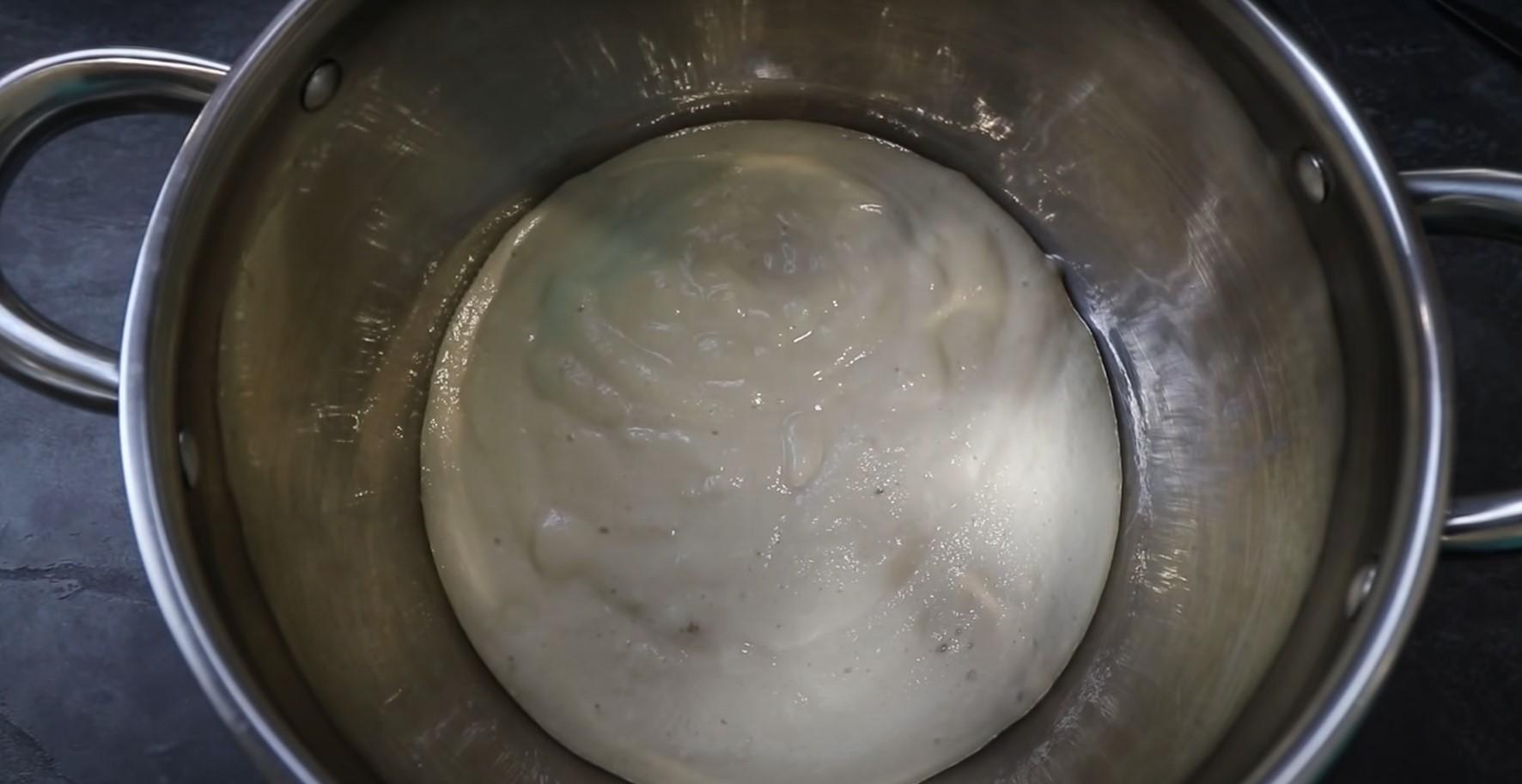
Step 6
Add the remaining milk.
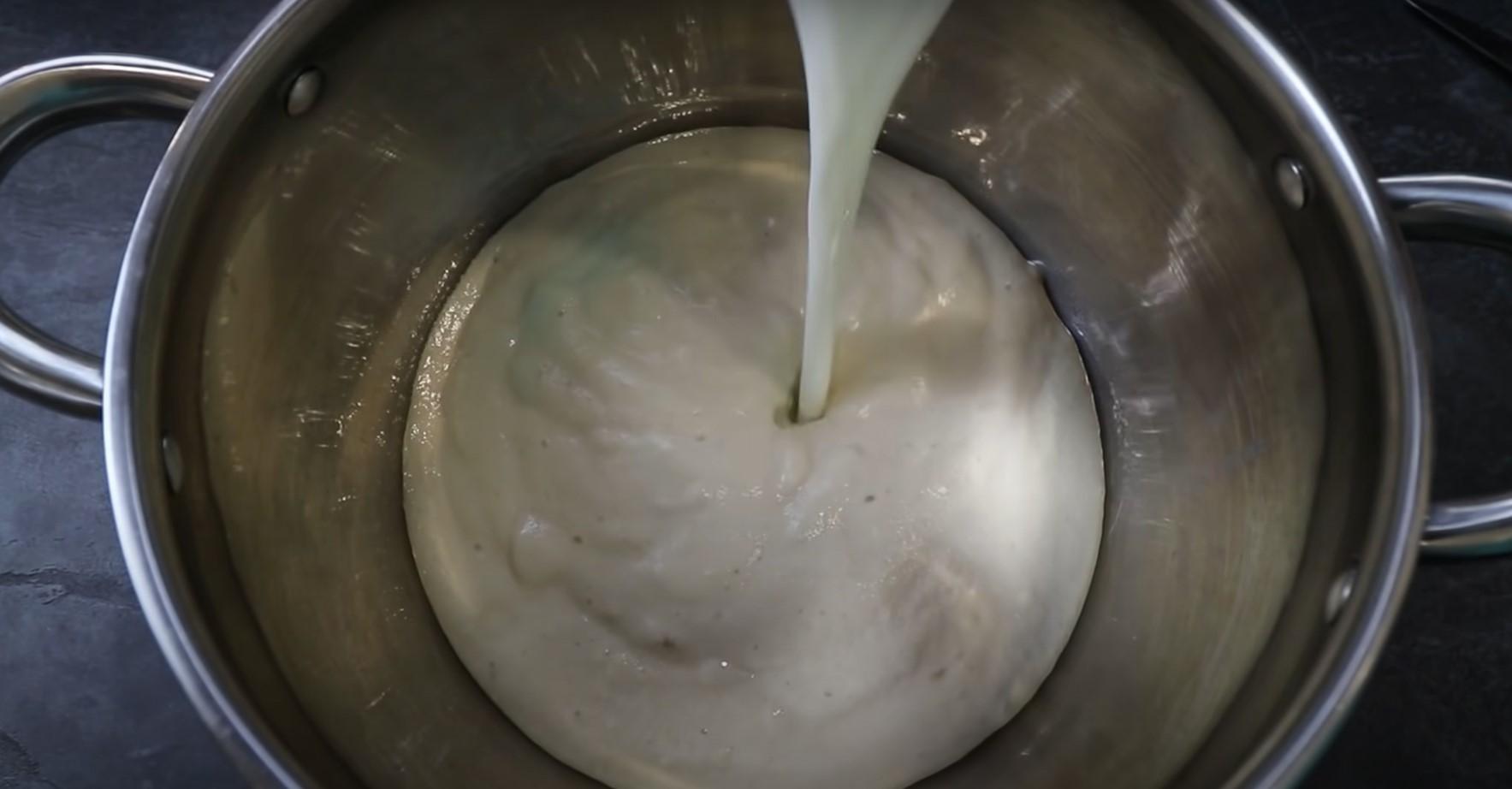
Step 7
Add sugar, vanilla sugar and salt.
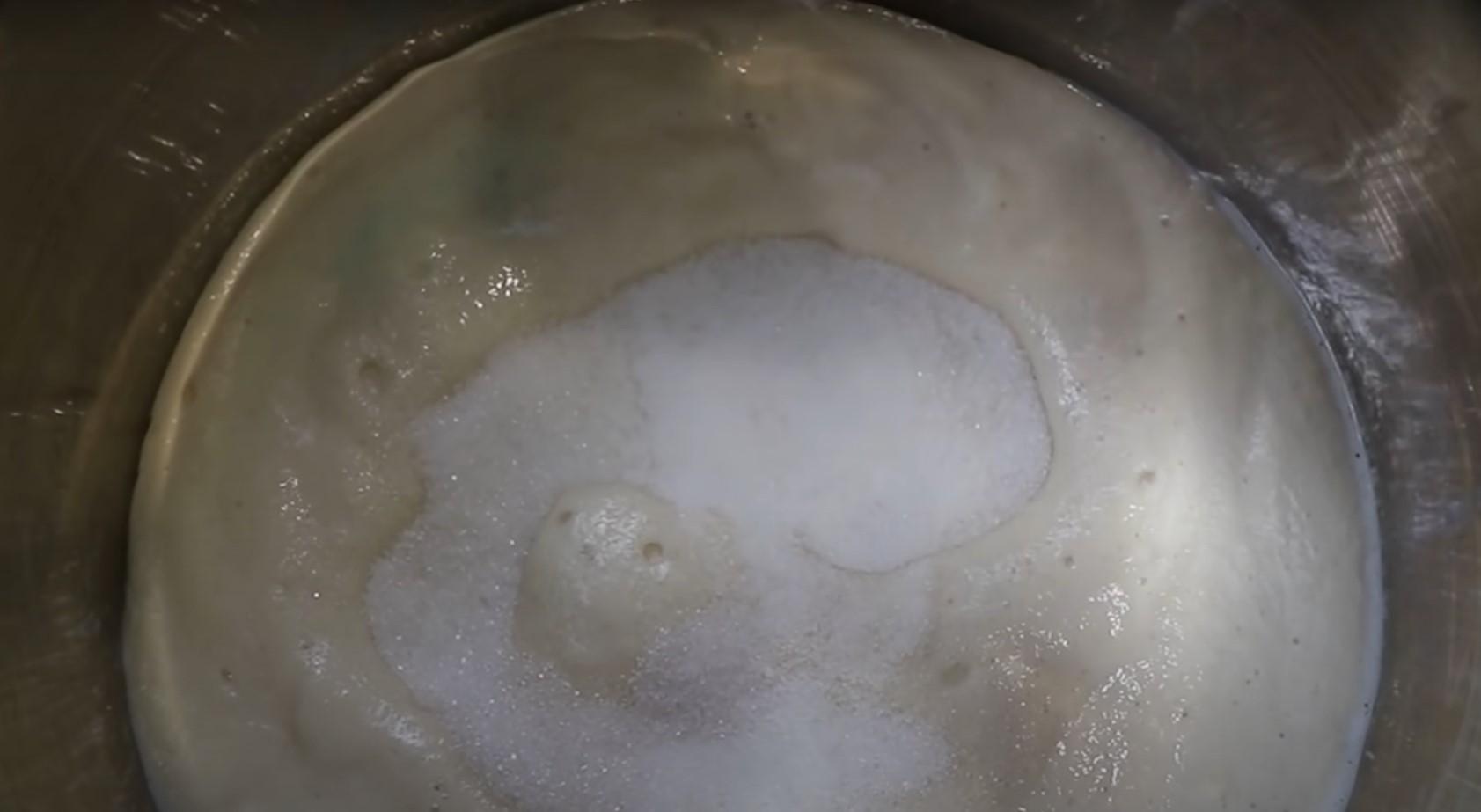
Step 8
Pour in the yolks. Mix.
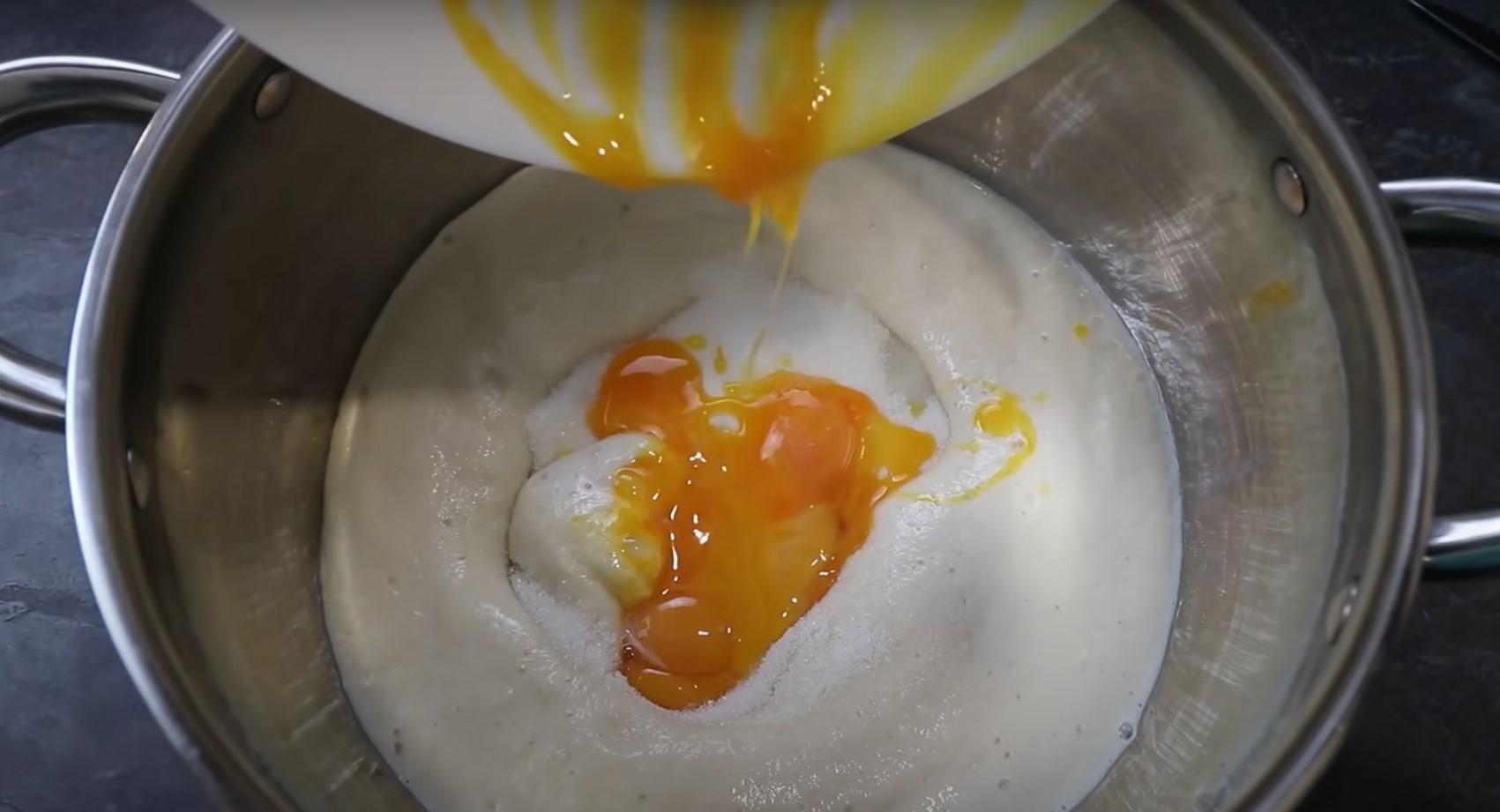
Step 9
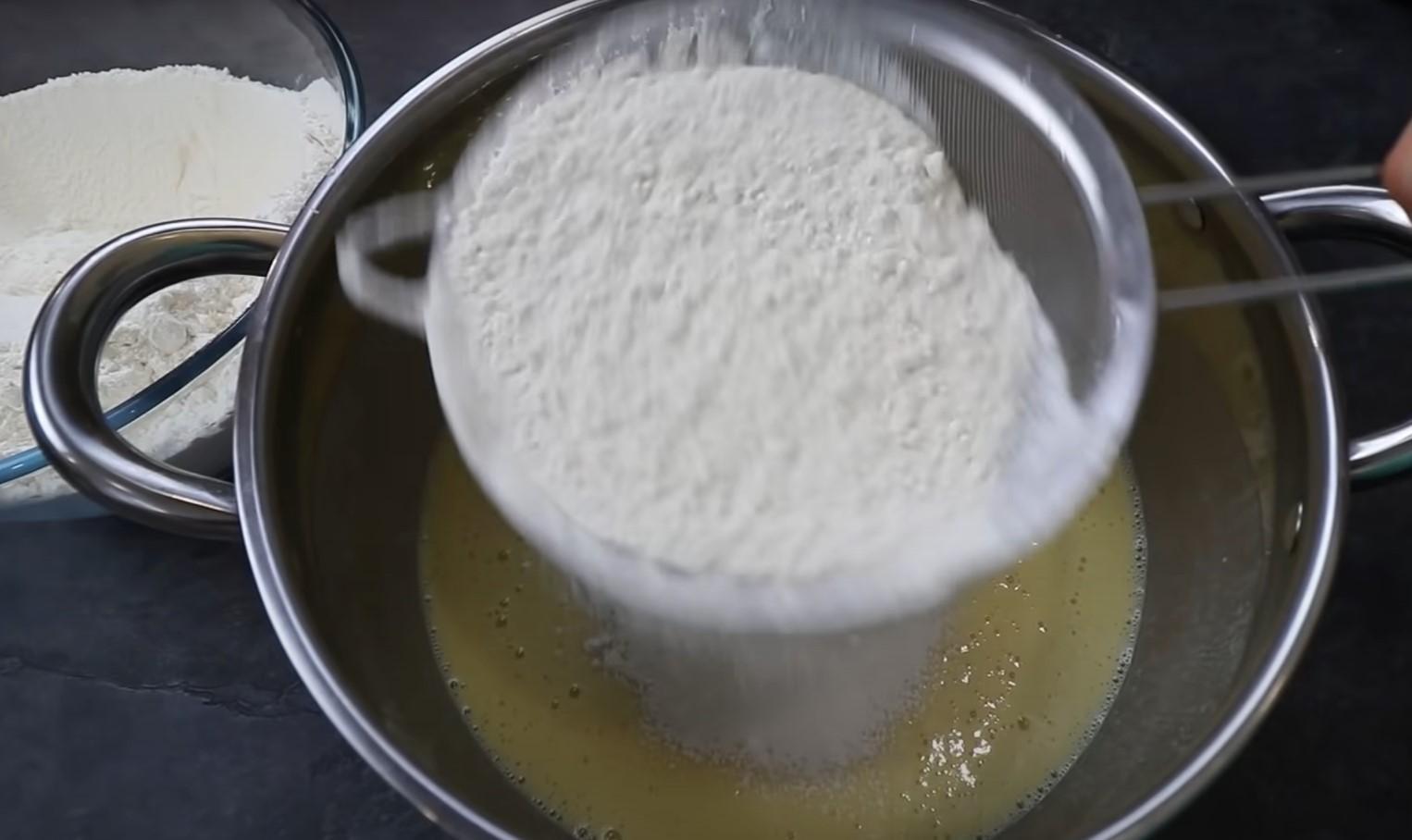
Sift the flour in small portions. Mix well. Stir first with a spoon, then with your hands.
Step 10
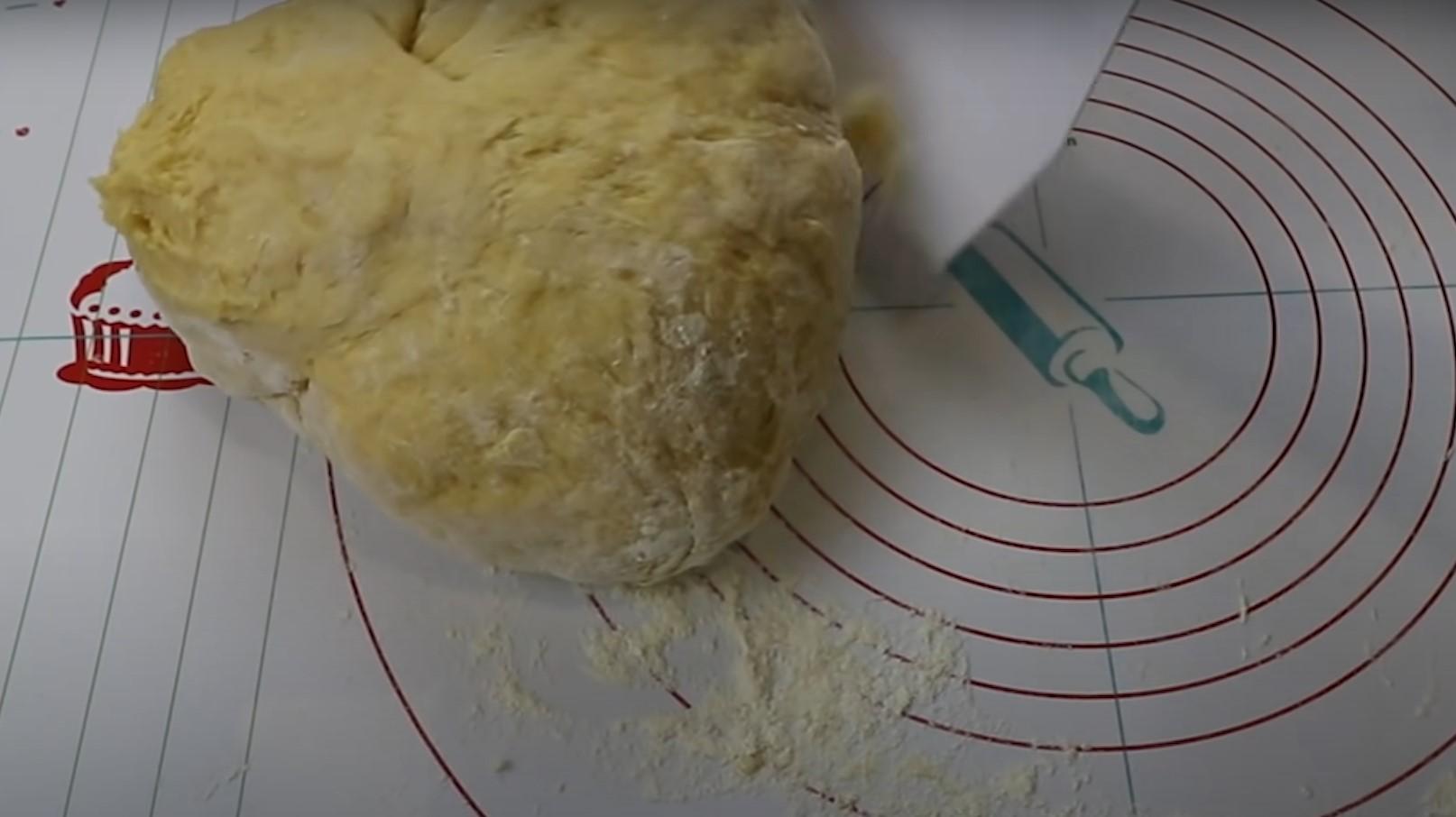
Sprinkle a small amount of flour on your work surface (don't add any more flour). Knead the dough for about 10 minutes, until it stops sticking to your hands.
Step 11
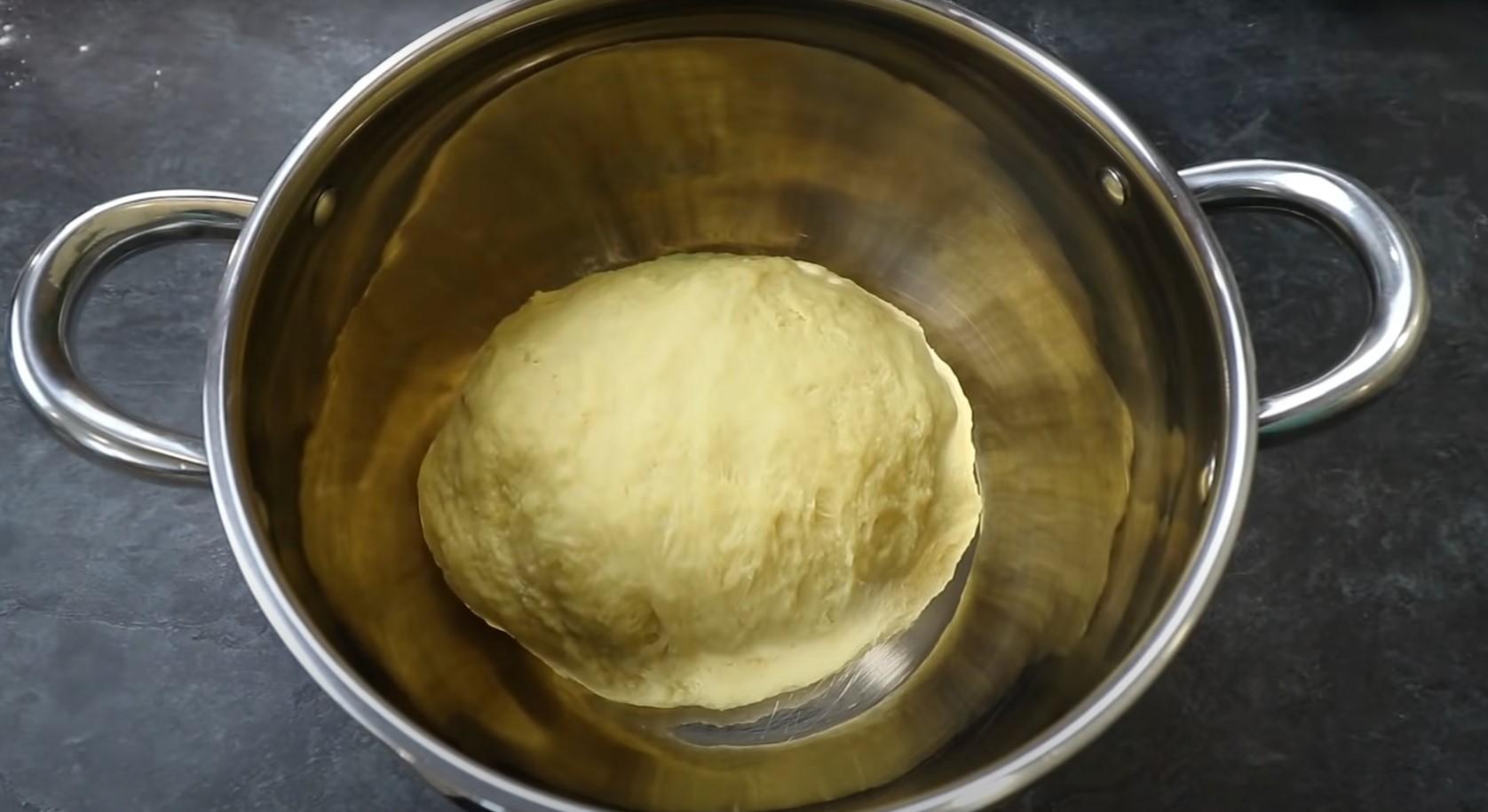
Return the dough to the deep container, cover with cling film or a towel and leave in a warm place for 1 hour to rise.
Step 12
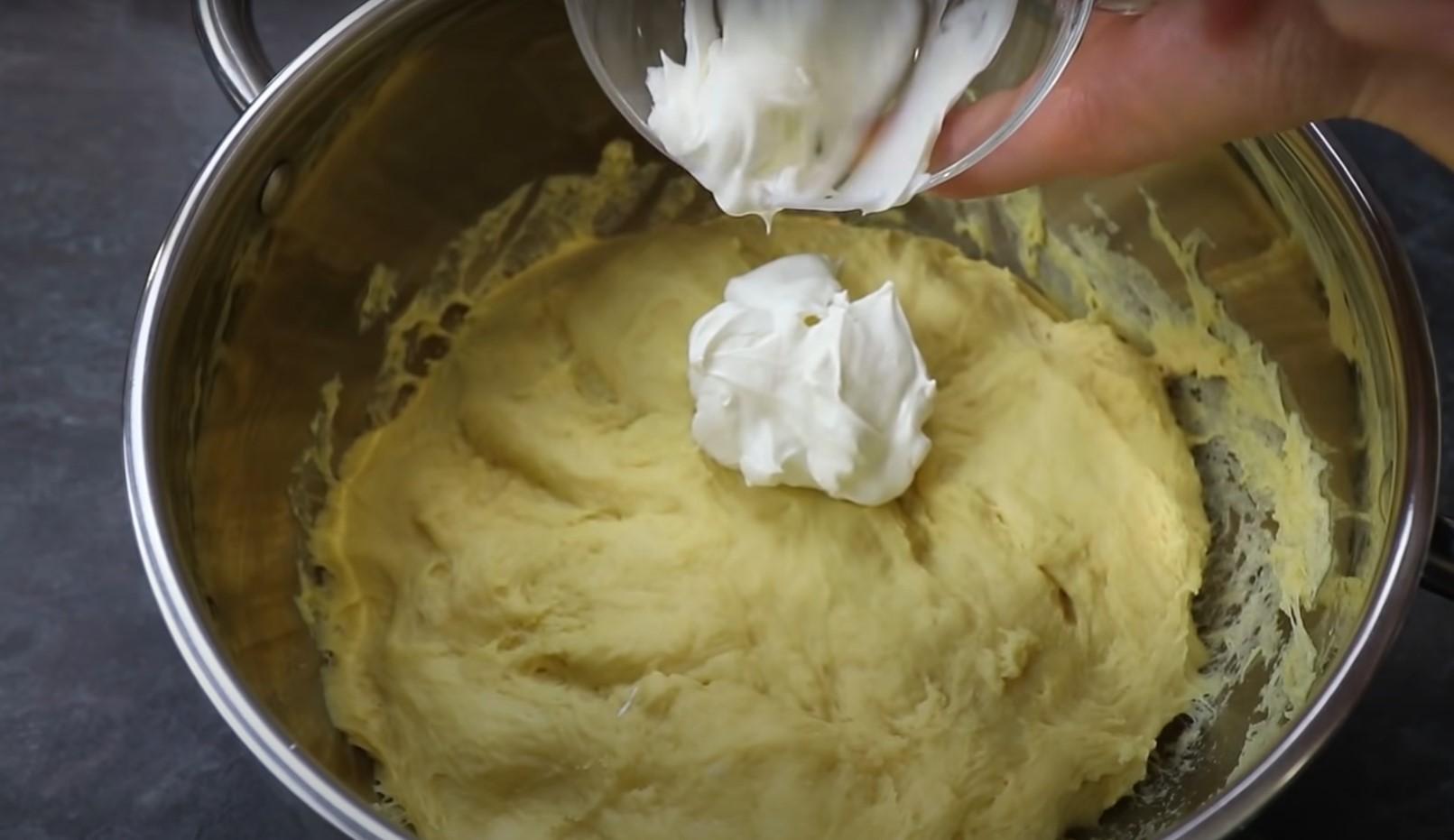
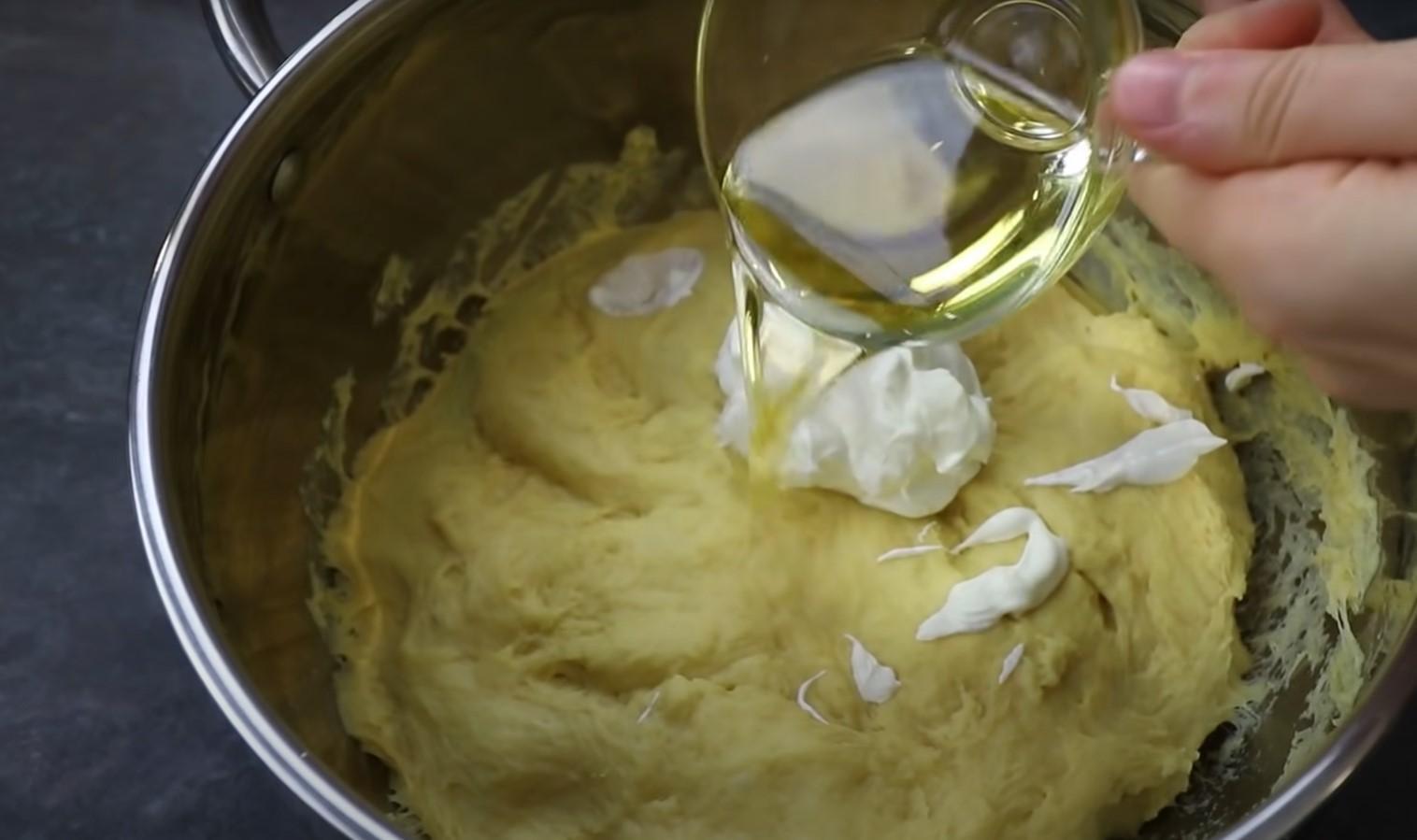
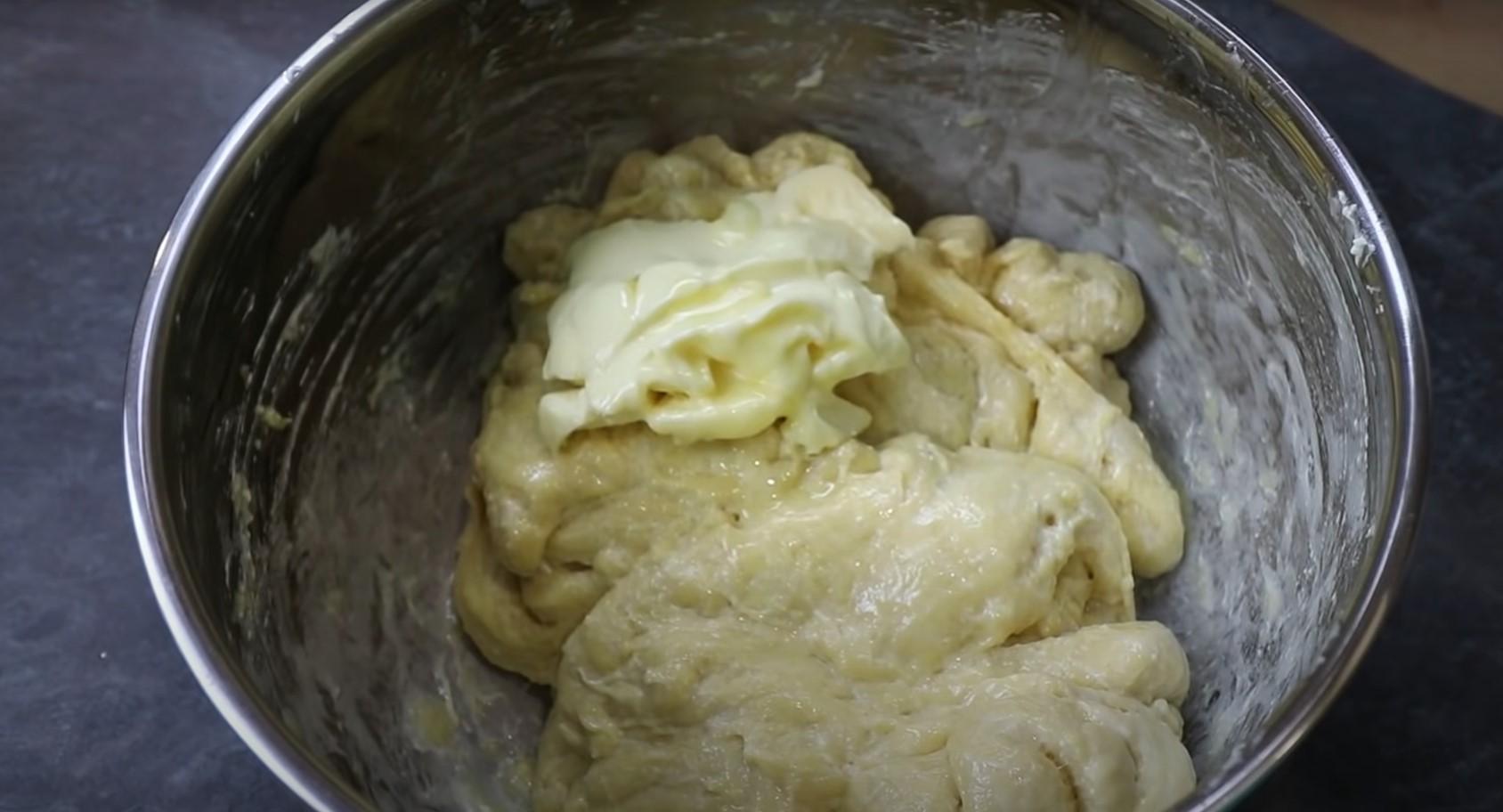
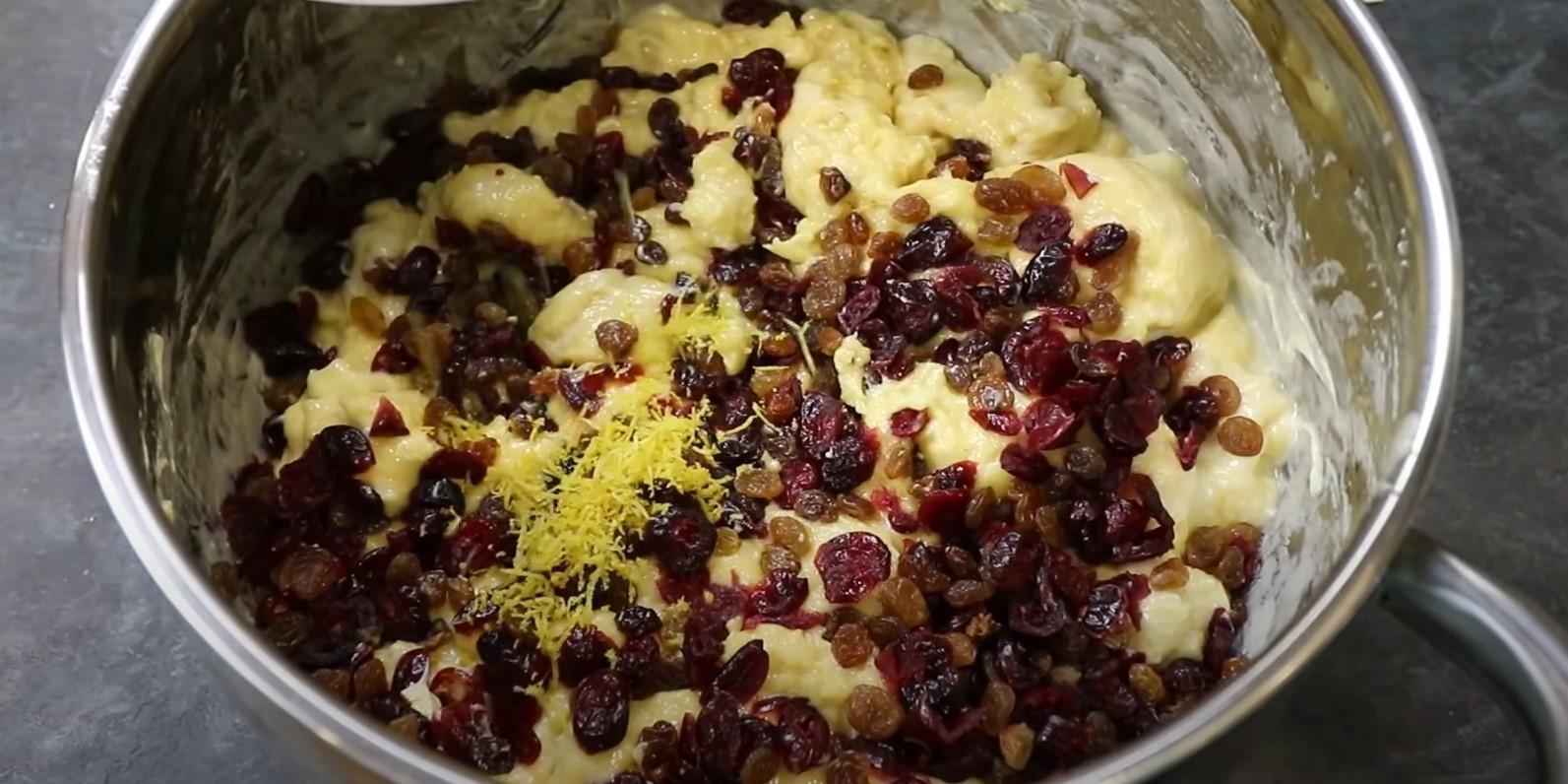
After 1 hour, knead the dough, add sour cream and sunflower oil. Knead by hand. Add softened butter, dried fruit, and lemon zest. Knead. Cover again and place in a warm place to rise.
Step 13
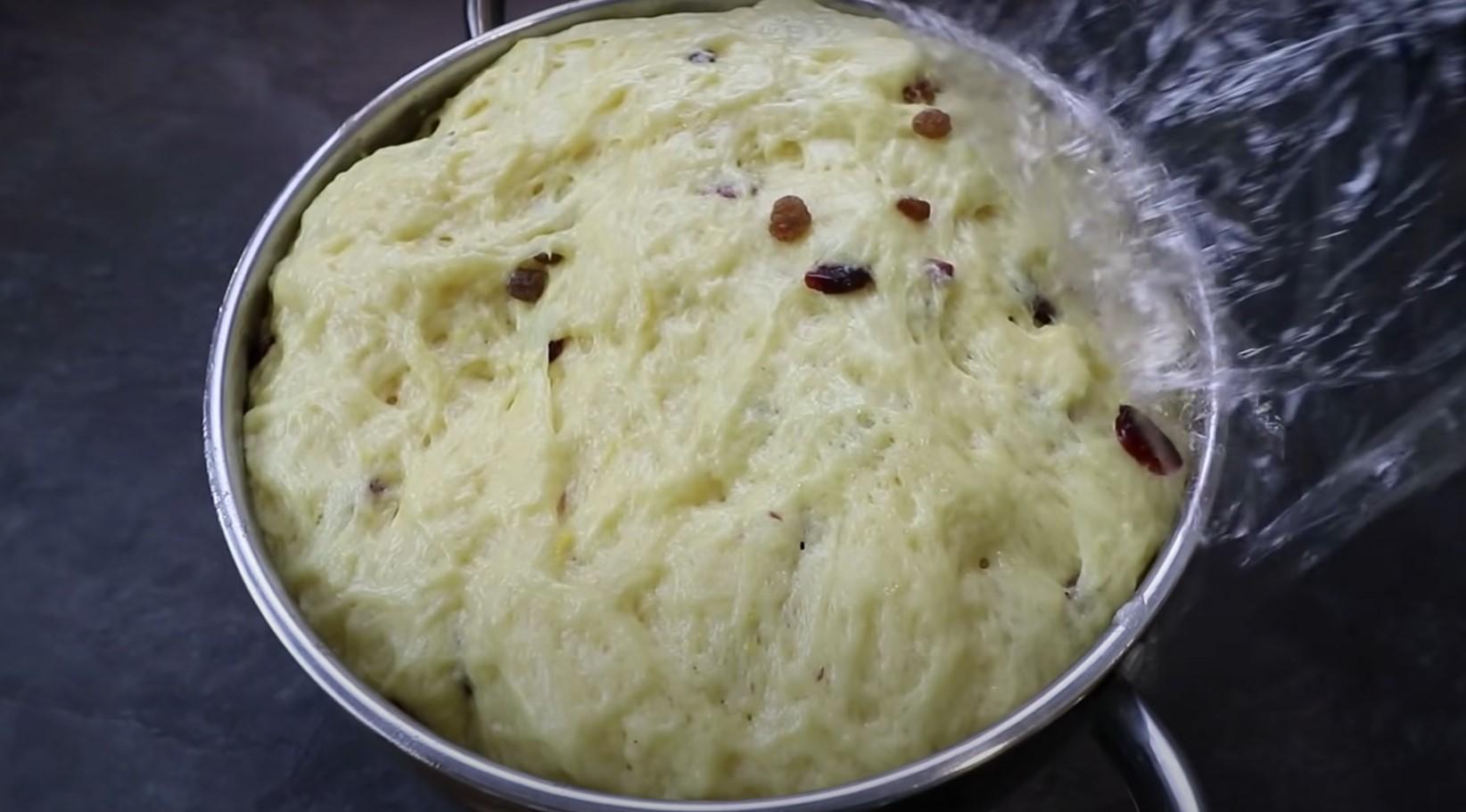
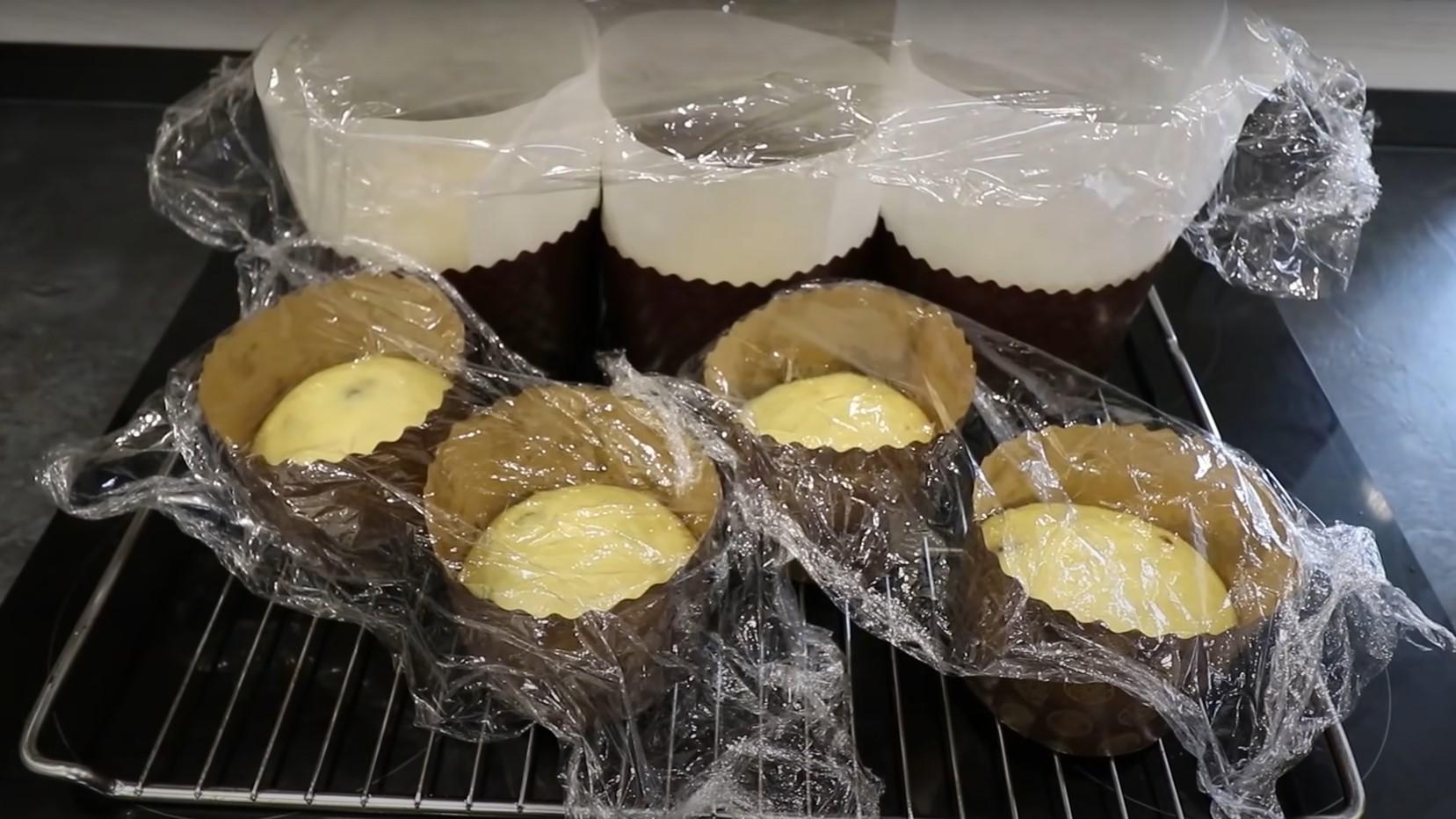
After 1 hour, take the dough out again and knead it. Divide it into the molds. Fill them 1/3 full. Cover and let rise.
Step 14
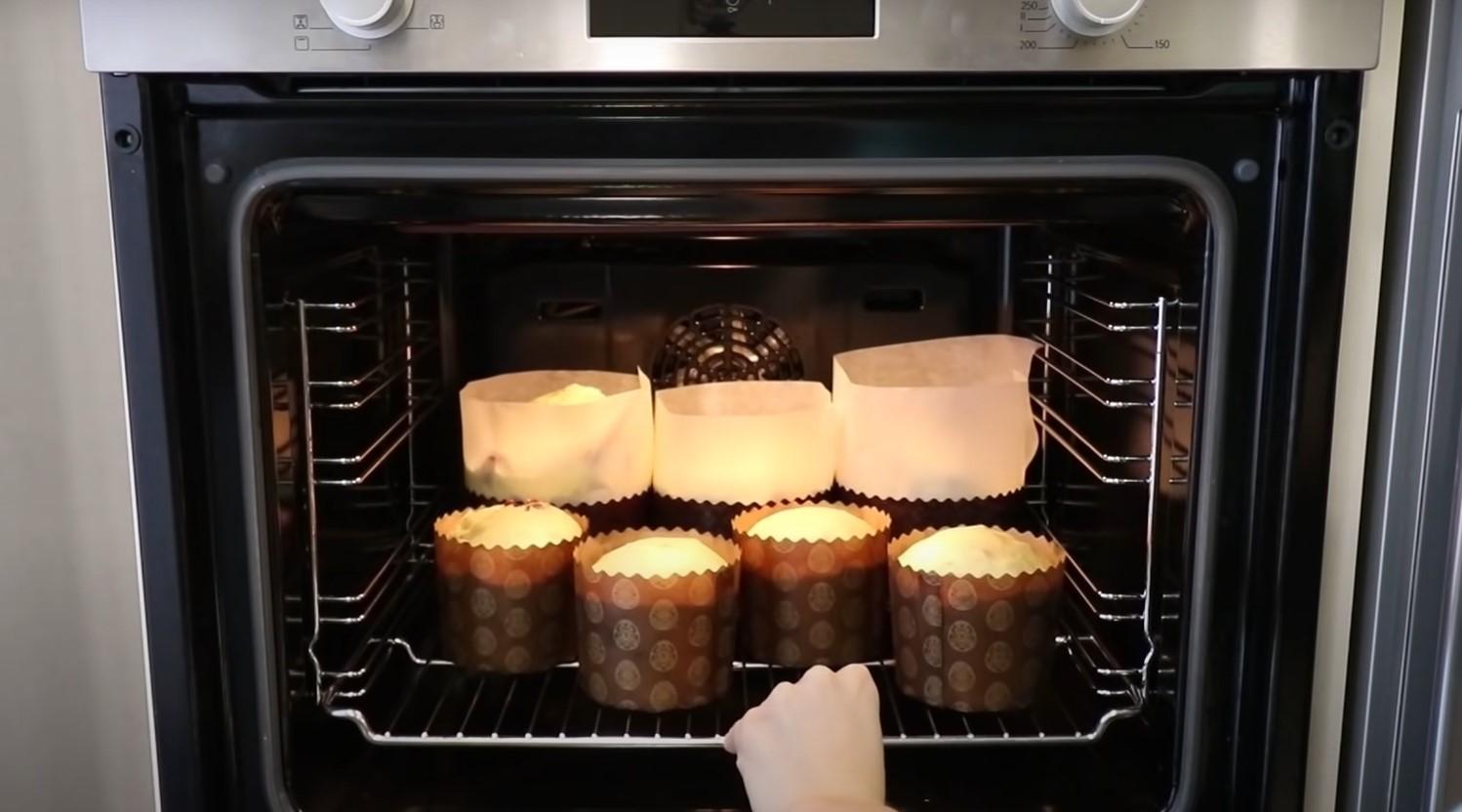
Bake at 180 degrees Celsius. Smaller kulichi bake for 30 minutes, larger ones for 40 minutes. Decorate the kulichi to your liking and enjoy this fragrant, delicious, and airy holiday homemade pastry!

Yeast dough for Easter cakes
I suggest making Easter kulichi using another recipe. All the ingredients are readily available, and the process is quite simple. Despite this, the baked goods are delicious, rich, and tender, while the dough is fibrous, porous, and moist. Even a novice cook can handle this recipe. Be sure to try making kulichi using this yeast dough.
Ingredients
- Flour - 600-650 g
- Milk - 200 ml
- Yeast (live) - 35 g
- Eggs - 2 pcs. and 2 yolks
- Sugar - 170 g
- Butter - 120 g
- Vanilla sugar - 20 g
- Salt - 1/2 tsp.
- Flavorings (raisins, dried apricots, nuts) - 150 g
Cooking time: 3-4 hours
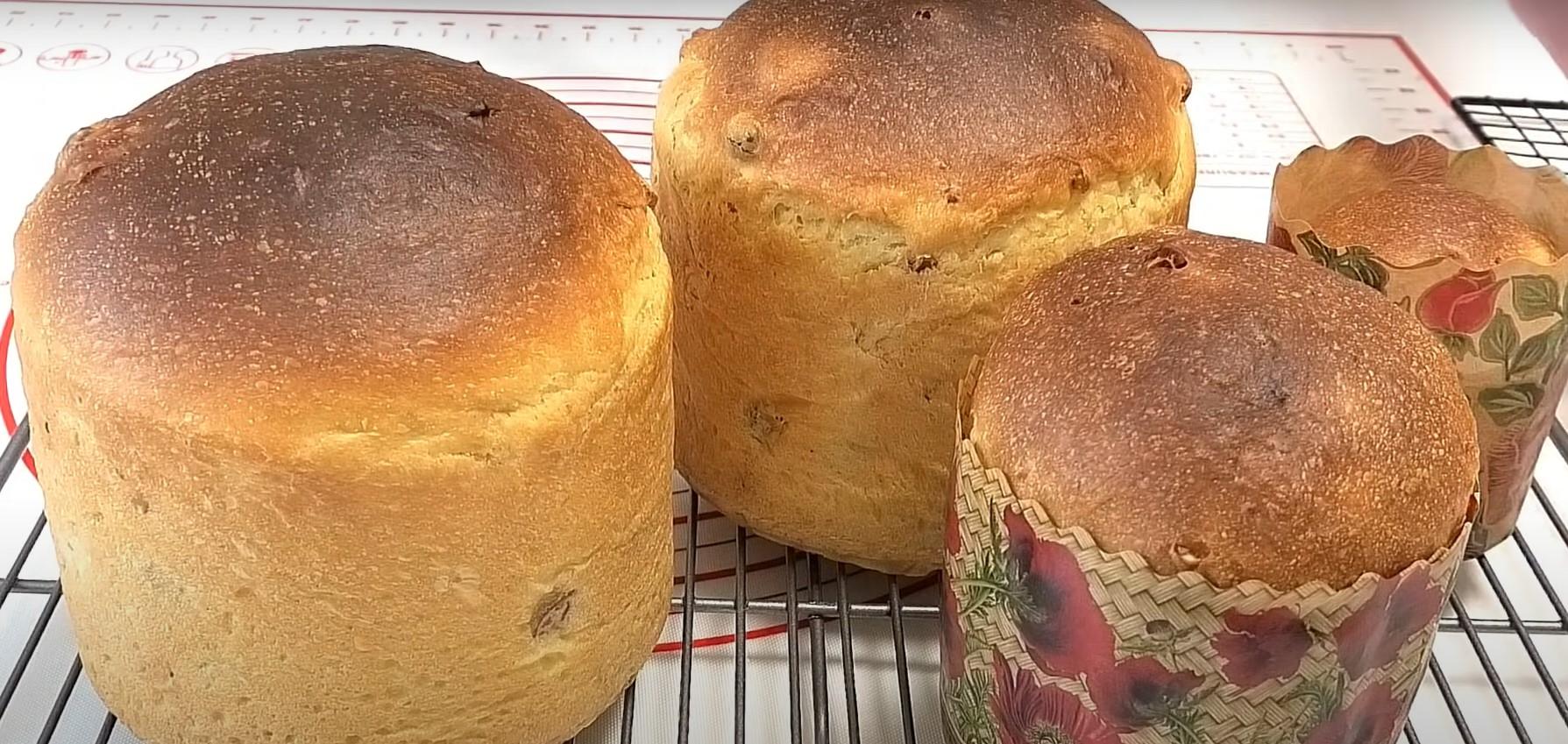
Servings: 2 Easter cakes in a form with a diameter of 14 cm, a height of 10 cm; 1 Easter cake in a form with a diameter of 9 cm, a height of 8 cm, 1 Easter cake with a diameter of 7 cm, a height of 8 cm.
Step-by-step recipe
Step 1
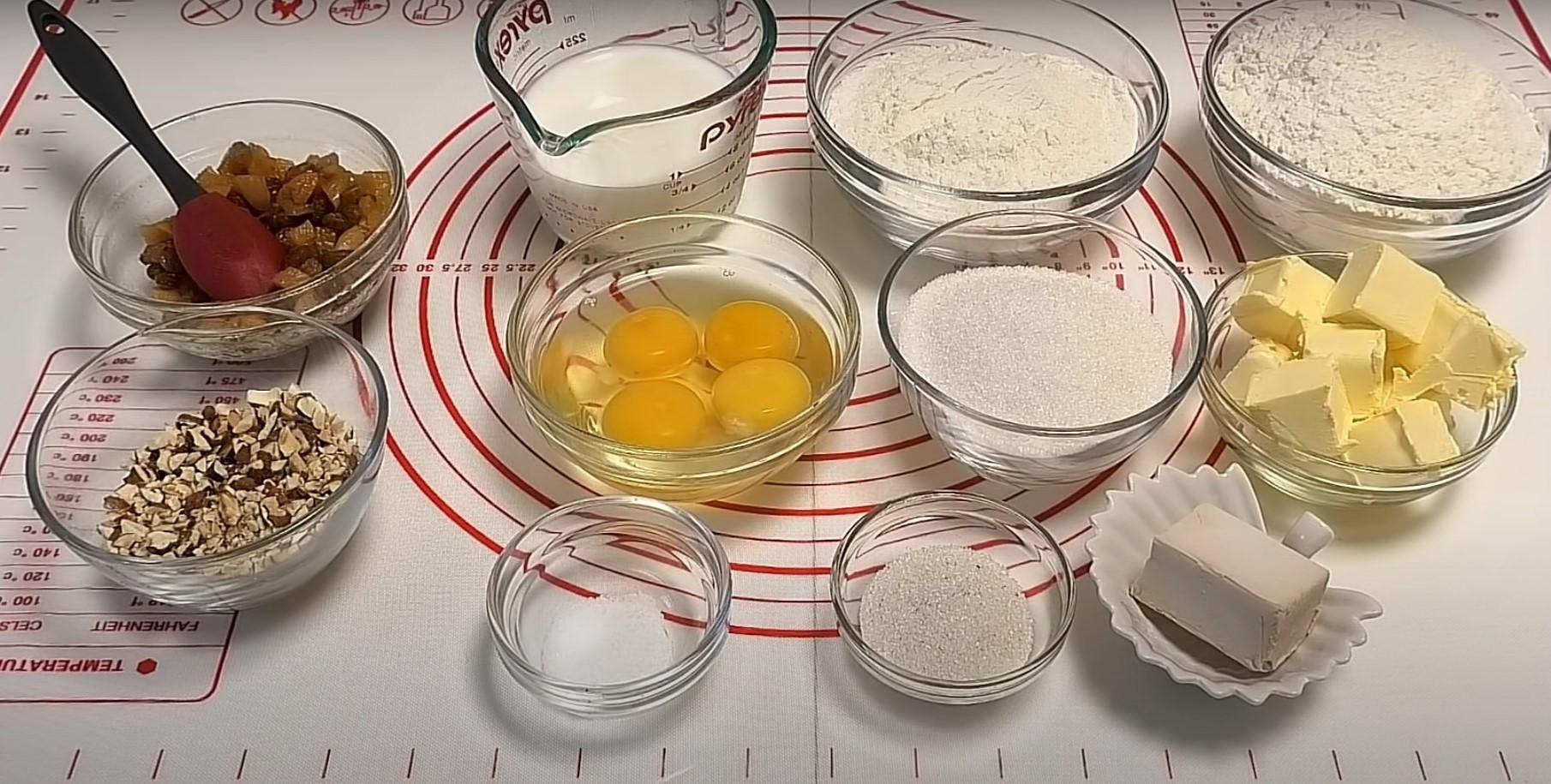
We measure out the required amount of ingredients.
Step 2
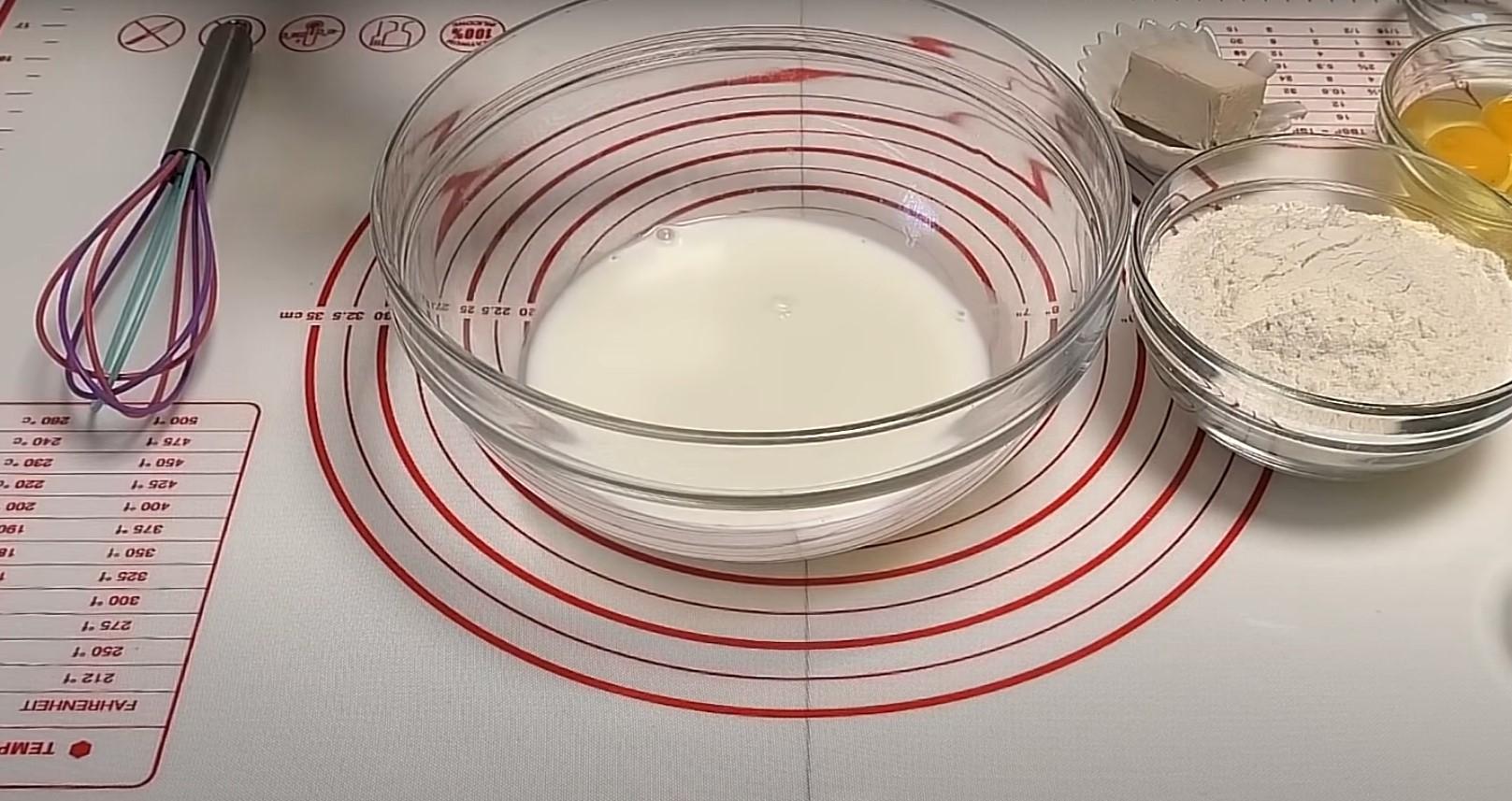
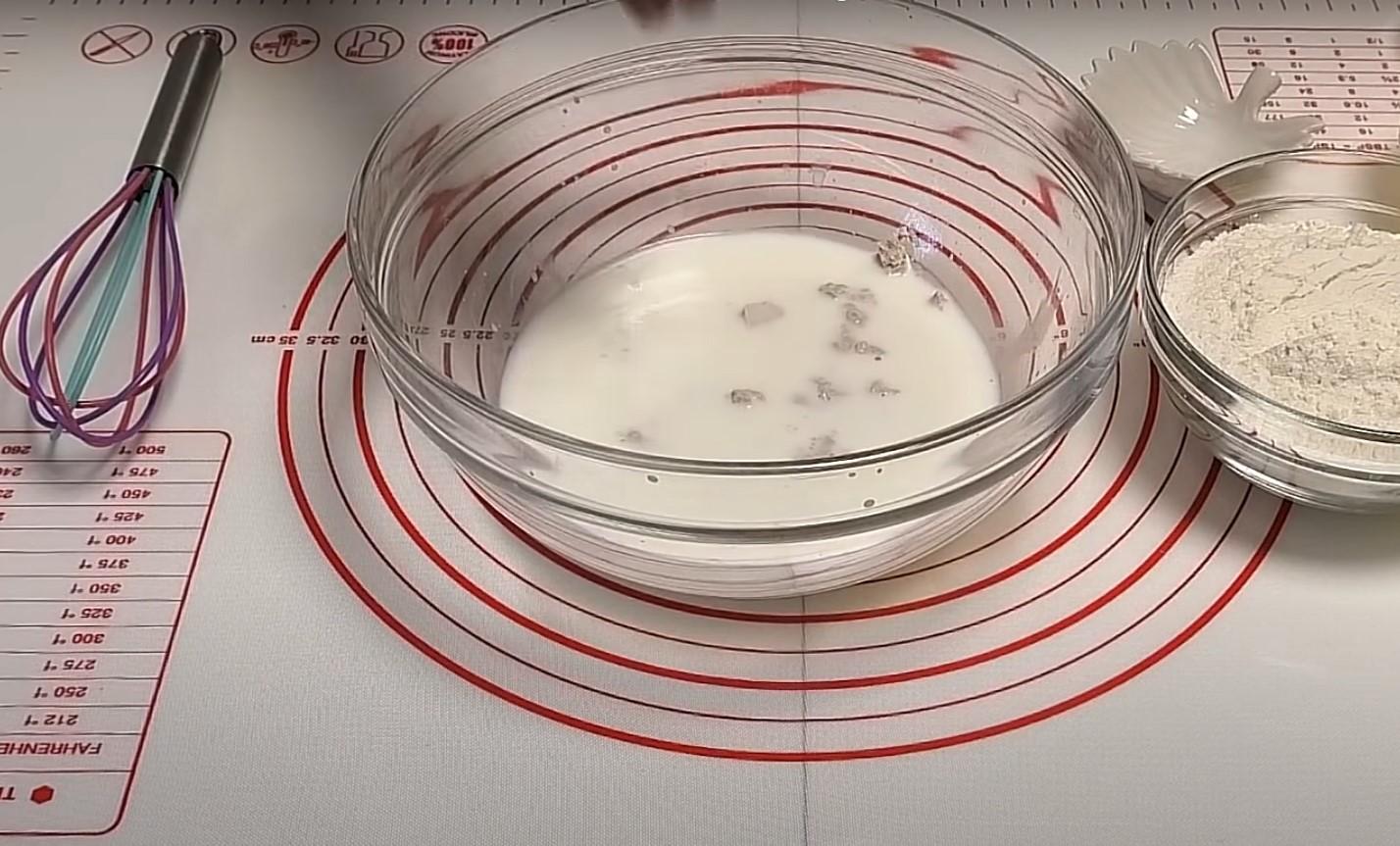
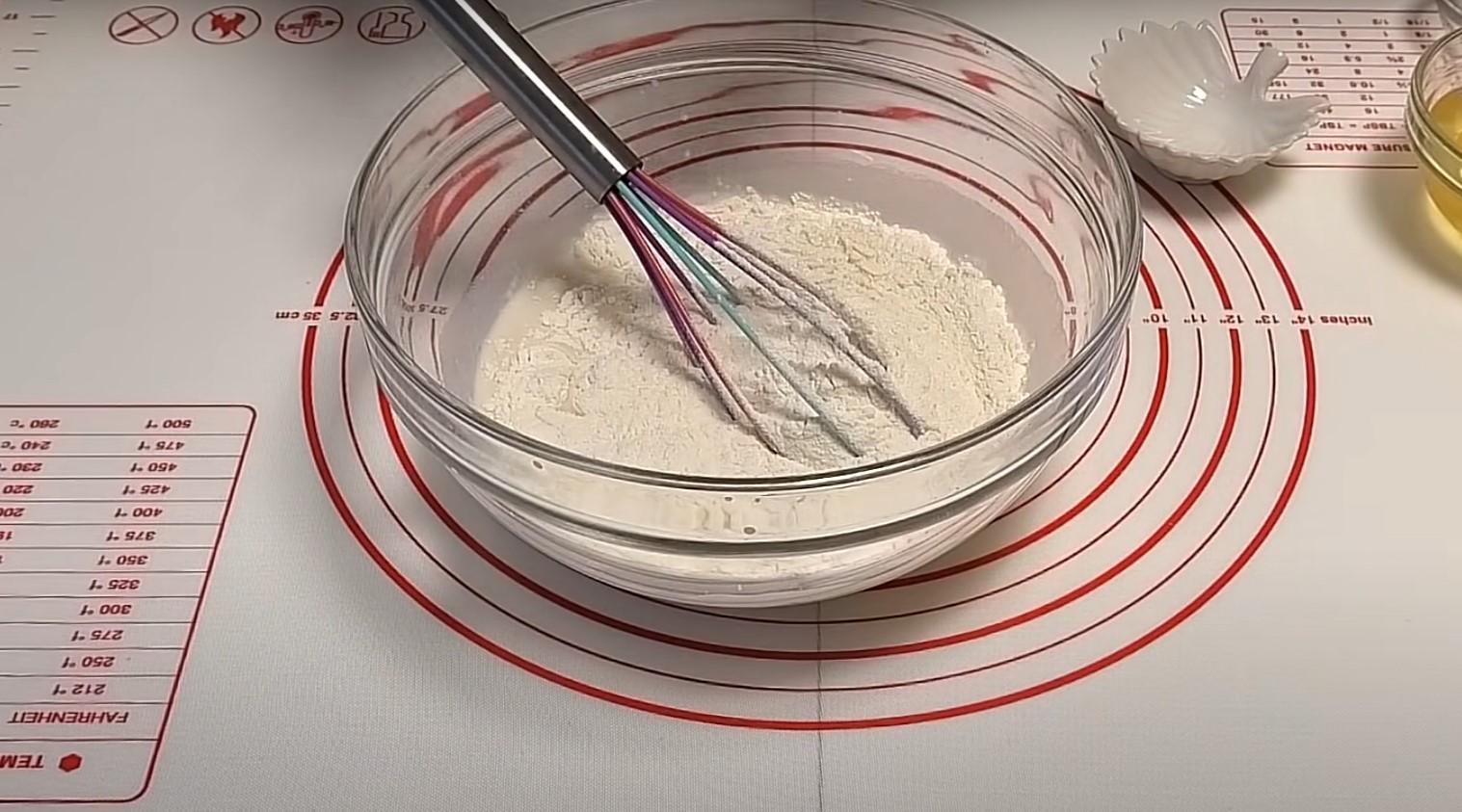
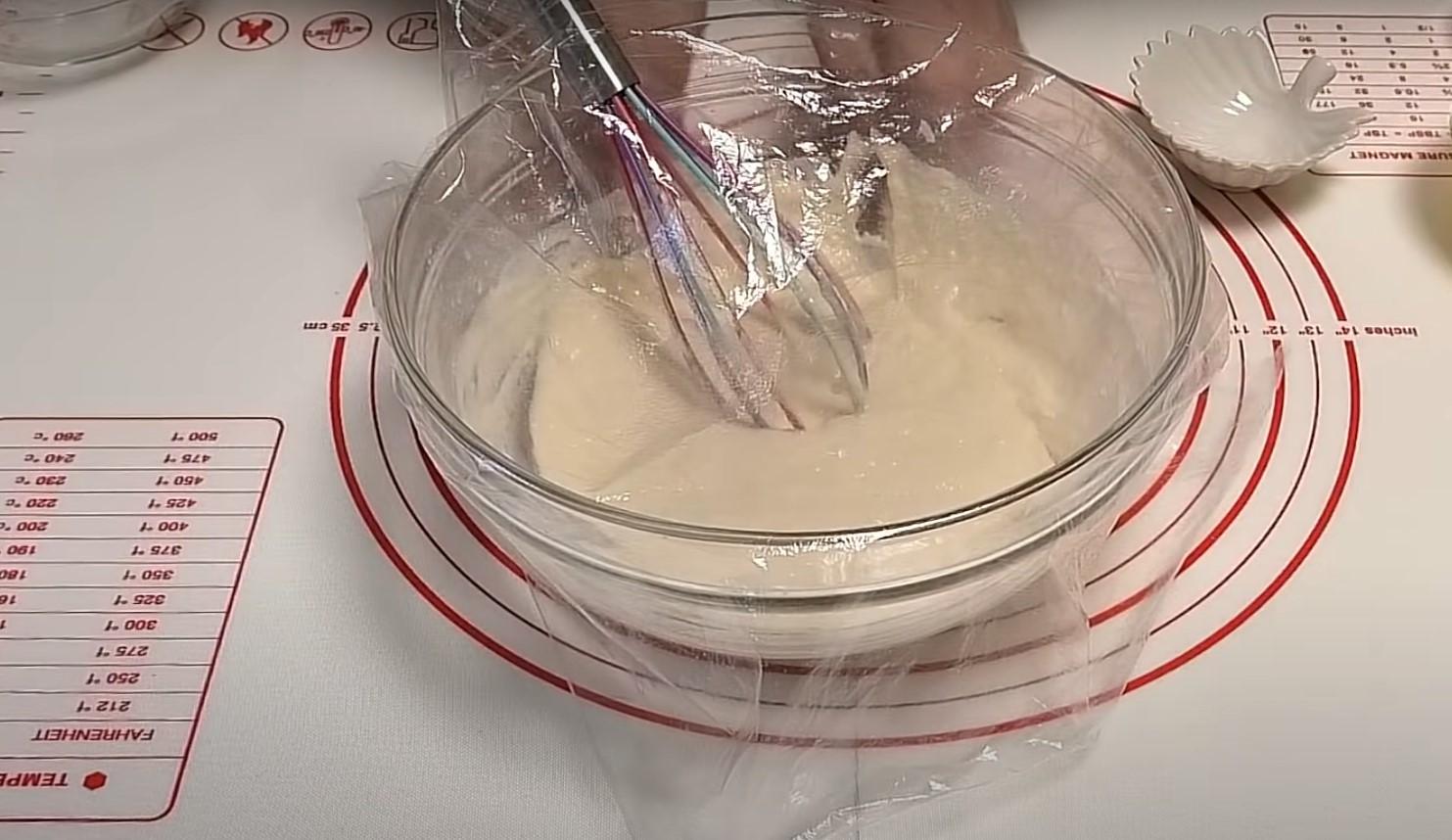
Prepare the dough: pour in warm milk (maximum 40 degrees Celsius), add yeast, and flour (200 g). Stir, cover with cling film, and let sit for 15-20 minutes.
Step 3
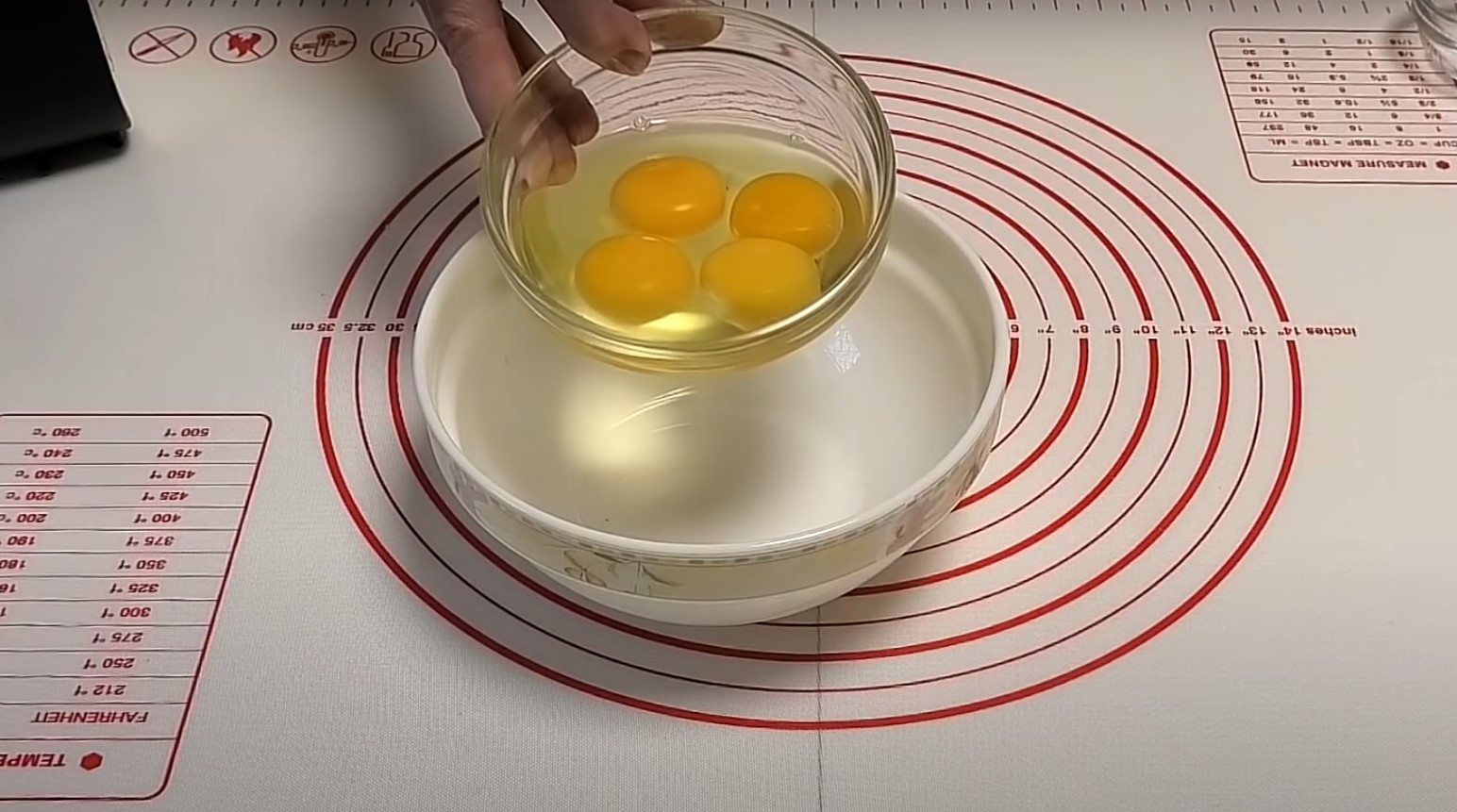
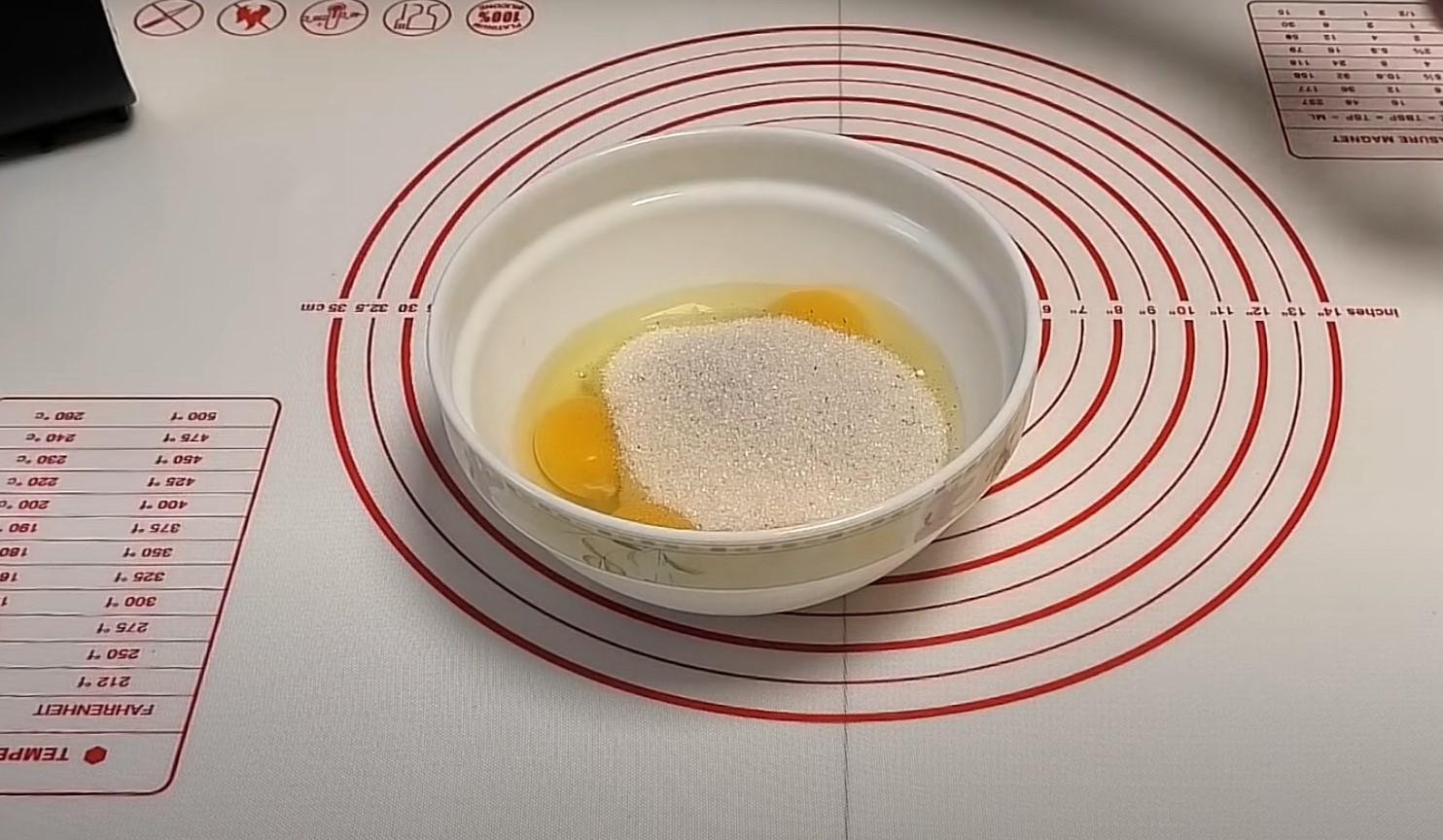
Pour the eggs into a deep bowl.
Step 4
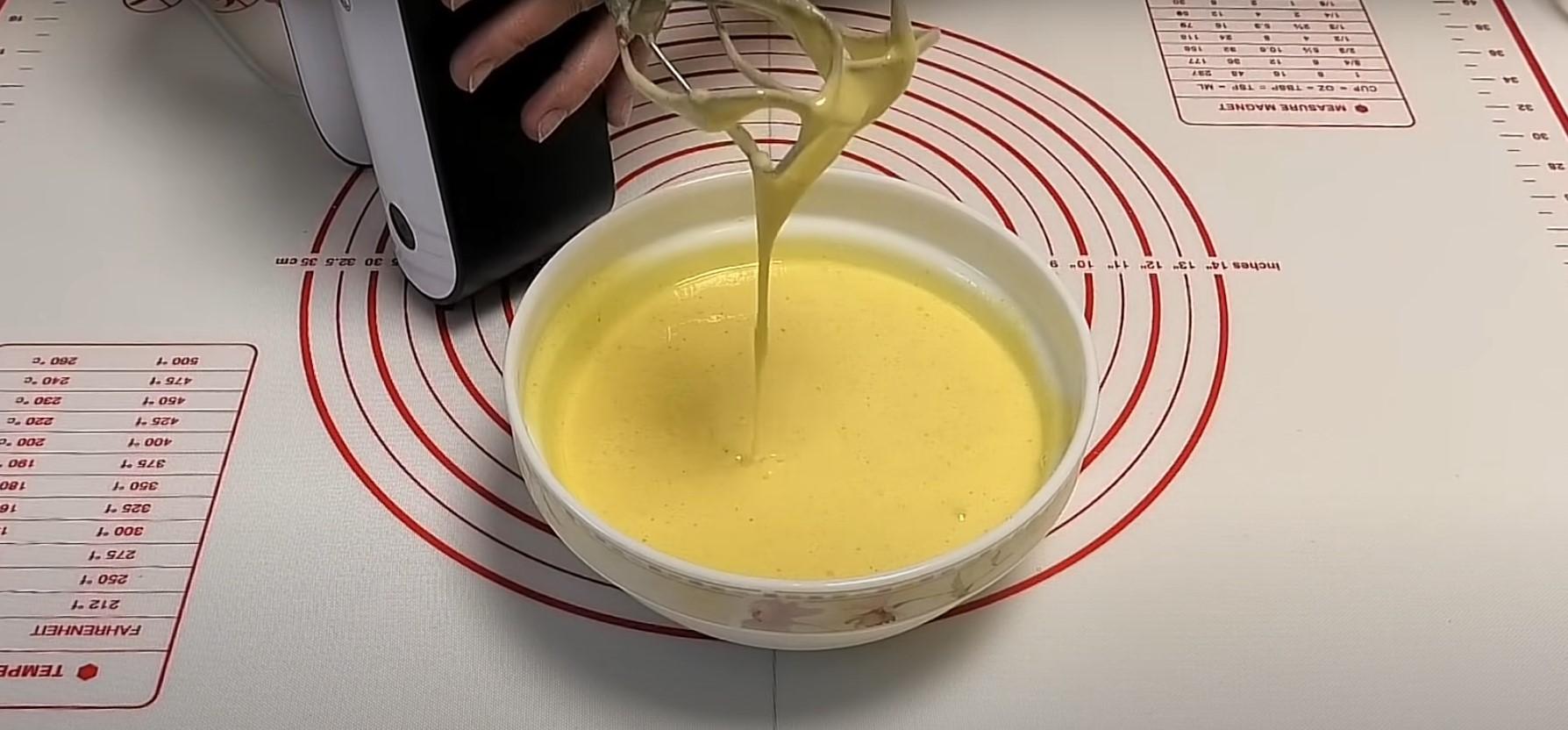
Add sugar, salt and vanilla sugar. Beat with a mixer until a fluffy, light mixture is obtained.
Step 5
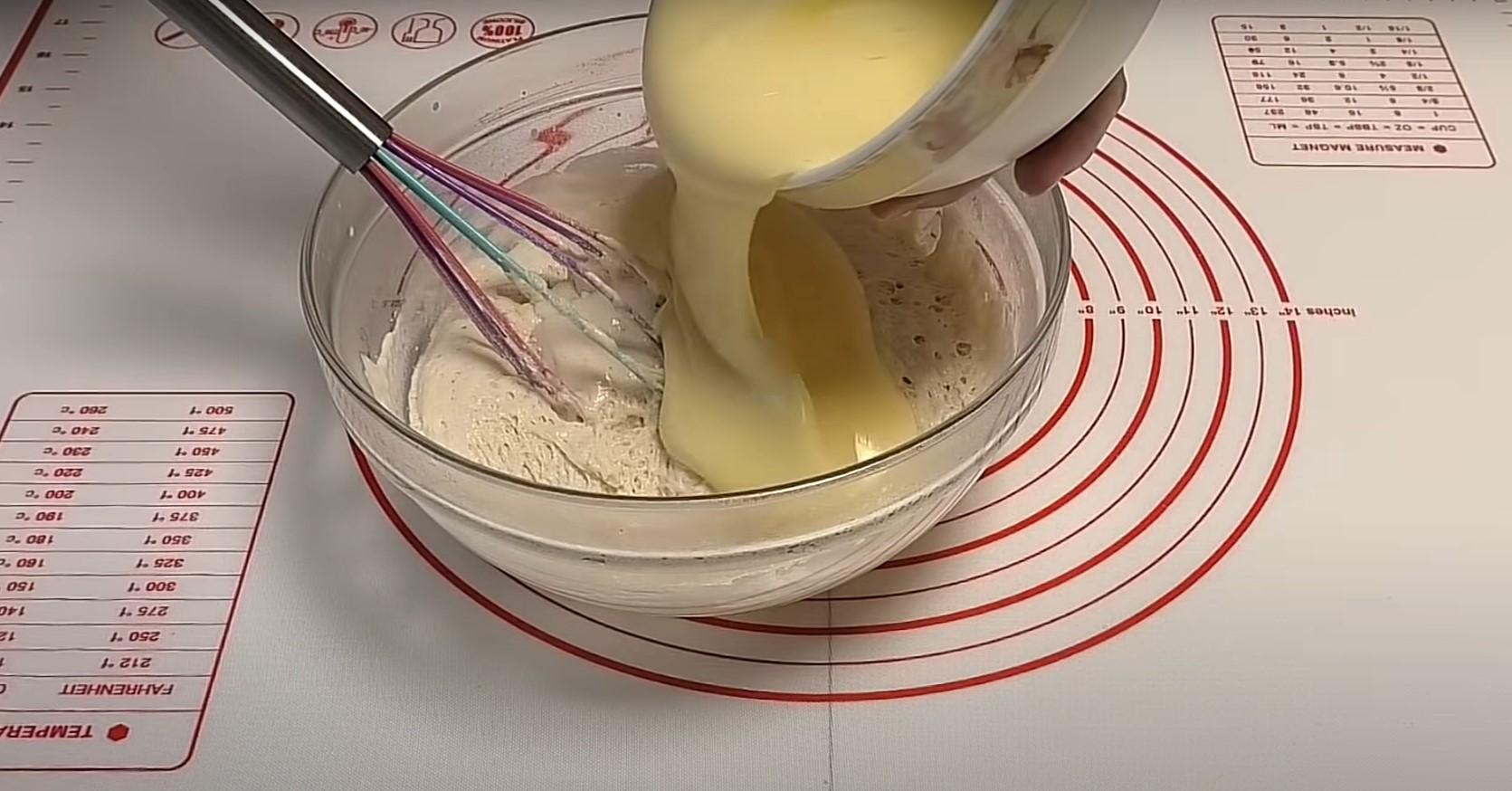
Combine the dough and the yeast mixture. Mix well with a whisk or spatula.
Step 6
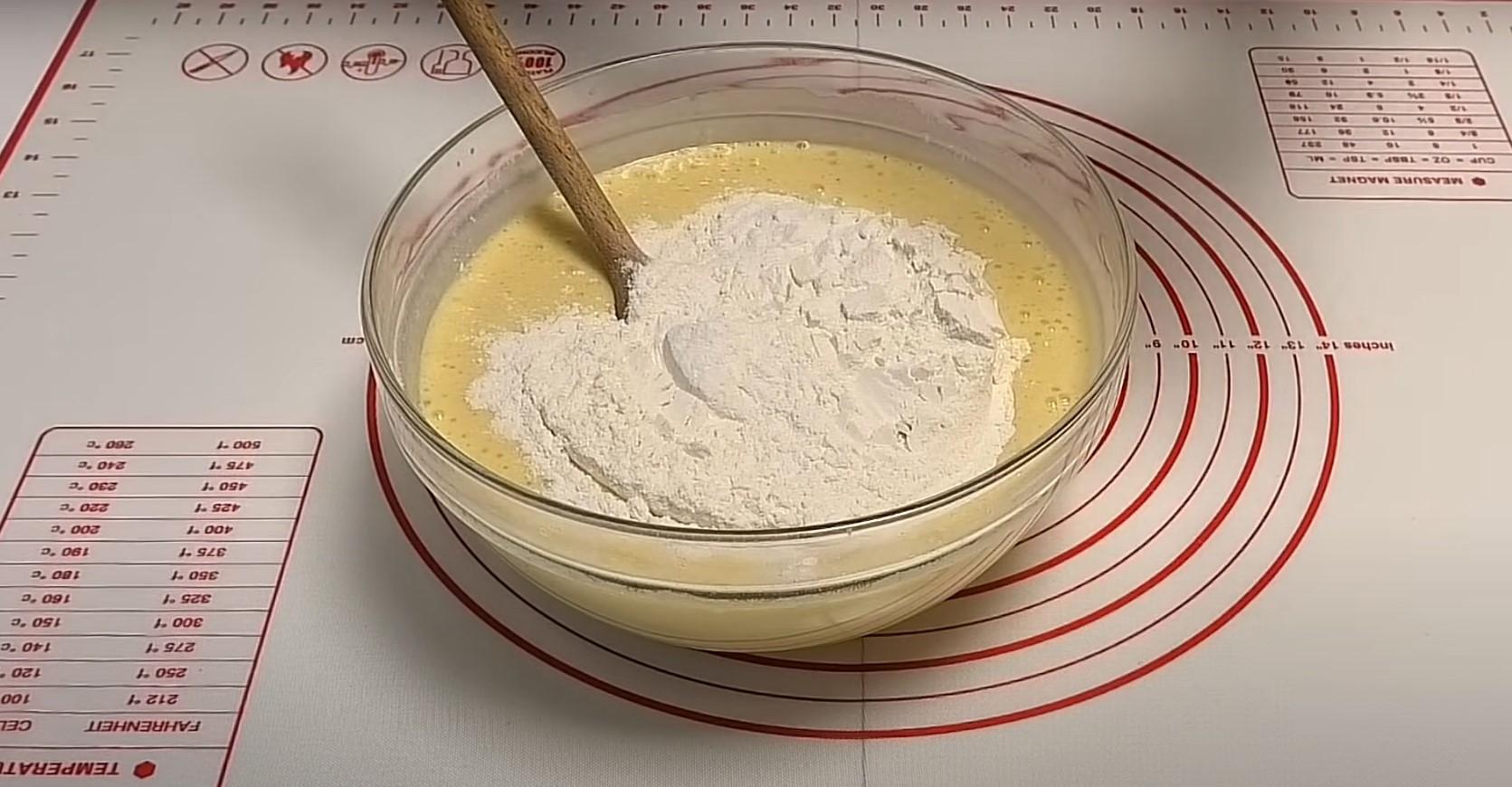
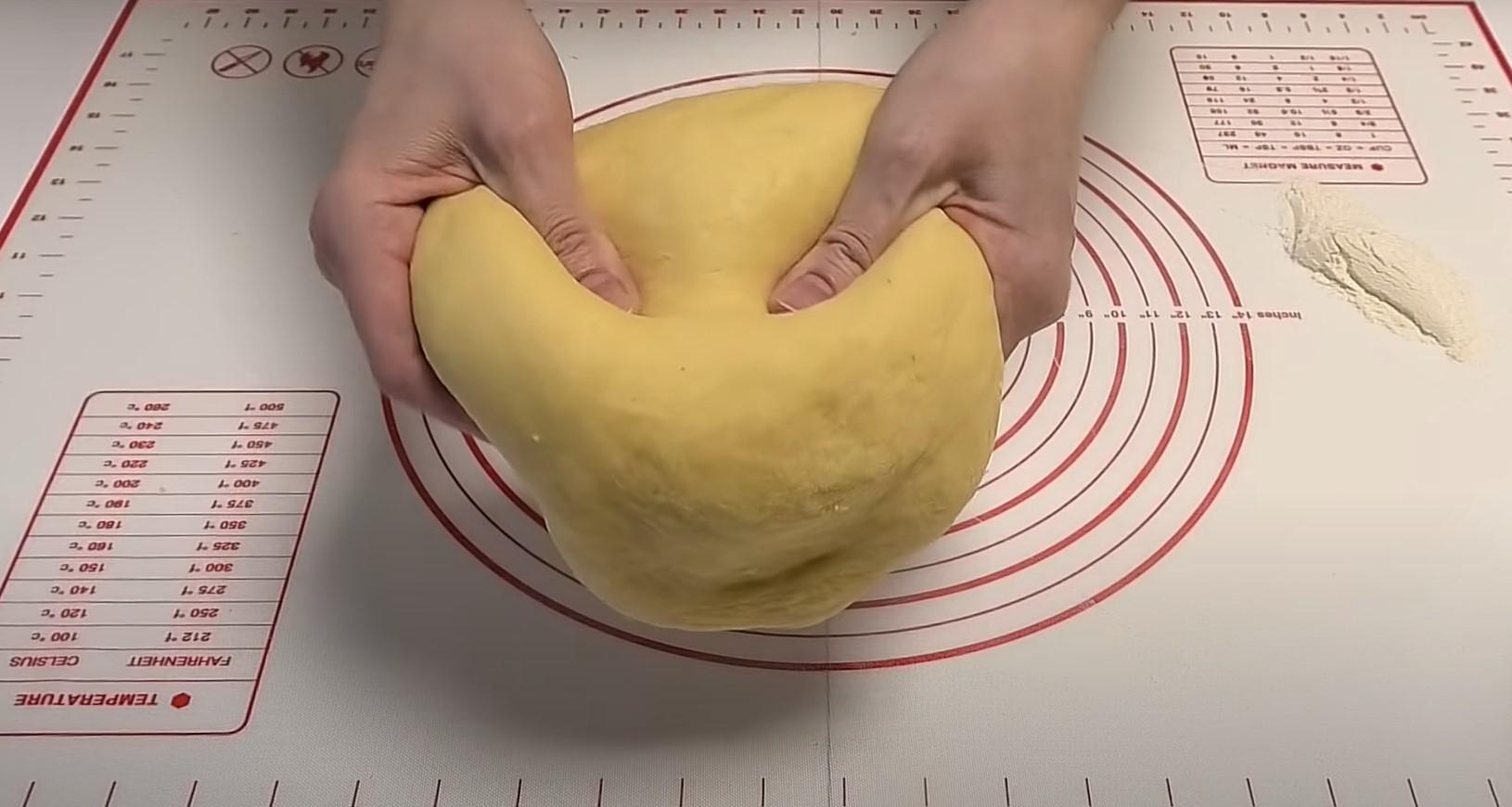
Add flour. Mix first with a spoon, then knead on the counter. Don't add too much flour; the dough should remain moist and elastic, but not sticky.
Step 7
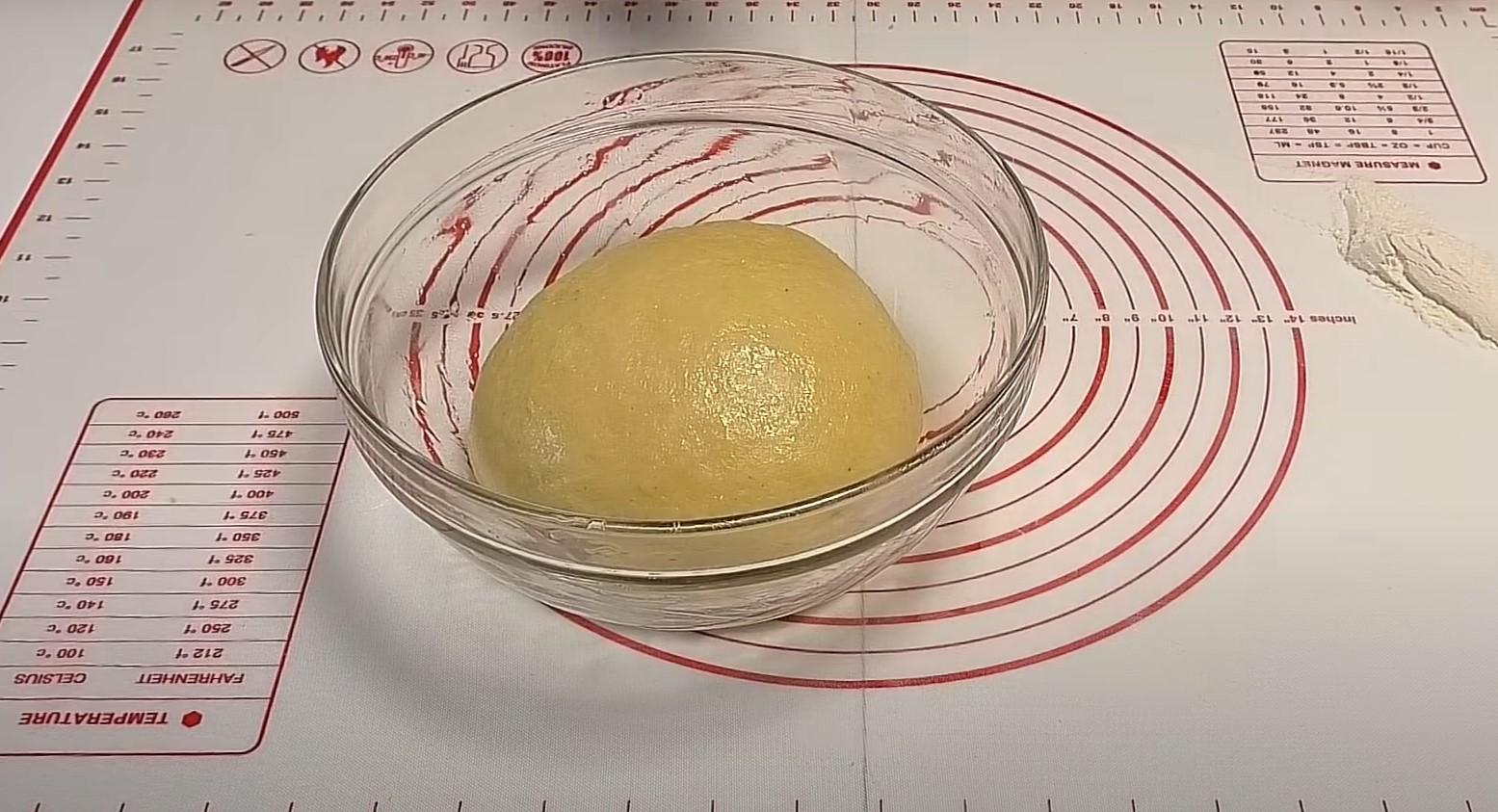
Grease the bowl with sunflower oil and leave the dough to rise for 30 minutes.
Step 8
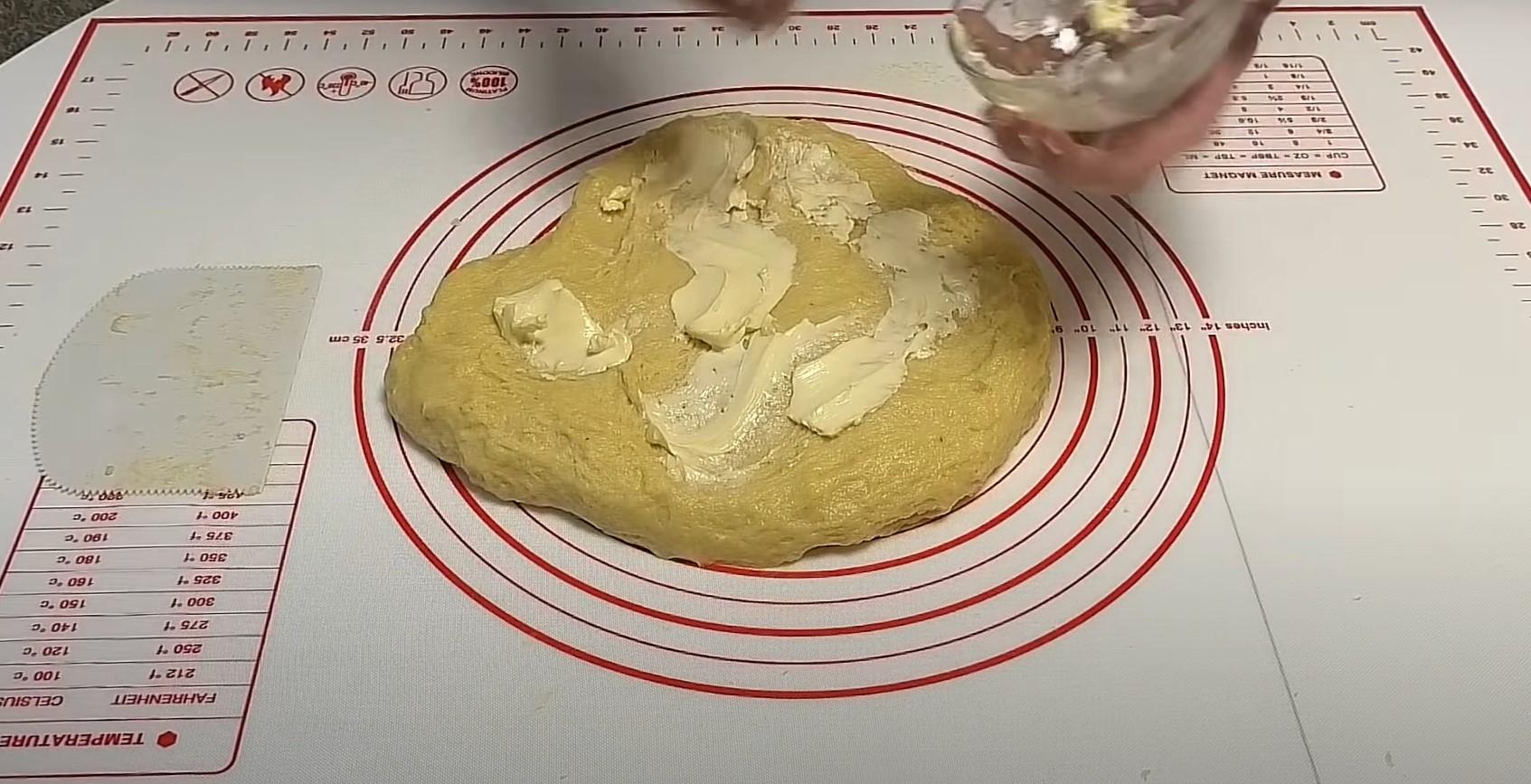
After half an hour, turn the dough out onto the counter and begin kneading in the softened butter. Knead the dough until it no longer sticks to your hands or the counter (10-15 minutes). Place it back in the deep bowl, cover, and let it rise in a warm place for 50-60 minutes.
Step 9
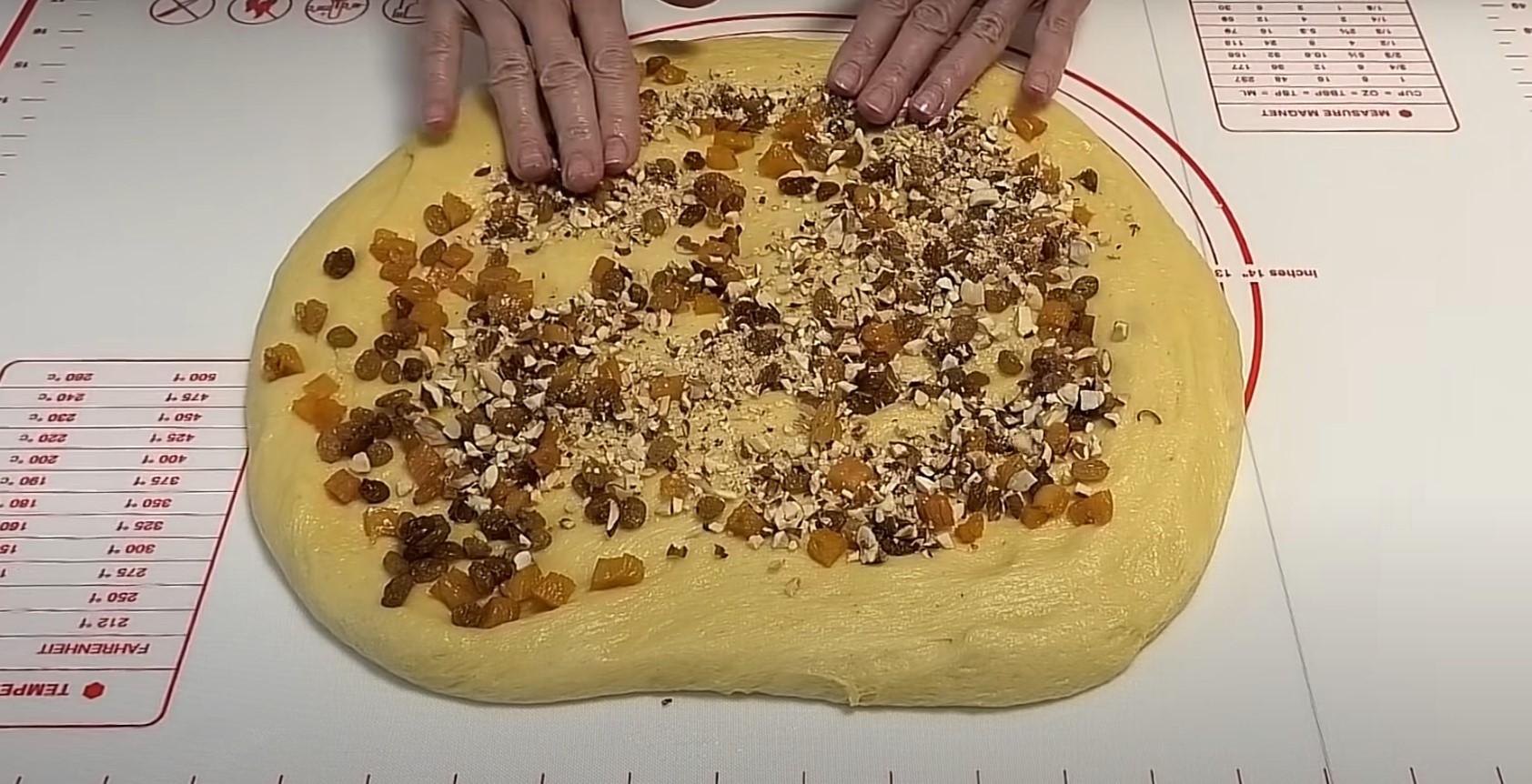
Knead the dough once it's risen, add dried fruit and nuts, and mix. Let it rise again for 20-30 minutes.
Step 10
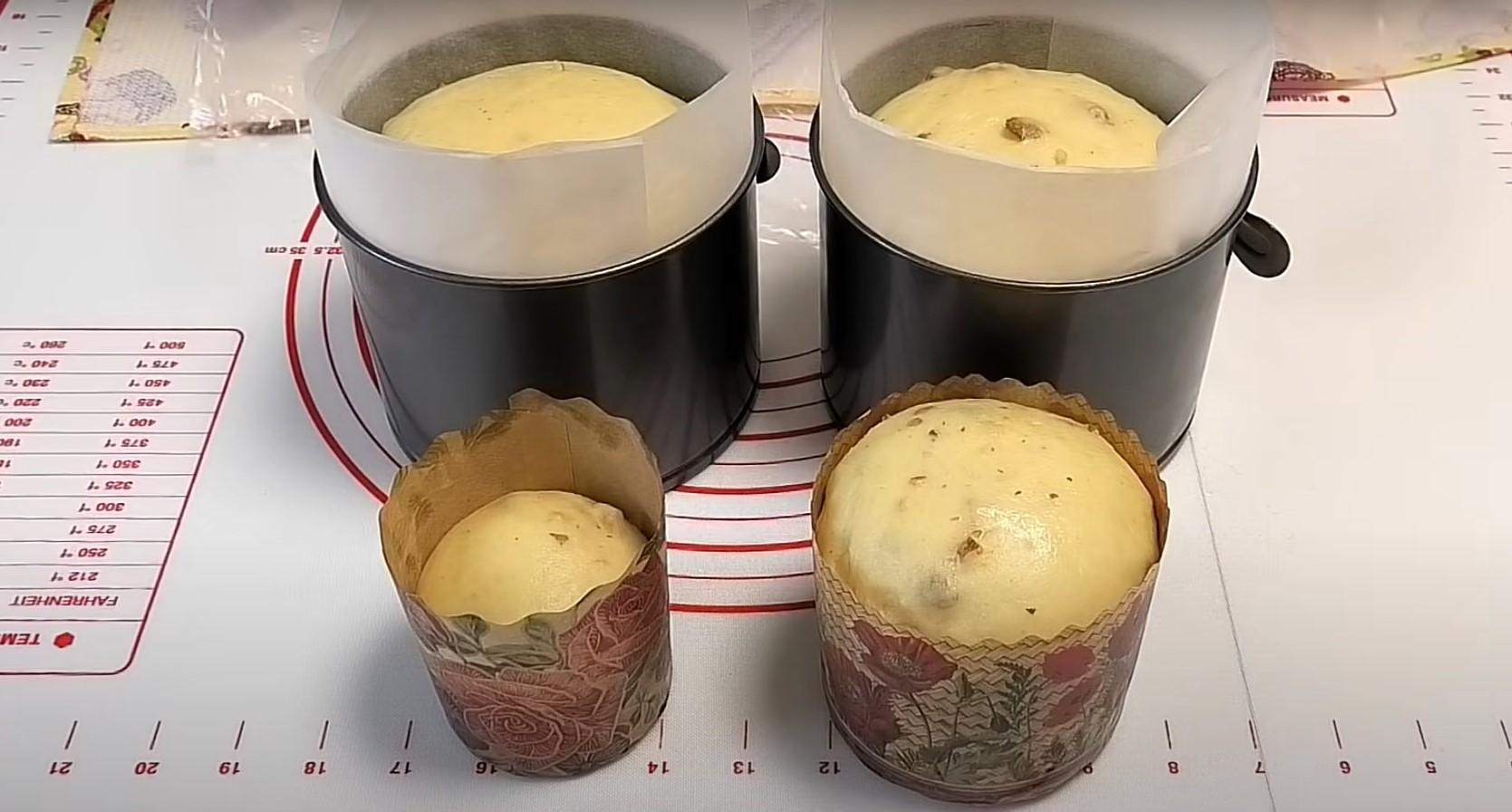
Spread the dough halfway into the molds. Let it rise until it almost fills the mold.
Step 11
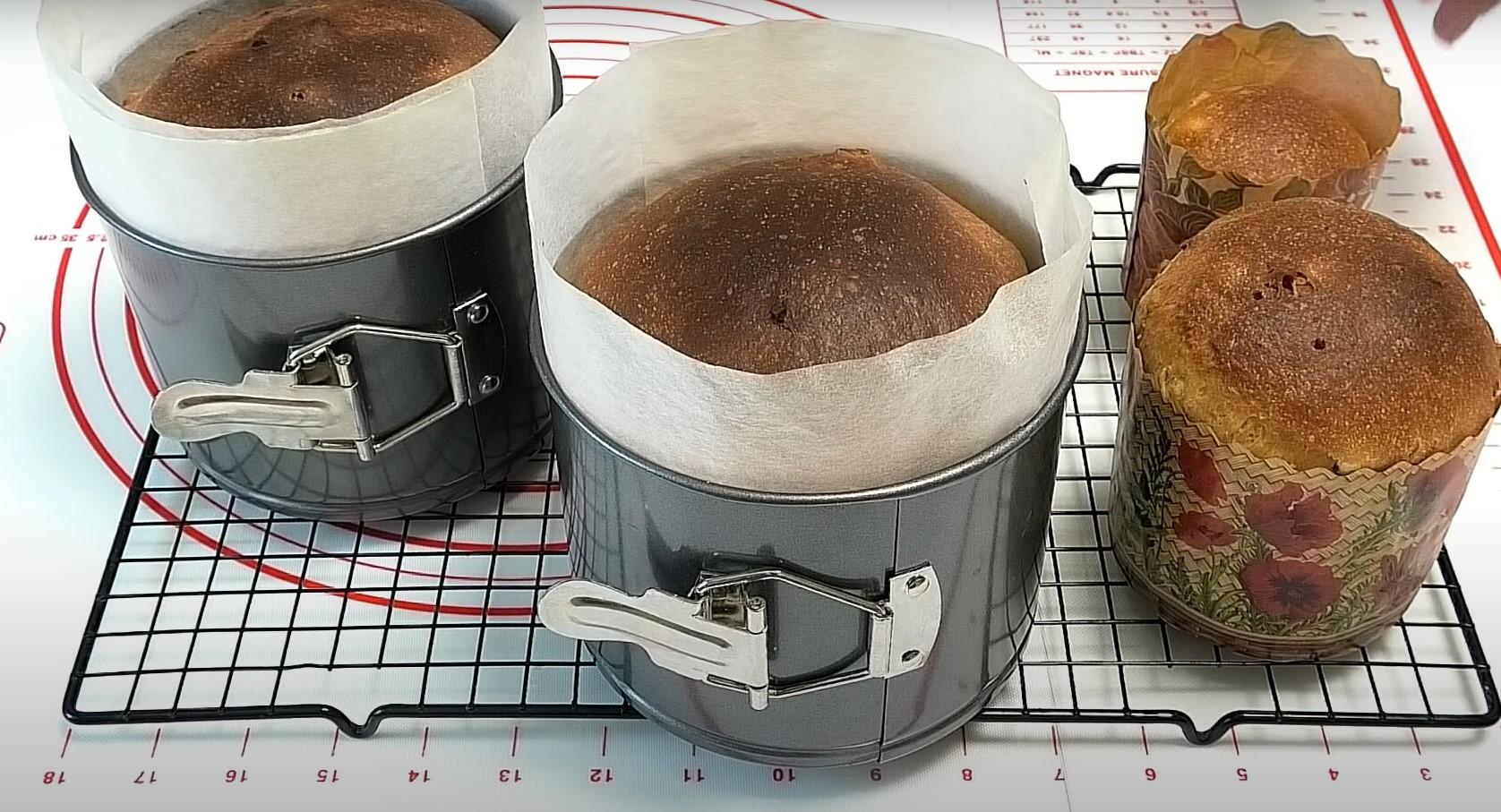
Place in the oven at 170 degrees Celsius. Bake the small ones for 20 minutes, the medium ones for 30-35 minutes, and the large ones for 40-45 minutes.
Viennese dough for Easter cakes with live yeast
Besides Alexandrian dough, Viennese dough, also known as "night dough," is very popular among home cooks. It gets its name from the unique recipe. The starter for Viennese dough is left to rise overnight. This saves time on preparation; in the morning, the dough can be kneaded from the prepared starter and baked into Easter cakes.
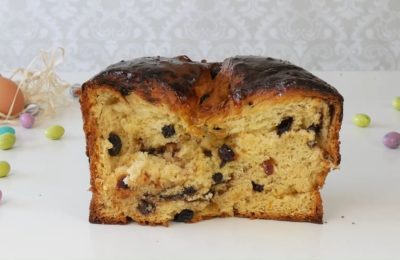
Although the Viennese Easter cake shares many similarities with the Alexandrian version, there are fundamental differences in the recipe. This is why the kulichi are always fluffy, light, and practically weightless. However, they are not hollow at all; the crumb is quite dense, porous, and very soft. I invite you to learn the secrets of making kulichi using Viennese dough.
Ingredients
Dough:
- Eggs - 4 pcs.
- Sugar - 200 g
- Milk - 300 g
- Live yeast - 35 g
- Butter - 200 g
Dough:
- Flour - 1 kg
- Salt - 1/2 tsp.
- Vanilla sugar - 10 g
- Candied fruits - 100 g
- Orange, lemon zest
- Juice of 1 orange
Cooking time: 2 hours plus 8-12 hours for the dough
Servings: 6 medium Easter cakes
Step-by-step recipe
Step 1
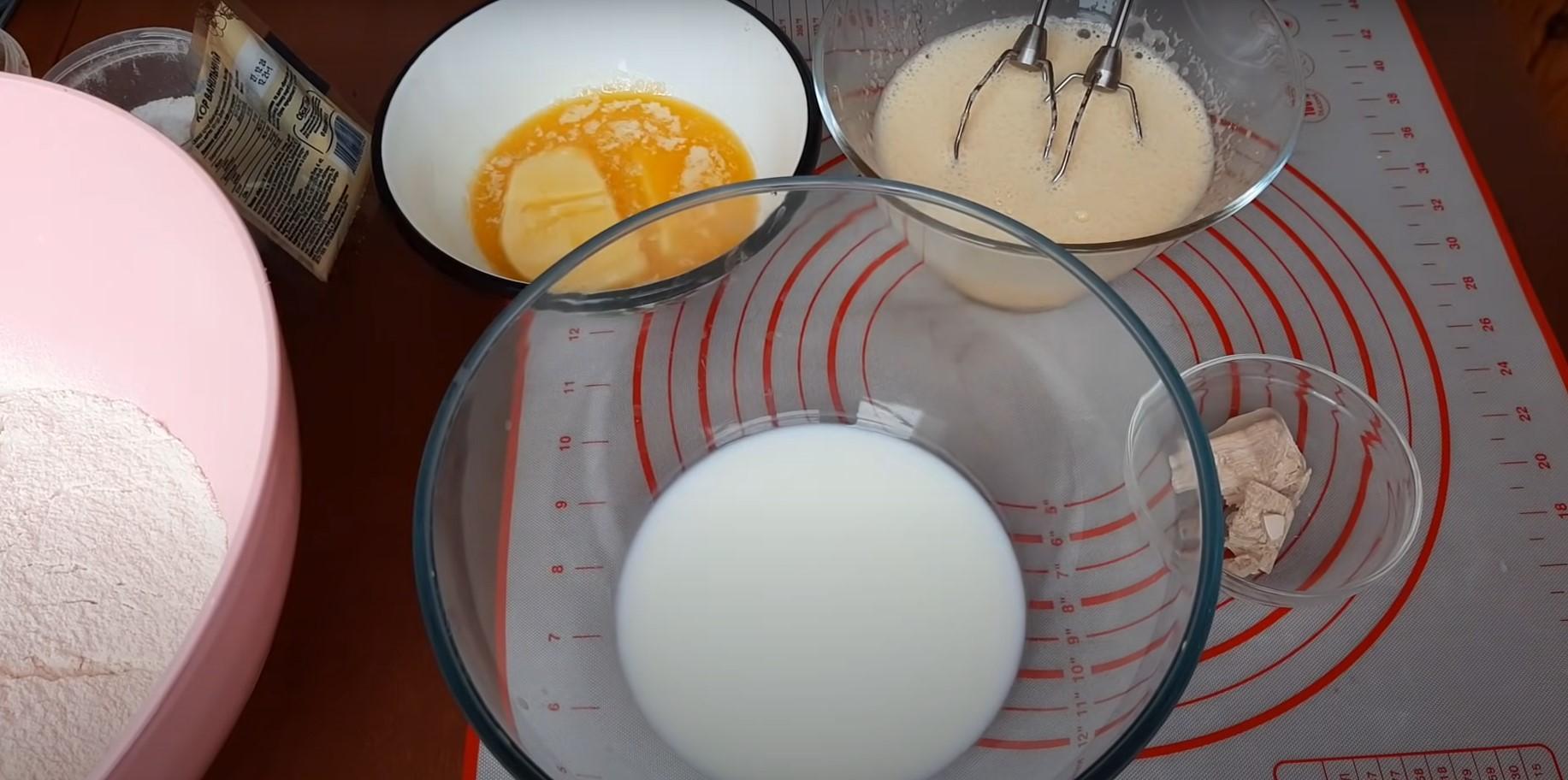
Prepare the ingredients for the dough. Melt the butter and let it cool. Warm the milk slightly. Beat the eggs with the sugar until the sugar dissolves.
Step 2
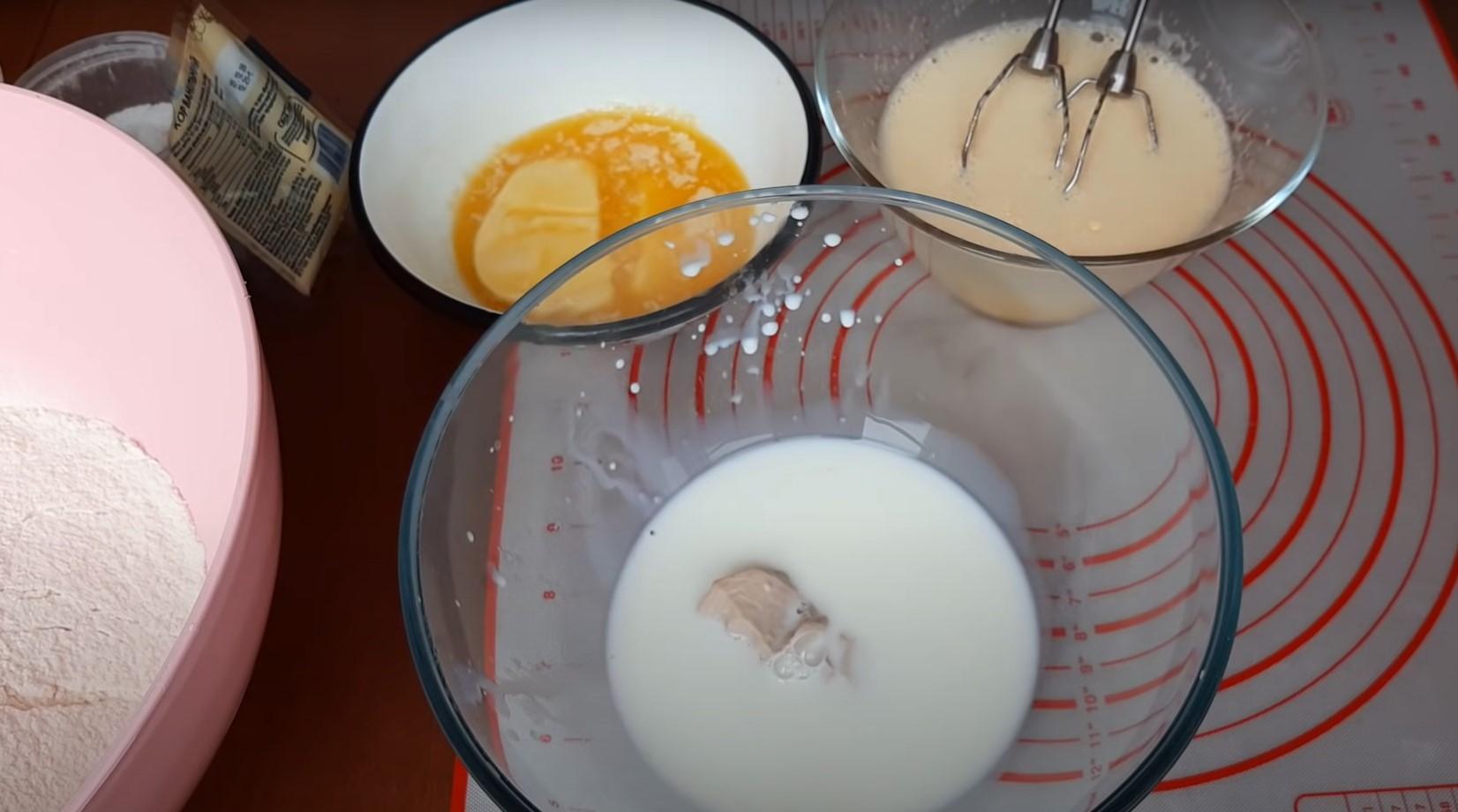
Dissolve the yeast in milk.
Step 3
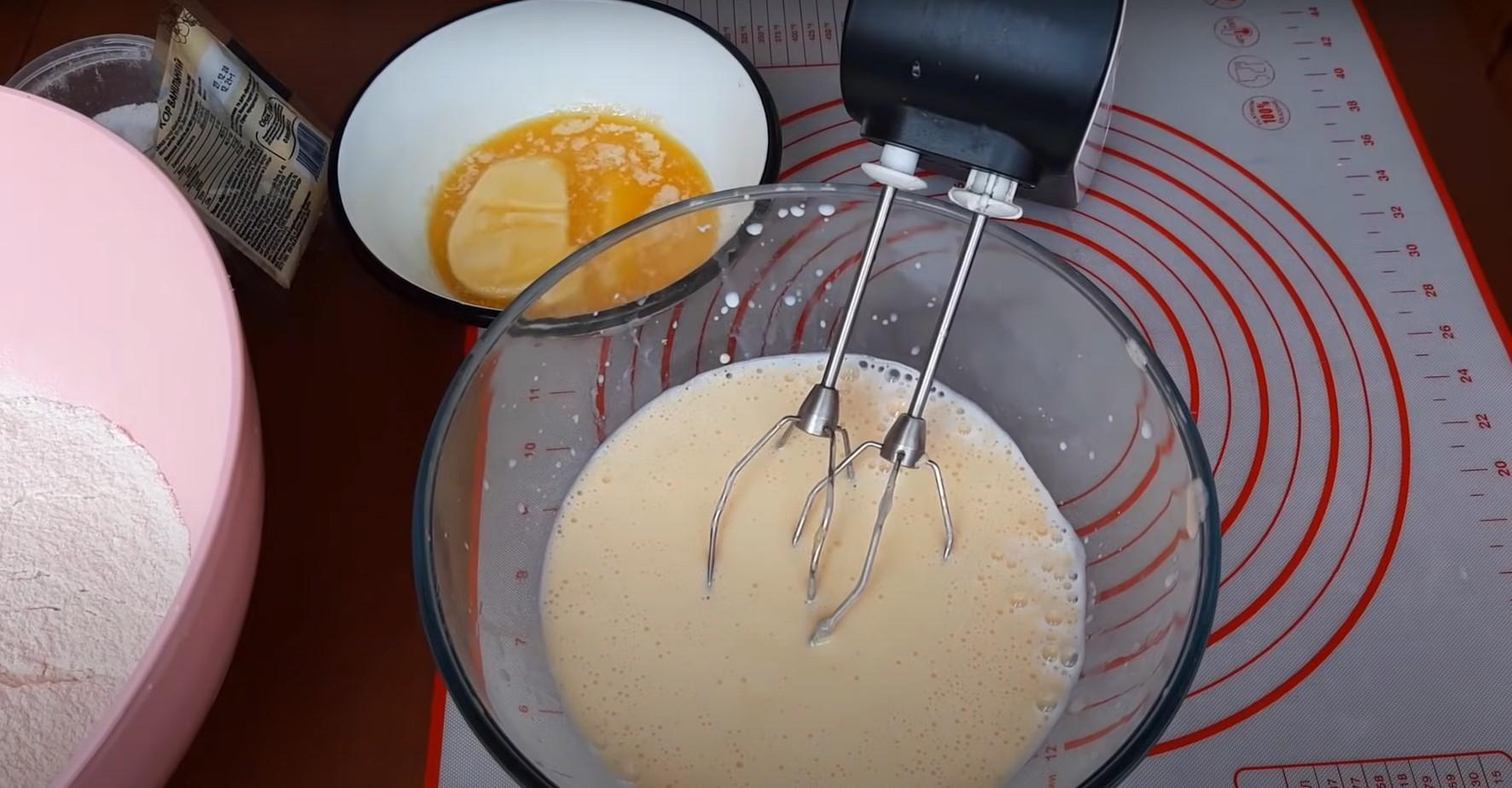
Combine the egg mixture with the yeast mixture.
Step 4
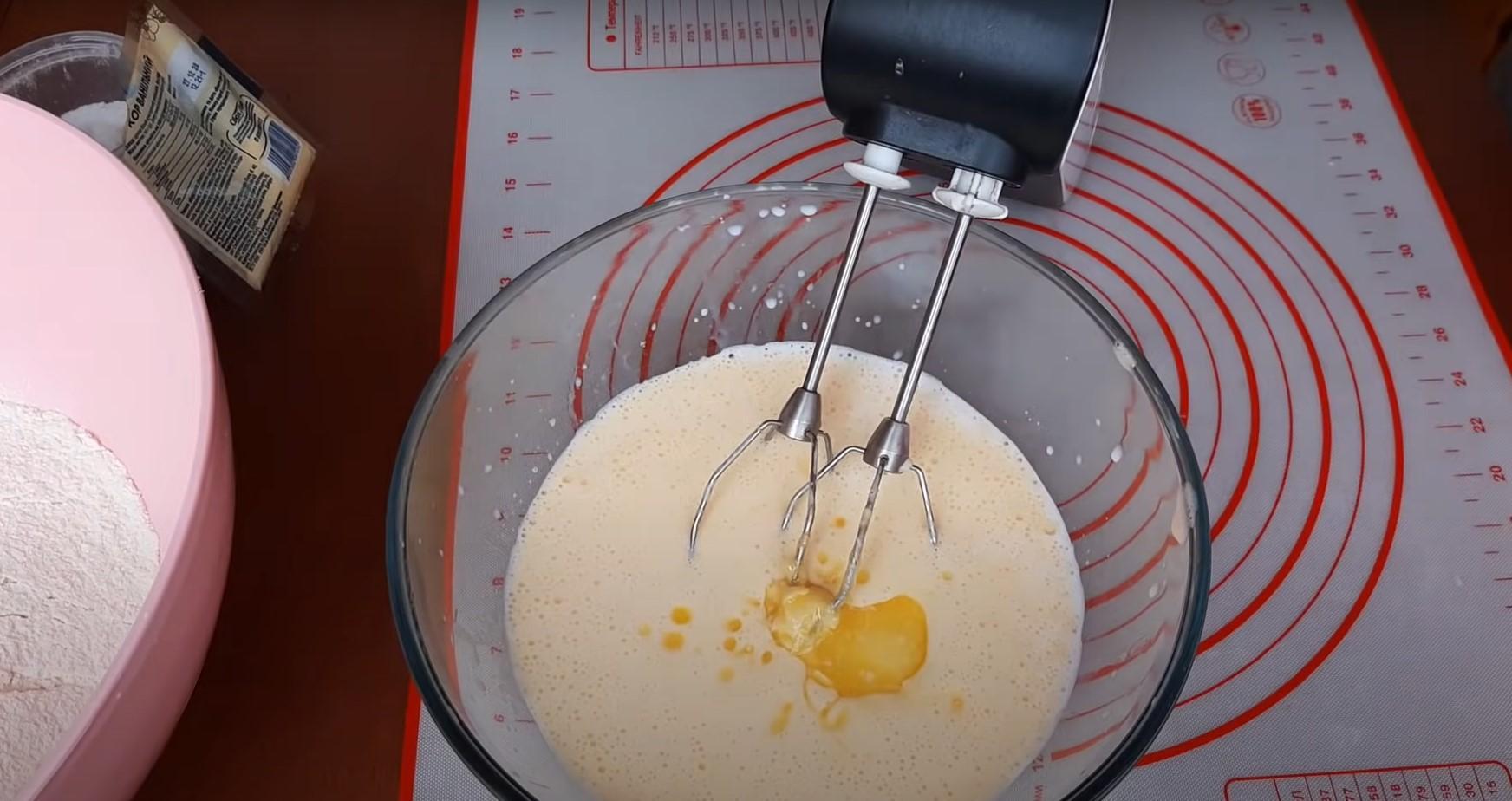
Pour in the oil and stir.
Step 5
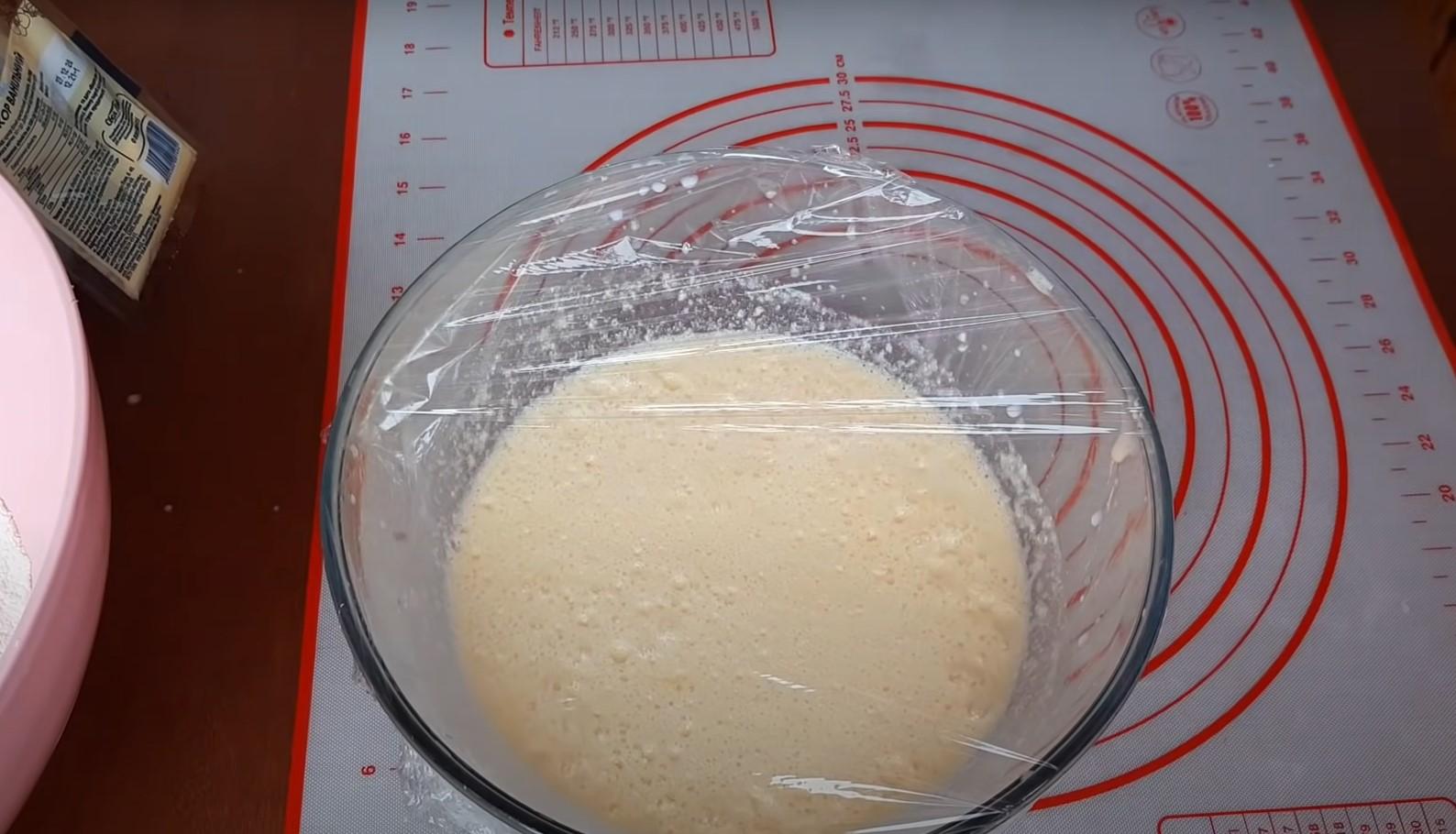
Cover with cling film and leave for 8-10 hours at room temperature.
Step 6
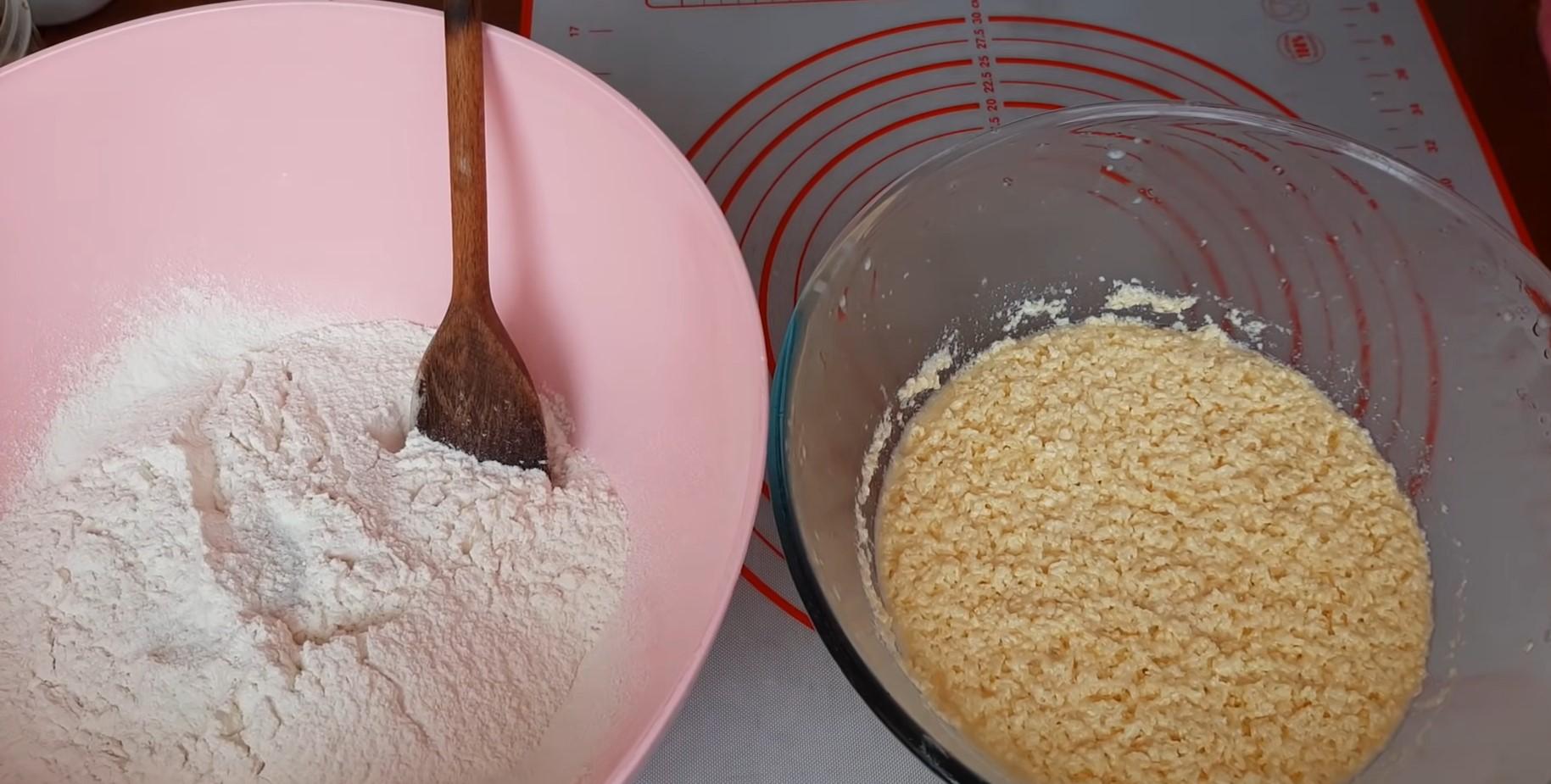
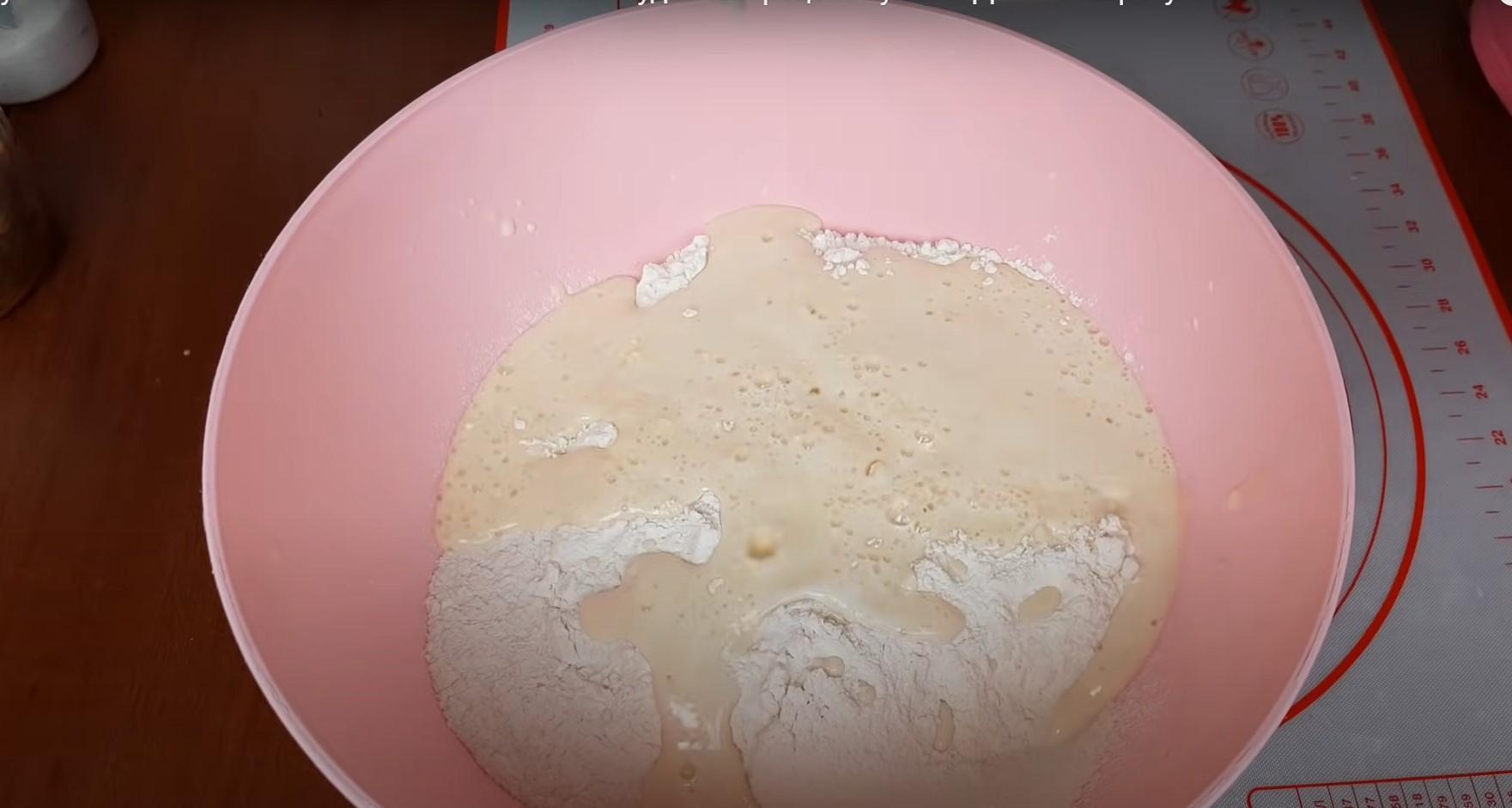
Add salt and vanilla sugar to the flour and pour in the prepared yeast mixture. Knead the dough, first with a spoon, then with your hands for 5-10 minutes, until it stops sticking.
Step 7
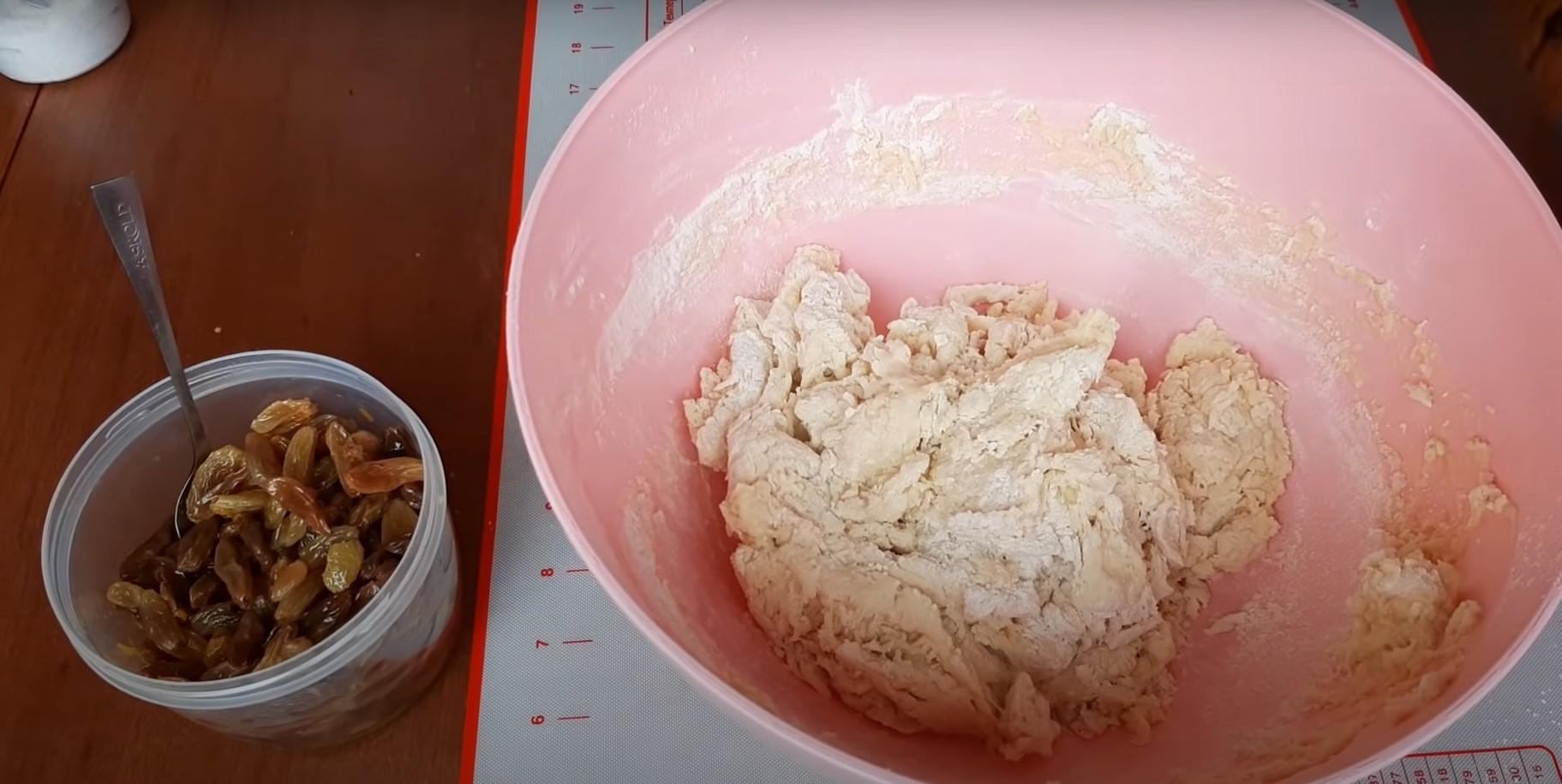
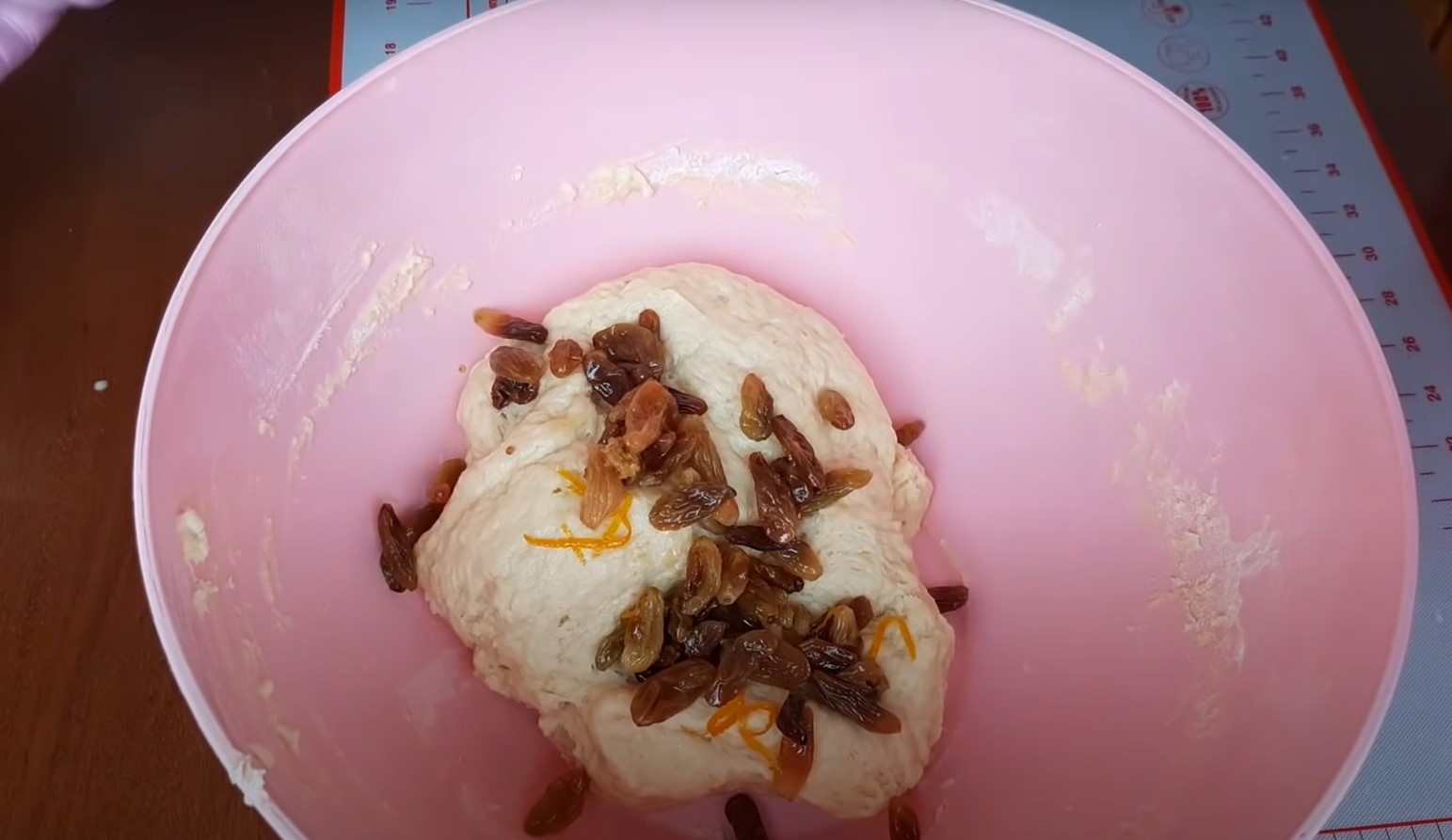
Add lemon and orange zest, orange juice to the raisins and pour it into the dough.
Step 8
Place the dough in a deep container, cover and leave in a warm place to rise.
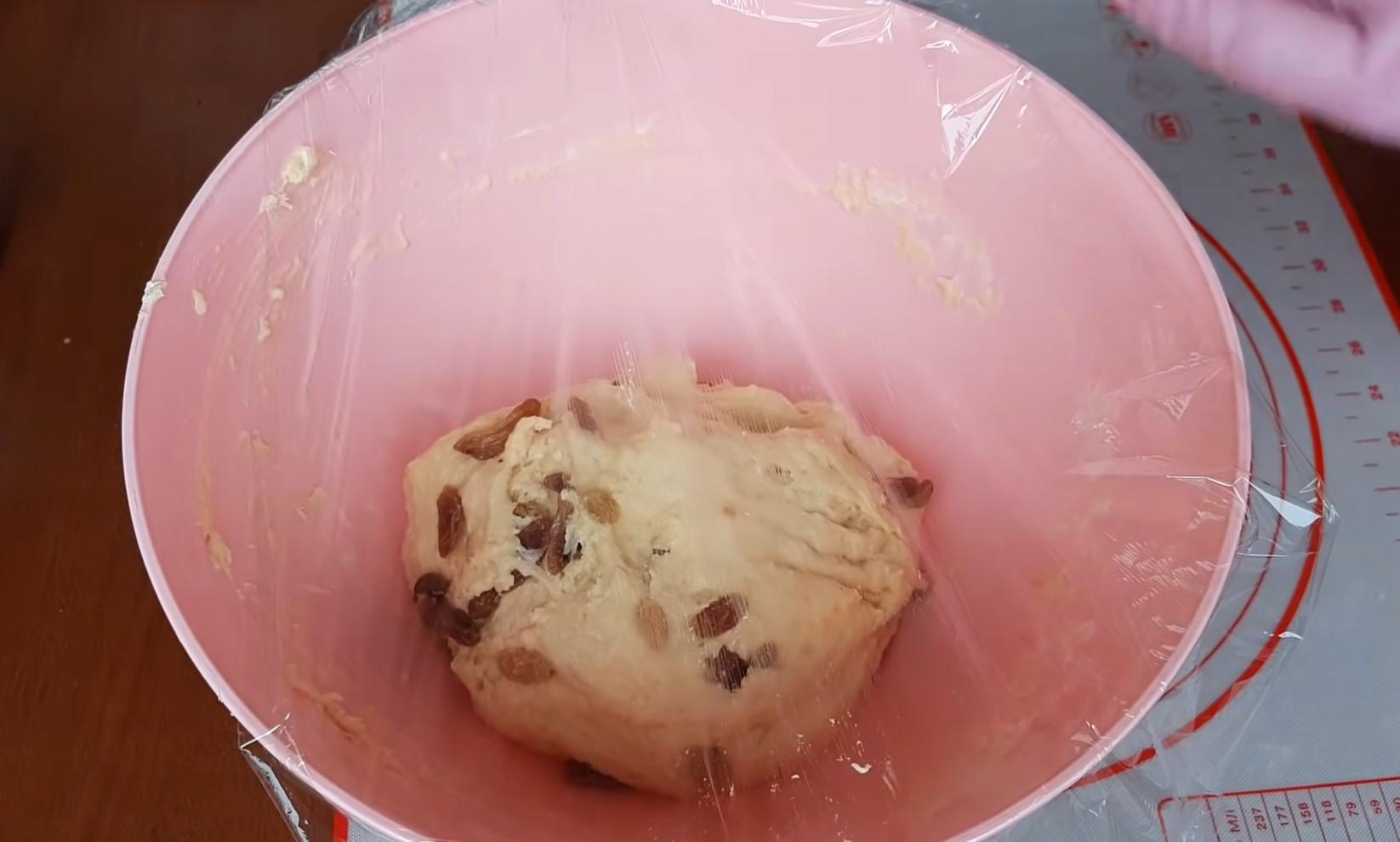
Shg 9
Knead the dough. Place it in a baking pan and let it rise until it doubles or triples in size. Bake at 170 degrees Celsius for 40-45 minutes.
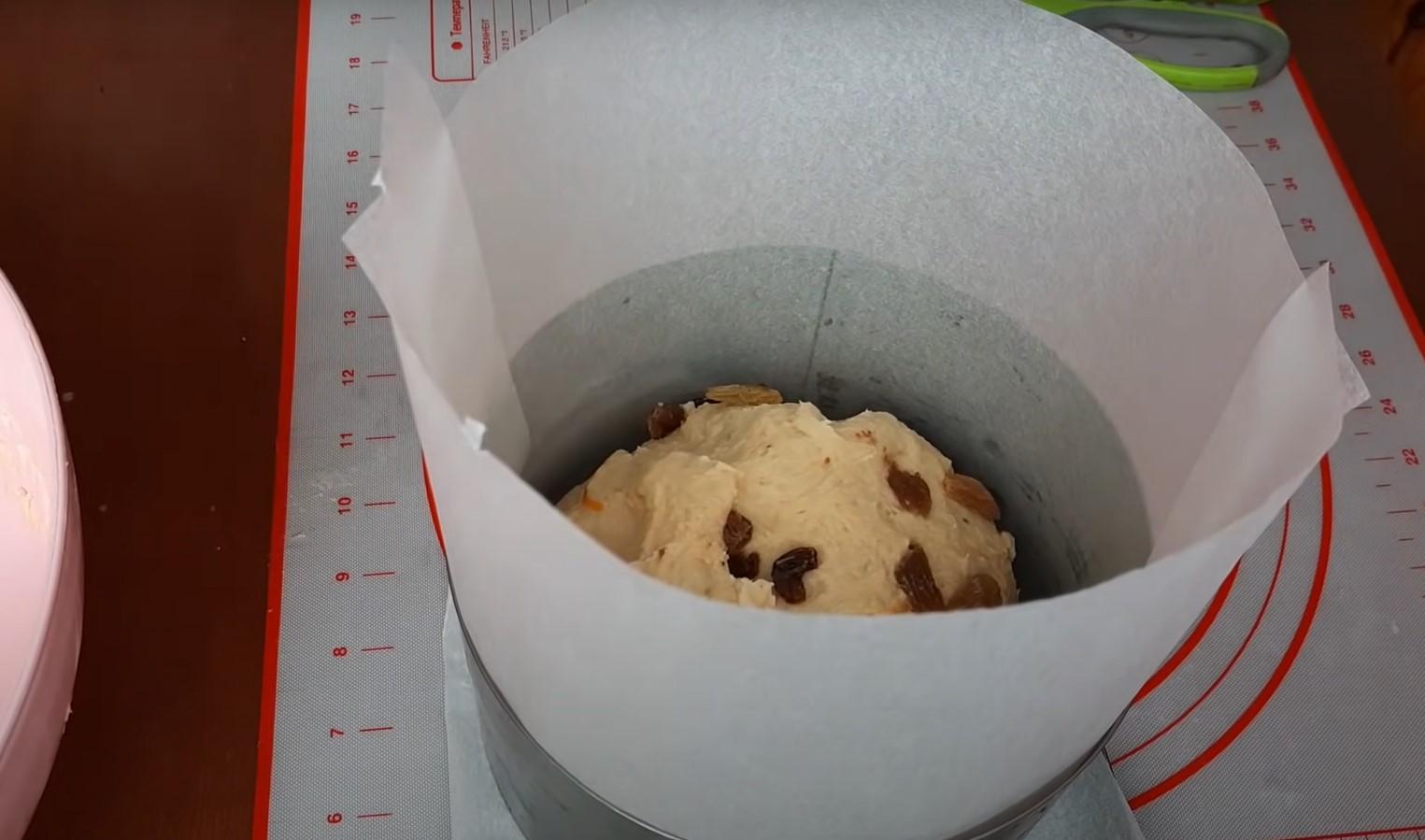
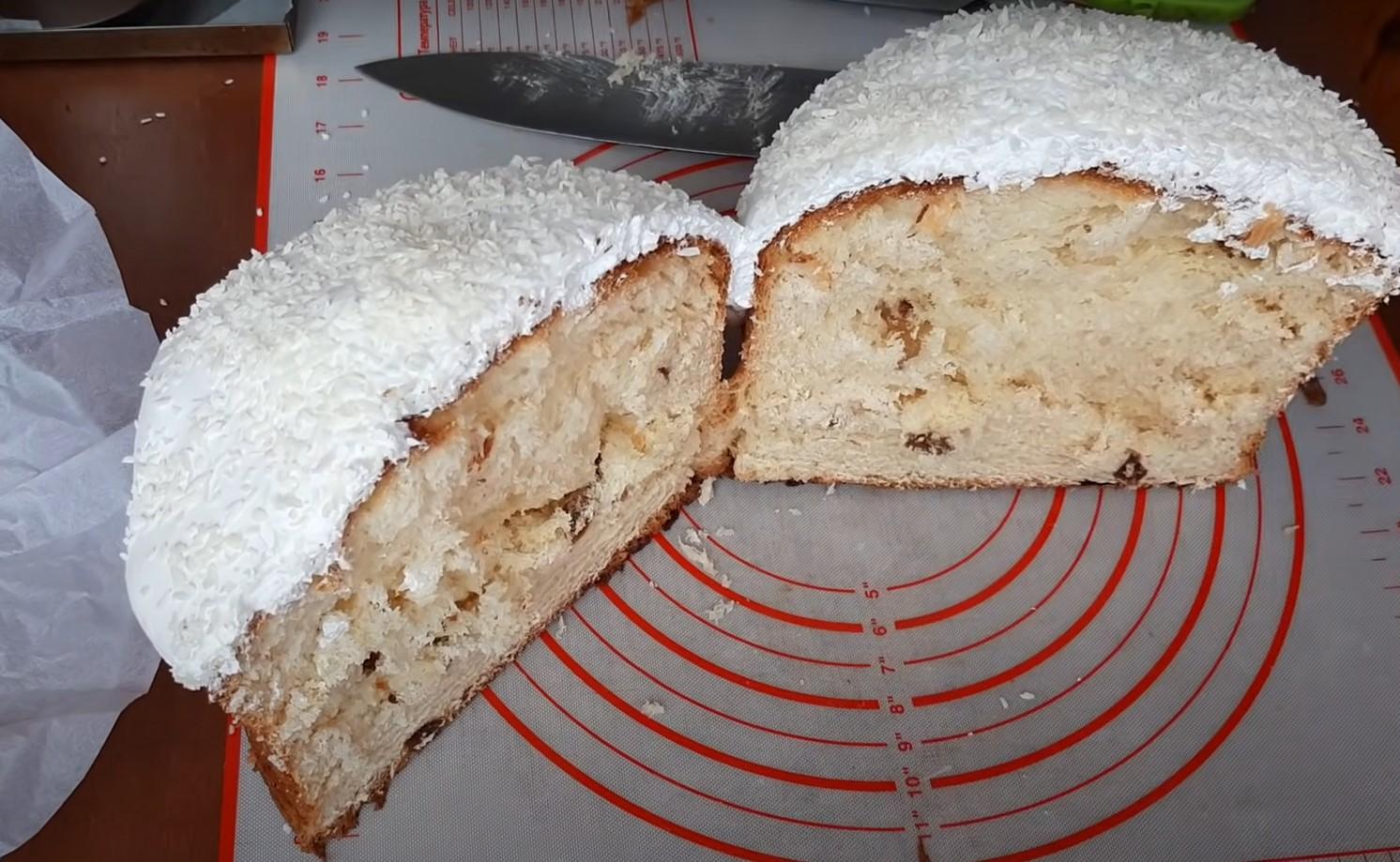
Step 10
This is such a beautiful kulich with an incredible texture. Be sure to try baking with Viennese dough!
Curd Easter cake with fresh yeast
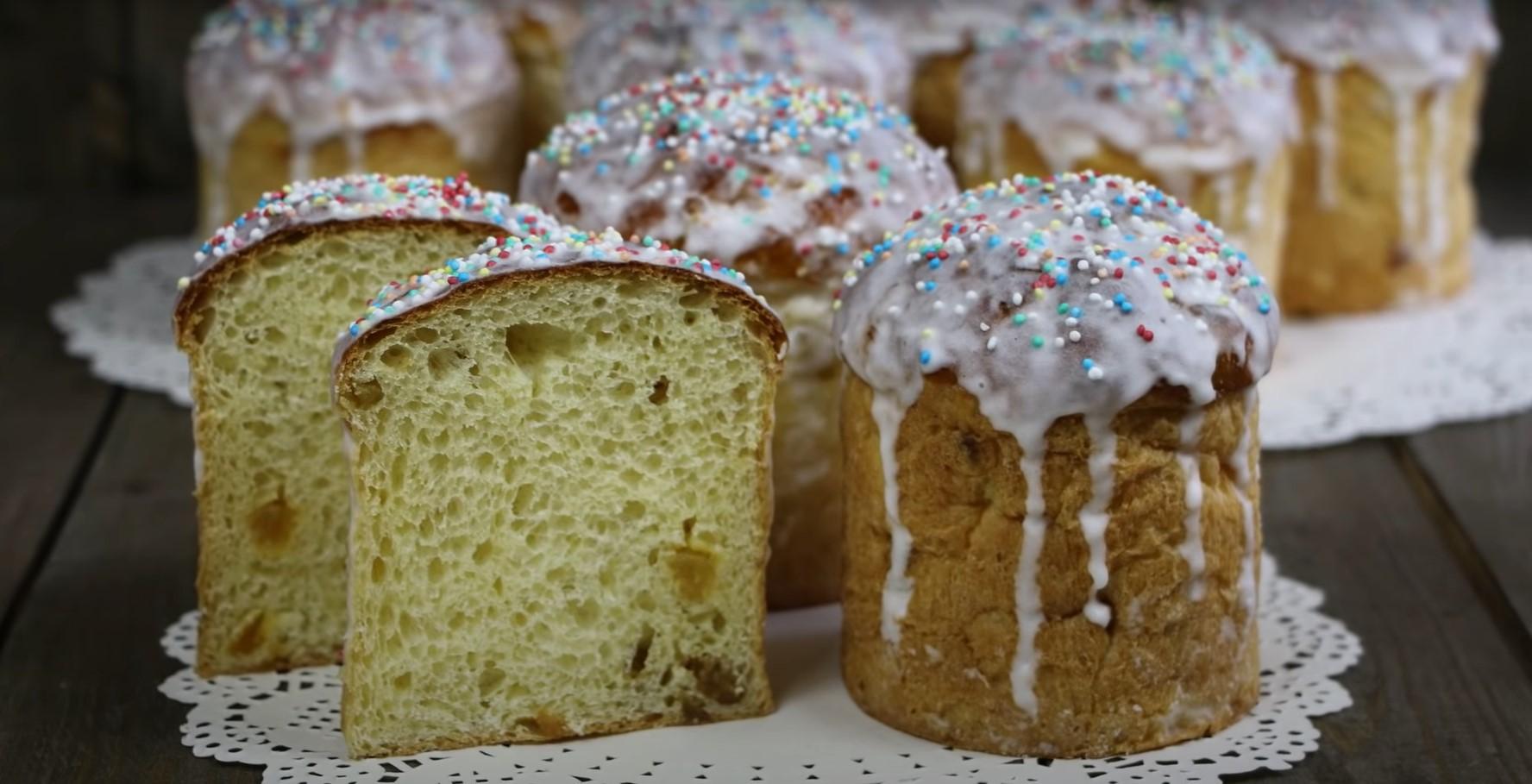
This is one of the simplest, quickest, and most accessible recipes for Easter kulich. The dough is made using the straight-dough method, requiring just one rise. This recipe for Easter kulich with cottage cheese and yeast, baked in the oven, produces a delicious and aromatic homemade treat.
Ingredients
- Flour - 500 g
- Cottage cheese - 150 g
- Butter - 100 g
- Sugar - 100 g
- Milk - 100 ml
- Water - 100 ml
- Eggs - 2 pcs.
- Live yeast - 25 g
- Salt - 1/2 tsp.
- Raisins - 100 g
Cooking time: 3-4 hours
Servings: 10 Easter cakes in a mold with a diameter of 8 cm and a height of 7 cm
Step-by-step recipe
Step 1
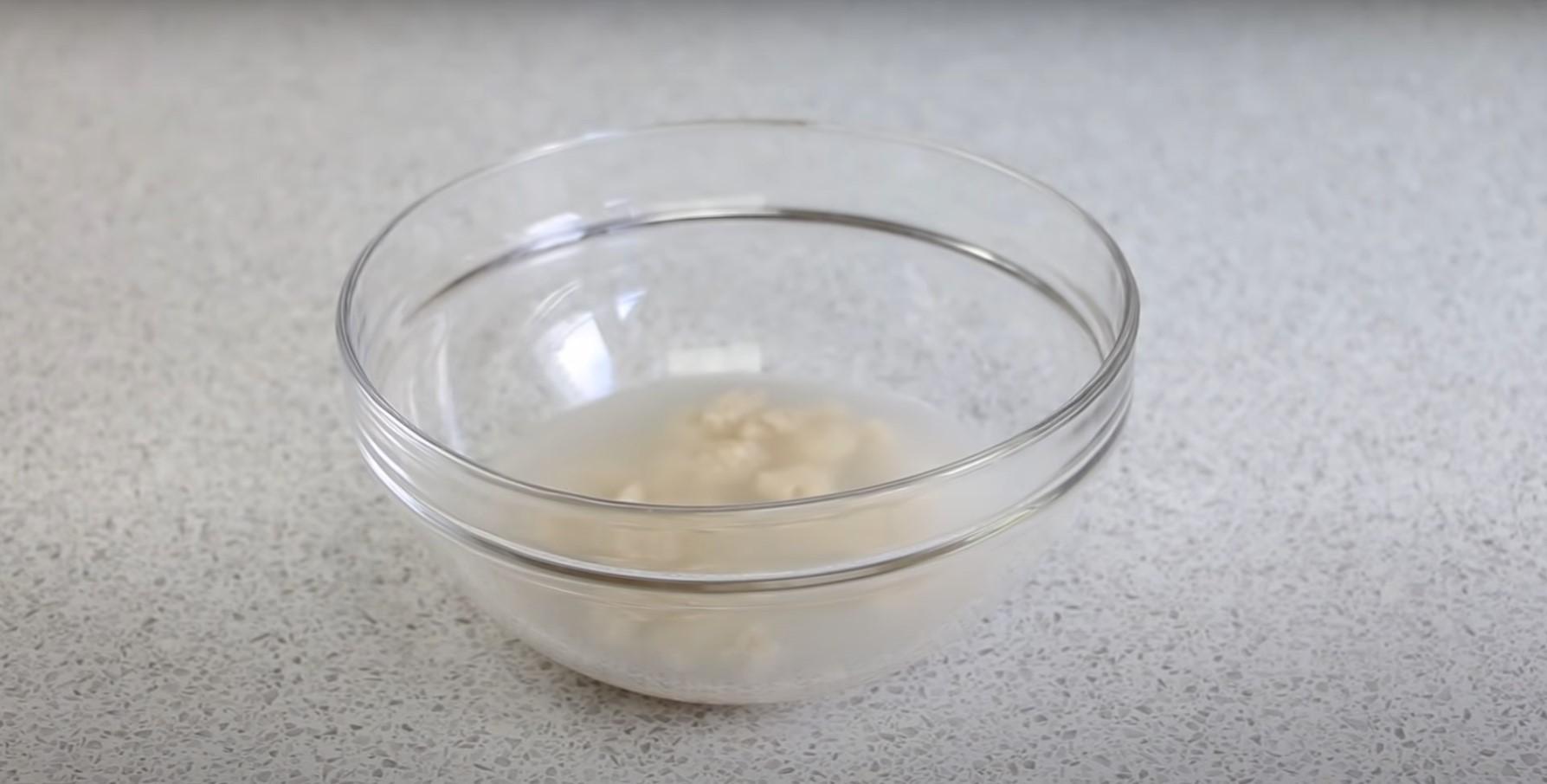
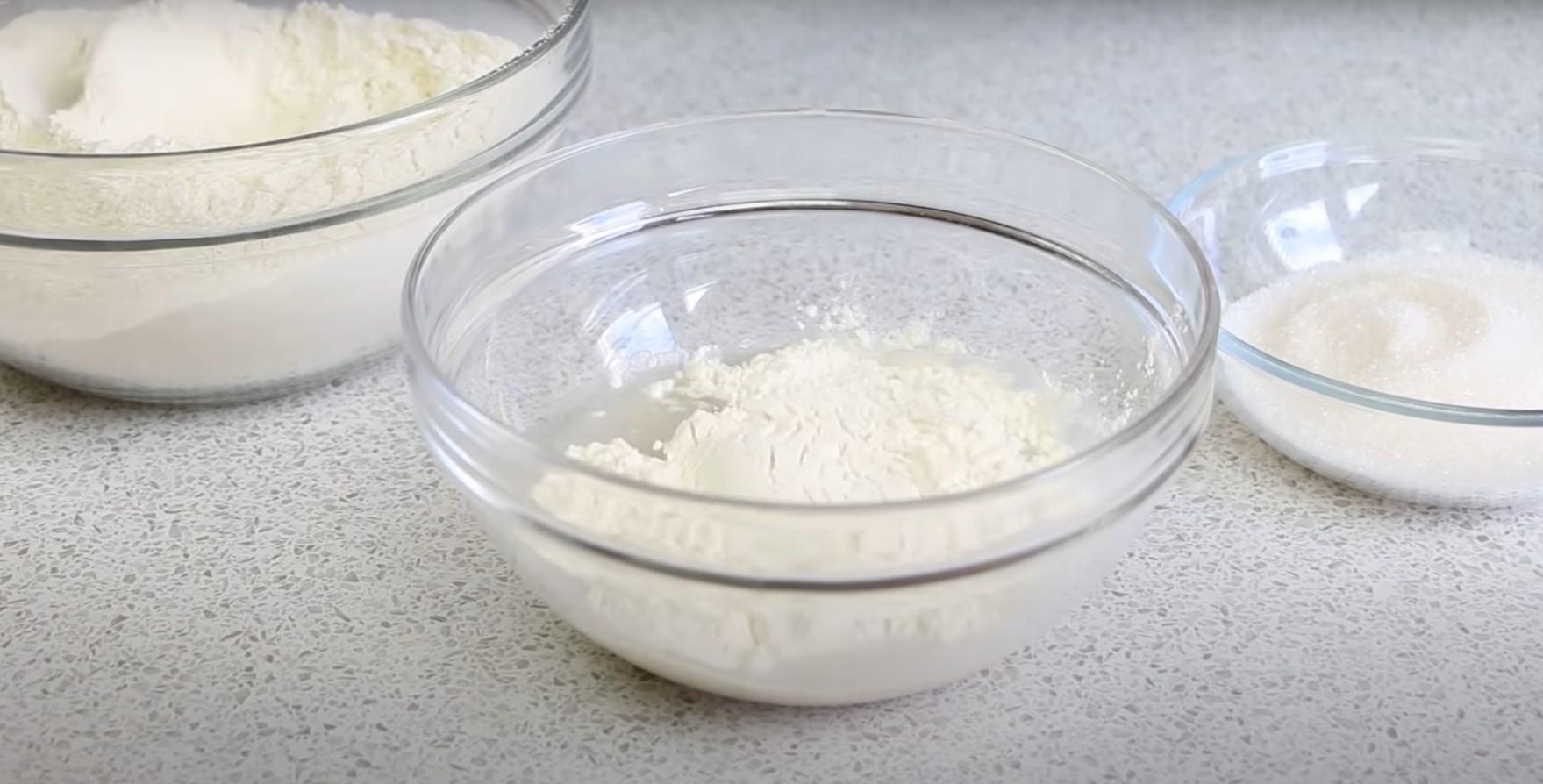
Mix the yeast with warm water. Stir.
Step 2
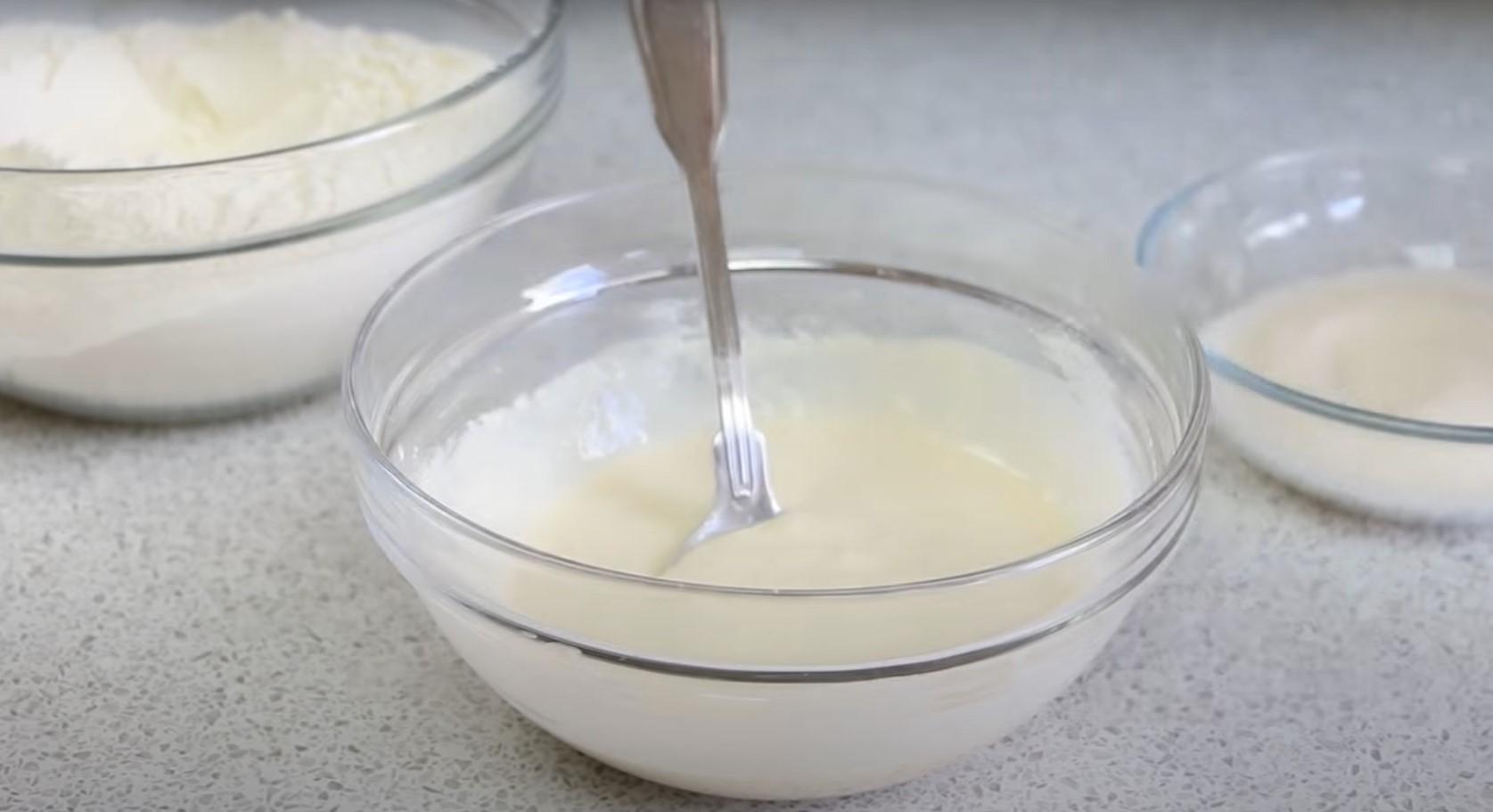
Add 3 tablespoons of flour, a pinch of sugar, and stir. Cover and leave in a warm place for 20 minutes.
Step 3
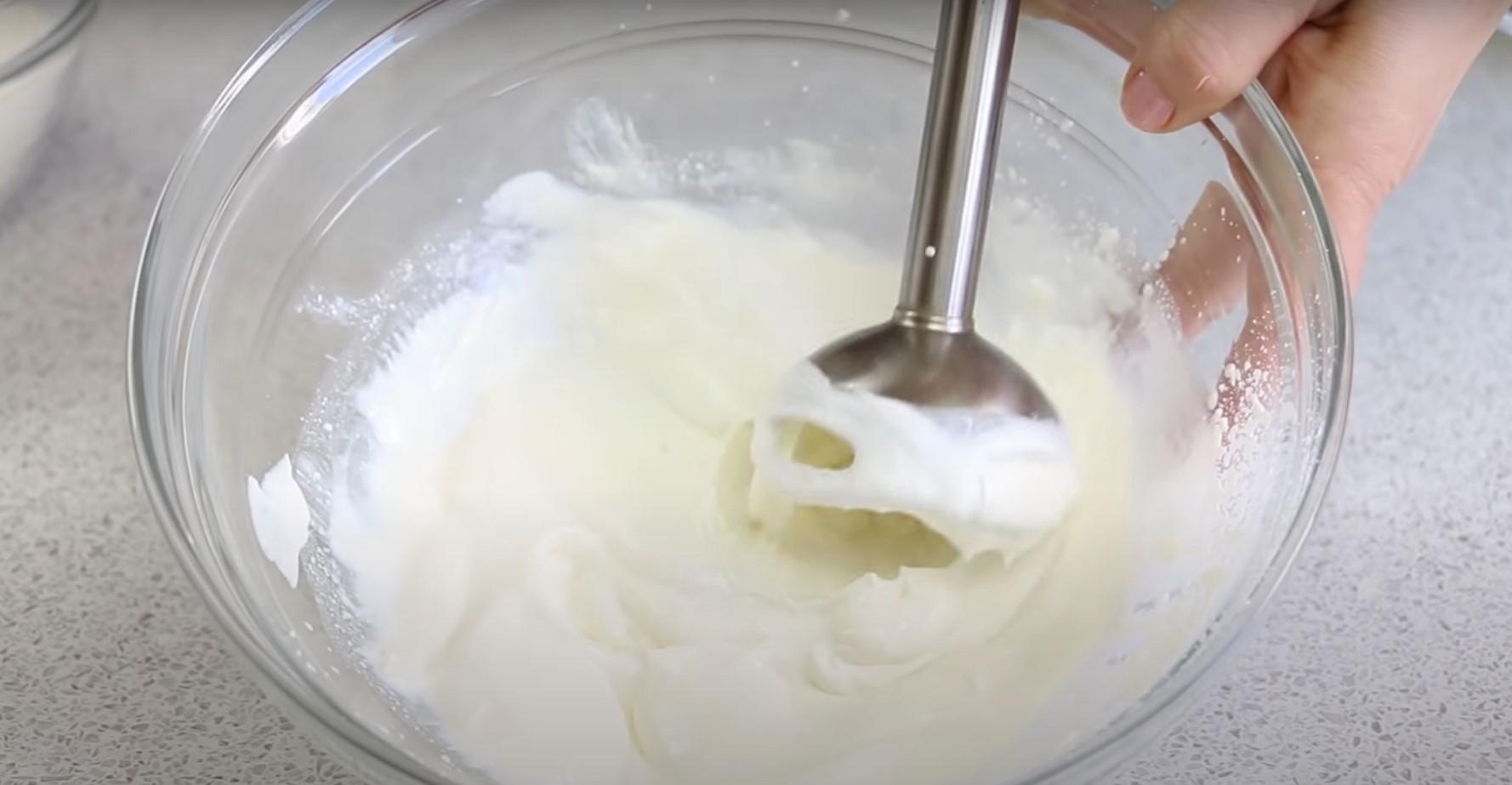
Pour milk over the cottage cheese and mix with an immersion blender (you can rub it through a sieve).
Step 4
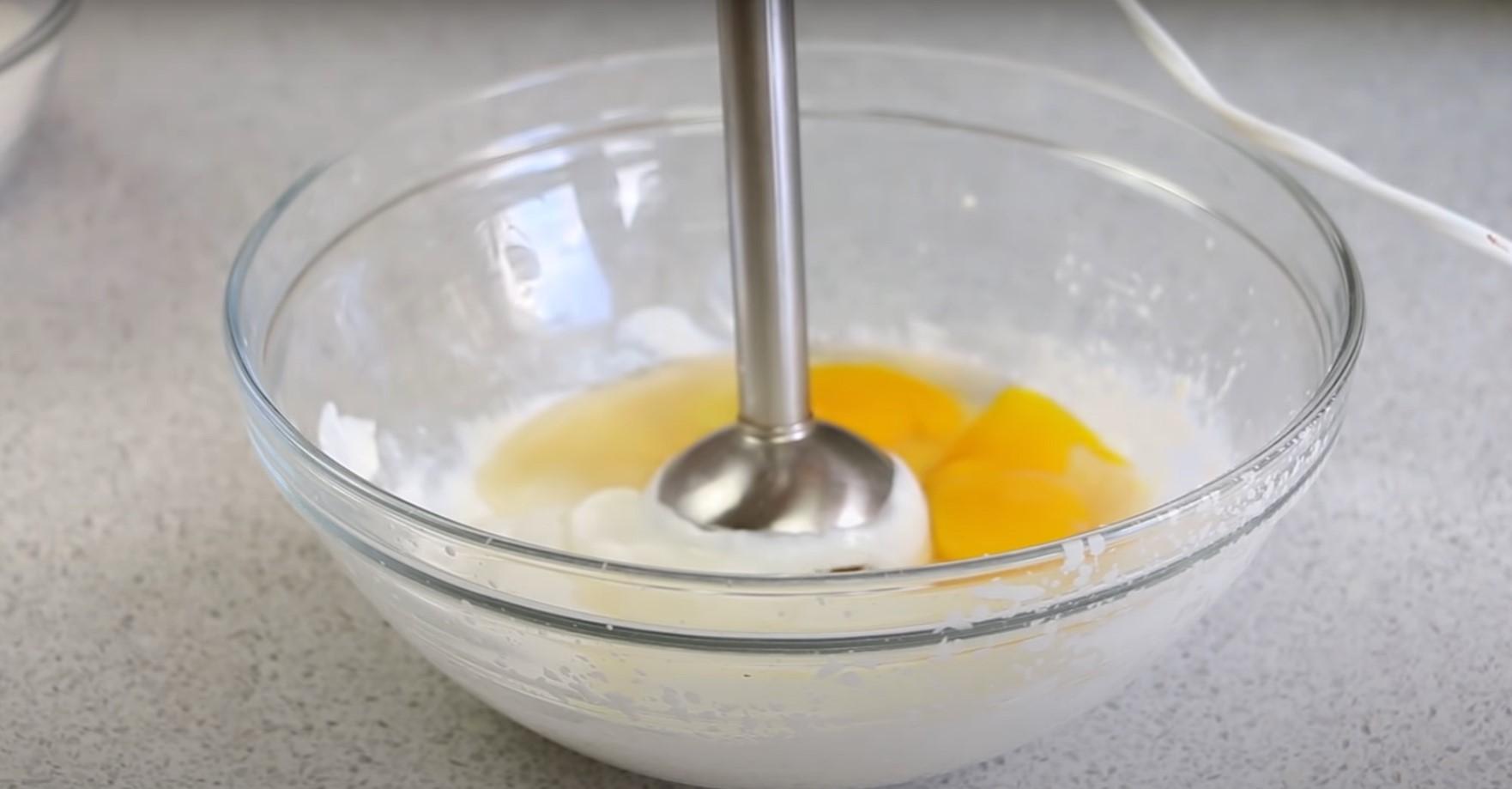
Add eggs and mix.
Step 5
Add sugar and salt.
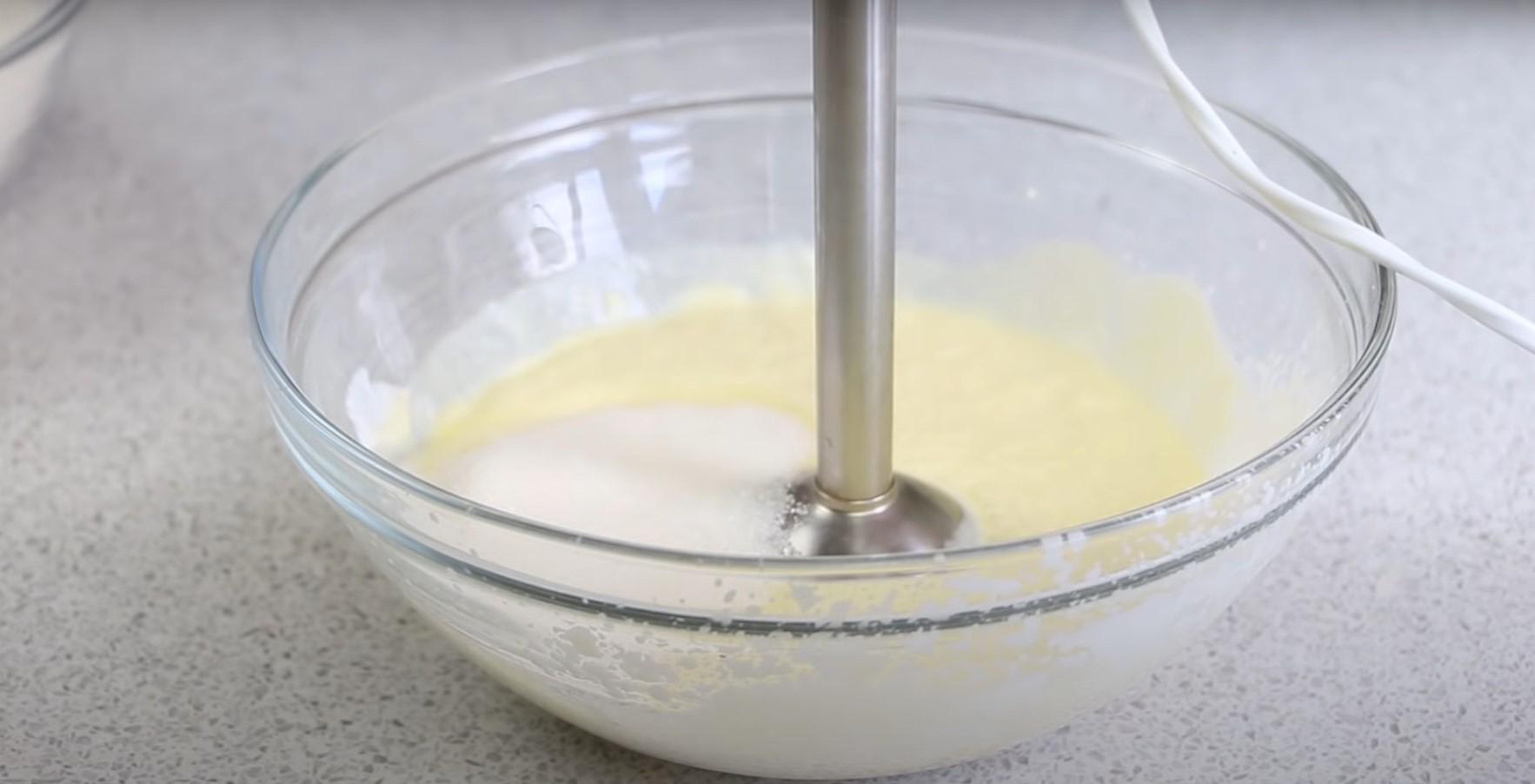
Step 6
Pour in the melted and cooled butter.
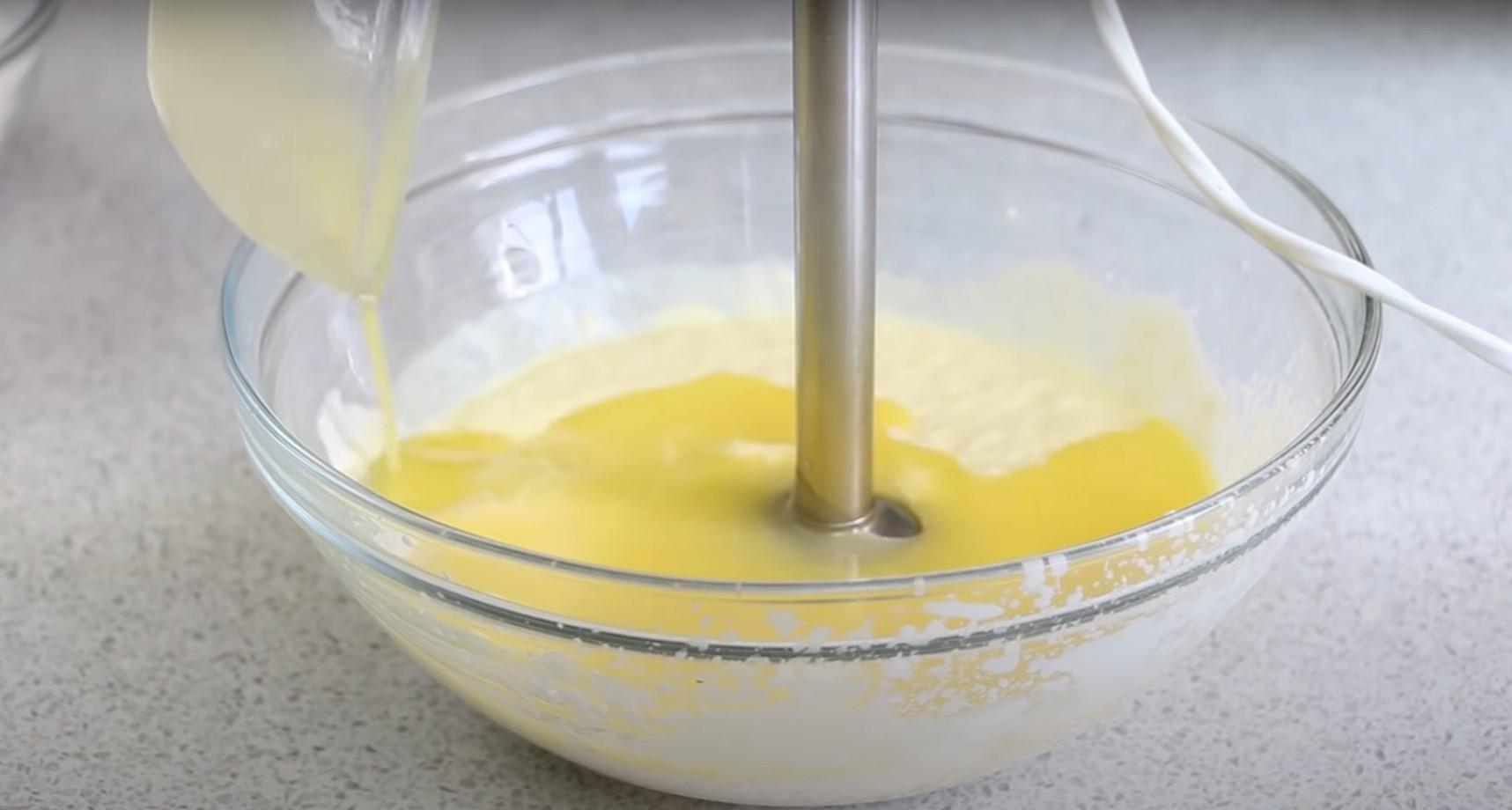
Step 7
Add the yeast mixture and mix until smooth.
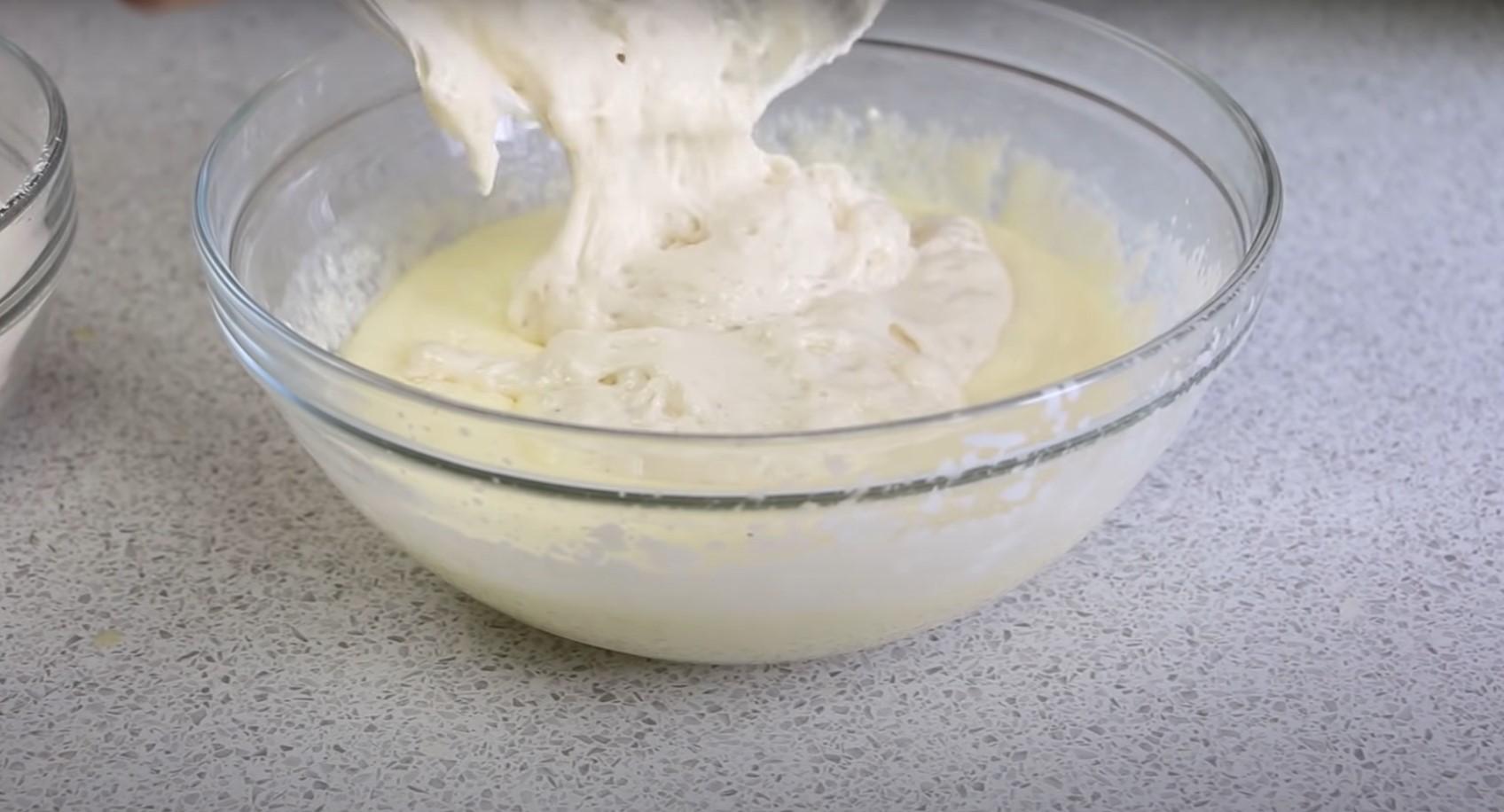
Step 8
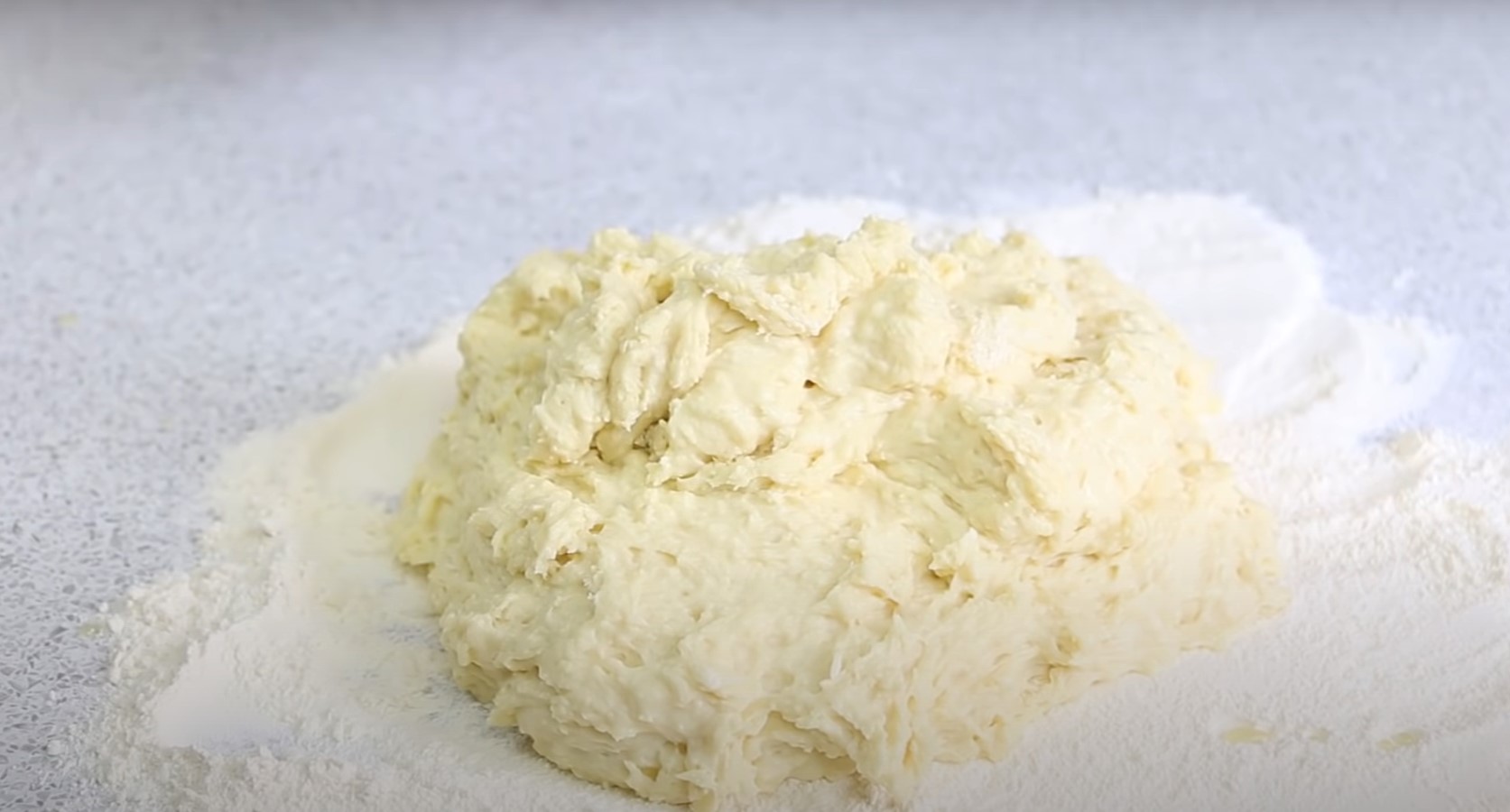
Add flour a little at a time and mix. When the dough becomes difficult to stir with a spoon, sprinkle the remaining flour onto the counter, turn the dough out, and continue kneading by hand until it stops sticking to your hands (10-15 minutes).
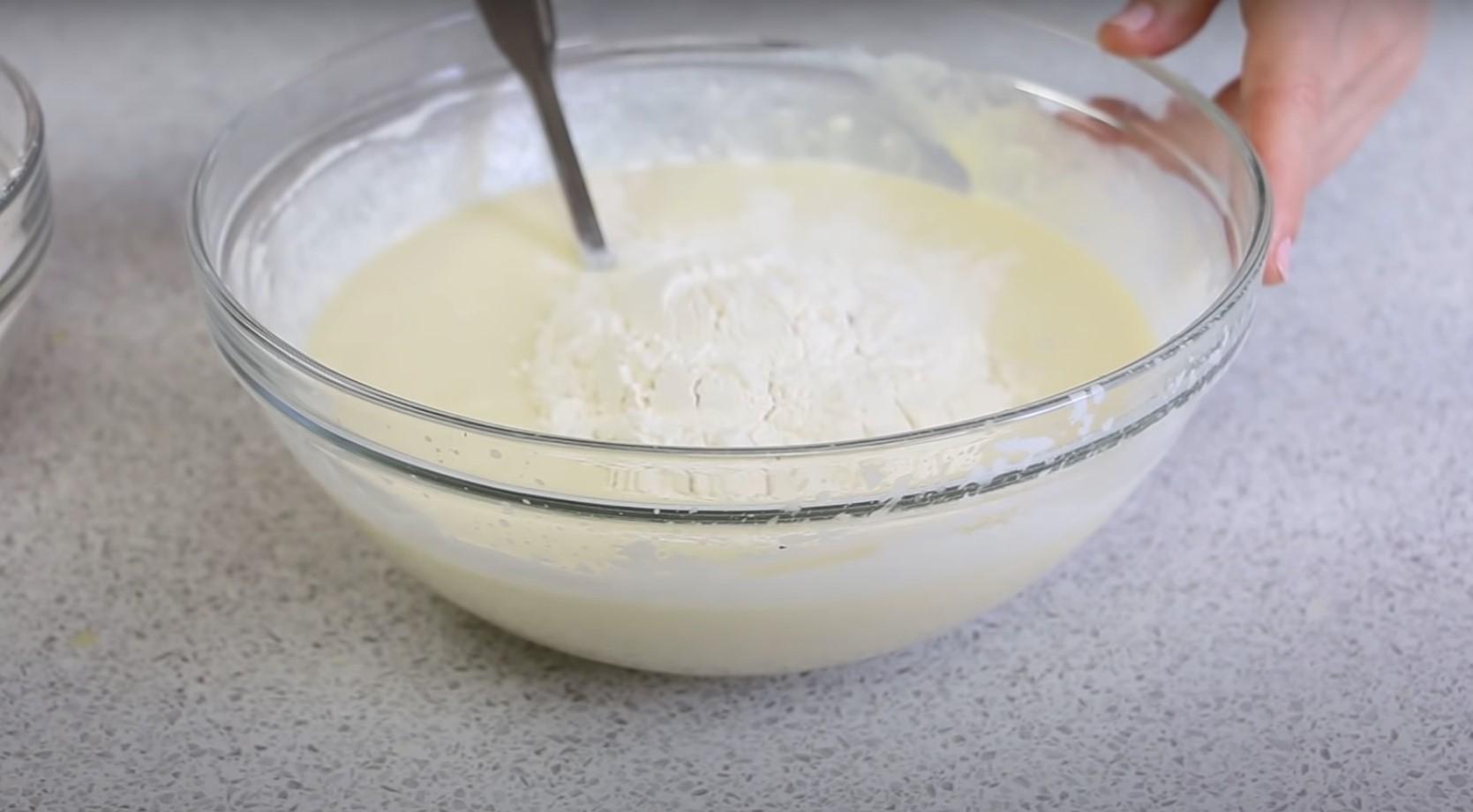
Step 9
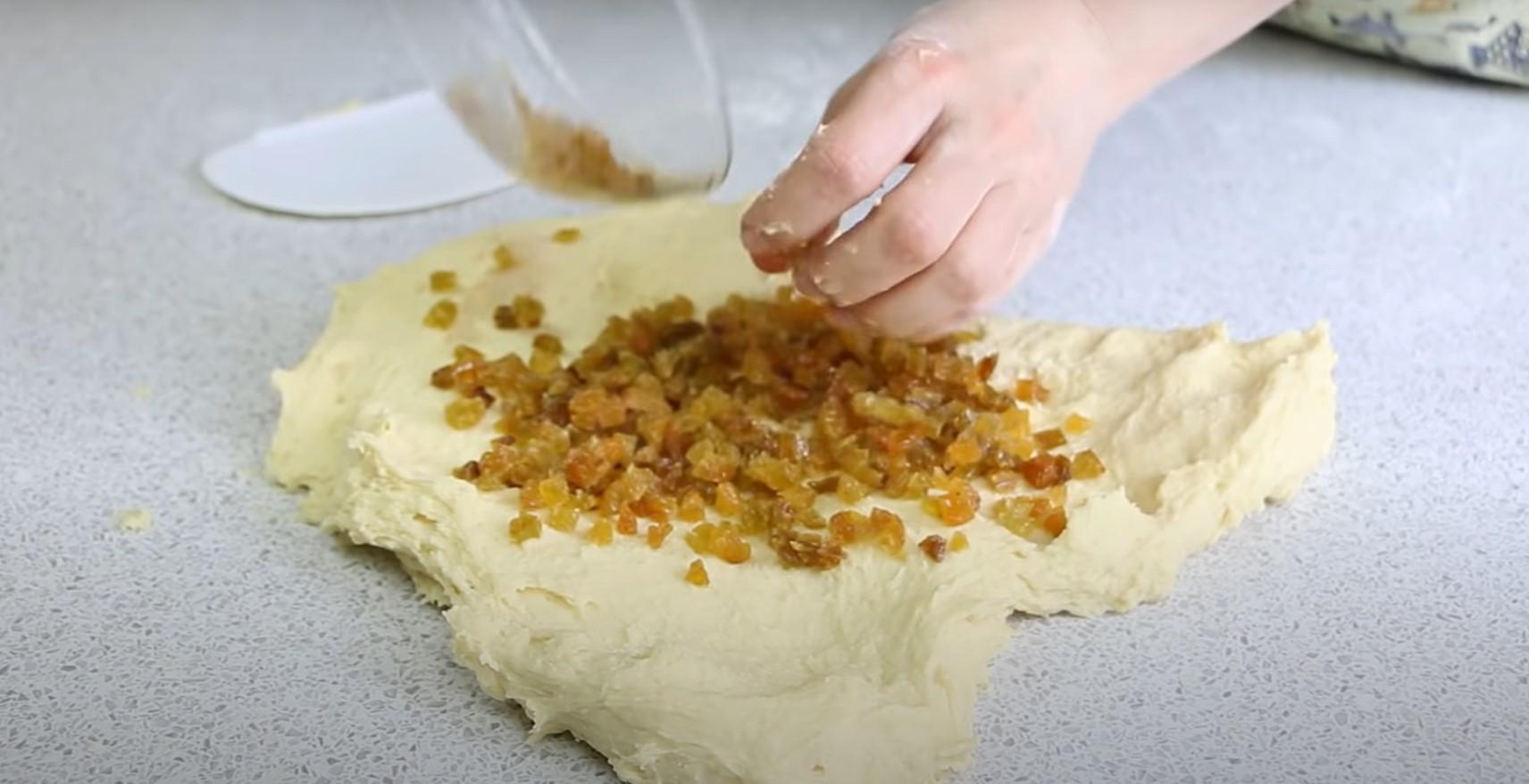
Stir the washed and dried raisins into the dough.
Step 10
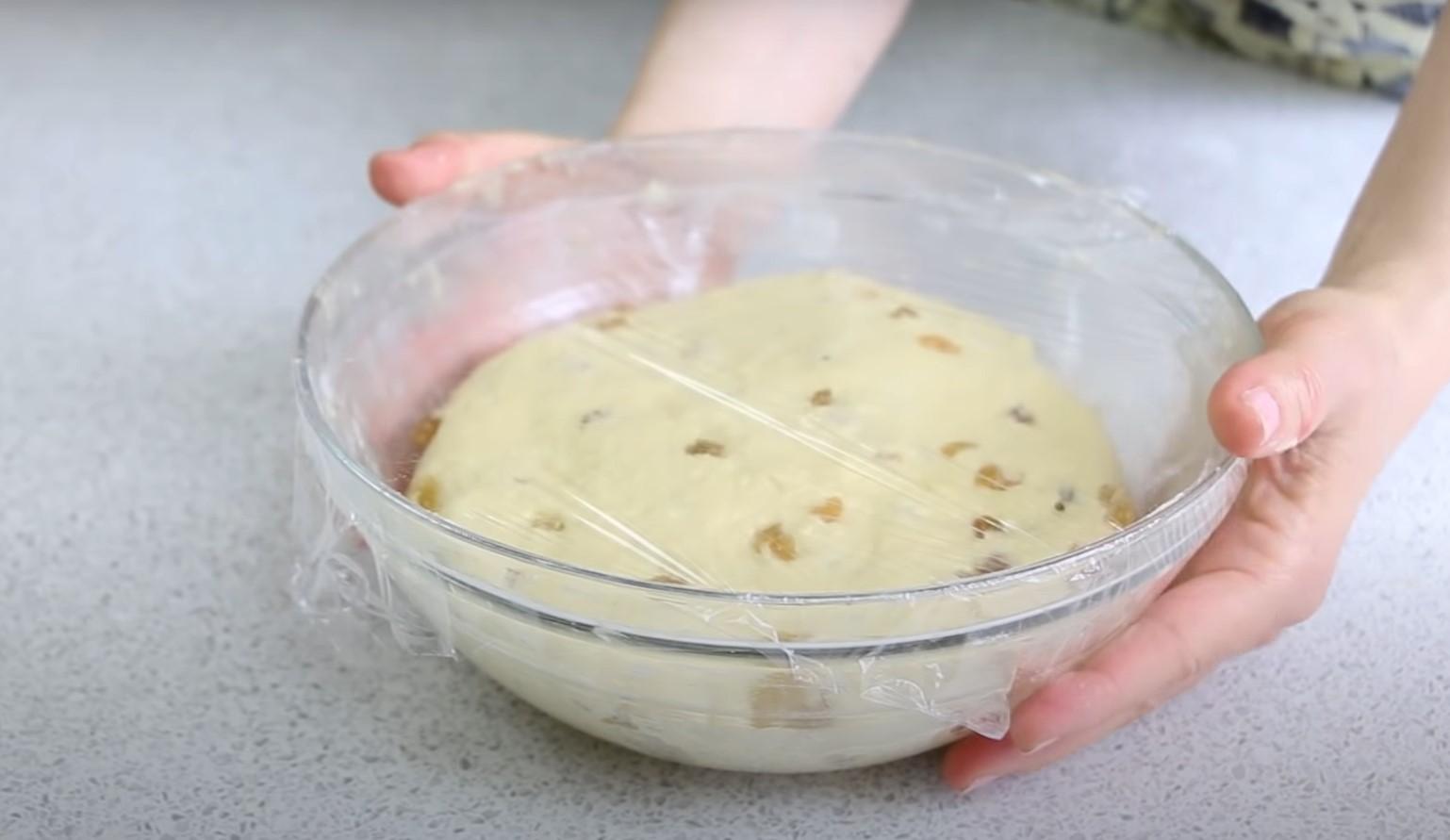
Place the dough in a deep container, cover, and let rise. Punch down the dough once it has risen.
Step 11
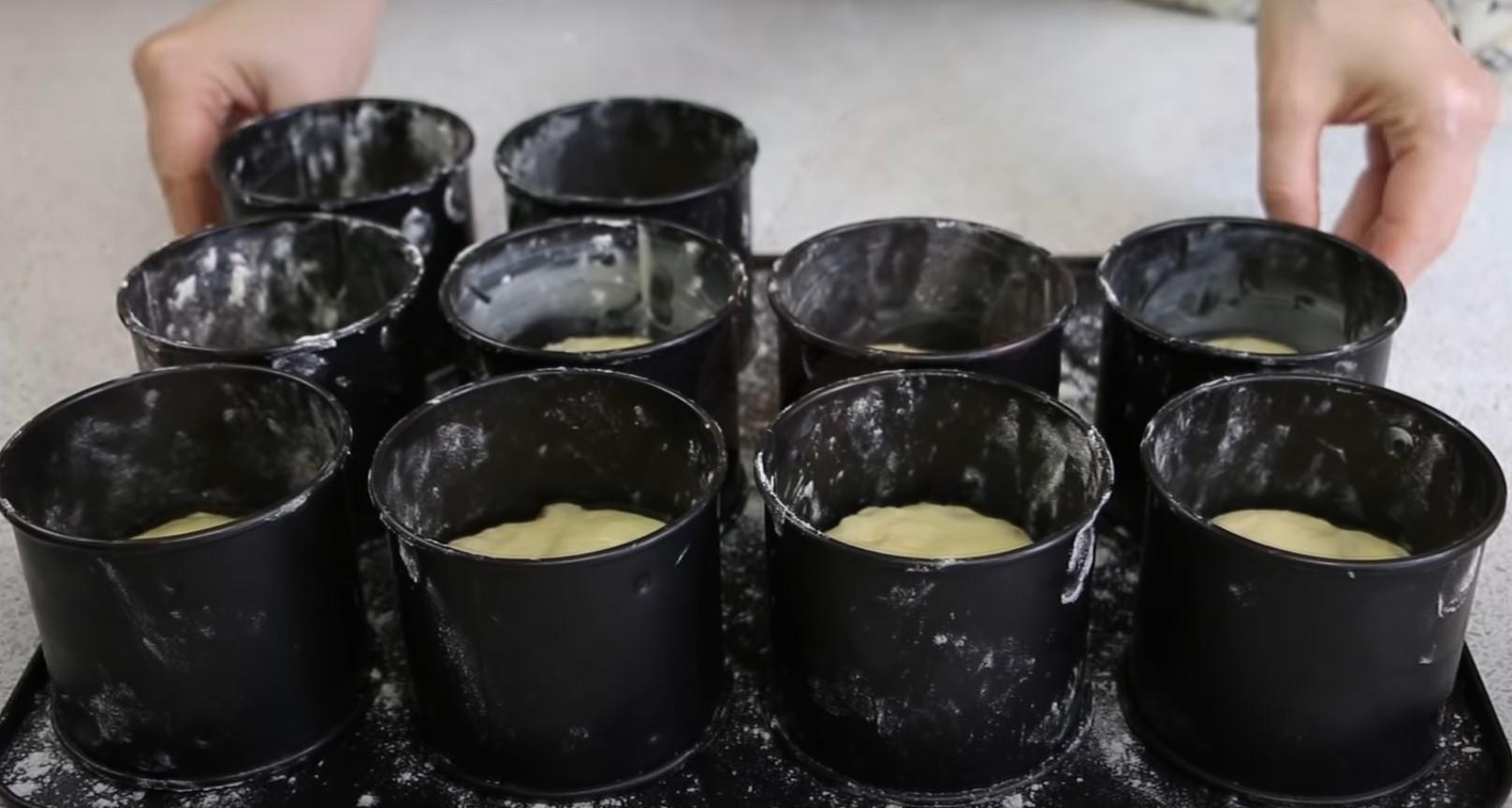
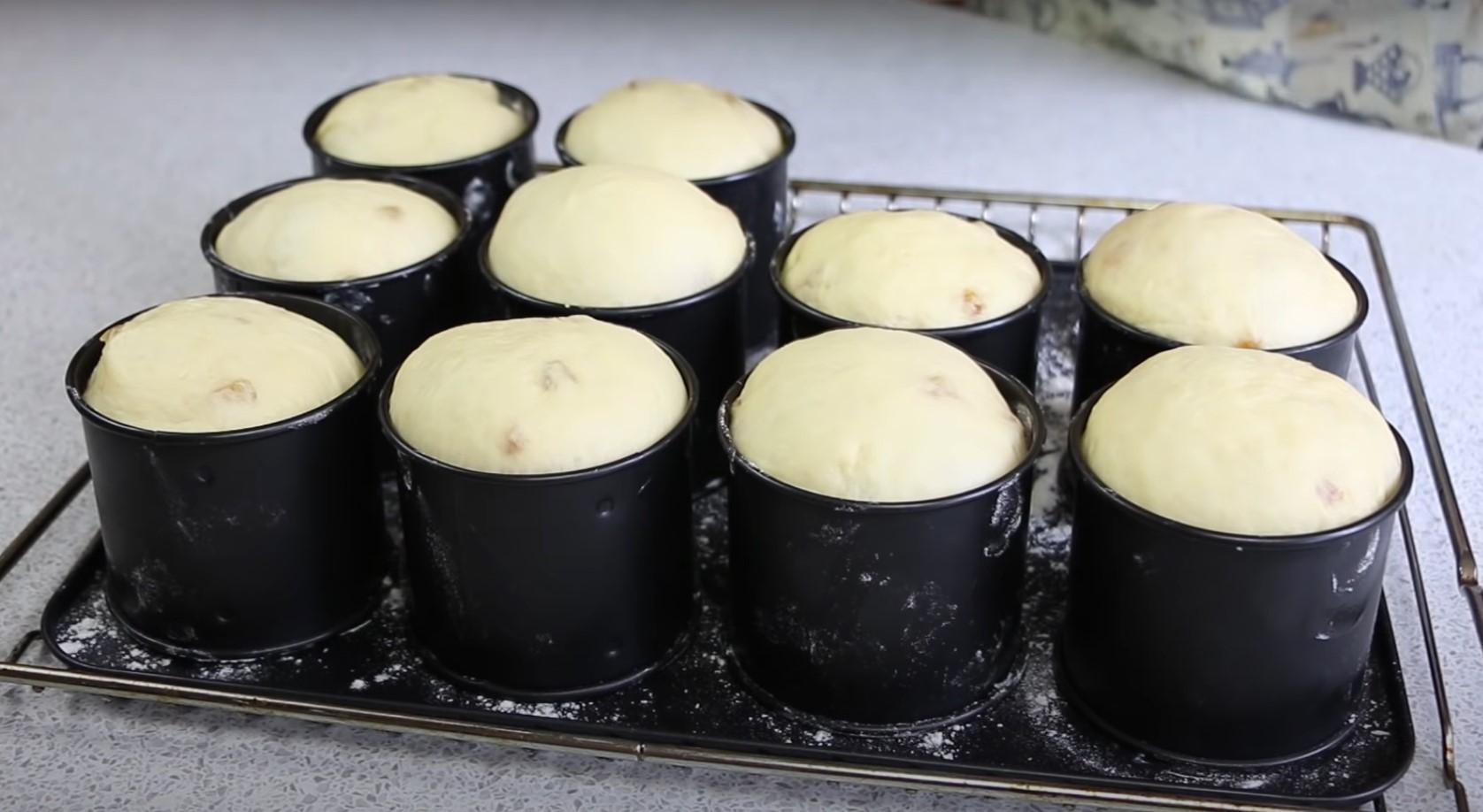
Grease the bottom and sides of the pan with butter and sprinkle with flour. Fill the pan 1/3 full. Leave in a warm place to rise.
Step 12
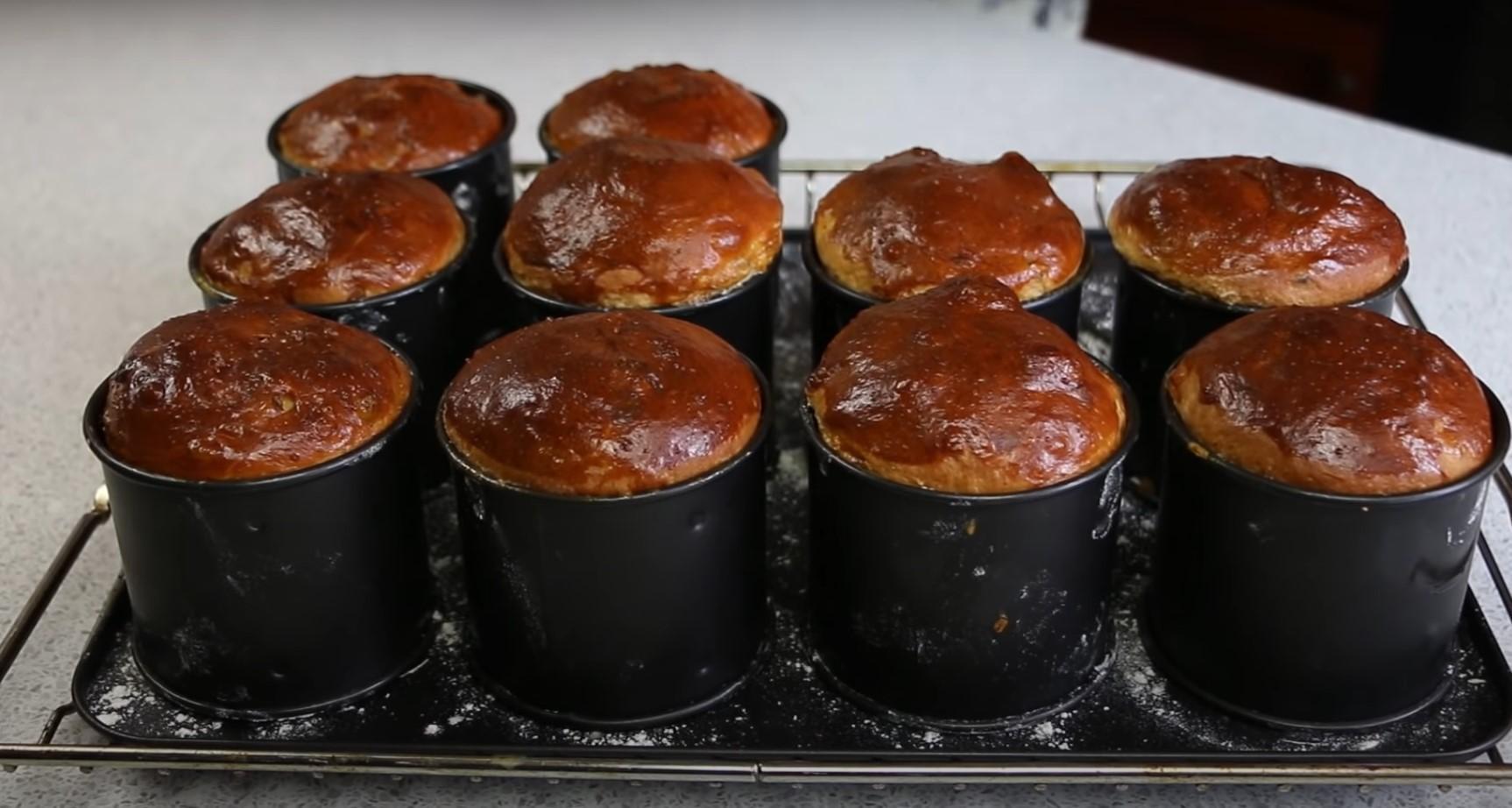
Brush the tops with beaten egg. Bake at 180 degrees for half an hour.
Easter cake with kefir and yeast
Easter kulich doesn't necessarily have to be made with milk or sour cream. A dough made with kefir produces a tender, delicious, and airy pastry. Be sure to try this kulich; I guarantee it will take pride of place among your favorite Easter recipes.
Ingredients
- Flour - 1 kg (+100 g per dough)
- Sugar - 350 g (+2 tbsp per dough)
- Butter - 200 g
- Raisins - 200 g
- Kefir (2.5%) – 1/2 liter
- Live yeast - 50 g
- Sunflower oil - 60 g
- Eggs - 4 pcs.
- Vanillin - 1 tsp.
- Cognac - 2 tbsp.
- Zest of 1 orange
Cooking time: 4-5 hours
Servings: 4 Easter cakes in molds with a diameter of 14 cm and a height of 10 cm
Step-by-step recipe
Step 1
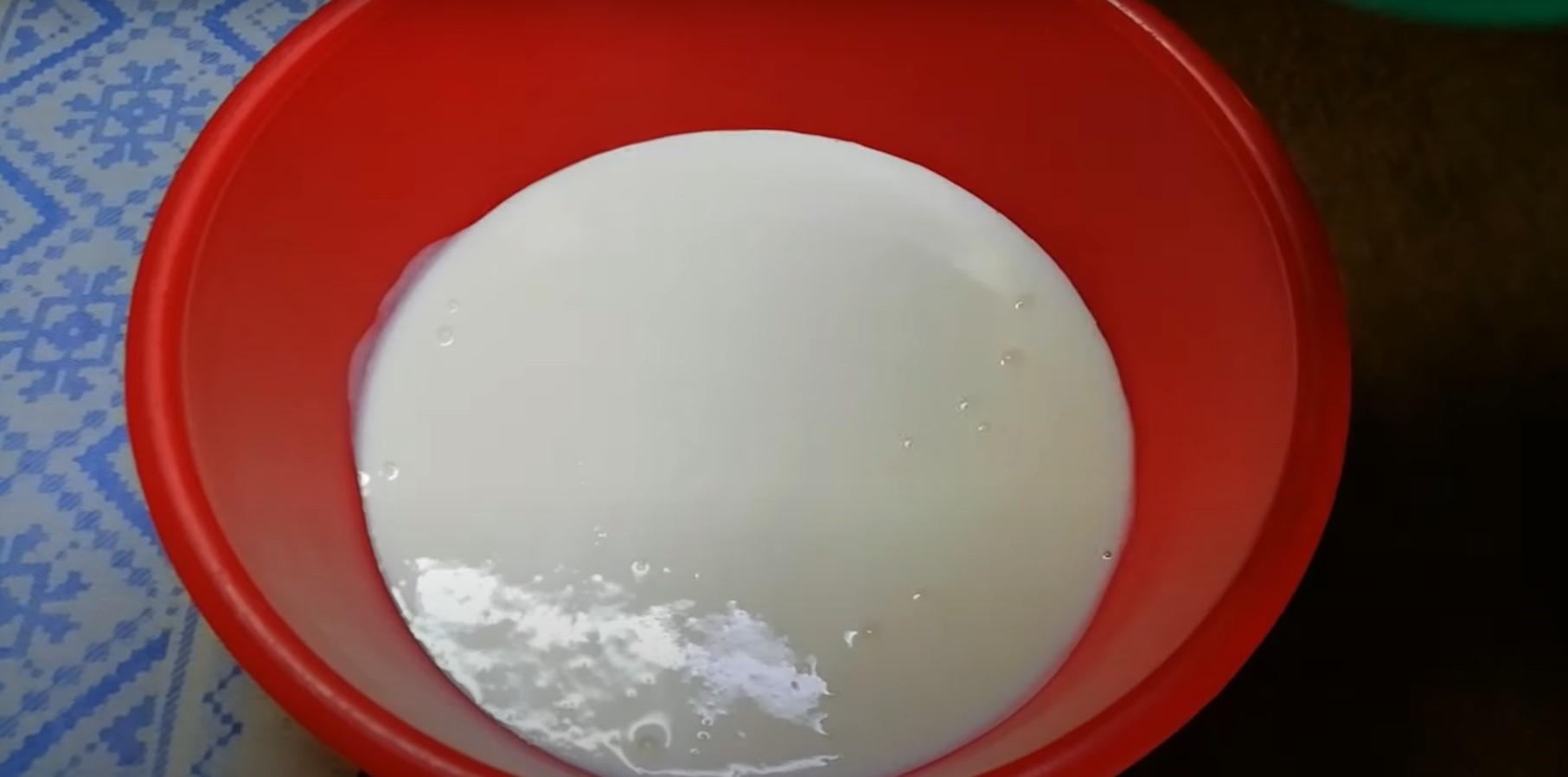
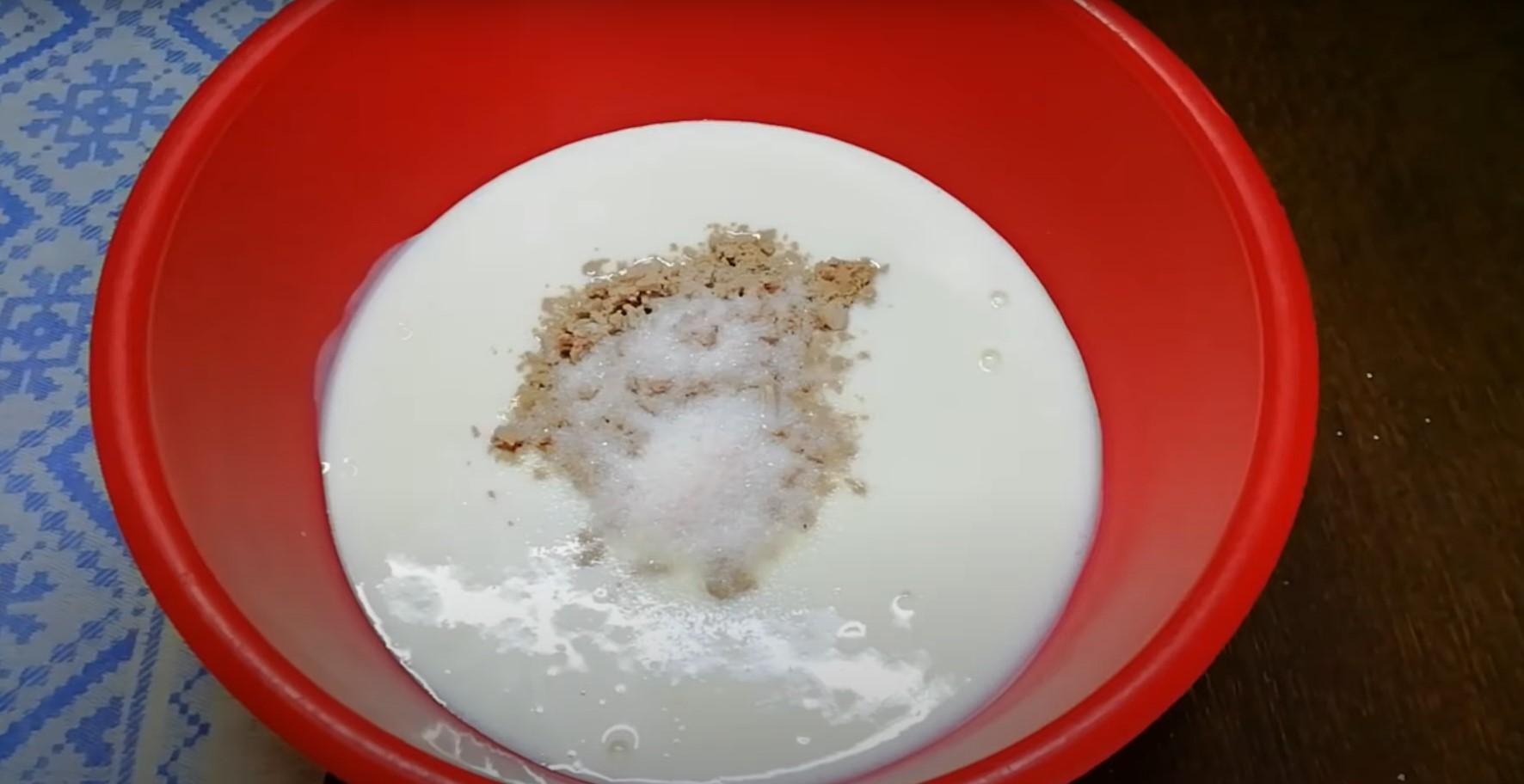
Pour warm kefir into a deep bowl.
Step 2
Crumble the yeast into the dough. Add the sugar for the dough. Stir.
Step 3
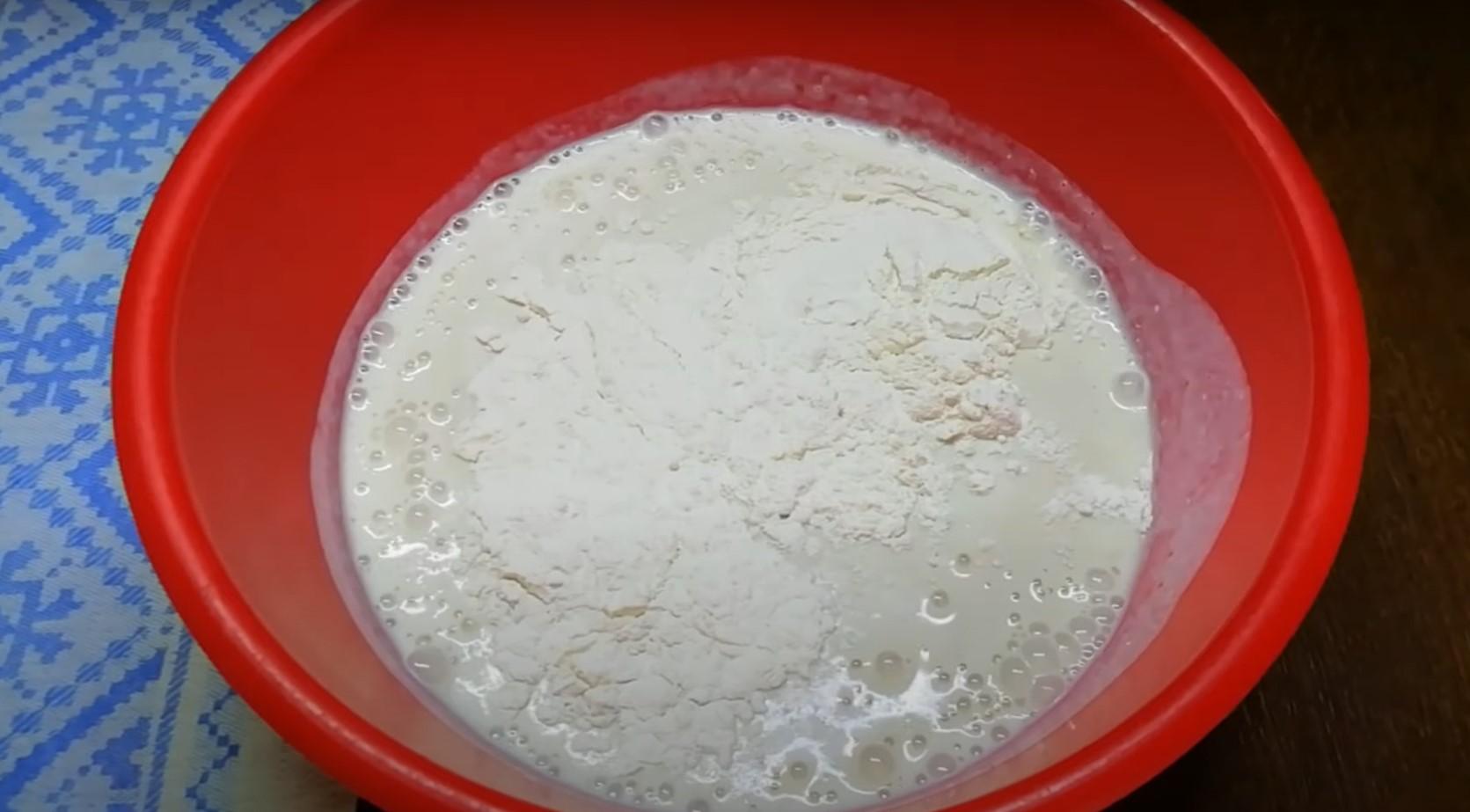
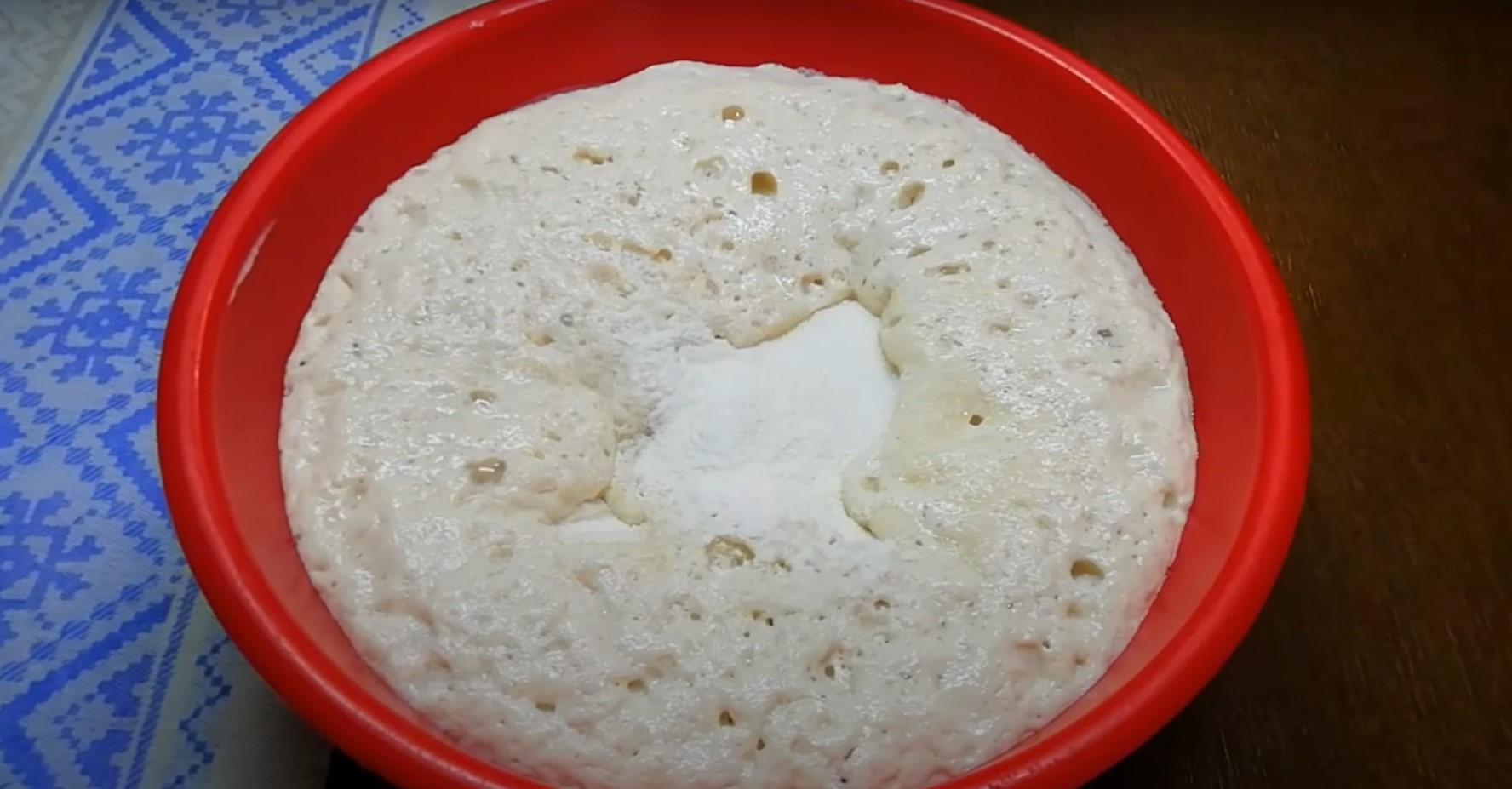
Add flour. Stir. Cover loosely and let stand in a warm place for 20 minutes.
Step 4
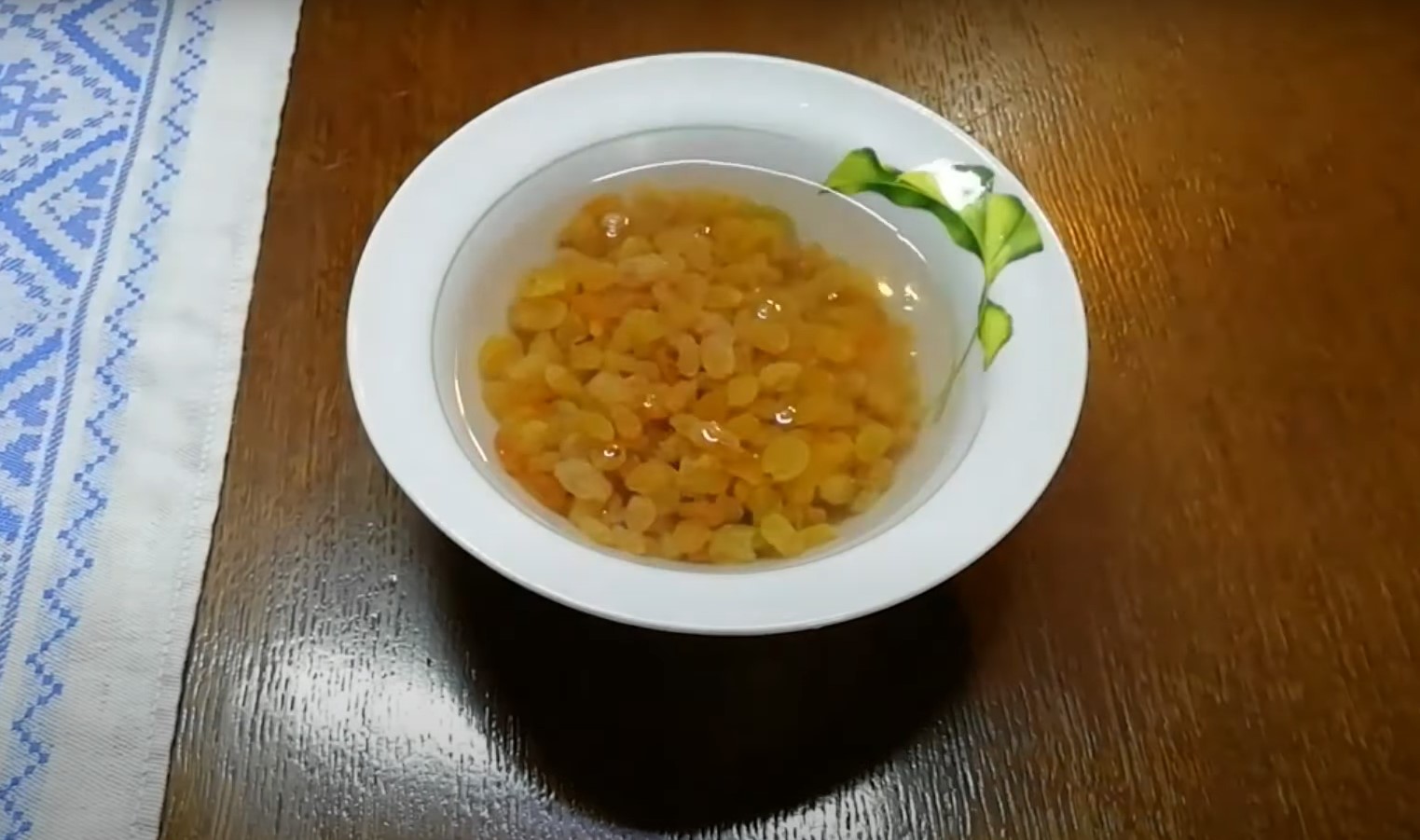
Prepare the raisins. Pour boiling water over them. Let them steep for half an hour.
Step 5
Place the eggs into the prepared dough. Pour in the melted, cooled butter. Add the sugar and vanilla sugar. Mix.
Step 6
Stir in cognac and zest.
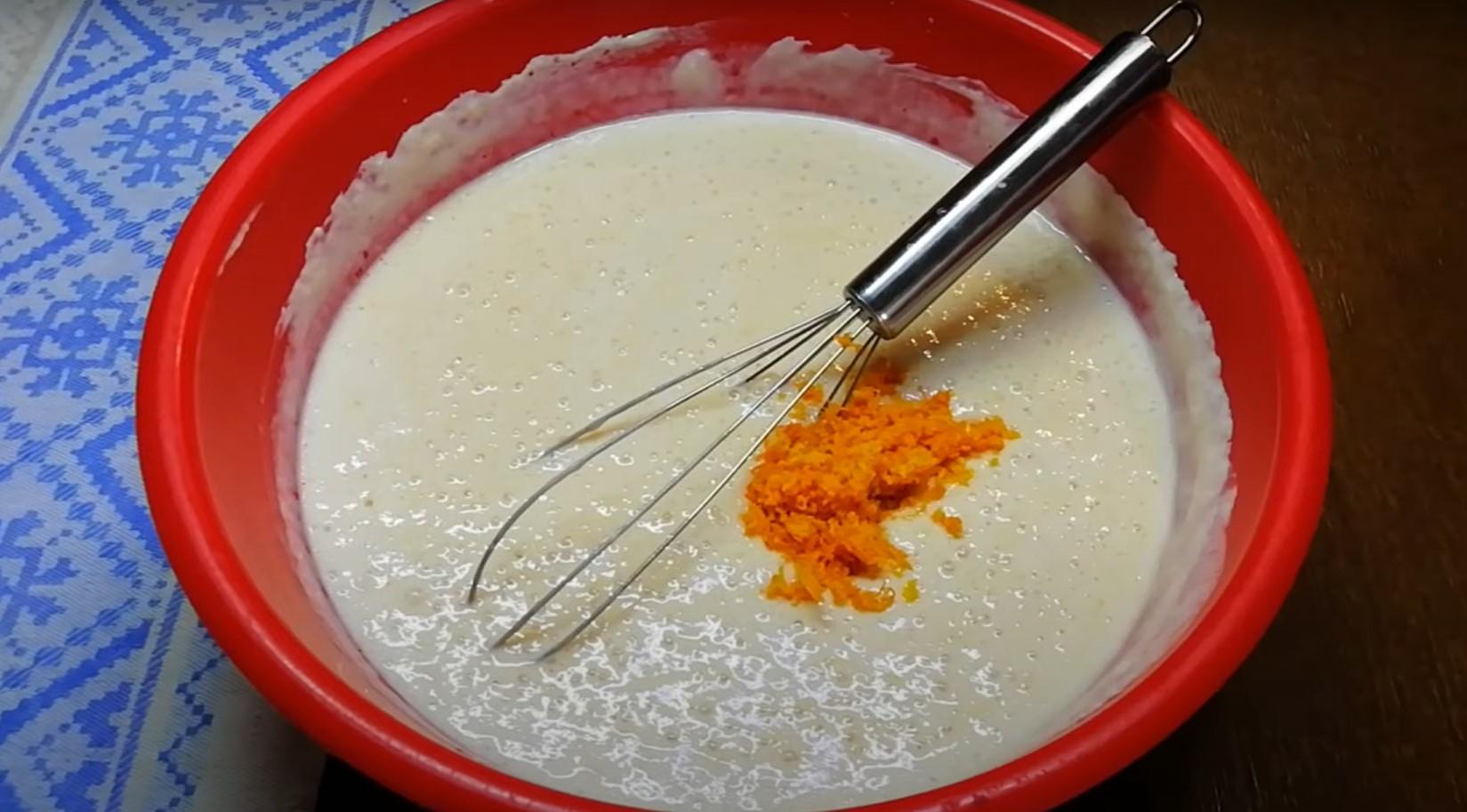
Step 7
Sift the flour in several stages. When the dough thickens, stir it with your hands. Knead for 5-6 minutes, making sure the dough doesn't stick to your hands. Let it rise.
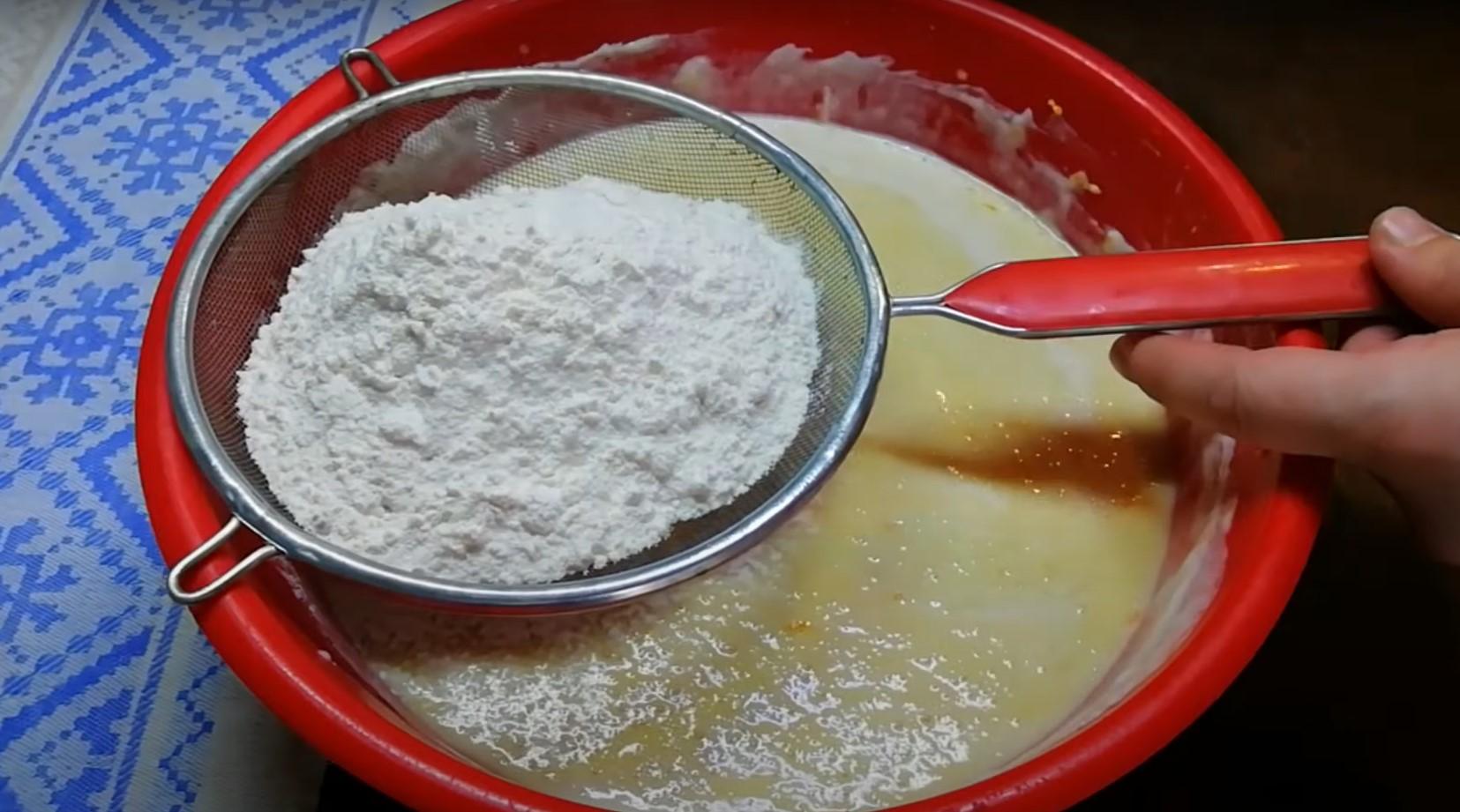
Step 8
After the first rise (2-2.5 times its original volume), punch down. Drain the raisins in a colander and pat dry lightly on a napkin or towel. Add the raisins. Knead. Let rise.
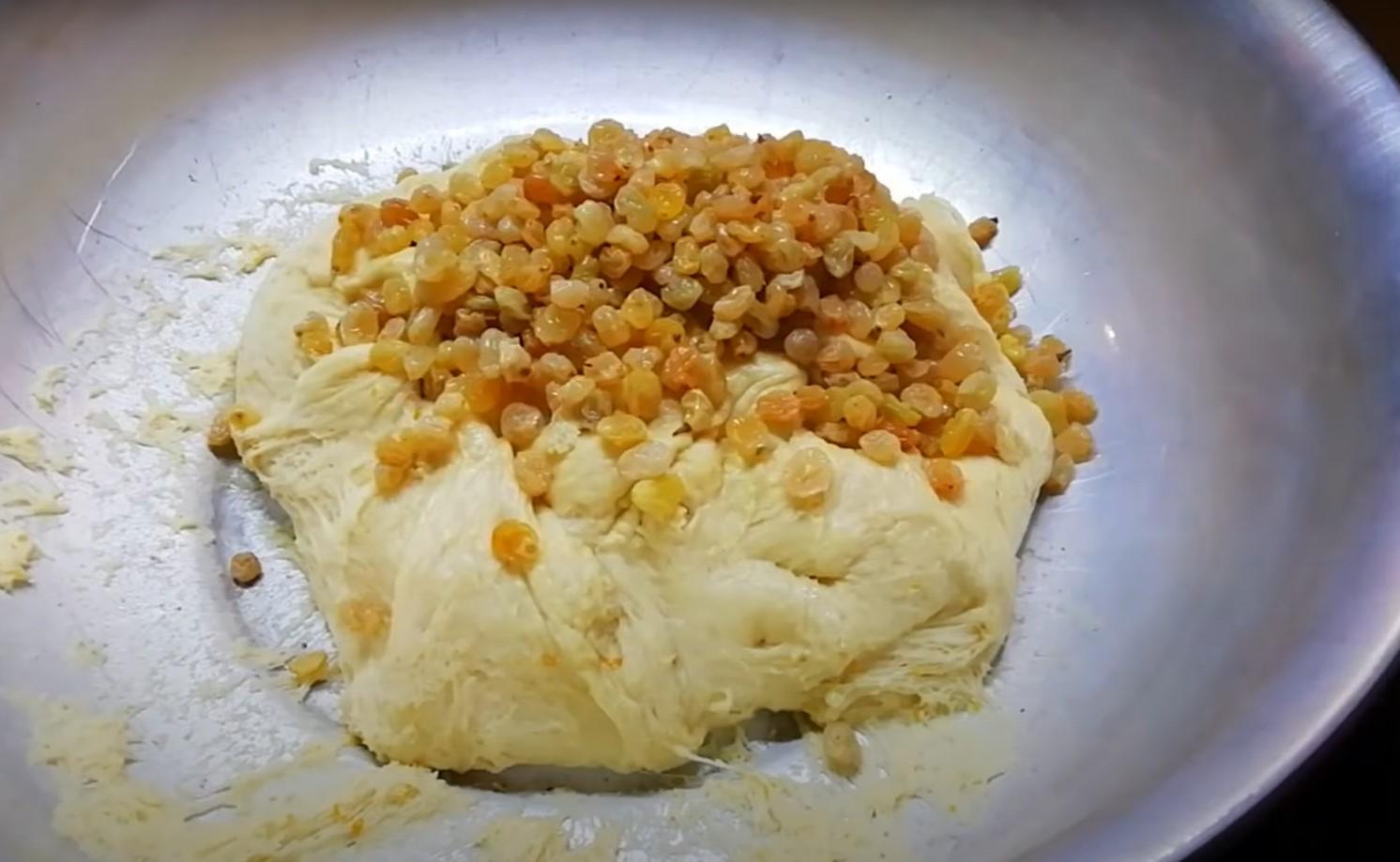
Step 9
After rising, knead again. Pour in sunflower oil. Knead. Let rise.
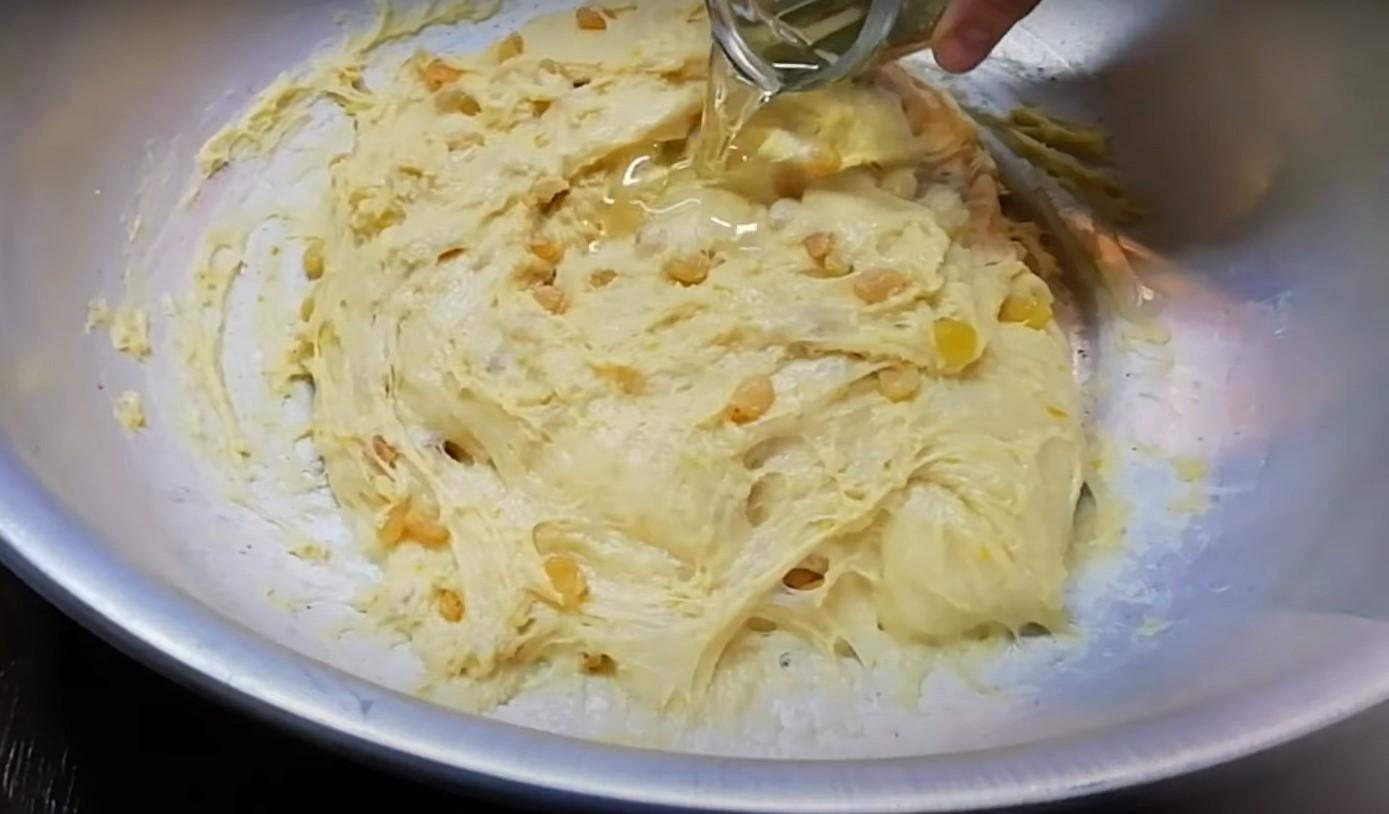
Step 10
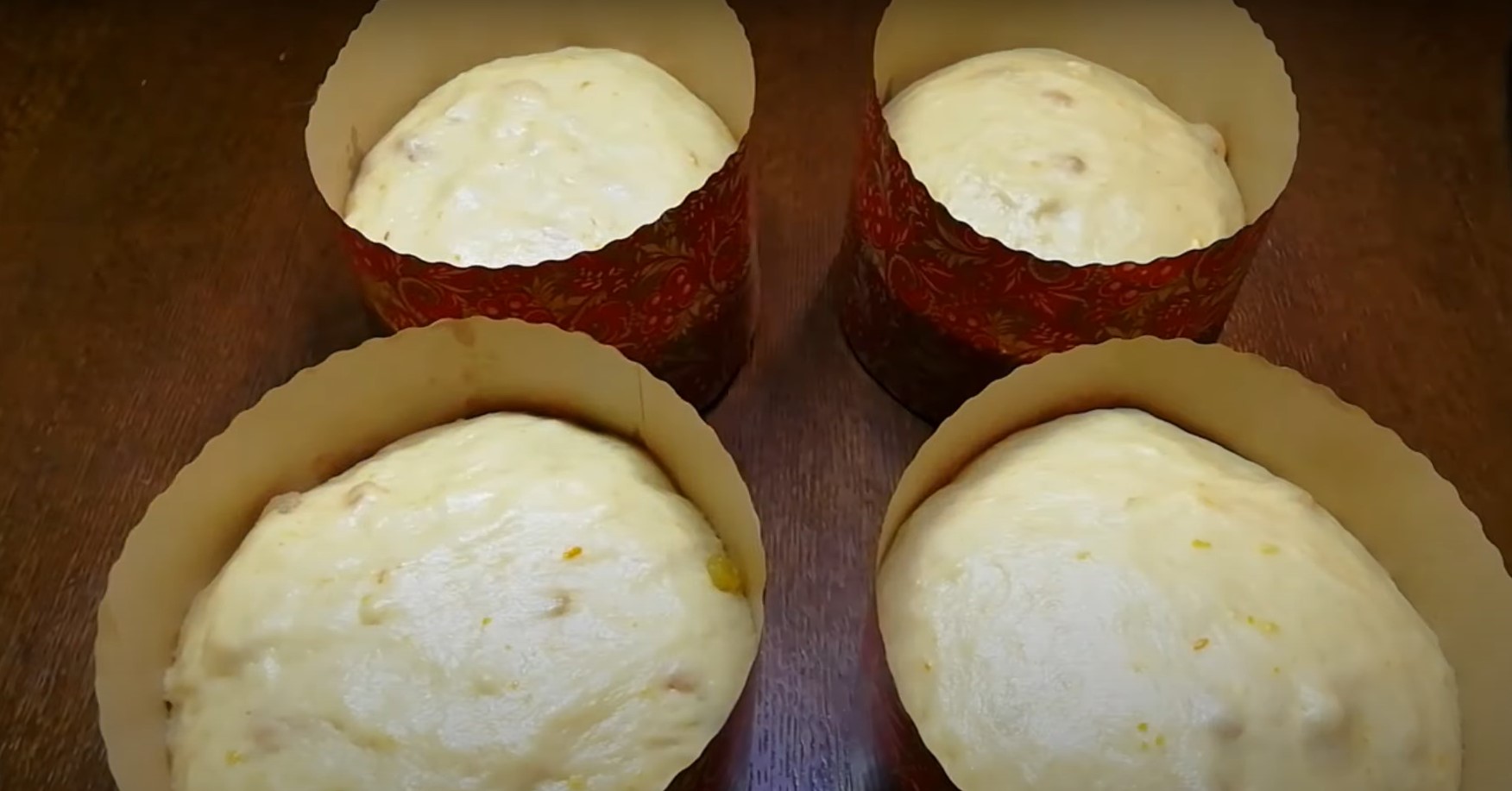
Knead the dough for a few minutes. Fill the molds halfway. Let the dough rise in the molds.
Step 11
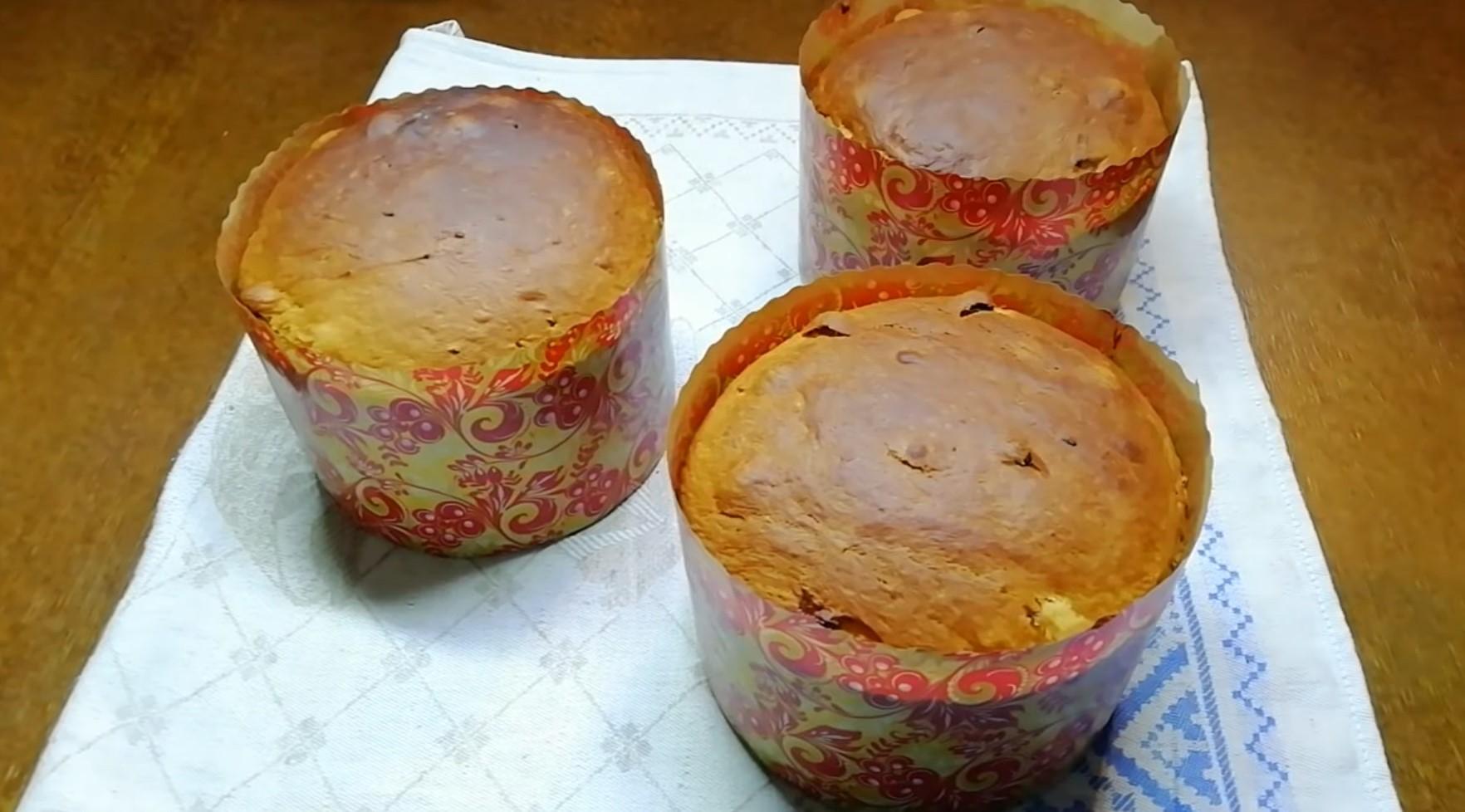
Bake at 180 degrees for 40-45 minutes.
Proportions of dry and live yeast
There are three main types of yeast used in cooking:
- live (pressed);
- dry active (requiring soaking);
- dry instant (quick-acting, can be added directly to flour without pre-soaking).
It should be taken into account that dry active yeast has a reduced ability to ferment (compared to live yeast), while instant yeast is suitable for working with dough that contains a large amount of oil.
Although many home bakers prefer to use traditional live yeast when baking Easter cakes, it can easily be replaced with dry yeast. However, it's important to maintain the correct proportions (the amount of live yeast is not the same as the amount of dry yeast) and take into account the specific characteristics of the specific product.
| Type of yeast | Weight | Mass/volume | Mass/quantity of flour |
| Alive | 3 g | 15 g | 4 g per 100 g of flour |
| Dry | 1 g | 1 tsp | usually indicated on the packaging |
Experienced cooks agree that all yeasts are equally good, as long as they're given enough time to activate. However, dry yeast requires a longer proofing time than fresh yeast.
Video: Fluffy Easter cake with yeast (based on Grandma's recipe)
Every housewife wants her Easter cake to be the most delicious, beautiful, and soft as feathers. Despite the many different recipes available, finding the perfect one can be challenging. I suggest learning how to make Easter cake using my grandmother's recipe.
Although this method is time-tested, we'll be making the dough with dry yeast. To achieve a fluffy and airy Easter cake, you'll need to complete all the main steps: making the dough starter and then letting it rise several times. If you want to learn how to make an incredibly delicious and light Easter cake, watch this video recipe.
I hope my selection today helps you find the perfect recipe for baking Easter cakes. Let me know in the comments what kind of yeast you use for this type of baking.