Why do people dye eggs and bake Easter cakes at Easter? Christian traditions

Content
The bright holiday of Easter is the greatest holiday in Christianity, along with Christmas. This day marks a great joy for every believer—the Resurrection of Christ. The return of the Son of God from the dead symbolizes the triumph of faith and life, victory over sin and corruption, and the beginning of humanity's new journey toward the Lord.
Christian Easter has many traditions, and its hidden symbols are countless. The main attributes of Easter Sunday are eggs and paskas (paskas). These have come down to us from ancient times. But few people know the origins of the tradition of dyeing eggs and baking kulich (Easter cakes) for this day.
Why do people dye eggs at Easter?
There are countless views on the origins of the tradition of dyeing Easter eggs. This question has been addressed by priests, theologians, historians, and cultural scholars. Each field has its own view on where this custom originated, how it spread, and what it symbolizes. It's difficult to say which legend is more credible. It's safe to assume that Easter eggs are dyed using a little bit of each.
The first mention of krashenki (painted eggs) for Easter appears in parchment manuscripts from the 10th century AD. They are kept in the library of the Monastery of Saint Anastasia in Greece. The document contains a sacred charter, which concludes with the following: "After the Easter service, read the prayer for the blessing of eggs and cheese. Then distribute the blessed eggs to the brethren with the words 'Christ is Risen!'"
The abbot could punish a monk who refused to eat a red egg on Easter Sunday. Evidence suggests that the history of the Easter egg dates back to the time of Mary Magdalene. The ritual of dyeing has been going on for over 2,000 years.
How Easter came to be
The history of the holiday of Passover dates back to the pre-Christian period. The ancient Jews were the first to celebrate Passover (Hebrew: פֶּסַח—passed by, passed by). This was the day when the Jewish people were finally freed from Egyptian oppression. For forty years, they walked through the dry Sinai desert until God parted the waters of the Red Sea before them. Jews consider this moment the transition to a new, free life, over which only God has control.
Much later, the feast of the Resurrection of Christ, the feast of Easter, emerged in the Christian tradition. It also marked a special transition for all believers. Only this transition was on a spiritual level: from sin to repentance, from darkness to light, from death to life, from unbelief to faith. And it was embodied in the resurrection of Jesus Christ, who took upon himself all the sins and all the pain of humanity.
The egg as a symbol of the holiday
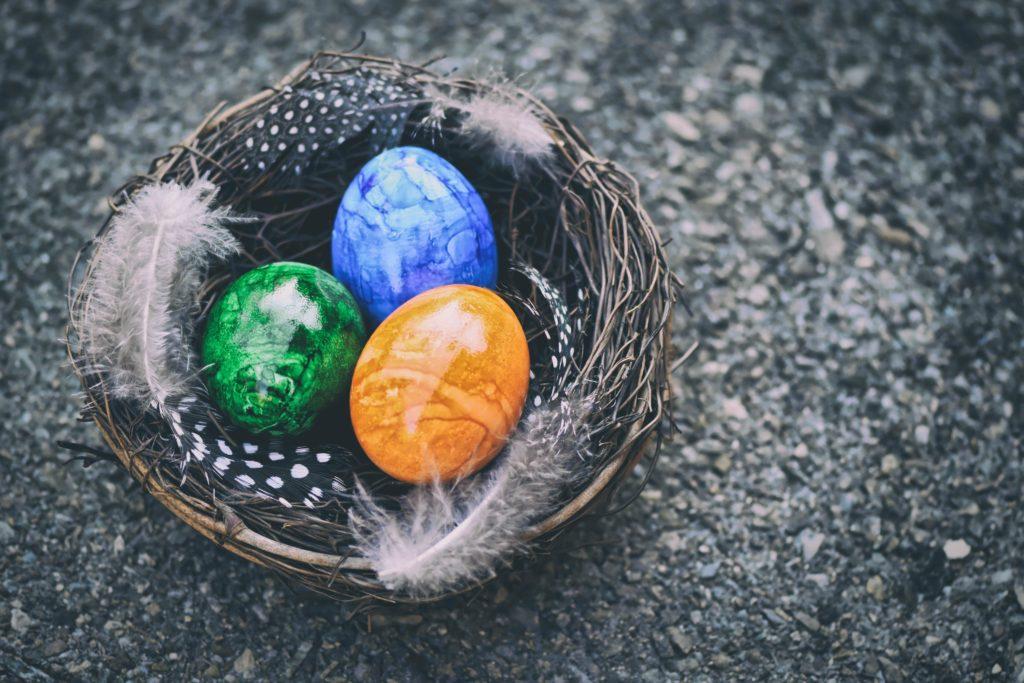
The origin of the Christian symbol comes from the millennia-old customs of various religions around the world. The egg has always been considered a symbol of life, as its strong shell contains a tiny embryo that will one day become a chick.
Eggs were believed to have magical properties even before the advent of Christianity. During excavations of ancient burial sites, archaeologists find both real eggs and those made of various materials. Apparently, for ancient people, eggs symbolized purity and the birth of new life.
With the advent of Christianity, and later its offshoot, Orthodoxy, the egg acquired a new meaning. First and foremost, it became a sign of Christ's bodily appearance, a symbol of great joy for the faithful.
The Easter egg also symbolizes the Holy Sepulchre. This is because the stone used to seal the entrance to the cave where Jesus was buried was shaped like an egg. Therefore, for Christians, the Easter egg is a reminder of the Resurrection of Jesus Christ, salvation, and eternal life.
According to Christian tradition, Easter eggs should be dyed and decorated on Maundy Thursday. This day is designated for cleaning and tidying the home, kneading rich dough and baking Easter cakes, and painting Easter eggs. There's a belief that if the housewife manages to complete all this on time, troubles and dirt will pass her family by all year round.
Besides eggs, Easter sweet bread, kulich, is also imbued with sacred significance. It's a pastry made from wheat dough with raisins and candied fruit. The symbolism of this tall, airy pastry has many interpretations. It is said that the taller the bread, the more fruitful the year will be. Clergy, however, tend to believe that kulich symbolizes the flesh of Christ and the beginning of life. The presence of kulich on the holiday table symbolizes the invisible presence of Jesus in the homes of parishioners, who thus pay tribute to their love and respect for the Savior.
The meaning of the red color in Easter eggs
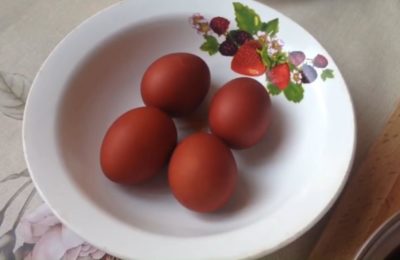
The Christian tradition of dyeing eggs for Easter is often explained by the fact that the red Easter egg is identified with the empty tomb of the resurrected Christ. More precisely, with the stone soaked in his martyr's blood, which he voluntarily gave for the forgiveness of the sins of all humanity. It also serves as a reminder of the Resurrection of Christ and His suffering for the sins of mankind.
The most common version among parishioners is that the tradition originated with Christ's disciple Mary Magdalene, who dedicated her entire life to preaching the Christian faith. When Jesus rose from the dead, the girl went to Emperor Tiberius to inform him of the miracle. Only guests bearing offerings were allowed to see the ruler, so Mary Magdalene took the only thing she had—an ordinary chicken egg. When she told Tiberius about the Savior's return from the dead, the emperor was in disbelief. He laughed and said it was as hard to believe as a white egg turning red in a girl's hands. After this statement, the shell turned blood red. The emperor exclaimed, "He is risen indeed!" In honor of Mary Magdalene, people began making painted eggs (krashenki) on this day.
Another legend about red eggs at Easter is connected to a Jewish meal that took place three days before Christ's resurrection. One of the guests reminded those present of the prophecy. The others then laughed at the man and remarked that it was more likely for a chicken on the table to come to life or for eggs to turn red than for a miracle of resurrection to occur. The next moment, the chicken began clucking, and colorful eggs lay on the table.
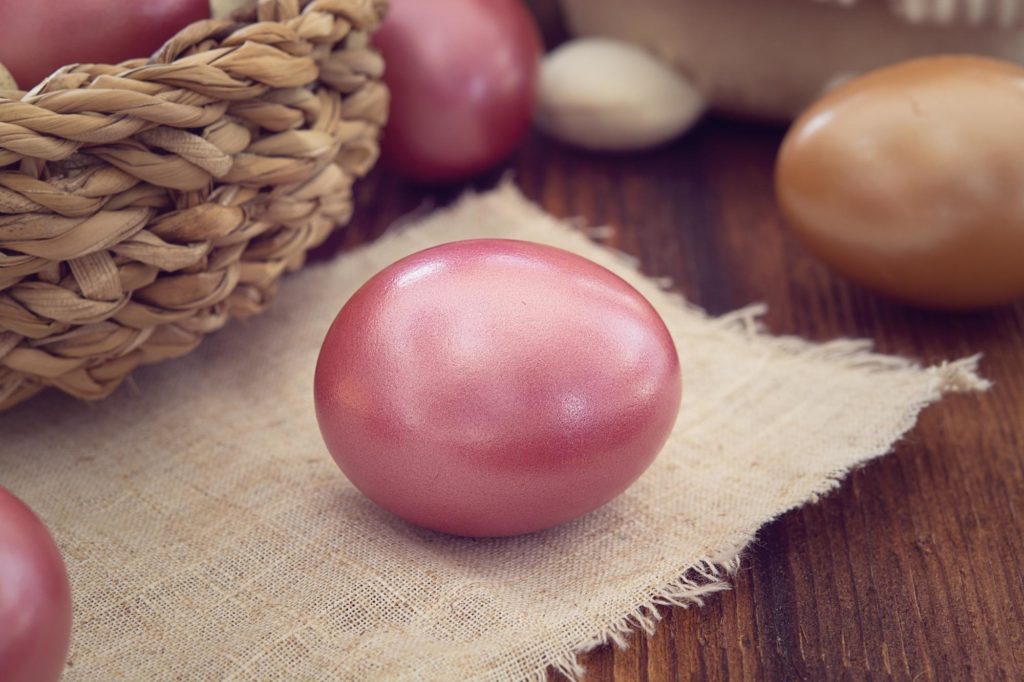
Legends point to another origin for the custom of creating krashenki. This tradition is believed to date back to the ancient times of pagan gods. Red Easter eggs honored one of the main gods of the ancient Slavic pantheon—Yarilo, the god of the sun. The Slavs revered the sun. Its warm, springlike rays heralded the end of the cold season and the awakening of nature after long, harsh winter frosts.
Proponents of one new theory believe that the tradition of dyeing eggs isn't a tradition at all, but a practical solution to a daily situation. The first mentions of Lent date back to the time of Moses. Even then, people abstained from animal products, including poultry eggs. These eggs accumulated, creating the problem of separating old eggs from fresh ones. As a result, old eggs were boiled to prolong their shelf life and then dyed, making them stand out. Red was the most common color used for eggshell dyeing, as it was the most readily available—it was obtained from onion skins.
According to Roman belief, on the birthday of Emperor Marcus Aurelius (121 AD), a hen laid an egg with red spots. This was considered a lucky omen. After this, the Romans began the tradition of giving each other colored eggs for Easter.
Video: Archpriest Georgy Vlasenko on Easter eggs and kulich
In an interview with the Mir Belogorya channel, the rector of the Church of the Nativity of John the Baptist in Severny explained why people eat eggs and kulich (Easter cakes) at Easter. Archpriest Georgy Vlasenko told the story of how the tradition of dyeing eggs for this day arose. Viewers can also learn which truly has more significance on this day: paska or kulich? What are the differences between these two dishes? And why does only one have sacred significance, while the other is simply a sweet dessert for breaking the fast?
Color symbolism of the Easter egg
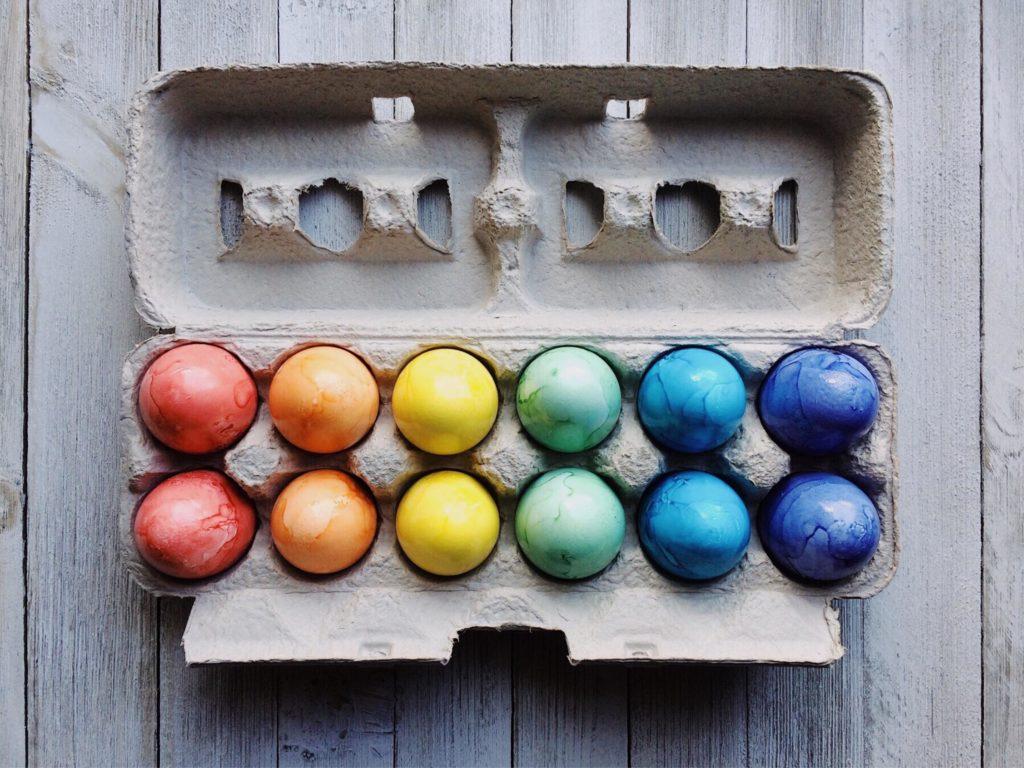
At first, krashenki were painted only red—symbolic of the blood of Christ. Later, the color palette of krashenki expanded, and in addition to color, designs and patterns began to be applied to the eggs. This is how pysanky came to be.
Krashenki are boiled and dyed eggs. Pysankas are hollow eggs decorated with ornaments. In the old days, pysankas were more than just festive decorations, but true masterpieces of folk art. Only a truly talented artisan can masterfully decorate an Easter egg.
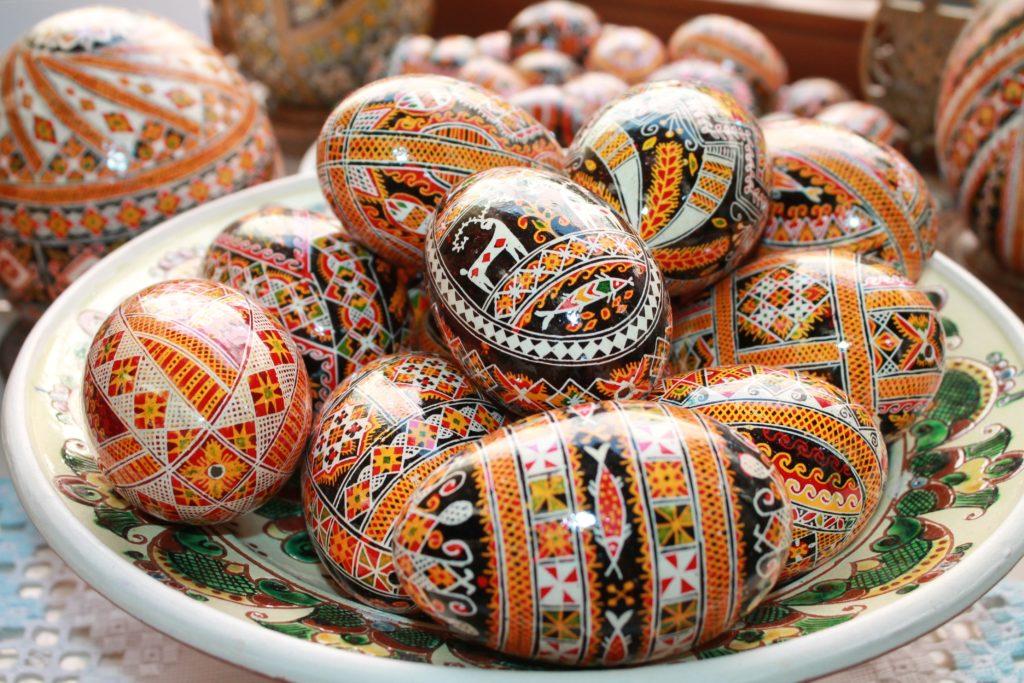
Pysanky are rarely made for Easter these days. Most often, homemakers create krashenki, often using different color combinations on the shells. Choosing the right color should be done carefully, as each color has its own magical significance:
- yellow - sun and well-being;
- green - nature and life;
- blue - sky and health;
- brown - earth and fertility;
- white - purity and innocence.
To wish someone health, family well-being, prosperity, happiness and success, you need to give a painted egg that combines 5-6 colors.
However, the use of black and gray colors is strictly prohibited. Also, avoid applying a trinig design with the ends curved against the sun's direction to the eggs.
How do you usually paint your Easter eggs? Are they solid-colored krashenki or pysanky with intricate designs? Share your thoughts in the comments.