Peculiarities of preparing French desserts

Content
Even in the Middle Ages, the French were considered true gourmets. And since then, French cuisine has been considered the most popular in the world. French desserts literally melt in your mouth and are unlikely to leave anyone indifferent.
Once you visit a pastry shop selling desserts prepared according to French recipes, you'll inevitably develop a sweet tooth. Not only do these dishes have an unearthly taste, but they also look incredibly appetizing, not only in person but also in photos. The delicious recipes created by French chefs centuries ago have become true legends.
Traditional French sweet dishes are striking in their diversity. Among them, you can find exquisite pastries, cakes, delicate soufflés, and light fruit appetizers. Dishes and delicate desserts from France have become very popular in our country.
The best part is that most of these recipes are quite simple, so these delicious treats can be recreated at home. If you want to prepare delicious desserts for your guests, traditional French recipes are the best choice.
The French macaron is a dessert that conquered Versailles.
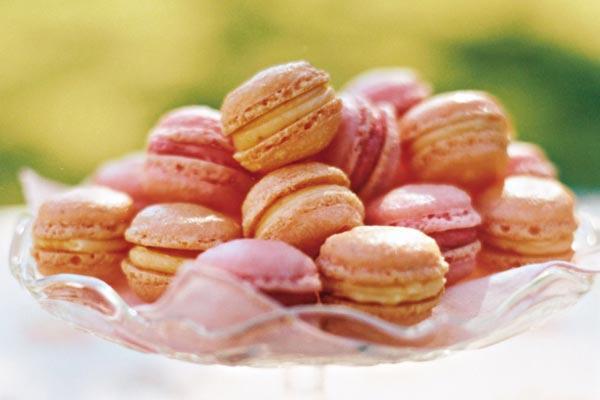
One of the most vibrant desserts is the colorful macaron. As early as the 16th century, this pastry was a regular treat at royal tables. French aristocrats treated their guests to macarons, serving them on elegant saucers with a cup of hot chocolate. Royals and courtiers loved these desserts so much that even Marie Antoinette named her cat Macaron.
Recipes for this dessert may vary slightly, but the principle is always the same. A key feature is that the cake needs to rest for 2-3 days from the time it's made until it's served.
Desserts like macarons are striking in their brightness and elegance, making them perfect for a children's party, and they also look great in photos.
Recipe: French Macarons with Chocolate Filling
To make this treat yourself, you will need 4 chilled egg whites, 110 g of almond flour, 1 cup of powdered sugar, a quarter cup of sugar, 1 tsp of cocoa, and red food coloring.
Mix the almond flour with cocoa and powdered sugar, then bake the mixture in the oven for 5 minutes, spreading it evenly on a sheet of parchment paper. Then sift the mixture through a sieve to remove any large particles.
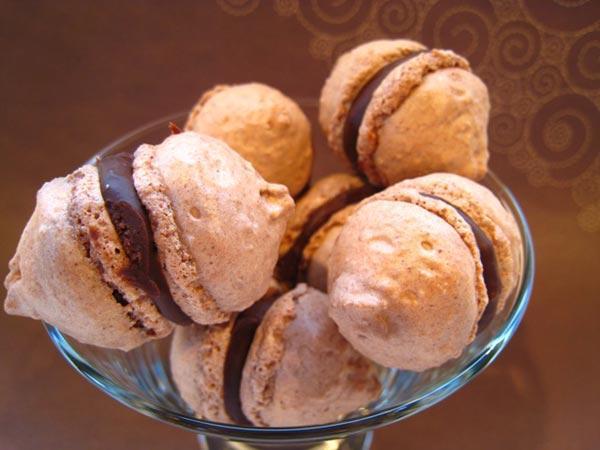
Whip the chilled egg whites until stiff peaks form, gradually adding sugar. Gently fold in the almond mixture with a wooden spatula. The dough should be sticky. Using a pastry bag, press the round cakes onto a baking sheet lined with parchment paper and bake in an oven preheated to 150 degrees Celsius (300 degrees Fahrenheit). Bake for about an hour, then increase the temperature to 180 degrees Celsius (350 degrees Fahrenheit) and bake for another 12 minutes. The cakes should rise evenly in size.
To prepare the filling, take 0.5 cups of whole milk, 30 grams of heavy cream, and 125 grams of dark chocolate. Pour the milk and cream into a saucepan, then add the chocolate, which has been broken into crumbs. Once the chocolate has melted, pour the mixture into a deep container, cover it with plastic wrap, and refrigerate until it sets. Remove the filling from the refrigerator 2 hours before frosting the cakes.
Now take the cake, spread the filling on it, and cover it with another cake. Repeat the same procedure with the remaining halves. Refrigerate the finished dessert for 2 days.
The symbol of Parisian pastries is the croissant.
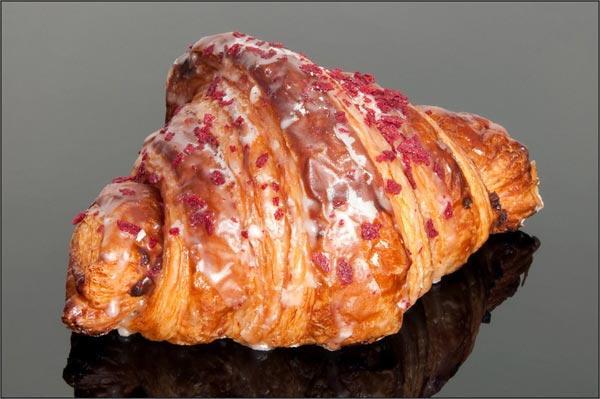
When describing French desserts, it's impossible not to mention croissants. Although they have become a symbol of France, their history began in Austria as early as the 13th century. The French only tasted them in 1770, when Marie Antoinette moved to Paris. However, it's worth noting that modern recipes for Viennese and French croissants differ significantly.
Croissant recipes in France have also evolved over time. But these desserts are always delicate and crisp, literally melting in your mouth. Even looking at a photo of golden-brown croissants is sure to make you want to try them.
Croissants can be filled with both sweet and savory fillings, so there are separate recipes for each. Croissant recipes can also vary, with some chefs adding margarine to the dough, while others use butter, although many agree that butter makes the pastry more tender.
Recipe for classic croissants
To prepare the dough for this famous local delicacy, add 20 g of fresh yeast, a pinch of salt, 0.5 cups of whole milk, 1 egg, and 0.5 cups of water to half a kilogram of flour, and then knead the dough for 3-4 minutes.
Form a round flatbread from the dough, score it crosswise, and refrigerate overnight. Then, spread butter evenly over the dough. Roll the dough into a small envelope, then roll it out again and refrigerate for half an hour. Repeat this rolling process 2-3 more times.
Next, cut the dough into 3x7 cm rectangles, which are then cut into triangles. Fill each triangle with your favorite filling and roll them into croissants. Before baking, let the croissants rest at room temperature for a couple of hours to rise slightly. Bake them for 20 minutes at 220 degrees Celsius.
Savoiardi – a royal treat
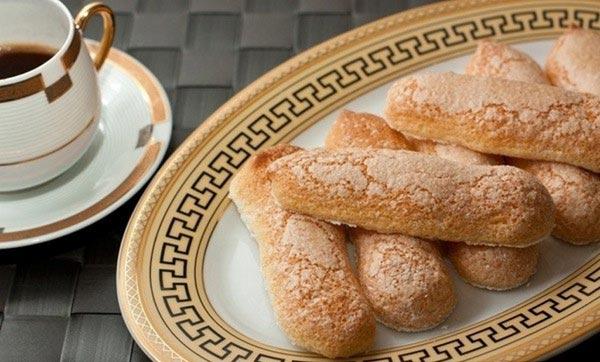
These cookies were first made in the 15th century for the French king. They were named after the province of Savoy. Although the recipes for these cookies have changed over the centuries, it's safe to say they've become even more delicious.
Recipe: Savoiardi Cookies
To prepare the dough, beat 75 g of sugar with three egg yolks, then add salt and 75 g of flour and 20 g of butter. Beat the egg whites separately and carefully fold them into the dough. Using a pastry bag, squeeze the resulting dough onto a baking sheet.
Mix 25g of sugar and 30g of powdered sugar. Sprinkle half of the mixture over the dough, then sprinkle the remaining mixture after 10 minutes. Bake the cookies in a preheated oven at 150°C (300°F) until golden brown.
French dessert recipes embody all that France has to offer. Every time you try new dessert recipes, you discover new secrets of this country.