What is the correct way to dry glaze: at room temperature or in the oven?

Content
Protein glaze is the best material for decorating gingerbread. It's easy to dye, smooth, shiny, and holds its shape perfectly. However, many home cooks and novice pastry chefs don't know how to properly dry the glaze on cookies or gingerbread. As a result, the cookies turn out sticky, and the design runs or cracks.
In this article, I'll explain how to dry icing at home and address common mistakes that prevent it from setting. Follow this information, and your gingerbread cookies will always look flawless.
How long does it take for gingerbread icing to dry?
Drying time for gingerbread icing can range from 10 minutes to 2-3 hours. It always depends on a number of different factors. The most important ones are the following:
- ConsistencyThe thicker the icing, the faster it dries. There are three main icing consistencies: for filling, for lining, and for gluing parts together. The first of these dries more slowly than the others.
- TemperatureThe higher the temperature, the faster the icing on cookies or gingerbread will dry. This is why confectioners often dry icing-covered baked goods in the oven.
- HumidityThe higher the humidity in the room, the longer it will take for the icing on the gingerbread to set.
- SizeThe larger and more voluminous the picture or pattern on the gingerbread, the longer the icing will take to set.
Always consider these factors when choosing a place or room to dry your gingerbread. After all, if you miss even one of them, you could miscalculate the time it takes for the icing to set and the cookies to be ready for use. Let's look at the basic methods for drying icing.
Drying the glaze at room temperature
Most often, gingerbread covered with meringue icing is dried at room temperature. This can take anywhere from 20 minutes to several hours. Some pastry chefs leave the finished gingerbread overnight. During this time, the icing hardens thoroughly and becomes dense.
Typically, contour gingerbread cookies dry within 20-30 minutes at room temperature. This is because they are decorated with a fairly thick glaze that hardens quickly.

If the gingerbread or cookies are completely covered in icing, they may take 1 to 3 hours to dry.

But if the gingerbread has a three-dimensional design or a thick layer of icing, it is better to leave it to dry overnight.
How to quickly dry icing in the oven?
If you don't have the time or desire to wait for the icing on your gingerbread cookies to set at room temperature, you can dry them in the oven. This method is faster than the previous one. Some pastry chefs also note that this drying method gives the icing a beautiful, distinctive shine.
Preheat the oven to 50 degrees Celsius (122 degrees Fahrenheit). It's best to use convection mode. Place the decorated gingerbread cookies on a baking sheet or rack and bake in the oven until the icing is completely set. By time This procedure will take from 10 to 30 minutes.

Gingerbread cookies with dried icing should be removed from the oven very carefully. After heating, they will become softer for a while and may break.
Video - The Most Common Mistakes When Drying Icing
Have you decorated your gingerbread cookies with icing, but it's not drying, cracking, or turning yellow? This means you've made one of the common mistakes when making or using meringue icing. To understand the causes and prevent such problems in the future, I suggest watching this video.
In this video, an experienced modern pastry chef explains the 5 most common mistakes made when working with icing. Thanks to this video, even a novice pastry chef can easily prepare the perfect meringue icing and flawlessly decorate gingerbread or gingerbread cookies with it.
Why doesn't the icing on gingerbread cookies harden?
This is a question many homemakers and pastry chefs are asking themselves when they're just starting out with icing. It seems like they followed the recipe perfectly, applied the icing correctly, and let it dry… but it still won't set, remains sticky, or runs. What could be the problem? Let's look at the most common mistakes that can lead to this problem.
Incorrect consistency
Icing for decorating gingerbread cookies should be neither too thick nor too runny. Always use a proven icing recipe and strictly adhere to all the proportions specified. Icing that's too runny will hold its shape poorly, won't set, and sometimes will even run off. If this happens, you can always adjust the consistency by adding powdered sugar and a few drops of lemon juice.
Lots of dye
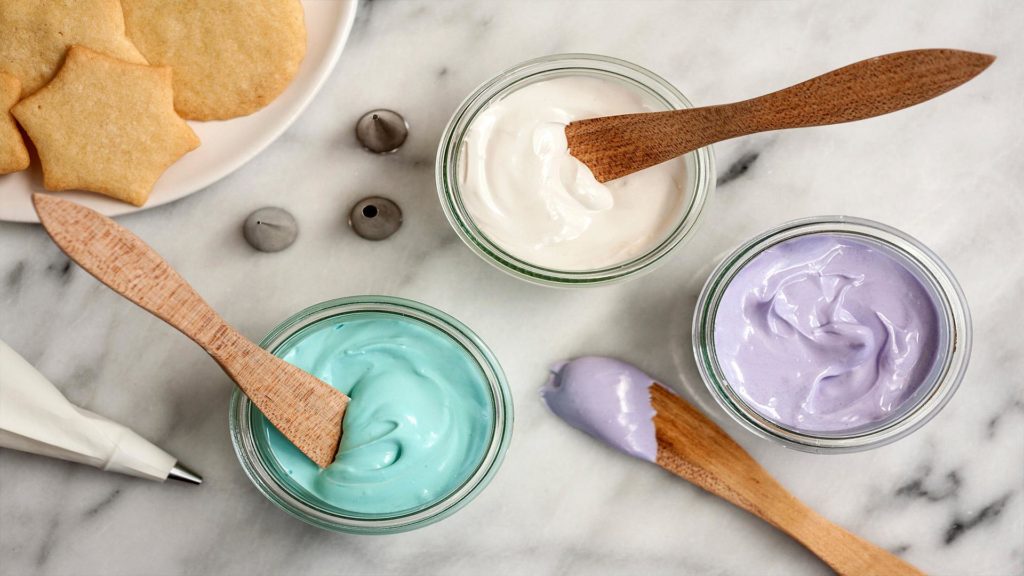
Icing can easily be tinted to any shade. However, remember that liquid or gel food coloring changes the consistency of the icing. It becomes thinner and takes longer to dry. If you overdo it with food coloring, the icing may not set and remain sticky.
The egg whites are over- or under-beaten.
The egg whites for the icing should be lightly beaten until bubbles form. This is best done with a whisk or mixer (at low speed). If you overbeat the egg whites or don't beat them at all, the consistency and structure of the icing will be improper. It won't adhere well to the gingerbread and may not set at all.
High humidity
In a room with high humidity, the icing will take too long to dry or won't set at all. For the same reason, gingerbread cookies shouldn't be stored in the refrigerator, as the icing will simply become damp.
The icing layer is too thick
If you need to apply a thick coating of icing or a three-dimensional design to the gingerbread, it's best to do it gradually, allowing each layer to dry. This way, the treats will dry faster and turn out very neat and beautiful.

Working with icing requires attention to detail, precision, and patience. Take your time, approach each step carefully, and always work in a positive mood, and you're sure to succeed.