Magic Maracons

Content
Oddly enough, the Italian dessert "Macaroni" is related to pasta, hence its name. Once upon a time, one of the traditional dishes was almond soup with chunks of grain dough. Soon, the dough and almonds were diversified into different culinary recipes and dishes, but the name remained.
"Macaroni" came to Russia thanks to Catherine de Medici. Previously, this dessert was brought by the Arabs from distant lands. As they used to say at the time: "Macaroni cannot be eaten because they inflame passion and all sorts of appetites, but it is also impossible to stop yourself from eating them." If you try a chocolate macaron out of curiosity, you'll be followed by the pistachio one lying next to it. Everything would be fine, but there's a lemon macaron next to it, and two cookies later, there's a raspberry macaron, a striking contrast to the blueberry.
Macaroni has driven crazy everyone on the planet who has ever dared to try this unforgettable dessert. The Japanese, French, and Americans revere the art of macaroon making. The variety of colors, smells, and flavors of these smooth, shiny cookies captivate every child's curiosity. And under the slogan "What's inside?", they strive to eat as many cookies as possible, covering the entire color palette.
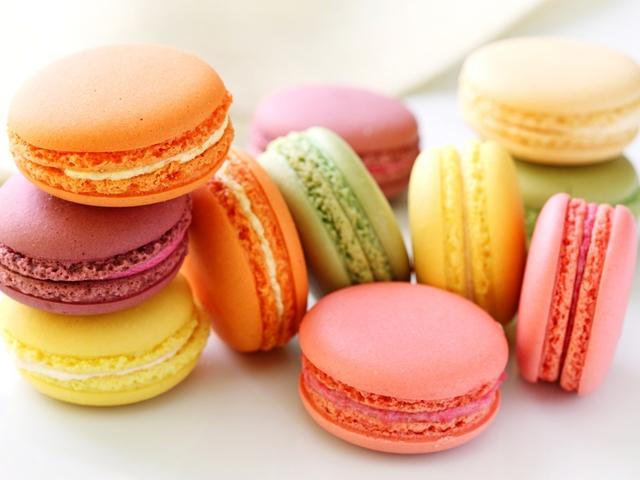
Pasta: sweet, spicy, fruity, meaty
Along with the confectionery production of sweet macarons, cookies with the flavor of goose liver, pepper, olives and many other products not related to dessert flavors began to appear on the shelves.
Pierre Hermé, a world-famous pastry chef, was the first to offer custom-made macarons. You can order your own flavor and color, and your cookies will bear your signature initials. However, it's not as simple and happy as you might imagine. You'll have to make your own macaron yourself, no matter how it turns out.
After such a PR stunt, it's no longer clear what's in greater demand: the macarons themselves or Ermé's main book, which features recipes for desserts with secret and exclusive ingredients.
The book reads with the subtext, "Everyone should earn their own macaron." If your debut is delayed, and you've tried all the recipes on the first four pages, but nothing has worked, you'll naturally give up. However, some unknown force compels you to return again and again to this cherished dessert, to conduct further experiments with the oven, the dough, and, of course, yourself. When your macaron finally turns out right, you'll feel like you've taken a huge step forward in your evolution.
Video guide with the original pasta recipe:
Secrets of making dessert
It's a strange situation, but the secret to successful cookies is that the preparation begins much earlier than the actual process and actions towards the dough.
To make the best macaron dough, you need aged whites. To do this, separate the whites from the yolks and refrigerate them two days before the intricate preparation. After a couple of days, the whites lose their elasticity and become limp. The next secret is that cold whites won't make dough, so remove your dough from the refrigerator a few hours before cooking, otherwise you've already wasted two days.
Peeling almonds takes a long time. You can quickly save a couple of minutes by scalding them with boiling water and letting them soak. The brown skin will peel off on its own, and once dry, the almonds will become soft and shiny, ready for grinding into powder.
Then you'll mix the almond powder with powdered sugar. Regular sugar won't work; your mixture should be like a sandstorm of sweet bliss.
To add a "yummy" flavor to the coveted flour, you won't be able to guess if you're choosing dyes or, even more so, squeezing berry juices into the mixture.
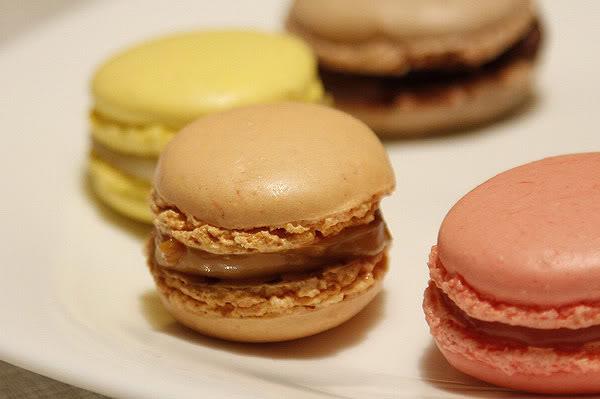
For your first macaron, use cocoa powder. Don't think of this as a shortcut, as you're still only halfway there, and you need to start small.
The next step is whipping the egg whites. For this dessert, beat the egg whites until very thick and season with a pinch of salt; no sugar is needed. While whisking, you can add a drop of lemon juice to firm up the whipped egg whites.
When you feel the egg whites have firmed up, you can whisk in the powdered sugar and almond mixture. Be sure to do this carefully, ensuring that the lightness and airiness remain between the egg whites and the nut-sugar mixture. The end result will look like a stretchy ribbon stretching from the spoon to the bowl where you beat the dough.
You won't be able to make macarons without baking paper, so get hold of this valuable ingredient right away.
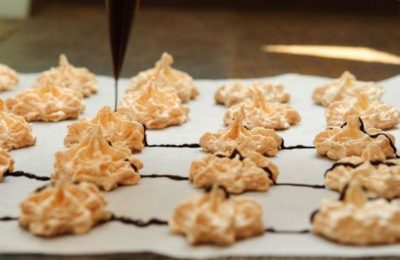
The whipped batter must be pressed into a pastry bag. You can make your own by snipping off the corner of the bag. Press out tiny dots, spaced well apart, distributing them across the entire sheet.
You can only place the baking sheet in the oven once it reaches 160 degrees Celsius. As the oven heats up, the cookies begin to dry out and develop a crusty texture. In this state, place them in the oven for 15 minutes.
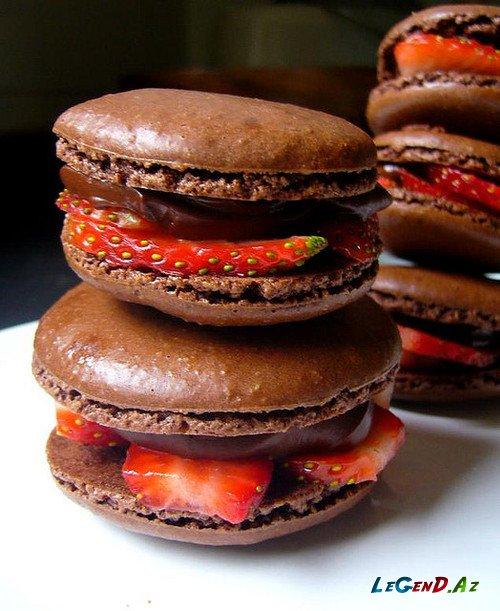
Not all macarons will turn out as beautiful as the picture, but they will definitely be equally delicious. If you're making these for a holiday table, simply store the less-than-pretty shapes out of sight or eat them yourself. Allow the macarons to cool for about 20 minutes before serving. For the ultimate indulgence, pair your macarons with buttercream.