The Smart Cake is a dessert that chooses its own shape.

Content
An Ordinary Miracle or Simple Confectionery Magic
The art of pastry is always akin to magic. Indeed, it takes a simple set of ingredients, an original recipe, then a little magic at the stove—and voila, a wondrous culinary masterpiece emerges. Pastry wizards are constantly refining their craft, creating new, extraordinary creations. One such invention is a smart cake that decides on its own what kind of cake it will become during the baking process. Isn't it a miracle?
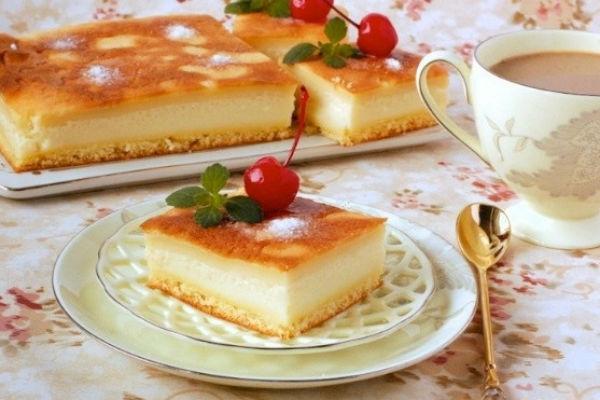
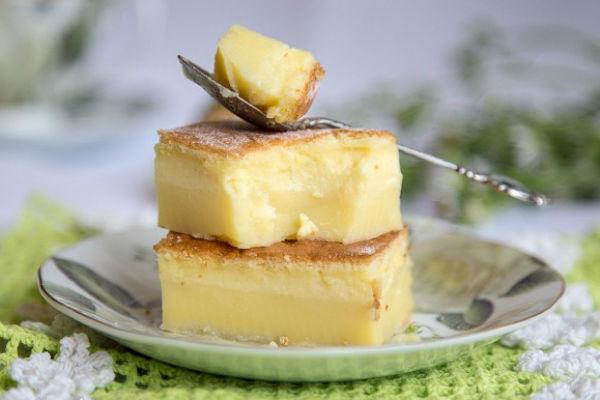
The amazing magic lies in the fact that this dessert is made with just one liquid batter. The transformation begins later: during the baking process, the batter separates into three distinct layers. They are clearly visible in the photo: an airy soufflé, a delicate cream, and a light sponge cake. A fairy tale!
Of course, one could understand the physical nature of this phenomenon and substantiate it scientifically. But is it worth it? It's much more satisfying to simply feel like a bit of a magician, creating a small, ordinary miracle in your kitchen every time.
Instructions for a Beginner Magician
So where should you begin when mastering the basics of baking magic? Learn the recipe, of course. Then, prepare your ingredients so you have everything on hand when you need it.
Next, pay attention! Two secret ingredients, not listed in the recipe, but absolutely essential for successful confectionery:
- a boost of good mood;
- endless faith in yourself.
So, now everything is ready – the magic begins! The magic recipe says: you need to take
- 500 ml of milk (necessarily warm);
- 110 g of wheat flour (of course, the highest grade);
- 125 g melted butter;
- 150 g sugar;
- 4 eggs;
- 1 teaspoon vanilla essence (this is important);
- 1 tablespoon of water;
- powdered sugar (for decoration);
- a pinch of salt.
The recipe recommends preparing this culinary miracle as follows:
- First, separate the eggs into their components. Be careful to ensure that even the smallest piece of yolk doesn't cloud the purity of the whites.
- Pour vanilla essence, water, and sugar into the yolks. Beat the mixture with a mixer until completely pale. Then add the melted and cooled butter and beat again.
- Add the flour and mix it with the yolk-butter mixture until smooth. Pour in the milk (as previously stated, it must be warm) and whisk again.
- It's time to work on the whites. And perhaps it's time to turn on the oven: by the time you're done with the dough, it should be well preheated. The temperature should be 165-175 degrees Celsius. The beaters should be thoroughly cleaned; the slightest speck of fat can ruin the desired result. Now add a pinch of salt to the whites and begin whisking. A small caveat: start at low speed and increase the speed only after the whites have turned cloudy. Beating until stiff peaks form will take a long time—5 or even 8 minutes. The recipe suggests a drastic way to test for doneness: the whites should not fall out of the bowl when inverted.
- At this point, put the mixer aside: it can now turn from a faithful assistant into a pest. Gradually fold the egg whites into the dough, gently stirring the mixture with a spoon (or fork) from the bottom up. This is done to preserve the air bubbles that were so laboriously created.
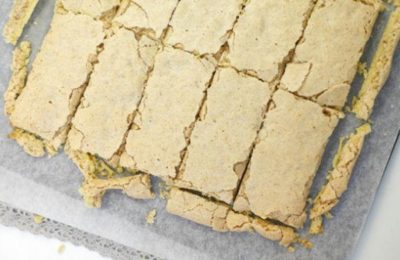
- Now take a baking dish (the recipe calls for greasing it with butter and dusting it with flour) and pour the prepared dough into it. This magical transformation process will take exactly 1 hour and 20 minutes. After the pastry has cooled completely, decorate it with powdered sugar and cut it into squares (as in the photo) or rectangles, if you prefer.
That's it: the clever cake is ready. Well, you can't really call it a cake: it's more accurately described as a melting delight!
Coffee version
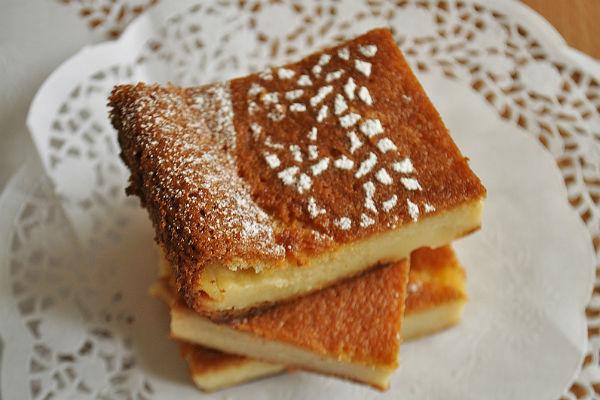
But who said there's only one version of this unusual treat? Coffee lovers and aficionados will surely be interested in this recipe featuring a coffee-inspired version of this cake.
To create it you will need:
- 3 tablespoons of instant coffee;
- 1 tablespoon cocoa powder;
- cognac (1 tablespoon will pleasantly enrich the taste of the dessert);
- vanilla extract (where would we be without it!) - 1 teaspoon;
- 500 ml milk:
- 2 tablespoons of flour (heaped);
- 150 g sugar;
- 125 g melted butter:
- 4 eggs;
- a pinch of salt.
The step-by-step recipe is as follows:
- Bring half the milk to a boil and dissolve the coffee in it. Combine with the remaining milk – the mixture will be just right for room temperature.
- Separate the egg whites from the yolks. Beat the whites with a pinch of salt until stiff and foamy. Add one spoon of sugar at the end. Set aside.
- Beat the remaining sugar with the egg yolks until doubled in volume. After this, the recipe calls for pouring in the cognac and vanilla essence, and then slowly, whisking constantly, add the melted butter at room temperature.
- Mix the flour with the cocoa and combine with the yolk mixture. Finally, gradually pour in the milk, whisking constantly.
- Now all that's left is to combine the prepared mixture with the egg whites. Do this with a spoon or whisk (by hand) in three stages.
- Bake this smart cake in a greased and floured pan. A little secret: to prevent the top from cracking during baking, pour a little hot water on the baking sheet. Bake at 170 degrees Celsius (350 degrees Fahrenheit). Bake in the oven for 1 hour. This will give the cake a nice, pleasing appearance. Now remove it from the oven and let it cool in the pan. The cake will settle slightly during this process, which is completely normal—no need to worry.
To complete this magical culinary ritual, just one final touch: cut the cooled dessert into small individual cakes (as pictured) and dust with powdered sugar. A true temptation—infinitely tender and airy!