Traditional English Christmas cake

Content
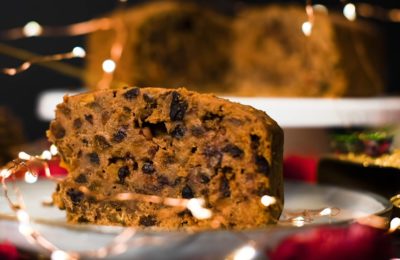
Christmas cake is one of the most luxurious and popular desserts in the UK, traditionally baked for the holiday. Baked according to an old recipe, it features a rich variety of dried fruits, aromatic candied fruits, and nuts. The dough typically contains more additives than flour. When cut, the cake looks like a magical kaleidoscope, and the taste and aroma are simply mesmerizing.
English Christmas cake
- Proteins: 5.4 g
- Fats: 12.9 g
- Carbohydrates: 52.7 g
- Total time:
-
Complexity:
A simple recipe.
- Number of servings: 1
Ingredients
-
Dried fruits400 G
-
Wheat flour50 G
-
Almond flour25 G
-
Sugar25 G
-
Butter70 G
-
Egg C11 pcs
-
Honey10 G
-
Jam1 tsp
-
Spices1 tsp
-
Salt1 pinch
Preparation

We prepare the necessary ingredients.

In advance, soak the dried fruits in strong alcohol, sugar syrup, or a mixture of both.

Let it sit in the refrigerator for several days.

Beat softened butter with sugar until white.

We obtain a homogeneous mixture.

Add the egg to the butter mixture and continue beating until you get a smooth, fluffy mass.

Add a mixture of spices (for example, cinnamon, nutmeg, cardamom, cloves, star anise), salt, pour in any jam and honey.

Beat again until smooth.

Sift the flour directly into a bowl.

Beat thoroughly with a mixer.

Add dried fruits.

Carefully mix them into the dough using a spoon.

Line a baking pan with parchment paper and grease with butter.

We lay out the dough and smooth it out well so that there are no empty spaces.

To prevent the top from burning and to ensure the middle is well-baked, cover the pan with foil.

Bake in the oven at 145-150 degrees Celsius for 2 hours. At the end of cooking, remove the foil and let the top brown.

Once the cake has cooled, remove it from the pan. Wrap it in parchment paper and store it in the refrigerator for two to three weeks.
The History of Christmas Cake
The origins of Christmas cake in Britain are incredibly fascinating, and can be traced back several centuries. On Christmas Eve, it was necessary to prepare a dish that would serve as a transitional meal from fasting to the abundance of delicacies. It was then that barley and oatmeal porridges, flavored with dried plums, pomegranate seeds, and raisins, began to be cooked.
Over the years, porridges became more popular with additives, including candied fruit, honey, dried fruit, nuts, and so on. Sugar, however, was only added in the 16th century. This is how Christmas pudding was born.
As time went on, culinary experts introduced innovations. Butter was added to sweet pudding, and oatmeal and barley were replaced with flour. The dish was no longer boiled, but baked. Because of the large number of nuts and candied fruits, eggs were added to the recipe to bind all the ingredients together. The result was the "Christmas cake," which is now called Christmas cake.
Video recipe: British Christmas cake with dried fruit
This Christmas cake recipe will be a true highlight of your holiday table. The resulting cake is delicious and aromatic. It's quite simple and doesn't require much time or effort. Another advantage of this dessert is that it can be made in advance. The cake will only become more flavorful and aromatic over time. Be sure to delight your family and guests with this recipe this Christmas.