Catalan crème brûlée – the dessert of kings and bourgeois

How sweet and delicious it becomes just from the name of the dessert. Everyone imagines their favorite recipe: ice cream, sponge cake, marmalade, soufflé, and much more. And indeed, The taste of crème brulee can be found in absolutely any dessert.
The battle over the origin of this dessert's recipe continues between Spain, England, and France even today, when the dessert itself has become familiar to every child on the planet where food is a cult. England claims the dessert originated in the 17th century at a Cambridge college. The name for this dessert was "Trinity Cream" or burnt Cambridge cream. In Britain, they claim that even the French have given the name "English Cream" to the dessert, thus acknowledging its true birthplace.
However, the French themselves boast not legends, but facts: 1691 gave the world the book "The Chef for Kings and Bourgeois," which describes a recipe for crème brûlée. However, Catalans are quite certain that the author visited Catalonia before writing it and, having slightly adjusted the recipe, included it in the book as a French treasure.
In Spain, crème brûlée is still called "Catalana." However, this recipe differs from the crème brûlée itself in the ingredients required:
Catalana is made with milk and starch, not heavy cream. Cinnamon or zest are used for flavoring, and the cooking process eliminates the need for a double boiler. Perhaps, after all, crème catalana and crème brûlée are different desserts?
History of Catalan creme brulee
One day, a bishop visited the local monastery and was supposed to serve him the then-famous flan dessert. However, the chefs hadn't had time to prepare the dish in time for his arrival, so the process had to be sped up. The thickening process worked well with starch, but cooking over a fire instead of a double boiler somewhat hampered the quick preparation plans. To prevent the dessert's imperfections from causing further problems, it was covered with a sugar crust. The first serving burned the bishop, and he exclaimed "Crema," signifying the pain he felt from the burn. This is where crème brûlée came to be known as "crema cremada," but it soon softened to crema catalana.
With changes to the French-inspired recipe, cream was added to the custard instead of milk and starch, and it was cooked in a double boiler rather than over a fire. The finished dish is served with Grand Marinier liqueur.
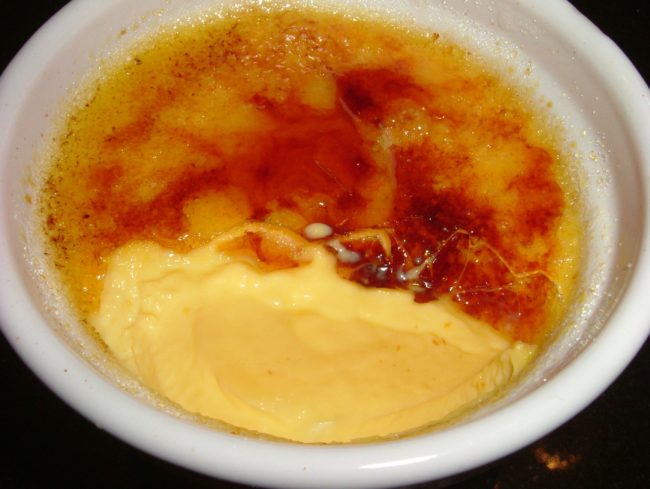
In fact, there are a huge number of variations of crème brûlée in France. It's made, for example, with the addition of milk, rum, lavender, chocolate, or cinnamon, served warm or cold, and there's even a salted crème brûlée! The only thing that remains constant is the famous, thin, golden crust. And in France, it's no longer called crème anglaise; it's now considered a dish of haute French cuisine.
Secrets and rules of dessert
If you're making crème brûlée at home, there are a few rules to follow. They'll help you replicate the perfect recipe as closely as possible:
- The custard should be made only with very heavy cream, containing at least 30% fat. The more cream you reserve for the dessert, the better.
- All ingredients for making the cream should be at room temperature.
- For baking, use oven-safe ceramic or glass.
- Don't make one dessert heavier than 120 grams
- Do not set the oven temperature higher than 170C, otherwise the yolks will curdle and the dessert will not work.
- The dessert is considered ready when the mixture in the pan begins to jiggle but doesn't set completely, but rather acquires some density. The rest is done by the cold, into which the crème brûlée is placed after baking.
- To create a crust, you need to let the dessert cool. The sugar you sprinkle on crème brûlée quickly soaks into the mixture, distorting the flavor and shape. This is unavoidable, so be patient.
- The easiest way to make a caramel crust is to place a saucepan with a drop of water over the stovetop or on the grill for a couple of minutes. While the caramel is still warm, spread it evenly over the dessert.
- Vanilla can be substituted with vanilla sugar, but the original recipe calls for a vanilla bean.
- The dessert can and should be decorated. Mint or lemon balm leaves, sugar figurines, sweet confetti, and fruit pieces are all suitable.
The recipe itself:
- 600 ml of very heavy cream
- 8 eggs
- Sugar 1/3 cup
- Vanilla
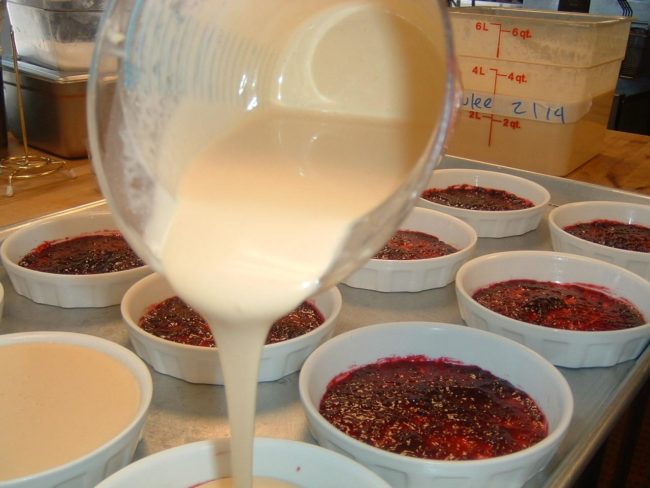
Preparing dessert
Separate the whites from the yolks, reserving only the yolk, thoroughly whisking it with sugar. Bring the cream to a boil with the vanilla, but do not let it boil. Once heated, remove the vanilla bean. If you are using vanilla sugar, simply let the vanilla-flavored cream sit aside for a few minutes. Then, while stirring the cream, pour the yolk mixture and sugar into the mixture in a thin stream.
Place the saucepan with the cream in a double boiler. Bring it to a boil. Let it warm up for 10 minutes. The cream won't foam or bubble in a double boiler, as it might on the stovetop.
For the next steps, you'll need a deep baking sheet with wide sides or a round baking dish for chicken or lasagna. Fill the dish with about 2 fingers' worth of water and place ceramic or glass molds into it to hold the almost-ready crème brûlée.
The bottom of the oven should be no higher than 170°C (325°F). We'll keep the cream in the oven for about half an hour. Then, refrigerate the thick mixture for 4 hours, or even better, overnight.
After this comes the final part: sprinkle the resulting crème brulee with sugar and place it in the oven under the heated top heating element.
This is how we get real crème brûlée, which is the subject of heated debate in several countries around the world.
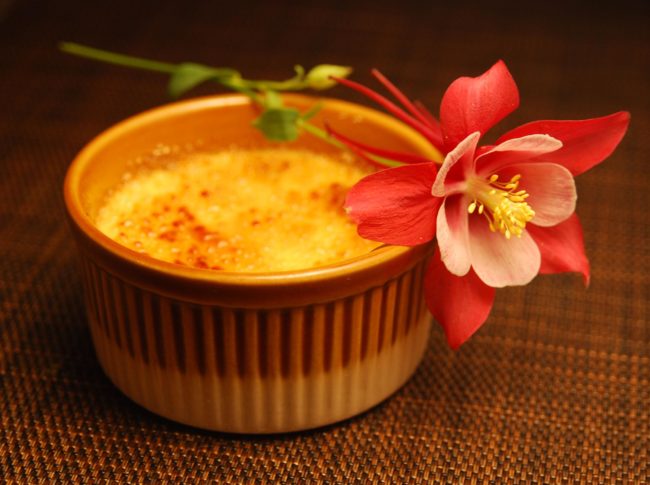
If you want your recipe to work and crème brûlée to decorate the top of the cake or be part of the ice cream cone, you can skip the last step. The crème brûlée itself, without caramel, has a very delicate, creamy, and pleasant taste that's perhaps incomparable to any other. You can spread the filling between sponge layers or decorate the top of a birthday cake with the crème brûlée as is, or add fruit pieces and confetti. If you use a separate ladle (with a non-stick coating), pour 4-5 tablespoons of sugar into it, and add 3 tablespoons of water, the sugar will boil. When you bring the sugar to a boil, it will form a hot caramel, which cools incredibly quickly and freezes into the shape you've created. Using a regular spoon, you can create needle-like threads from the caramel or roll it into intricate patterns to decorate the top of the crème brûlée.
To make a delicious ice cream dessert with crème brûlée, you'll need plenty of creamy, pure ice cream, various types of nuts, especially cashews, and, for flavor, you can add colorful raisins, cherries, raspberries, or lingonberries.
Cut the ice cream into slices and cover the bottom of a bowl. Place crème brûlée and a layer of prepared sweet spices in the center. Then add another layer of ice cream and a layer of spices, then another layer of crème brûlée on top of the spices. Finish with a layer of ice cream, sprinkled with nuts and drizzled with syrup. Chocolate sauce, caramel, boiled condensed milk, or maple syrup all work well.
Crème brûlée can be used as a croissant filling in this recipe. This delicious dessert is made with puff pastry and crème brûlée. Several filling variations can be used to surprise your loved ones with a delicious dish.
You can spread the layers of the crust, which will be ready in the oven in 15 minutes. You can also roll out puff pastry envelopes or rolls and hide the delicious crème brûlée inside them ahead of time. It won't spoil when heated in the dough, making the buns tender and delicious. Under the crisp puff pastry crust, the creamy taste of crème brûlée awaits, bringing a festive and joyful atmosphere to all your guests.