

Brioche: A Classic French Recipe
French Brioche – a true queen in the world of baked goods! We suggest making this incredibly delicious pastry at home, using a classic French recipe with a detailed description of the preparation process and step-by-step photos.

- Proteins: 8.5 g
- Fats: 8.8 g
- Carbohydrates: 56.0 g
- Total time:
- Time in the kitchen:
-
Complexity:
It's easy and straightforward to prepare, but it does require some experience. Not everyone can do it right the first time.
- Number of servings: 8
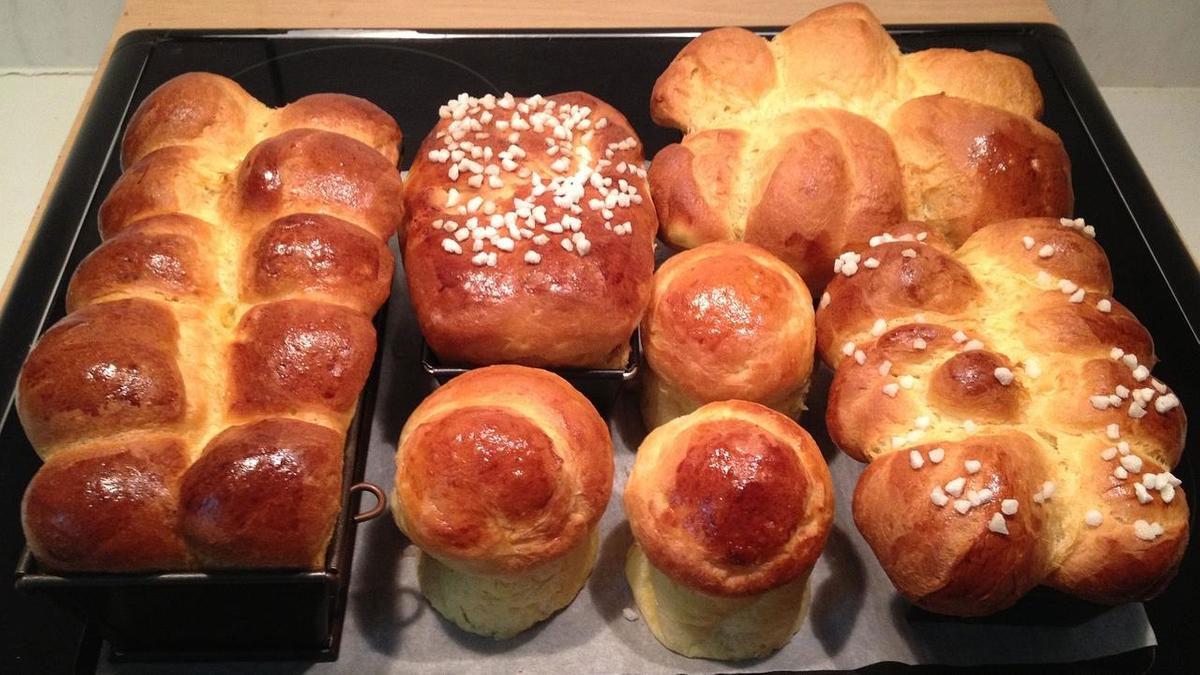
Sweet brioche bread comes in many varieties:
- classic bun without filling;
- Brioche à tête (or "Parisian brioche") is a round "head" baked in special bowls;
- with sweet fillings (jam, fruits, vanilla cream);
- with a variety of meat fillings.
Today, we'll walk you through a simple step-by-step recipe for a classic brioche bun made from soft yeast dough without filling. It can be prepared as a simple sweet treat for tea, or as a delicious Easter treat.
-
Milk75 ml
-
Dry yeast4 G
-
Sugar70 G
-
Flour270 G
-
Egg C02 pcs
-
Butter120 G
-
Milk1 tbsp
-
Egg yolk1 pcs
-
Confectioner's sugaras desired

Step 1 – make the dough.
To prepare a soft, delicious brioche, we begin by kneading the dough. To do this, add 3 teaspoons of sugar, 4 grams of dry yeast (about 1 heaping teaspoon), and 4 teaspoons of flour to 75 milliliters of warm milk.

Mix all the dough ingredients thoroughly. The dough should have the consistency of thick sour cream, as shown in the photo.

Cover the container with cling film and let the yeast activate for about 15-20 minutes.

Step 2 – knead the dough.
After 15 minutes, the dough should increase in volume – this indicates that the yeast is active and you can begin preparing the dough.

In a bowl for mixing the dough, add 2 eggs (white + yolk), the remaining sugar and flour (according to the recipe), a pinch of salt and the prepared dough.
If you're kneading the dough by hand, a step-by-step algorithm for adding ingredients will come in handy:
- First, beat the eggs with salt and sugar.
- Then add the dough to the mixture and stir until smooth.
- Next, add the remaining flour, kneading a soft dough.

Once all the ingredients have combined, add 120 grams of softened butter to the dough. Add the butter in several additions, mixing thoroughly each time until the dough is smooth.

As a result, you should have a soft, fluffy dough that easily forms a ball and does not stick to your hands.

Grease the bowl for the dough with vegetable oil.

Transfer the dough to a bowl, cover with cling film, and let the yeast and sugar rise for about 1 hour. During this time, the dough should double in size.

After an hour, our classic brioche dough looks like this. Remove it from the bowl and give it a first "knead." Knead it lightly and return it to the bowl.

Cover with film and let the dough rise for at least another 30-40 minutes.

After 40 minutes, our dough looks like this. It's risen nicely, and we're ready to begin shaping our French rolls.

Step 3 – form the brioche.
After greasing the base with a small amount of vegetable oil, lay out the dough and stretch it slightly with your hands, pushing out excess air.

Roll out the dough into a small rectangle.

Carefully roll the dough into a roll.

Divide the dough lengthwise into two equal parts using a plastic scraper.

We twist the dough into a rope, as in the photo.

Line a 30*9*7 cm baking pan with a “French shirt” (grease with soft butter and sprinkle with flour).

Carefully move the dough rope into the mold, cover with film and leave to rise for another 1 hour.

After 60 minutes, our brioche will acquire a fluffy appearance.

Step 4 – grease the finished dough.
In a small bowl, mix 1 egg yolk and 1 tablespoon of milk, beat until smooth.

We carefully grease the top of our baked goods with the mixture to get a beautiful golden brown crust during baking.

Sprinkle the baked goods with confectioners' sugar.

Step 5 – bake.
Bake the dough in the oven on the “top + bottom” mode without convection at a temperature of 200℃ for approximately 30-35 minutes.

Remove the finished baked goods from the pan and let them cool on a wire rack.
We also offer you another option for making brioche bread at home, with a step-by-step video analysis of each step.
You can also make brioche at home in a bread maker—here's a simple step-by-step recipe for Panasonic owners:
This video recipe will be useful for owners of a BORK bread machine:

- 1 hour 20 minutes
- 289.3 kcal
- 4288
- 50 min
- 120 kcal
- 453
- 7 min
- 150.5 kcal
- 1558
- 3 hours 30 minutes
- 296 kcal
- 345
- 2 hours
- 224.4 kcal
- 365
- 30 min
- 226.4 kcal
- 9786
- 1 hour 10 minutes
- 265 kcal
- 667
- 1 hour 40 minutes
- 177 kcal
- 382