

How to make homemade marmalade from compote?
It often happens that preserved drinks for the winter, such as fruit drinks and compotes, sit unattended on pantry shelves. The special thing about homemade soft drinks is that they don't contain any food additives or stabilizers, meaning they spoil quickly.

- Proteins: 1.7 g
- Fats: 0 g
- Carbohydrates: 10 g
- Total time:
-
Complexity:
A simple recipe.
- Number of servings: 1
Indeed, after a year in a sealed container, compote can ferment and have to be thrown out. To avoid wasting food, give your preserves a second life! Today, I suggest making homemade marmalade from your favorite (or not so favorite) compote. The resulting dessert is very delicate and delicious. Both children and adults will love it, but it won't last long on the table.
-
Berry compote250 ml
-
Sugar150 G
-
Gelatin30 G
-
Lemon juice2 tbsp

Pour gelatin into a bowl.

Pour in half of the compote. You can also use juice. Stir.

Leave the mixture to swell.

Pour the remaining compote into a saucepan and add sugar.

Add lemon juice. If you don't have lemon juice, dissolve citric acid in plain water in a 1:2 ratio.

Place the mixture over the heat. Cook until the sugar is completely dissolved, stirring constantly to prevent burning.

Remove the syrup from the stove. Add the gelatin mixture. Mix thoroughly.

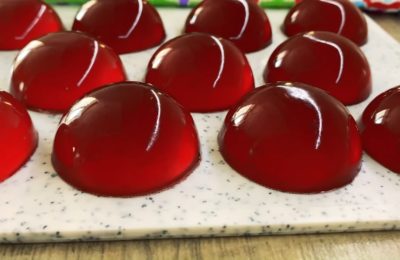
Pour the marmalade into molds. Silicone molds are best—they'll make removing the candies easier. Refrigerate the molds for 2 hours.

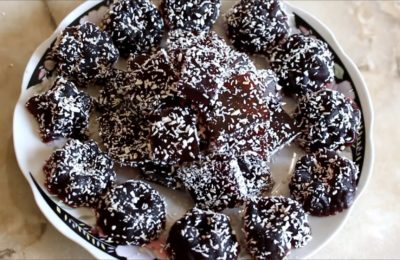
Remove the marmalade from the molds. Roll in granulated sugar or coconut flakes. Enjoy!
A similar video recipe: Marmalade made from compote and agar-agar
A marmalade that will give supermarket treats a run for their money. It's easy to make, and your kids will love the results! The candies are incredibly tender, sweet, and firm, literally melting on the tongue, and the aroma is simply magical. The video recipe uses dogwood compote, which imparts a light, floral, sweet aroma to the dessert.
What kind of recipe is this, you ask? Well, here it is! On the YouTube channel "Trapeza House," I found an accessible recipe for homemade agar-agar compote marmalades. They cost mere pennies, and if you're smart about your supplies, you can get them for free. Depending on the compote, you won't need to add sugar to the jellies. Gelatin can always be substituted for agar.
The most unusual flavors of marmalade
Marmalade has been a part of our lives for so long that we can imagine its taste with our eyes closed. In the Soviet Union, there was only one type of marmalade available: apple marmalade.
The candies, made from natural ingredients, were sold in layers. They were genuine marmalade—without stabilizers, flavor enhancers, or artificial flavors. Pectin, which is found in large quantities in apples, did all the work itself. The jellies retained their structure for a long time. They tasted moderately sweet, delicate, with a light fruity aroma.
There are now dozens, if not hundreds, of varieties of marmalade. And sometimes the imagination of confectioners and sweets makers reaches unprecedented levels.
In free Holland, marijuana gummies are sold as souvenirs on practically every corner. Manufacturers keep their recipe a secret, but not out of fear of the law. Tests have shown that the candies don't have a narcotic effect, but merely contain cannabis extract. The flavor of the gummies is quite distinctive, but everyone wants to try these notorious gummies.
In sunny Spain, it's common to serve a kind of marmalade with hot peppers. It looks more like jam or preserves, but has the texture of marmalade. It's considered a side dish for roast meat.
- 45 min
- 54.3 kcal
- 5758
- 8 hours
- 175 kcal
- 1152

- 24 hours 30 minutes
- 86.4 kcal
- 2751
- 2 hours 30 minutes
- 341 kcal
- 3579
- 6 hours
- 119 kcal
- 394
- 1 hour 10 minutes
- 296.2 kcal
- 5502
- 20 min
- 357 kcal
- 825
- 5 hours
- 189 kcal
- 2603