

Armenian baklava: step-by-step recipe
Armenian baklava is a delicious Eastern dessert with a vibrant nutty flavor. In this article, we'll explain the differences between the different types of baklava and offer a unique step-by-step recipe with a full list of ingredients and photos of each preparation step.

- Proteins: 5.7 g
- Fats: 17.8 g
- Carbohydrates: 50.7 g
- Total time:
- Time in the kitchen:
-
Complexity:
It's easy and straightforward to prepare, but it does require some experience. Not everyone can do it right the first time.
- Number of servings: 30
The dish is part of the national cuisines of many Eastern nations. Depending on the recipe, the nuts used for the filling, and the preparation methods, there are the following types of baklava:
- Turkish;
- Armenian;
- Azerbaijan (Baku);
- Greek.
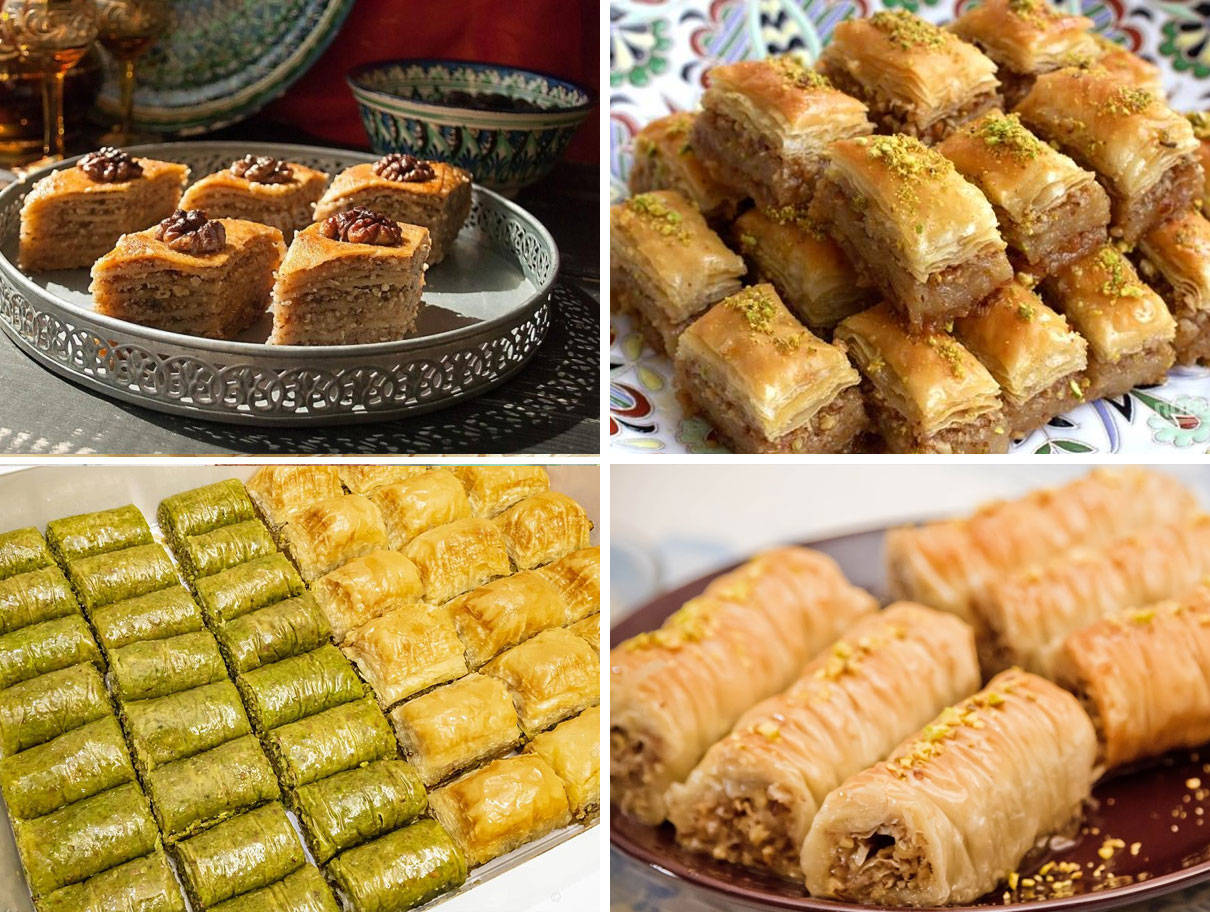
The filling can be made with hazelnuts, pistachios, almonds, or walnuts. The pastry can be puff pastry or shortcrust pastry, and some recipes even feature kefir-based versions. The filling can also be made with various syrups, natural honey, or even milk.
Today we'll learn how to make classic Armenian baklava at home using puff pastry, honey, and walnuts.
-
Egg yolk3 pcs
-
Butter (chilled)150 G
-
Sour cream120 G
-
Flour300 G
-
Baking powder1 tsp
-
Vanilla sugar10 G
-
Walnuts300 G
-
Sugar200 G
-
Egg white3 pcs
-
Cinnamon1 tsp
-
Cardamomas desired
-
Nutmegas desired
-
Egg yolk1 pcs
-
Milk1 tbsp
-
Honey4 tbsp

Our Armenian baklava will be made with a shortcrust pastry base, so let's start by preparing the dry mixture. In a bowl, combine 300 grams of flour, 10 grams of baking powder, and vanilla sugar, and mix until smooth.

Next, use the dry mixture to make the crumble. To do this, grind the chilled butter or margarine into the flour. This is easiest to do using a food processor, but you can achieve a similar result by hand.
As a result, you should get fine crumbs, as in the photo.

When the crumble is done, add 120 grams of sour cream (any fat content) and 2 egg yolks (we will need the whites to prepare the filling).

Knead the dough first with a spatula, then simply by hand. Avoid kneading for too long, as this will make it firmer and less crumbly.

While the dough is cooling, the filling for baklava with nuts and aromatic spices is usually prepared.

Grind the dried (or lightly roasted) walnuts in the oven until they form coarse crumbs. This is easiest done in a blender, but you can also do it the old-fashioned way, by rolling them with a shaker.

Add a teaspoon of cinnamon and any other spices to taste to the nuts (usually nutmeg and cardamom are added to oriental sweets).

Beat the meringue from 3 egg whites and 200 grams of sugar until stiff peaks form.

At this stage, you need to prepare the form (we have 32x22 cm), lining it with parchment or silicone paper.

Divide the chilled dough into three equal parts.

Roll out the first part of the dough to the size of the pan, place it on parchment and cover with half of the whipped egg whites.

Place half of the nut filling on the meringue.

Roll out the second part of the dough, place it on top of the first filling and also cover it with meringue and nut filling.

Roll out a third of the dough and cover it with the second layer of filling.

Mix one egg yolk with a spoonful of milk and brush the top of the dough to create a beautiful golden brown crust when baking.

We cut the top layer of dough, forming the characteristic diamond shapes that Armenian baklava is traditionally cut with, and lay out the nut pieces, as shown in the photo.


While the baklava is still hot, soak it in slightly warmed honey (or sugar syrup) and let it sit for 5-8 minutes.

The baklava should be cut while still hot, and then allowed to cool completely naturally in the pan.

Serve baklava cold, beautifully presented on a tray or large platter.
You can also try making layered baklava. The recipe for this type of baklava is very similar to the one described above, but the preparation method is slightly different.
- 40 min
- 440 kcal
- 2571
- 2 hours 20 minutes
- 272 kcal
- 8810
- 1 hour 20 minutes
- 1454.2 kcal
- 1123
- 30 min
- 53.4 kcal
- 610
- 1 hour
- 450 kcal
- 4727
- 1 hour 20 minutes
- 301.3 kcal
- 2407
- 1 hour 20 minutes
- 168 kcal
- 2585
- 14 hours 20 minutes
- 396 kcal
- 9031