

Easter cake with dry yeast

- Proteins: 9 g
- Fats: 7 g
- Carbohydrates: 26 g
- Total time:
-
Complexity:
It's easy and straightforward to prepare, but it does require some experience. Not everyone can do it right the first time.
- Number of servings: 4
In this recipe, I'll show you how to make Easter cake dough using dry yeast. The advantage of this method is that you don't need to make a starter or knead the dough for long periods of time. Try making a tender, airy, and spongy Easter cake using this recipe. Rest assured, you'll get it right the first time!
-
Flour2.5 kg
-
Egg C115 pcs
-
Milk500 ml
-
Butter400 G
-
Sour cream 15%200 G
-
Sugar450 G
-
Vanilla sugar16 G
-
Salt1 tsp
-
Dry yeast22 G
-
Raisin80 G

Crack the eggs into a large saucepan (at least 8 liters). Whisk. Do not beat.

Pour in room temperature milk, melted and cooled butter or margarine, and sour cream. Add salt, sugar, and vanilla sugar.

Mix the yeast with the flour.

Gradually add the flour and yeast to the liquid mixture, stirring each time with a spoon or spatula.

Add the washed raisins with the last portion of flour. Mix with a spoon.

Knead the dough with your hands for 2-3 minutes.

Cover the container with a lid or a towel. Let it rise. When the dough has risen, push it down and let it rise again. Repeat this process twice.

Prepare baking pans.

Grease your hands with sunflower oil and place the dough into the molds.

Fill the form halfway with dough.

Cover the molds with a towel and leave to rise.

Once the dough has risen, place the pans in the oven. Bake at 160-180 degrees Celsius for about 40 minutes.

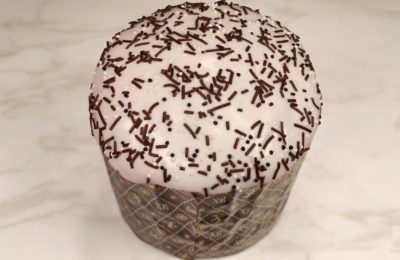
Remove the finished kulichi from the oven, let them rest for 5 minutes, and then remove them from the pans. Leave them to cool. Decorate as desired.
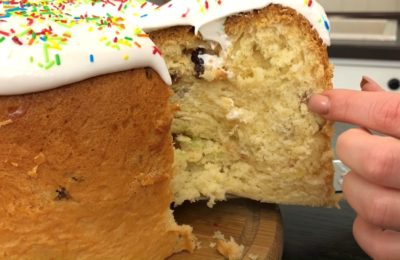
- 3 hours
- 1056 kcal
- 226
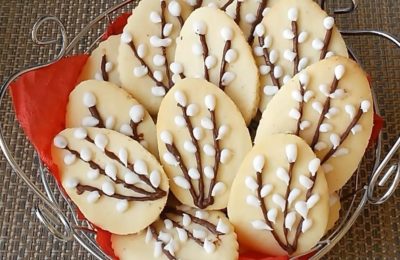
- 20 min
- 0 kcal
- 466
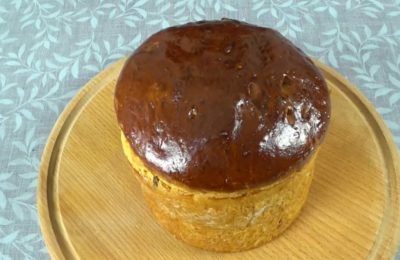
- 3 hours
- 321 kcal
- 436
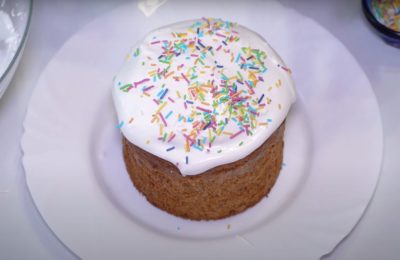
- 5 min
- 641.4 kcal
- 240
- 30 min
- 157 kcal
- 357
- 4 hours 30 minutes
- 341.3 kcal
- 1092
- 20 min
- 0 kcal
- 341
- 15 min
- 328.2 kcal
- 220