

Pishmanie: What is it and the classic recipe
Writing (Pismaniye) Cotton halva is a very unusual Eastern dessert, a special type of halva that resembles fine sugar threads. Today, we'll take a detailed look at what "cotton halva" is and what it's made from, and also offer a classic Pishmaniye dessert recipe with step-by-step photos and helpful tips from experienced halva masters.

- Proteins: 6 g
- Fats: 7 g
- Carbohydrates: 77 g
- Total time:
- Time in the kitchen:
-
Complexity:
This is a complex recipe. Only try it if baking cakes is your usual go-to.
- Number of servings: 20
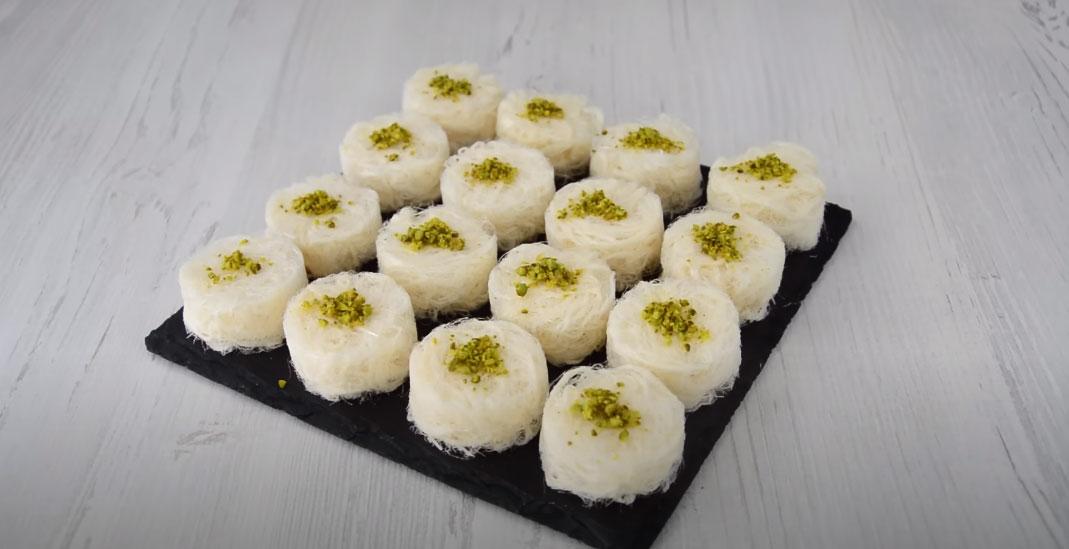
It's unclear exactly where the sweet halva "Pautinka" was invented. The first recipe for Turkish Pishmaniye dates back to 1430, but similar dishes, both in composition and preparation, also appeared in other countries around the 15th century:
- "pashmak" in Iran (consists of caramelized sugar threads made from wheat flour with pistachios sprinkled in);
- dragon's beard in China (made from rice flour and corn syrup with the addition of peanuts, coconut and sesame seeds);
- talkysh kaleve in Tatarstan (made from wheat flour, honey and butter);
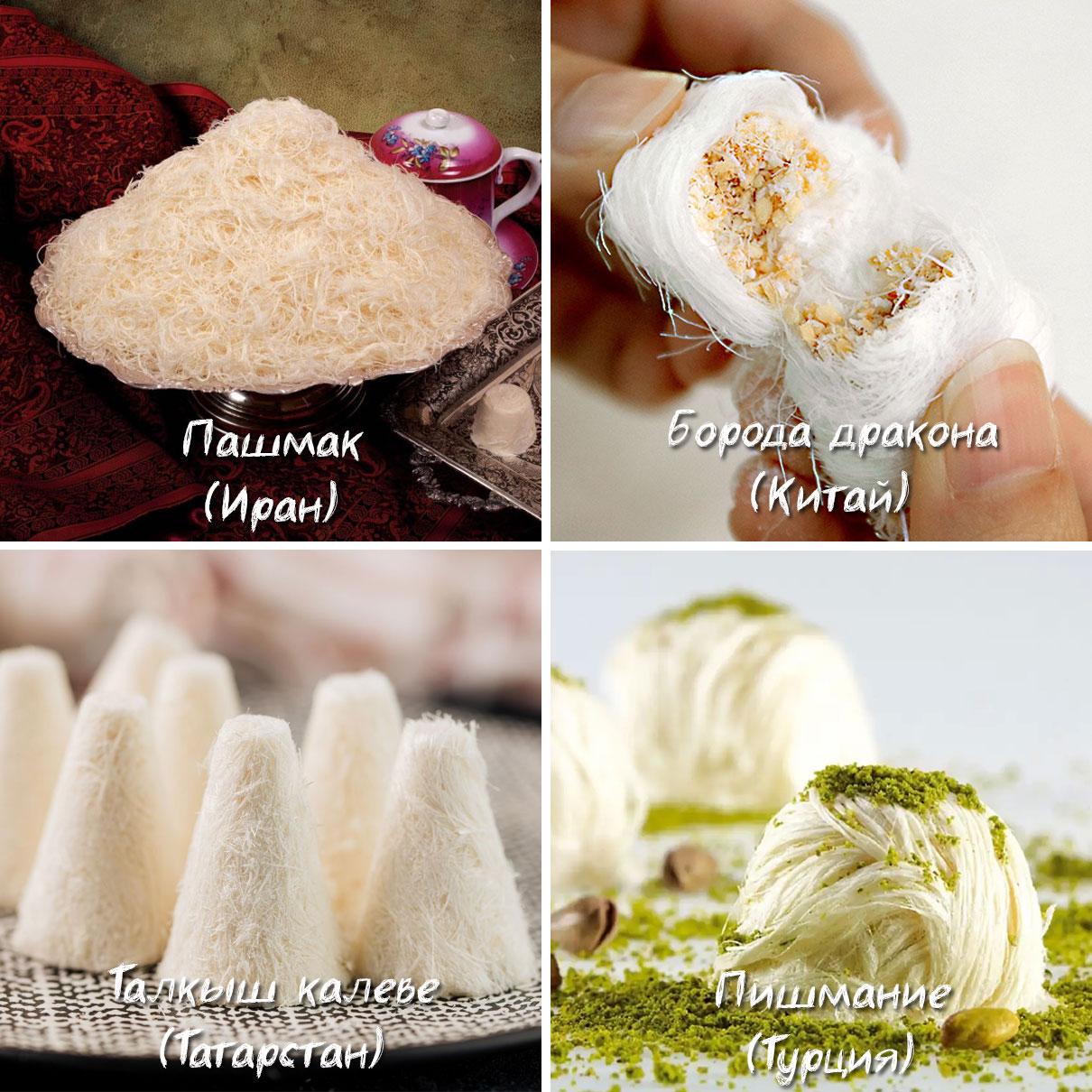
Long ago, Turkish and Iranian housewives made pashmane at home, but the recipe is considered one of the most complex among the many dishes known as "halva." To ensure this oriental sweet has the right texture and doesn't stick to your teeth like caramel candies, it's important to strictly follow the preparation method.
You can buy airy, stringy halva these days not only in Turkey but also in Moscow or any other European capital. But it's even more exciting to try making this traditional delicacy yourself. We'll explain in detail how to make Pismaniye, explaining some of the complex processes in simple terms, and what to pay attention to to ensure your homemade halva is light, airy, and melts in your mouth.
-
Sugar150 G
-
Water50 ml
-
Honey50 G
-
Flour50 G
-
Butter40 G
-
Citric acid0.25 G

Step 1 – Preparing the butter paste
We begin preparing fibrous halva by making a butter paste. First, melt 40 grams of butter in a heavy-bottomed saucepan. Use low heat to ensure the butter melts but doesn't burn.

Add 50 grams of pre-sifted flour to the hot melted butter in one go.

Mix the mixture thoroughly, breaking up any lumps, and fry over low heat. At first, the paste will resemble wet sand in consistency (as in the photo), but will gradually become more crumbly.

The finished butter paste has a texture similar to peanut butter, acquires a light golden hue and a pleasant nutty-creamy aroma.

Step 2 – Making the caramel
In a saucepan, combine 50 grams of honey (or glucose syrup), 50 ml of water and 150 grams of sugar.

Place the pan on the stove and add a quarter teaspoon of citric acid (this ingredient will prevent the sugar from crystallizing during the caramelization process).

Over high heat, bring the mixture to a boil.

Next, boil the syrup until it reaches a temperature of 135-140℃.

Once the syrup reaches the desired temperature, pour it onto a silicone mat and let it cool slightly. The ideal temperature is when the caramel begins to separate easily from the mat.

Mix the caramel, folding the edges of the silicone mat in at different corners. Continue kneading until the mixture is thick and smooth enough to handle.

As a result, we get a large caramel candy, which is best handled by first putting on warm gloves and then silicone gloves on top of them.

Step 3 – Pulling out the threads
We alternately stretch and fold the caramel mass in half. This process allows the mass to be oxygenated. Its structure and color gradually change, acquiring a beautiful pearlescent hue.

Next, continue rolling out the caramel, applying the butter paste. To do this, place the butter paste on the table and form a ring from the mixture, as shown in the photo.

Apply the paste evenly onto the caramel ring.

Next comes the lengthy and rather arduous stage of stretching the caramel. The mass is pulled out and then again arranged in rings, forming a ring of small diameter. The oil mass is distributed so that it prevents the resulting strands from sticking together. It's important to work quickly so that the caramel doesn't cool significantly before the desired texture is formed.

If the caramel suddenly becomes too dense, you can restore its elasticity by gently warming it with a regular hair dryer. However, it's important not to overheat it, as overheated strands will begin to stick together, ruining the texture of the dish.

At a certain point, the threads will become quite thin, and the characteristic "hairiness" will begin to appear, as in the photo. This means you're doing everything correctly, but you still need to continue pulling the threads. Keep in mind that pulling the caramel will become even more difficult as you continue.

At the final stage, we apply force and break the ring of threads on one side.

Next, the fibers must be fluffed to prevent sticking and the halva must be allowed to cool completely.

The finished fibrous mass is then used to make lumps of the desired size.

Pishmaniye can be served sprinkled with nuts (most often, the taste of halva is enhanced with crushed roasted peanuts or pistachios).
We also suggest watching how to prepare Turkish halva Pishmaniye using the "dry" method:
Here's how the famous oriental sweet is prepared on an industrial scale:
- 10 hours 20 minutes
- 150 kcal
- 3368
- 1 hour
- 350 kcal
- 966
- 1 hour 30 minutes
- 471.0 kcal
- 3020
- 26 hours
- 218 kcal
- 614
- 33 hours 20 minutes
- 343 kcal
- 577
- 1 hour 30 minutes
- 463.3 kcal
- 2016
- 30 min
- 324 kcal
- 4543
- 24 hours 30 minutes
- 84.2 kcal
- 1960