

Turkish Delight: A Classic Step-by-Step Recipe
Turkish Delight (Lokum) – a delicious, natural oriental sweet from Turkey. These soft, translucent cubes with vibrant fruit flavors, dusted with classic powdered sugar and starch, are now loved around the world. We'll tell you how to make this delicious and healthy dessert at home, and also offer a classic step-by-step recipe for Turkish Lokum with orange flavor.

- Proteins: 0.08 g
- Fats: 0.0 g
- Carbohydrates: 80.7 g
- Total time:
- Time in the kitchen:
-
Complexity:
It's easy and straightforward to prepare, but it does require some experience. Not everyone can do it right the first time.
- Number of servings: 6
It is known that Lokum was invented by a court confectioner specifically for the Sultan and his family back in the 18th century and for many years was a delicacy of the great Ottomans, served exclusively in the main palace of Istanbul.
This oriental sweet was introduced to Europeans only in 1897, after which contracts were signed for the supply of Turkish delight to European countries.
The recipe for the dish was constantly changing and expanding, resulting in the development of a wide variety of variations of this delicious oriental delicacy:
- empty (the recipe for this sweet contains only water, sugar and starch);
- classical (based on fruit and berry juices);
- honey (based on honey solution);
- kaymak (with milk);
- pink (based on rose essential oil solution);
- walnut (with a variety of nuts: peanuts, hazelnuts, almonds, pistachios, etc.);
- with Chios mastic (an aromatic resin with a strong, specific smell, obtained from the mastic tree);
- multilayered (made in layers or as a roll from several types of Turkish delight or with a layer of nougat).
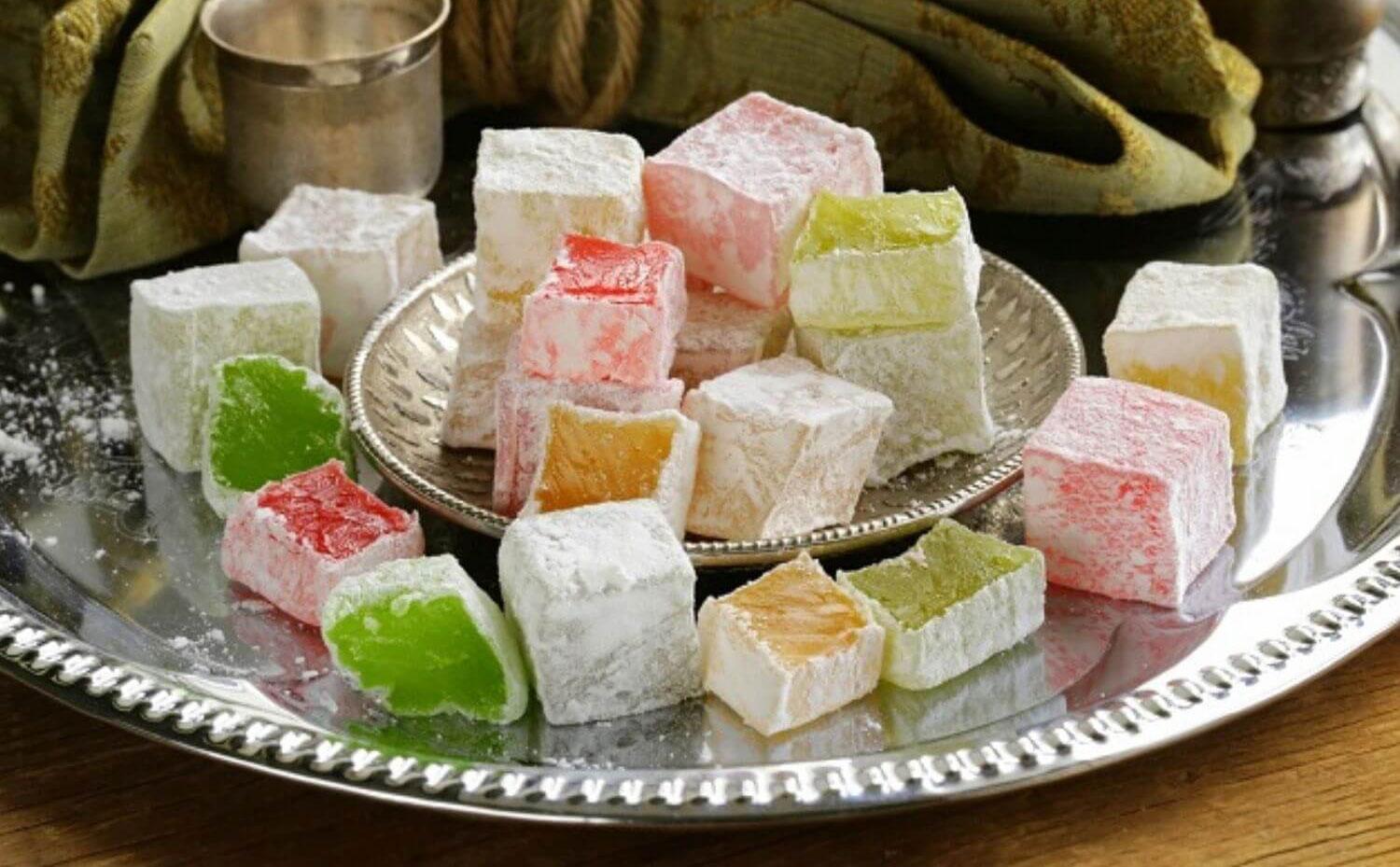
Now you know what traditional Turkish Turkish delight is made from and can plan to make different varieties of this popular Eastern sweet in the future.
Today we suggest making authentic Turkish Turkish delight, orange-flavored, at home. All you need is:
- saucepan;
- deep frying pan (or saucepan with a thick bottom);
- hand whisk;
- shoulder blade;
- square shape 18*18 cm (20*20 cm is also possible);
- cling film.
-
Sugar700 G
-
Orange juice400 G
-
Water400 G
-
Citric acid0.7 tsp
-
Cornstarch180 G
-
Powdered sugar3 tbsp
-
Vegetable oil1 tbsp

Pour 700 grams of sugar into a saucepan.

Add 200 grams of water to the sugar and stir.

Add less than a full teaspoon of citric acid.

Place the saucepan on the stove and bring to a boil over medium heat, stirring to dissolve the sugar faster.

When the sugar is completely dissolved, bring the temperature of the syrup to 130℃ and stop heating (remove from the stove).
You can also check whether your syrup is prepared correctly using the "old-fashioned method." It's believed that if you drop a drop of properly prepared syrup into cold water (and cool it quickly), it will form into a ball.

Pour 145 grams of cornstarch into the frying pan (we will need the remaining starch for coating the finished cubes).

Add 600 grams of cold liquid to the starch (400 grams of orange juice + 200 grams of water).
If you don't have any juice, you can simply add 600 grams of water with any flavoring, but this Turkish delight won't be as healthy as one made with natural juice.

Mix thoroughly until all lumps of starch are completely dissolved.

Place the pan on the stove and heat slowly, stirring constantly. As it heats, the starch will cook, and the mixture will thicken and acquire a richer color.

After it thickens, continue brewing for a while longer. 1-1.5 minutesuntil the mass becomes slightly transparent with a characteristic glossy sheen (as in the photo).

Continuing to heat slowly, add the syrup in small portions (4-5 times), stirring each time until smooth.

Next, boil the mixture for about 20-25 minutes, continuing to stir vigorously.

The finished mixture should have slightly reduced in volume and flow very slowly from the spatula. See the photo for what the finished, properly cooked mixture looks like.

Prepare the pan. We use a classic 18x18 cm metal frame, the bottom of which we cover with cling film and generously coat with odorless vegetable oil.

We transfer the mass into the mold.

Cover the food strip with vegetable oil and close the mixture on top "in contact", slightly straightening and tamping it into the form with a spoon or glass.
Let the mixture cool completely at room temperature. This usually takes about 2 hours, but you can leave it overnight.

In a bowl, mix starch and powdered sugar in a 1:1 ratio (about 3 tablespoons of each ingredient).

Remove the top film from the cooled mass and sprinkle generously with a mixture of starch and powdered sugar.

Remove the mold and cut the Turkish delight into 3*3 cm cubes.

Transfer to a bowl and roll in sprinkles.
Homemade Turkish Delight can be stored in the refrigerator for up to 60 days, wrapped in parchment paper. It is not recommended to store it in a plastic bag, as it will become damp.
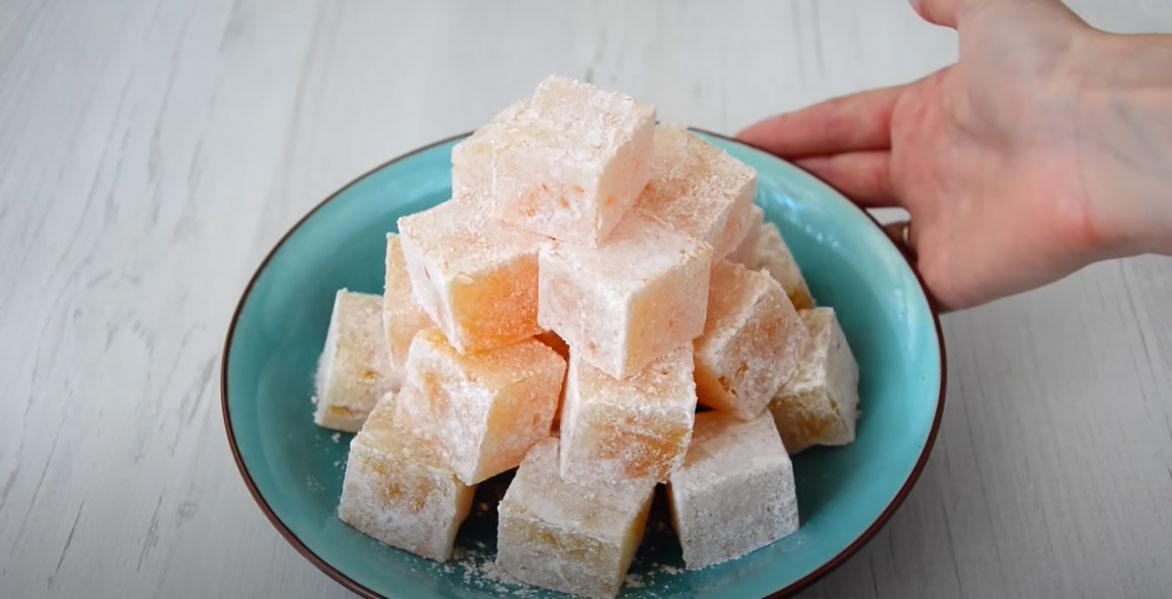
We also suggest trying our delicious pomegranate Turkish Delight with pistachios, the recipe for which is explained step-by-step in this video:
Also treat yourself to an original Turkish delight made with Hibiscus tea and walnuts; you'll find the recipe in this video:
Knowing what traditional Turkish delight is made of and how much sugar it contains, many people wonder what the true benefits and harms of this product are, and whether it's appropriate to give these oriental sweets to children.
Naturally, a few pieces won't pose any significant health risks to an adult or child, but it's important to note that in large quantities, this delicacy can cause uncontrolled weight gain and a number of related health conditions. Turkish delight is not recommended for women trying to lose weight. Caution should be exercised when giving it to children with food allergies.

- 24 hours 30 minutes
- 86.4 kcal
- 2751
- 14 hours 20 minutes
- 396 kcal
- 9031
- 24 hours 30 minutes
- 84.2 kcal
- 1960
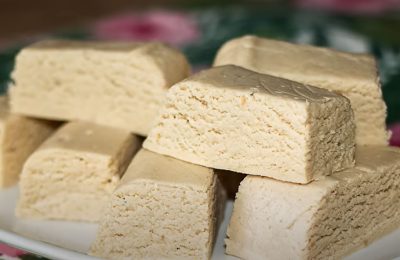
- 40 min
- 440 kcal
- 2571
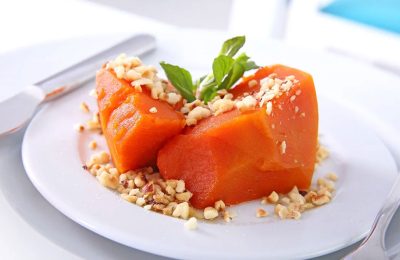
- 4 hours
- 109.6 kcal
- 2079
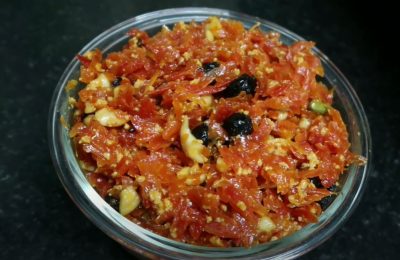
- 30 min
- 53.4 kcal
- 610
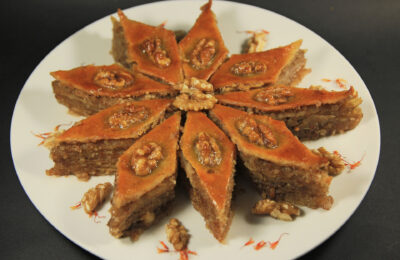
- 1 hour 30 minutes
- 460 kcal
- 247
- 2 hours
- 367.8 kcal
- 299