

Opera Cake: A Classic Step-by-Step Recipe
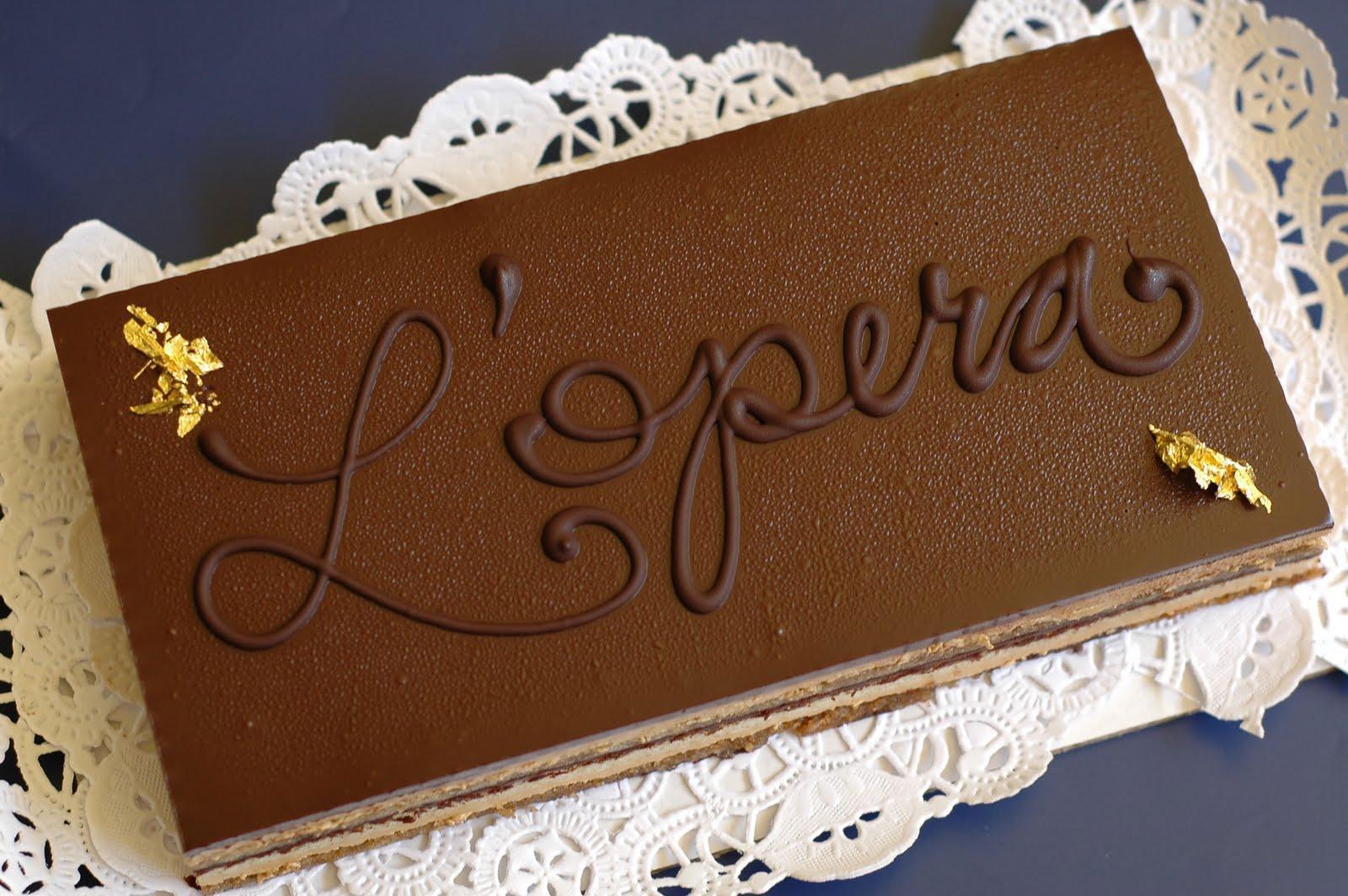
Opera Cake – an incredibly delicious treat worthy of being the centerpiece of your holiday table. If you love dark chocolate, as well as almond and coffee notes, in cakes, be sure to learn how to make this dessert at home and save the classic step-by-step recipe with detailed instructions and photos of each step to your collection.

- Proteins: 6.5 g
- Fats: 39.5 g
- Carbohydrates: 38.2 g
- Total time:
- Time in the kitchen:
-
Complexity:
It's easy and straightforward to prepare, but it does require some experience. Not everyone can do it right the first time.
- Number of servings: 12
"Opera" is a French recipe, as this cake was definitely invented by a French pastry chef, but experts still debate who exactly invented it. There are three main theories:
- Louis Clichy (Paris pastry shop owner), who presented such a cake at the Paris exhibition in 1906;
- Gaston Le Nôtre (French pastry chef and cookbook author), who described the recipe in detail in 1960;
- Cyriac Gavillon is the owner of the culinary house "Dalloyau" and also a direct ancestor of Charles Dalloyau (personal pastry chef of Louis XIV).
One way or another, the “Opera” cake received its sonorous name in honor of the famous Paris Opera.
-
Almond flour170 G
-
Wheat flour35 G
-
Egg C16 pcs
-
Egg whites6 pcs
-
Sugar200 G
-
Butter35 G
-
Coffee (instant)5 G
-
Sugar100 G
-
Water150 G
-
Egg yolks6 pcs
-
Sugar180 G
-
Butter 82%340 G
-
Coffee (instant)5 G
-
Water60 G
-
Dark chocolate190 G
-
Cream 35%150 G
-
Baileys liqueur40 G
-
Dark chocolate150 G
-
Cream 35%150 G
-
Dark chocolate40 G

Step 1 – prepare the almond sponge cake “Gioconda”.
Chill 6 egg whites, separated from the yolks, lightly salt and beat with a mixer until soft beer foam forms.

Add 3 tablespoons of sugar (we will need the rest) and continue whisking until a thick foam with stable peaks forms.

In another bowl, crack 6 eggs (now the yolk and white) and all the remaining sugar. Beat for about 4 minutes on high speed.

In a separate bowl, combine 170 grams of almond flour and 35 grams of all-purpose flour. Using a hand whisk, mix the dry ingredients together, breaking up any lumps as much as possible.

Add the dry mixture to the beaten eggs prepared in step 3 and mix until smooth.

Add the whipped egg whites prepared in steps 1-2 to the resulting mixture in three stages, mixing thoroughly with a silicone spatula, maintaining the airy structure of the egg whites.

Place about 3 tablespoons of the dough in a separate bowl and add 35 grams of melted and cooled butter. Mix until smooth.

Add the butter mixture to the biscuit dough.

Divide the dough into 2 equal parts and bake two identical biscuits measuring 30*32 cm (you can make a stencil out of parchment).

Make a 20 x 29 cm paper template and cut out the pieces to the required size. You'll end up with three cake layers: two solid layers and one two-piece layer.

Step 2 – prepare the coffee syrup.
In a saucepan, combine 100 grams of sugar, 150 grams of water and 5 grams of instant coffee.

Bring the coffee mixture to a boil and remove from heat. Stir until the coffee and sugar are completely dissolved. Pour into a measuring cup and let cool.

Step 2 – prepare the chocolate ganache.
Pour 190 grams of 54% dark chocolate over 150 ml of 35% hot cream. Let the chocolate melt, then add 40 grams of Baileys liqueur.

Blend everything with an immersion blender until smooth and cover with cling film in contact.

Step 3 – prepare the butter cream.
To prepare the buttercream, we also begin by brewing the coffee syrup. In a saucepan, combine 180 g of sugar, 60 g of water, and 5 g of coffee. Bring to a boil and stir until the ingredients are completely dissolved.

Beat six egg yolks with a mixer until they increase in volume and form a light foam.

Slowly pour the boiling coffee syrup, which has reached a temperature of 118℃, into the yolks, continuing to beat.

After adding the syrup, continue whisking the mixture for a while. It will continue to increase in volume and gradually thicken and lighten in color. Allow the mixture to cool to room temperature.

Add soft butter gradually into the completely cooled base.

The cream should be thick and homogeneous, as in the photo.

Step 4 – Assembling the Opera cake.
Melt 40 g of dark chocolate and spread it over the first layer of cake. If you have time, it's a good idea to refrigerate the cake for a bit to allow the chocolate to set.

Turn the cake layer over onto the base, chocolate side down, and soak it in coffee soaking, using 1/3 of the available volume.

Place half of the butter cream on the cake base and spread it into an even layer.

Next, we lay out the composite cake layer, pressing the parts together as closely as possible so that the joint is not noticeable.

Soak the second cake layer with coffee syrup.

Spread the well-cooled chocolate ganache.

Add the third sponge cake and soak it with the remaining syrup.

Spread the second portion of butter cream over the cake layer and smooth out the surface perfectly for the chocolate glaze.

Step 4 – cover the cake with icing.
To prepare the glaze, dissolve 150 g of dark chocolate in 150 g of hot 35% fat cream. Let the mixture cool until warm.

Cover the cake with icing and smooth the surface. Let the icing set in the refrigerator.

Our classic Opera cake is ready; all that's left to do is trim off the sides. You can then decorate it and serve it as a whole cake, or cut it into slices and use them as decorations for individual cakes.
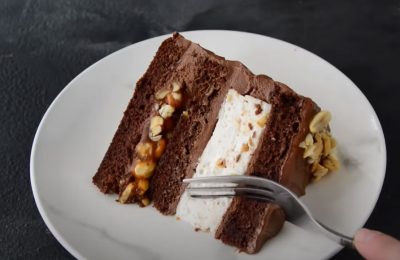
We also suggest making a fun interpretation of the "Opera" cake, originally named "Barbie" for its bright pink design. The recipe, described in detail in this video, perfectly combines the vibrant berry flavor of raspberries, the smoothness of white chocolate, and a subtle hint of hazelnut.
- 30 min
- 120 kcal
- 597
- 20 min
- 208.0 kcal
- 9350
- 3 hours 20 minutes
- 360 kcal
- 503
- 20 min
- 248.3 kcal
- 443
- 2 hours
- 180 kcal
- 1613
- 7 min
- 261 kcal
- 8662
- 30 min
- 298.4 kcal
- 373
- 4 hours 20 minutes
- 398.6 kcal
- 5339