

Prague Cake - A Step-by-Step Classic Recipe According to GOST
Prague cake is a recognized classic from the USSR. Today, we'll tell you how to make this incredibly delicious dessert at home and offer a detailed step-by-step recipe according to GOST standards, allowing you to create a classic "Prague" cake in your own kitchen.

- Proteins: 7 g
- Fats: 26 g
- Carbohydrates: 32 g
- Total time:
- Time in the kitchen:
-
Complexity:
For experienced cooks. Special equipment may be required.
- Number of servings: 12
The classic Prague cake, a combination of rich chocolate sponge cake, airy buttercream with condensed milk, chocolate glaze, and a piquant fruity note, was created by Moscow pastry chef Vladimir Mikhailovich Guralnik. Since he worked at the renowned Prague restaurant in the capital, he gave the chocolate dessert a corresponding name.
The creator never filed a patent for his recipe (recipes simply weren't patented in those days), but the Prague cake, or rather its ingredients, were designed according to GOST standards, allowing anyone to easily recreate it in a workshop or simply in their own kitchen.
Prague cake is not prepared quickly and is considered a complex recipe, just like the famous Red Velvet Bento Cake Because the cake layers are baked using the "wet sponge" technique, we recommend practicing before baking a cake for guests. If you have guests coming and time is short, we recommend using a faster option, such as quick honey cake without rolling with sour cream.
If you've decided to master the art of baking a real Prague cake, we recommend preparing:
- deep bowls for mixing biscuit dough and preparing cream;
- mixer;
- hand whisk;
- shoulder blade;
- a round metal or silicone baking pan with a diameter of 21 cm;
- baking paper (if using a metal pan);
- a small saucepan (preferably with a thick bottom).
-
Wheat flour115 G
-
Egg C16 pcs
-
Sugar150 G
-
Butter40 G
-
Cocoa powder25 G
-
Egg C11 pcs
-
Water20 ml
-
Condensed milk120 G
-
Butter200 G
-
Cocoa powder10 G
-
Vanilla sugar10 G
-
Jamto taste
-
Dark chocolate70 G
-
Butter48 G
-
Tea (strongly brewed)100 G
-
Sugar70 G

Step 1. Prepare the dough.
Take 6 eggs and separate the whites and yolks into separate containers.
Place the egg whites in the refrigerator for a few minutes. While you're whisking the yolks, the whites will cool, allowing them to form a firmer foam.

Add 75 grams of sugar to the yolks and beat with a mixer until a fluffy, light-colored cream forms.

As you whisk, the yolks will change color from deep yellow to light yellow (as shown in step 2) and then almost white, as shown in step 3.

Beat the egg whites until they form a thick, elastic foam.
At the very beginning, beat only the whites, and then gradually add sugar until you have added the full 75 grams required by the recipe.

In a deep bowl, combine the egg white and yolk. Using a hand whisk or spatula, mix the two ingredients until smooth.

In a suitable sized container, mix 115g flour and 25g cocoa powder.
It's best to use dark cocoa, as it will give the cake a richer, more chocolatey flavor. However, if you don't have dark cocoa, regular cocoa powder will do.
The dry mixture must be sifted through a fine sieve to remove any lumps present in the cocoa and to aerate the flour. Lumps can be further broken down by simply pressing them through a sieve.
But the classic GOST recipe does not include this ingredient, because Prague cake is made with a "wet sponge cake," and baking powder or soda will make the cake drier and the taste may differ from what you expect.

Gradually add the sifted flour and cocoa mixture into the previously combined egg white and yolk, mixing thoroughly with a spatula.

When the mixture becomes homogeneous, it should have a beautiful chocolate hue, as in the photo.

Melt 40 grams of butter in the microwave, cool slightly and add to the dough, carefully pouring it in along the edge and mixing with a spatula.

Step 2. Bake the chocolate sponge cake.
Line the bottom of the metal pan with baking parchment.

Place the finished dough into the pan and place in a preheated oven.

Keep in mind that baking time depends on your oven, so yours may take slightly longer or shorter. A good guide is a golden-brown crust. You can also check for doneness by inserting a long wooden skewer into the center of the cake. A finished cake will not stick to the skewer, while uncooked dough will cling to the surface.

Remove the finished sponge cake from the oven and let it cool in the pan for about 5 minutes. Then, carefully run a knife around the edge to release the cake easily, and remove the metal rim.

Don't forget to immediately remove the parchment paper from the biscuit that it was baked on.

Once removed from the mold, the biscuit must be placed on a wooden surface, covered with a clean towel and left to cool.
If you're not in a rush to prepare everything at once, you can bake the cake in the evening and make the cream and frost it in the morning.

Step 3. Prepare the cream.
Take a heavy-bottomed saucepan. Separate one yolk from the white and mix it with 20 ml of water.

Add 120 grams of condensed milk.

Heat the pan slowly, stirring vigorously, until the mixture thickens, then remove from the heat and let cool slightly.

Beat soft butter and sugar with a mixer until fluffy.

Add the condensed milk mixture to the whipped butter in small portions, whisking thoroughly each time with a mixer until a uniform consistency is achieved.

Add 10 grams of cocoa powder to the cream, rubbing it through a sieve to avoid lumps.

Beat the mixture again with a mixer.
Our cream is ready!

Step 4. Preparing the impregnation.
Brew 100 ml of your favorite black tea and dissolve 70 grams of sugar in it. Let the sweet tea cool.

Step 5. Assembling the Prague cake (GOST recipe).
Cut the sponge cake into three parts, getting three round cakes, as in the picture.

Place the first cake layer on a plate and soak it in sweet tea, using about a third of the soaking solution (less is possible).

Place half of the butter cream with condensed milk on top of the cake layer and spread it over the surface with a spatula.

Repeat steps 25 and 26 for the second cake layer, using the second half of the cream.

The third cake layer also needs to be soaked in tea.

Next, cover the top layer with jam.
After soaking the cake in jam, it must be placed in the refrigerator for 20 minutes.

Step 5. Prepare the glaze.
The classic Prague cake is covered with chocolate icing. To make it, melt 70 grams of dark chocolate and 50 grams of butter in a double boiler.

Step 5. Decorating the cake.
Cover the cooled cake with chocolate glaze, spreading the mixture over the surface and sides.
After applying, you need to let the glaze cool completely and only then proceed to decorating.

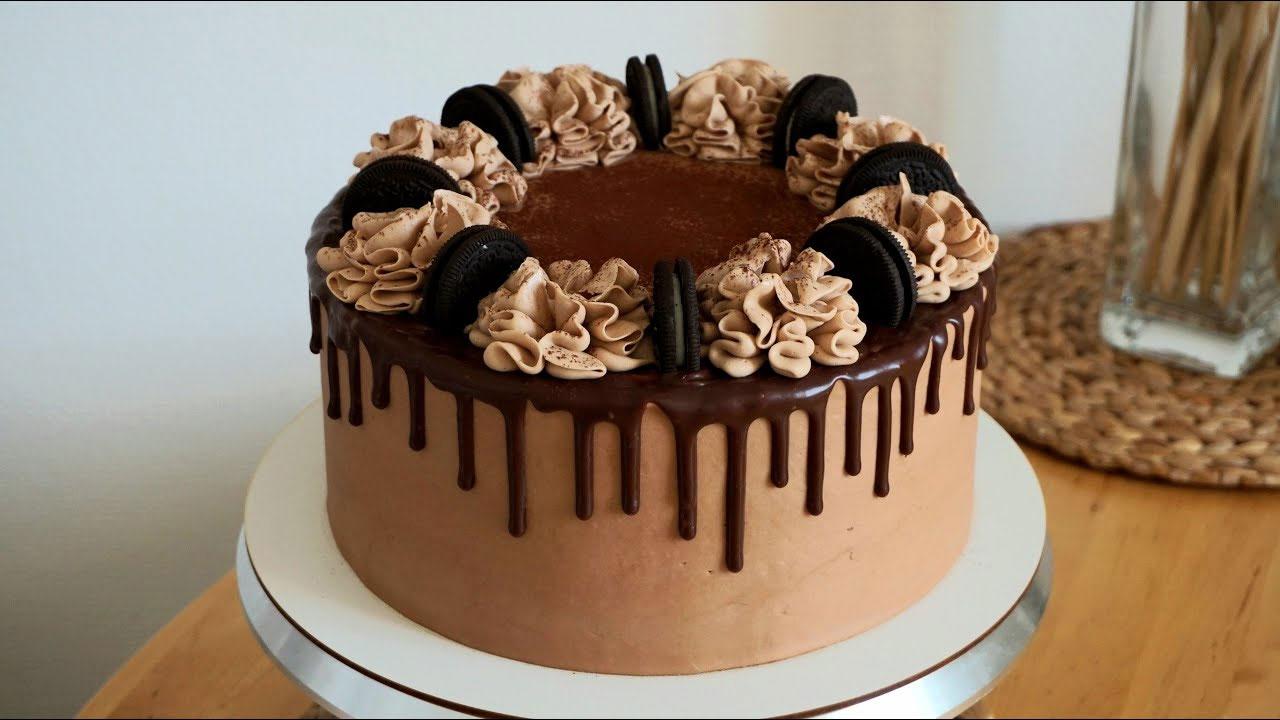
The classic Soviet Prague cake was most often decorated with thin chocolate stripes. This design is incredibly simple to create. Melt the chocolate, transfer it to a piping bag, and create a lacy pattern on the surface of the cooled cake.
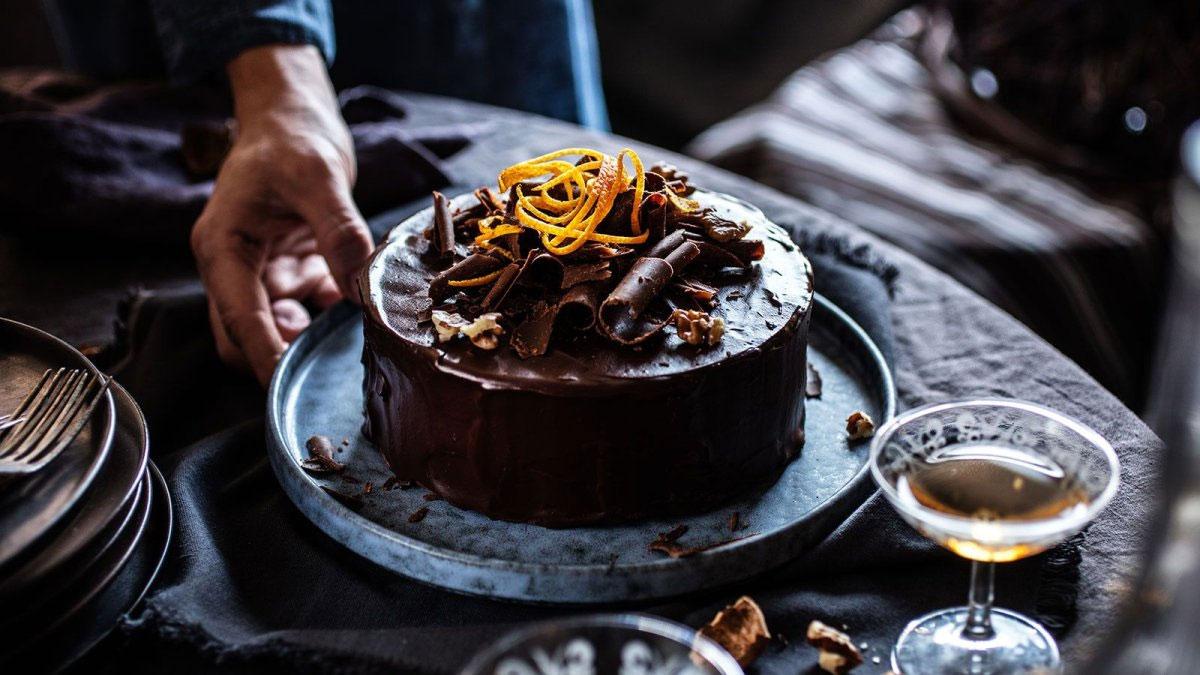
If you'd like, you can decorate the cake even more elaborately. We offer some interesting pictures with ideas for decorating a chocolate Prague dessert. This cake will be a worthy addition to any holiday table!
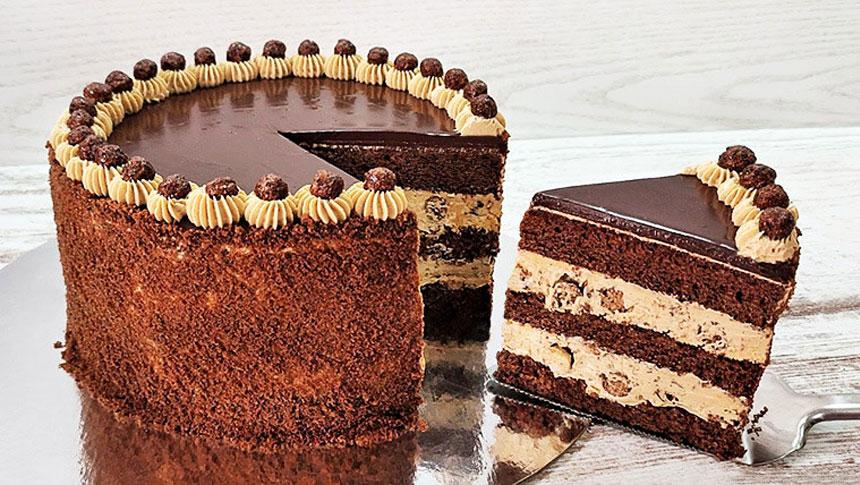
You can also sprinkle the sides with biscuit crumbs.
Another interesting treat idea is bento cakes based on a classic or alternative Prague recipe. We suggest trying these two mini desserts.
If you've already tried the classic version, we suggest learning how to make an interesting alternative recipe at home: Prague Orange Cake.
- 40 min
- 410 kcal
- 235
- 25 min
- 167 kcal
- 599
- 5 min
- 72.1 kcal
- 734
- 3 min
- 141 kcal
- 3662
- 4 hours 20 minutes
- 398.6 kcal
- 5339
- 1 hour
- 320.3 kcal
- 963
- 3 hours
- 333.7 kcal
- 349
- 1 hour 40 minutes
- 391.5 kcal
- 14889