

Sacher Torte: A Classic Austrian Step-by-Step Recipe
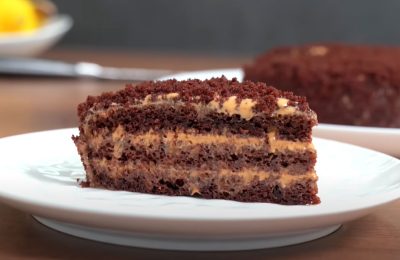
Sacher Torte – a famous Austrian dessert, appreciated by anyone who loves the combination of rich dark chocolate with a bright fruity note. You can make this beautiful and incredibly delicious holiday cake at home using this classic Austrian recipe, complete with step-by-step photos and detailed explanations of each step.

- Proteins: 3.9 g
- Fats: 14.3 g
- Carbohydrates: 53.0 g
- Total time:
- Time in the kitchen:
-
Complexity:
It's easy and straightforward to prepare, but it does require some experience. Not everyone can do it right the first time.
- Number of servings: 8
The recipe for a chocolate cake, very similar in composition to the dessert popular today, was known to Austrian housewives as early as the early 18th century, but it was the Austrian pastry chef Franz Sacher, who lived and worked in Vienna, who made it world-famous. That's why the cake today has two names: the first is "Sachertorte" (in honor of its creator), and the second is "Viennese Torte" (in honor of the city where it was first made).
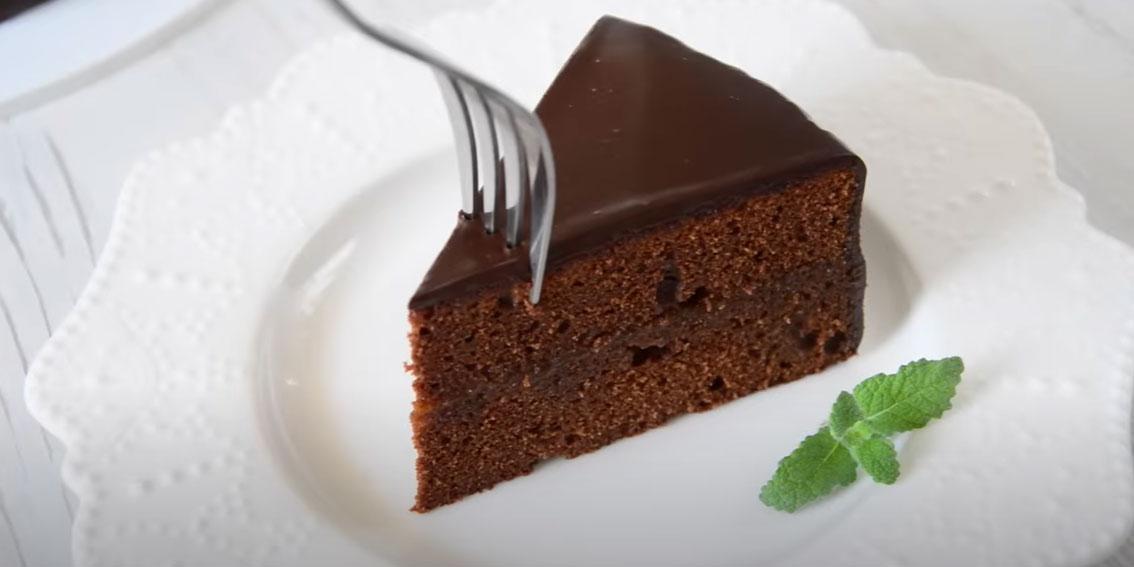
Today we'll explore a simple, classic Austrian recipe and prepare a real Sachertorte, 22 cm in diameter.
-
Dark chocolate150 G
-
Butter150 G
-
Sugar150 G
-
Flour150 G
-
Egg C16 pcs
-
Vanilla sugar10 G
-
Baking powder1 tsp
-
Salt1 pinch
-
Apricot jam250 G
-
Dark chocolate170 G
-
Cream 33%170 G

Step 1 – prepare the chocolate butter sponge cake.
Before preparing the dough, melt 150 grams of dark chocolate. You can do this in short bursts in the microwave or in a double boiler.

Combine 150 grams of soft butter, 75 grams of sugar (half the portion) and 8-10 grams of vanilla sugar.

Beat the butter with a hand mixer at maximum speed for 4-5 minutes until a fluffy white mass forms, as shown in the photo.

Add 6 egg yolks to the butter (we'll need the whites later). Add the yolks one at a time, beating each time until smooth.

Add the melted dark chocolate, cooled almost to room temperature, to the mixture. Beat with a mixer until smooth.

Sift together 150 grams of flour and 1 teaspoon of baking powder.

Beat with a mixer at low speed until a soft, homogeneous mass is formed.

Place 6 egg whites and a pinch of salt in a mixing bowl. Beat with a mixer until fluffy and fluffy.

Gradually add the remaining 75 grams of sugar to the egg whites, continuing to beat until stiff peaks form.

Add the whipped egg white to the butter base in two stages, mixing the dough thoroughly with a spatula each time until completely smooth.

Transfer the dough into a prepared pan with a diameter of 22-24 cm.

Baking time will vary depending on your oven, so be sure to check with a wooden skewer to make sure the cake is baked through.

Let the finished biscuit sit in the pan for a few minutes, then remove and cool on a wire rack.
Before assembling the cake, use a sharp knife to cut off the convex top, leveling the sponge cake, and cut it into two layers of equal height.

Step 2 – prepare the jam impregnation.
In a saucepan, combine 150 grams of apricot jam with pectin and 100 ml of water. Bring to a boil and blend until smooth. If there are any lumps, you can further puree it with an immersion blender.

Generously soak the bottom half of the biscuit with hot syrup.

Place the second half of the apricot jam on the soaked bottom layer and spread it in an even layer over the entire surface with a spatula.

Place the second chocolate cake layer and also soak it well with the warm liquid impregnation.

Place the prepared cake in the refrigerator for 15-20 minutes so that the jam becomes thicker and it will be easier to cover the surface with glaze.

Step 3 – prepare the glaze.
Melt the chocolate in the microwave or in a water bath.

Heat (without bringing to a boil) 170 ml of cream with 33% fat content.

Combine the cream and melted chocolate and blend with an immersion blender until smooth.

As a result, you should get an elastic chocolate glaze, as in the photo.

Step 4 – decorate the cake.
Place the cake, cooled in the refrigerator, on a wire rack (cover the table under the rack with cling film to collect excess glaze).

Cover the cake with glaze, pouring it exactly into the center of the sponge cake.

You can evenly distribute the glaze over the sides by tilting it in the desired direction along with the grate and shaking it slightly.

The final touch is the traditional “Sacher” inscription, which can be done with melted chocolate or warmed-up leftover icing.
As you can see, making the legendary Sachertorte at home is quite simple.
We also suggest watching a video that details another version of this dessert, using a classic Austrian recipe:
- 5 hours 50 minutes
- 270 kcal
- 17291
- 10 min
- 307 kcal
- 548
- 10 min
- 312 kcal
- 7562
- 3 hours
- 333.7 kcal
- 349
- 2 hours
- 191 kcal
- 520
- 3 hours 30 minutes
- 390.0 kcal
- 9243
- 5 min
- 0 kcal
- 3783
- 4 hours
- 263.3 kcal
- 25893