"Poor Jew" with a very rich filling

Content
"Poor Jew" is a very original and delicious cake. It's rich in a variety of flavors and textures. Its easy, quick-to-make recipe is perfect for home cooking.
Name and creation
The origin of this bizarre name is unknown. It likely derives from the proverb "necessity is the mother of invention." Jews are known for their practicality and ingenuity. A poor Jew's diet consists of simple ingredients found in any home or sold at the nearest store.
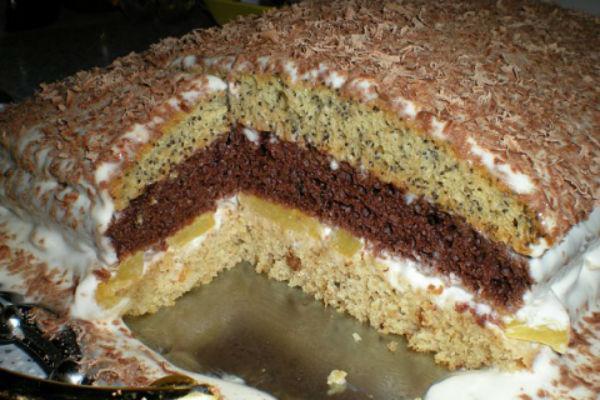
The ingredients used in this cake recipe are inexpensive and readily available. Using the original recipe as a basis, you can customize the cake to suit your tastes. For example, raisins and prunes can be substituted with any other dried fruit. Figs, pears, peaches, dried strawberries, and even bananas are all excellent choices.
Instead of walnuts, you can try making the cake with almonds, cashews, hazelnuts, or roasted peanuts. To add a fresh flavor and make the cake even richer, cut a firm, green apple, plums, or quince into one of the layers. A poor Jew with improvisation will only become more delicious.
Ingredients
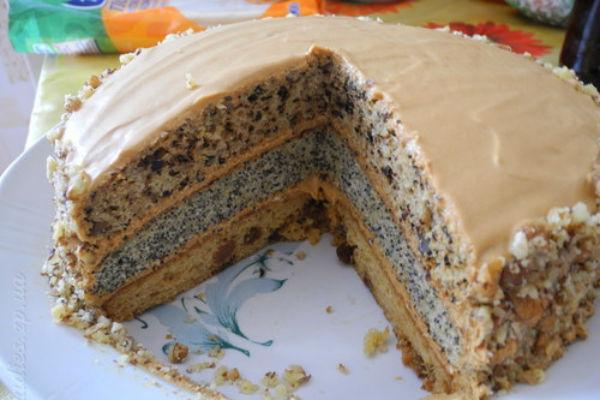
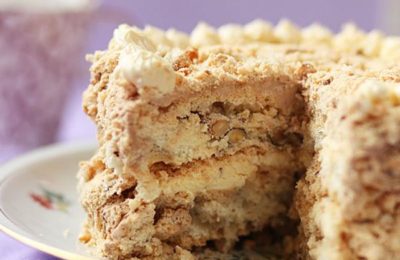
The cake consists of three different layers and cream. The first layer is with raisins:
- Half a glass of sugar
- Half a glass of flour
- Half a glass of low-fat sour cream
- 1 egg
- 1 teaspoon baking powder
- About 50 grams of raisins
For the remaining cakes, the list of ingredients is the same as for the first, only for the second cake, raisins are replaced with half a glass of poppy seeds, and for the third - half a glass of prunes and one hundred grams of walnuts.
To prepare the cream you will need:
- 1 can of boiled condensed milk
- 100 grams of butter
Preparing the filling
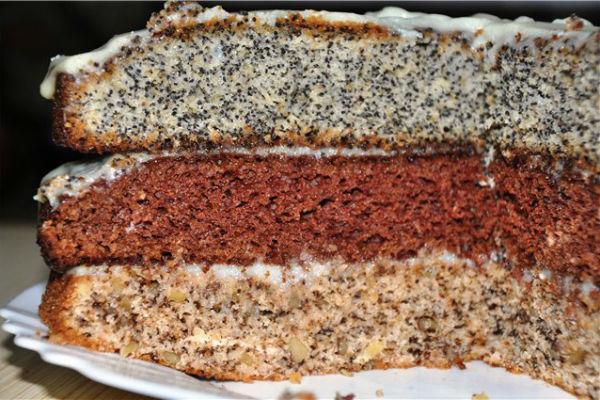
To prepare the cake, start with the fillings. To prevent the "Poor Jew" from drying out, soak the poppy seeds, prunes, and raisins in hot water for 30 minutes in separate containers. Once the raisins and prunes have steamed, absorbed the water, and become juicy, you can cut them into pieces of varying sizes, blend them until smooth, or use them whole in the filling.
The recipe for poppy seeds is slightly different. Place the poppy seeds in a sieve, let the water drain, then grind them into a paste and squeeze through cheesecloth. Otherwise, they will have an unpleasant crunch on your teeth. If desired, meadow or flower honey can be added to the poppy seed paste, which enhances the tart poppy seed flavor.
If the walnuts are fresh, dry them in the oven and be sure to remove all the skins, as they will add unnecessary bitterness to the cake.
Preparing the cake layers
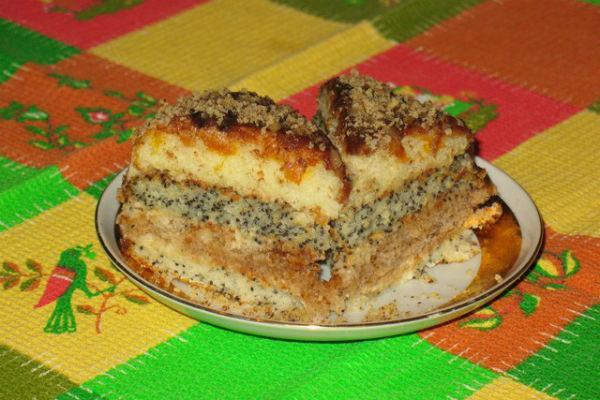
The same recipe is used for all three layers. First, beat the egg and sugar until smooth. Stir continuously, then add the sour cream. Mix the flour with the baking powder and add it little by little to the egg-sour cream mixture. Mix gently but thoroughly, eliminating any lumps or lumps.
When the dough has an elastic, creamy texture, you can add the filling. Make sure the filling ingredients are evenly distributed throughout the dough. To bake, pour the dough into a well-greased round pan.
The original recipe recommends making the cakes thinner, so it's best to use a wide pan. If the pan isn't large enough and the cakes are too tall, you should cut them in half and use them to make two cakes at once, but then you'll need to make twice as much frosting.
Each cake layer is baked individually. Bake in a preheated oven at 180 degrees Celsius (350 degrees Fahrenheit) for about thirty minutes until done. You can test for doneness with a wooden toothpick or skewer: if you insert it and the toothpick comes out clean, it's ready.
Making the cream and assembling the cake
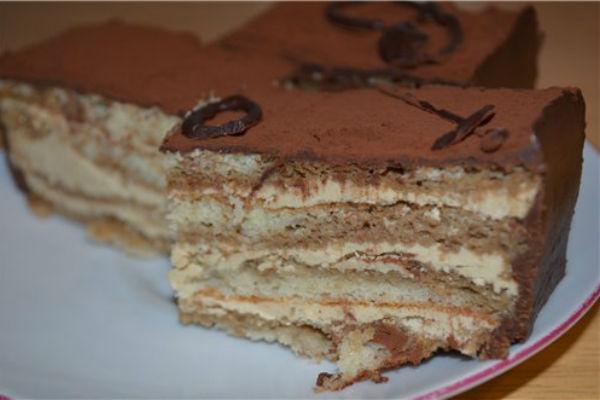
Once all the cake layers are prepared and allowed to cool, you can begin making the cream. Soften the butter in a double boiler. Combine it with the boiled condensed milk and beat until the cream is smooth.
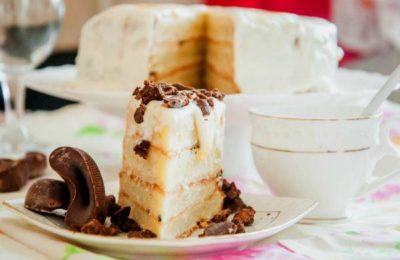
The "Poor Jew" can be assembled in any order. Based on texture, it's best to place the poppy seed layer in the center. Being the most uniform and smooth, it will contrast nicely with the layers containing the larger filling.
When frosting, don't skimp on the cream. It should soak each layer thoroughly, making the cake moist. After frosting each layer, use the remaining cream to cover the top and sides. Decorate with crushed or whole nuts, buttercream, or chocolate chips.
The poor Jew needs time to steep. Ideally, leave it in the refrigerator overnight and remove it just before serving.
This unusual cake is perfect for a formal table or a cozy tea party at home. The simple recipe is easy to recreate before guests arrive. "Poor Jew" consistently surprises with its flavor combinations and captivates with its aroma. This cake has only one drawback: it always runs out too quickly.