The story of one delicious "Opera"

Content
There are many different types of French cakes, but for true connoisseurs of confectionery, the sweet symbol of France is the Opera cake, in all its sophistication and richness of taste.
The history of the creation of the "Opera" dessert begins in France in 1955, when the renowned pastry chef Sirac Gavillon decided to create a dessert by joining forces with the legendary Dalloyau bakery in Paris, where he worked at the time. The success of the Dalloyau pastry shop, which existed since 1682, was determined by the fact that the desserts made there were constantly supplied to the Palace of Versailles.
Gavillon envisioned the new dessert as having a full range of flavors in the very first bite. Thus, the renowned chef developed the cake recipe, tinkered with the various layers and flavor combinations, and ultimately created a remarkably complex dessert. Gavillon's wife, after tasting her husband's creation, remarked that the cake reminded her of the Opéra Garnier in Paris. This is how the dessert got its name.
However, there are other theories about how this cake's recipe originated. For example, it's believed that the "Opera" recipe was invented at the theater itself around 1890. It's believed that the richness of the coffee-based dessert was meant to invigorate audiences for the final acts.
However, Dalloyau's main rival in the race for the title of creator of the "Opera" dessert is Louis Clichy, another renowned pastry chef. According to one version, he developed the recipe for the "Clichy" cake (the dessert's original name) and presented his masterpiece at a Parisian culinary exhibition back in 1903, after which the cake became the signature cake of the Clichy bakery. However, the owners of Dalloyau patisserie refute this version and openly emphasize that it is not credible.
There are as many opinions as there are people, and therefore, as many versions of the cake's origins. Today, decades after its appearance on bakery shelves, it's difficult to pinpoint its precise origins. Regardless, the dessert has survived to this day, and no bakery misses the opportunity to include it on their menu or even modify the classic French recipe.
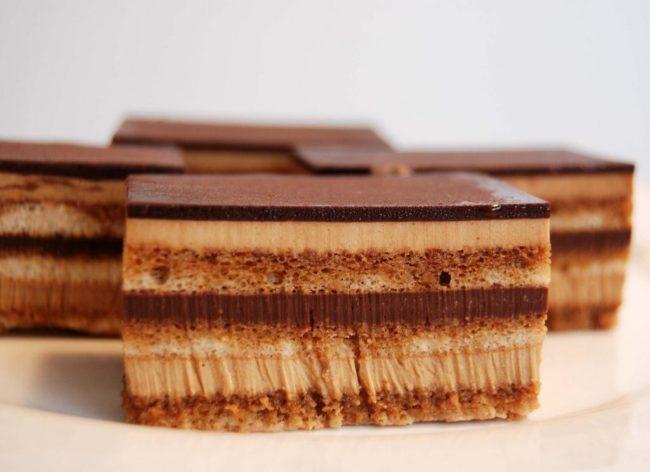
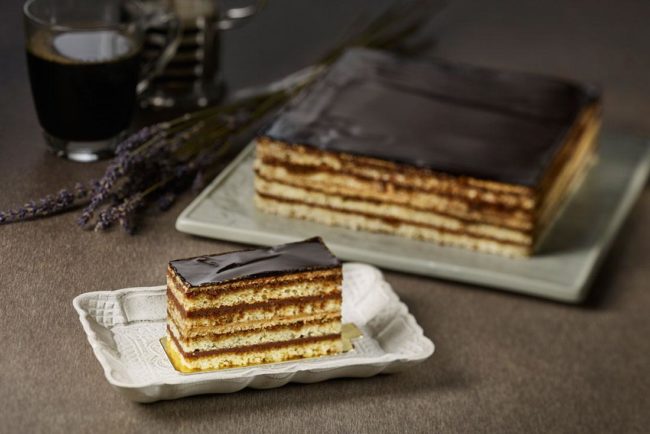
Today, the "Opera" is a world-famous dessert, rectangular in shape and combining three distinct yet perfectly coordinated layers: a thin almond "Gioconda" sponge cake soaked in coffee syrup, coffee cream, and chocolate ganache. The top of the cake is covered with dark chocolate icing.
But many modern pastry chefs, eager to outdo their colleagues or add a fresh twist to the classic recipe, tweak it and add their own twist. For example, there's a strawberry version of the dessert and even an "Opera" version using white chocolate. Today, we'd like to return to the classics and present you with a French recipe for this incomparable delicacy.
A video recipe for the classic Opera cake from Alexander Seleznev.
Classic Opera Cake
Almond sponge cake
- 6 large egg whites (room temperature)
- 2 tablespoons of sugar
- 280g almond flour
- 245g sifted powdered sugar
- 6 large eggs
- 70g of flour
- 60g melted butter
Coffee syrup for soaking
- 120g of water
- 66g of sugar
- 1.5 tbsp. instant coffee
Coffee cream
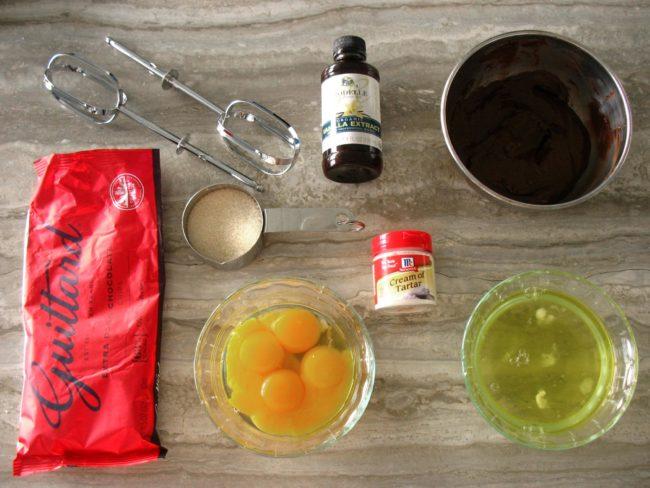
- 2 tablespoons of instant coffee
- 2 tablespoons of boiling water
- 200g of sugar
- 3 tablespoons of water
- 1 tsp vanilla extract
- 1 egg + 1 yolk
- 420g butter at room temperature
Chocolate ganache
- 225g dark chocolate (chopped)
- 123g of milk
- 65g cream (at least 33% fat)
- 120g butter at room temperature
Chocolate glaze
- 140g dark chocolate (chopped)
- 113g butter
This video will show you how to make Opera cake with green tea.
Recipe:
- Preheat the oven to 220 degrees Celsius (425 degrees Fahrenheit). Line a rectangular baking pan (38x30 cm) with parchment paper and lightly grease it. Half an hour to an hour before cooking, remove the eggs and butter from the refrigerator. This will make the butter more pliable, resulting in a smoother texture for the custard, and the room-temperature eggs will be easier to beat.
- To make the sponge cake, first start by whisking the egg whites. When they begin to double in volume, add sugar one spoon at a time, keeping the mixer running. Beat until the mixture thickens.
- Separately, beat the eggs with the almond flour and powdered sugar at medium speed. The mixture should lighten in color and increase in volume. Stir in the wheat flour.
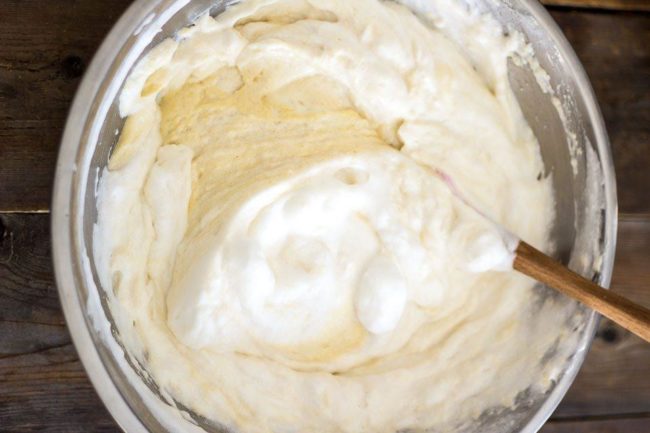
- Gradually fold the egg-flour mixture into the meringue. Finally, add the melted butter to the batter. To do this, add a small amount of batter to the butter, stir, and then fold the butter mixture into the batter.
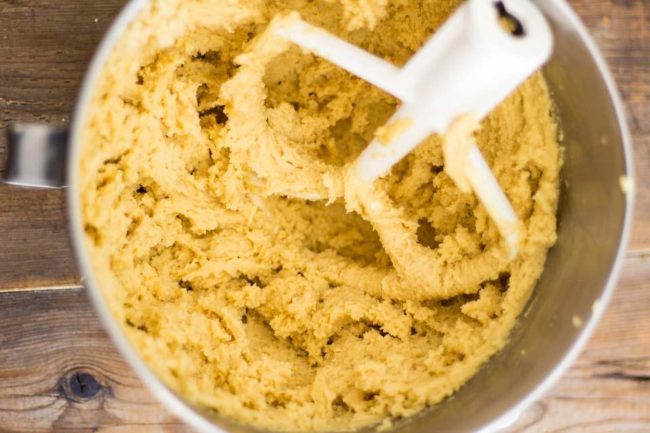
- Divide the dough between two pans (or spread the dough evenly on a baking sheet and then cut into equal portions) and bake for 5 minutes. The cake should spring back when touched with your fingers.
- Remove the parchment from the finished biscuits and let them cool.
- While the cakes are cooling, prepare the coffee syrup soak. Bring the water, sugar, and coffee to a boil over medium heat. Cool.
- For the coffee syrup, brew the coffee in 2 tablespoons of boiling water. Separately, heat the sugar, water (3 tablespoons), and vanilla extract over medium heat. Bring the syrup to a boil and cook until it reaches 124°C (250°F).
- Beat the eggs and yolks. When the mixture begins to thicken, begin pouring in the still-hot syrup in a thin stream, whisking continuously. Once the eggs and syrup are combined, pour in the coffee. Then, with the mixer running, begin adding the softened butter, one tablespoon at a time. The finished cream will have a thick, airy texture.
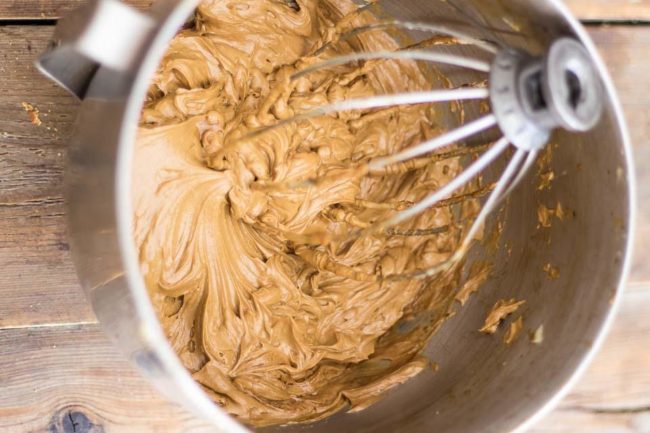
- To make the ganache, heat the milk and cream over medium heat. Pour the creamy milk mixture over the chocolate and stir until the chocolate is completely melted and the mixture is smooth. Finally, stir in the butter and continue to stir the ganache for another 90 seconds.
- Once all the ingredients are ready, you can begin assembling the cake: cut out a 25cm square from each layer. To ensure a smooth finish, it's best to assemble the cake in a cake pan (frame).
- Place the first square cake layer on the bottom, soak it with coffee syrup, and spread ¾ of the cream on top. Cover the cream with the remaining 2 rectangular cake trimmings, soak it again, and spread with ganache.
- Place the last square sponge cake on top of the ganache and cover with a thin layer of the remaining cream. Chill the cake for an hour before glazing.
- The glaze recipe is very simple: melt the chocolate and combine it with clarified melted butter. To "clarify" the butter, bring it to a boil and skim off the separated layer until the butter becomes clear.
- Cover the cake with the prepared glaze and put it back in the refrigerator for a while to allow the glaze to set.
The Opera cake recipe is living proof that it's not just another dessert, but a true work of art that requires considerable patience and skill. By creating it yourself, you'll experience the art of fine pastry, and after tasting it, you'll be transported thousands of miles away, to a cozy Parisian café or restaurant. Don't lose the recipe for this cake and be sure to use it, because a slice of this exquisite delicacy will bring you incredible pleasure!