Juicy and tender Napoleon cake – the simplest recipe

Content
Napoleon is a luxurious and most festive cake.There's much debate about why the French commander became the namesake for this amazing recipe. Perhaps it stems from his penchant for luxury and genuine desire to rule the world, no less. Or perhaps it stems from the emotions of the Russian people, their desire to express their sense of victory in such a masterpiece. Today, when the warriors of past centuries have faded into history, this cake is truly regal. "Napoleon" has achieved its goal, albeit in a confectionary context, but that's no small feat.
The recipe isn't complicated, but it requires a lot of work. That is, if you really want a Napoleon cake, not something like "Count's Ruins" or "Ladyfingers." Follow the simple step-by-step recipe, and you're sure to succeed.
What do you need to make Napoleon cake?
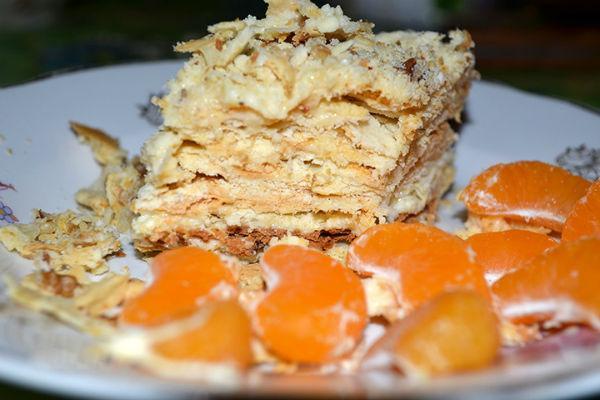
The key to this dessert is the number of thin layers, the recipe for which will be described below. Each layer will be generously coated with delicate cream. Only then will the Napoleon cake truly be a true Napoleon. Although simple, it's gorgeous to look at and incredibly delicious.
For the test:
- Margarine must be very hard 200g;
- Chicken eggs – 2 pcs;
- Water – 150 ml;
- Premium flour – 700-800g;
- Vinegar not less than 9% - 1 tbsp;
- Salt - a small pinch.
For a delicious cream:
- Cow's milk – 700 ml;
- Premium wheat flour – 3 tbsp;
- Chicken eggs – 2 pcs.
- Granulated sugar – 2 cups (500g);
- Soft butter – 100 gr.
Cooking process
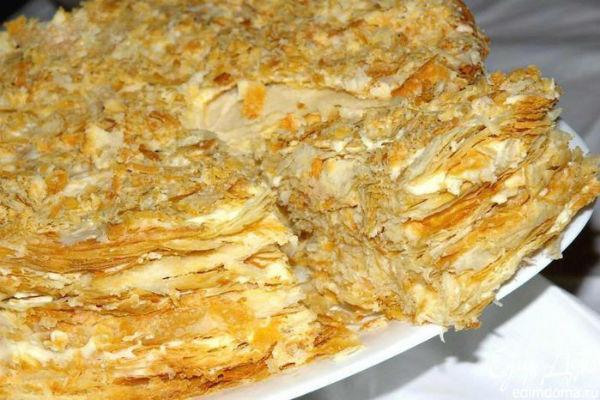
Let's start with the margarine. Finely chop the margarine with a knife. Don't assume that soft, spoon-cut margarine or melted margarine will work. If we want a real cake, the recipe must be original, without deviations.
Sprinkle flour on top of the chopped margarine. Don't rush to sprinkle it on by hand or from a bag. It's better to pass the flour through a sieve; this is the easiest way to make baked goods more tender and fluffy. Next, chop the margarine and flour together until you have fine crumbs.
Pour all the prepared water into a separate bowl and add salt and a teaspoon of vinegar. Then pour the water into the well made in the flour/margarine mixture. Continue cutting the dough. This will ensure a porous, tender dough. This recipe does not allow for any other method of making this cake.
Cut the dough until all ingredients are combined. The dough should be smooth when you use a knife. Form it into a firm roll and cut into 6 equal pieces. Wrap each resulting ball tightly in plastic wrap and refrigerate.
How to make cream
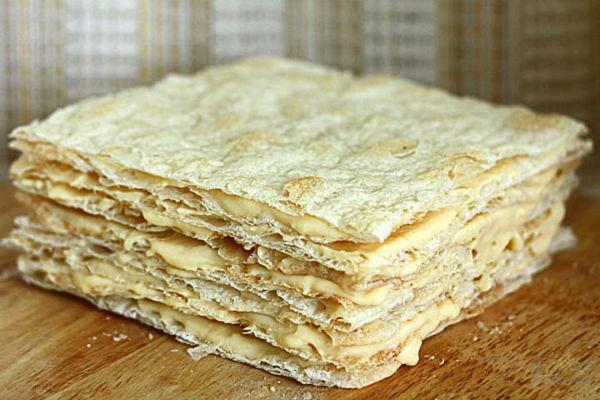
Bring the milk to a boil and pour the flour into a dry frying pan. The mixture should turn into a golden, toasted crumble. Then let the flour cool. The milk shouldn't be hot either; just slightly warmer than room temperature is sufficient.
Using a mixer or whisk, beat the eggs and add them to the cooled, golden flour. It's important to achieve a fluffy, smooth mixture, otherwise the recipe won't work and the Napoleon won't turn out as classic. Continue beating, even once the mixture is smooth. We need to add more milk. Without stopping the mixer, begin gradually pouring it into the future cream.
Next, pour the resulting soft mixture into another saucepan, designed for a double boiler, where our simple custard will be made. Stir constantly to prevent it from forming lumps, hardening, or melting to the bottom. The custard is ready when a spoon can almost stand in the thick mixture, and a pleasant, sweet, creamy aroma emanates from it.
While the cream is cooling, let's make the cake layers. The more layers you make, the more elegant the Napoleon cake will look. In this case, we'll have exactly six layers. Bake the layers for five minutes at 180 degrees Celsius.
Roll out thin flatbreads and fit them into a single pan to prevent them from shifting when layered. The remaining dough is also ready to use. The shavings will be used to decorate the finished cake. Before placing the dough in the oven, pierce the dough with a fork to prevent it from rising due to temperature changes. The recipe is complete.
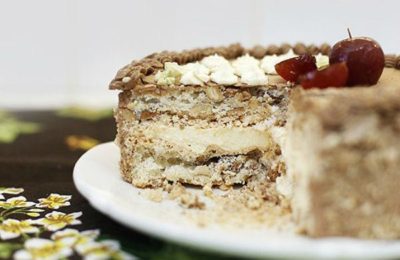
Once the entire dessert mosaic is ready, all that's left to do is assemble it. Carefully and gently spread the cooled cream onto each layer. The layers are very fragile and delicate, so it's important to find a balance so that the frosting adheres evenly and without breaking.
After gluing, the Napoleon cake should sit in a cool place and soak in the sweet cream. The dessert is served with a cheerful mood.