Napoleon Cake - Choose the Best Recipe

Content
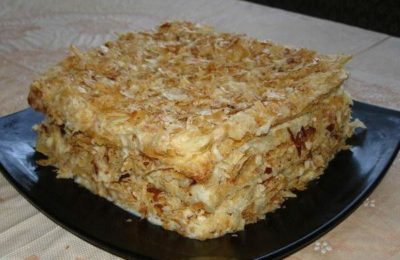
Napoleon cake, without a doubt, everyone's favorite. But it's difficult to say which recipe is the best: after all, as we know, there's no accounting for taste. And, surely, every homemaker will defend their own version of this delicacy, claiming it's the "best of the best." So which method should you choose, and which one should win? To avoid making a mistake, we offer three different holiday baking options. We hope they will help you make a delicious Napoleon cake, and that one of the recommended recipes will become your favorite.
Who is the author of this confectionery masterpiece?
It's now impossible to determine the true author of Napoleon's recipe or why the confection bears such an unusual name. Even the approximate birth date of this uncrowned emperor of the confectionary world is unknown.
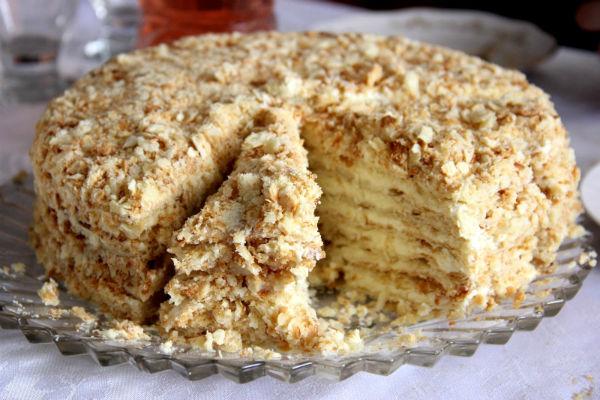
However, there are three versions of its origin. Italians are convinced that the cake was named after Naples, the city where it was first created. The French believe that the recipe for the delicacy was invented by none other than Napoleon himself. And Russians claim that the cake was first made for the centenary of the victory over the French emperor.
It's unclear which of them is right. And it doesn't really matter. The important thing is that this undisputed favorite of any holiday has finally come into being and has been delighting generations of gourmets with its divine taste.
The first method is traditional
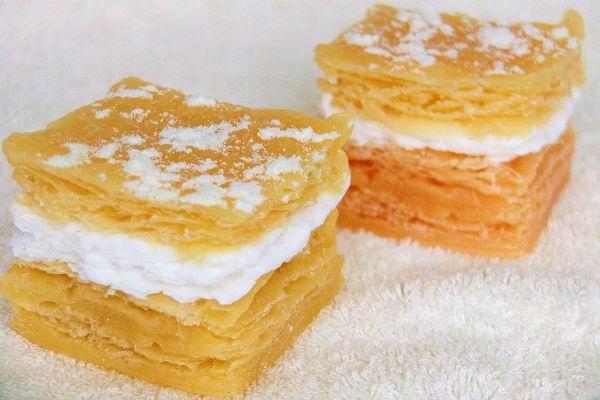
This recipe is a classic: the custard is made with a minimum of butter. First, as usual, the cake layers are baked (they can be prepared in advance, by the way), and 10 to 12 hours before the dessert is served, they are soaked in the custard.
To prepare puff pastry layers for the cake, you need to stock up on:
- 1 pack of margarine;
- 1 glass of sour cream;
- 1 egg;
- 2 tbsp. sugar;
- 4 cups of flour;
- 1 teaspoon of baking soda (recipe recommends extinguishing it in a spoonful of vinegar);
- a pinch of salt.
For the cream you will additionally need:
- milk – 2 glasses;
- sugar – 1.5 cups;
- 2 tbsp flour;
- 2 eggs;
- 100 g butter;
- vanilla.
The process begins:
- Using a knife, chop the cooled margarine with flour and a pinch of salt until a thick, buttery texture forms. Continue chopping (as the recipe calls for), adding sour cream mixed with baking soda, sugar, and an egg.
- Quickly gather the resulting dough into a ball, divide it into 6 pieces, and refrigerate for 1 hour. After cooling, remove one piece of dough (leave the rest to rest), roll it out thinly, and transfer it to a baking sheet lined with parchment paper. Incidentally, the layers can be immediately shaped into a plate on which the imperial cake will be displayed.
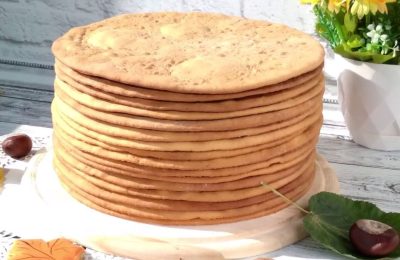
- After this, prick the dough with a fork all over and bake it in the oven, preheating it to 180-200 degrees Celsius. According to the recipe, the crust bakes quickly—5-7 minutes. It may take longer, depending on your specific oven. Therefore, it's important to monitor the baking process.
- Bake the remaining cake layers in the same manner and place them individually on parchment paper to cool. At this point (if you still have a couple of days left before the celebration), you can take a break and leave the frosting preparation for tomorrow.
The cream is prepared like this:
- Beat the eggs thoroughly with the sugar. Then add the flour. Then gradually pour in the milk, stirring constantly until it forms a smooth paste.
- Now place the cream mixture over low heat and, while continuing to stir, bring it to a boil. The cream is almost ready. All that's left is to cool it, beat the softened butter, and combine it with the milk-egg mixture and vanilla.
Next comes the most enjoyable procedure – assembling the cake:
- Place the thickest cake layer (and there will definitely be one) on a plate, spread it with cream, and top it with the next layer. Then press the top layer lightly with your hand.
- Do the same with the remaining layers. The recipe recommends setting aside the smallest layer for the topping—you won't mind crumbling it for the final cake decoration.
- After this, you should place the assembled Napoleon in the refrigerator (preferably overnight) so that the layers are thoroughly soaked in the cream, and the cake acquires a delicate, melting consistency.
The work is done. The most exciting part remains: bringing this miracle of confectionary art into the living room to the applause of delighted guests.
The second method is innovative
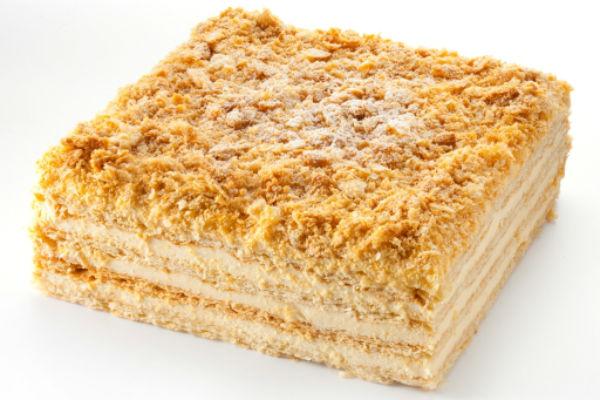
Since the original Napoleon recipe has long been lost, experimentation in its creation is entirely permissible. One such experiment is a cream that requires only a can of condensed milk, softened butter (200 g), and, of course, vanilla, which creates an enticing aroma.
The dough for this cake has a slightly different composition:
- you will need 3 cups of flour;
- margarine – 200 g;
- 1 egg;
- ½ tsp soda;
- ½ tbsp vinegar;
- ¼ glass of water (cold);
- a pinch of salt.
The technology for making cakes is basically the same:
- The recipe also suggests chopping the sifted flour with margarine, baking soda, vinegar, a pinch of salt, and cold water. Combine all ingredients into a ball, but don't let it sit for long: immediately divide it into 5 pieces (4 large and one small piece for dusting). Refrigerate the dough for about 60 minutes.
- Bake the cakes in the same way: roll them out thinly, prick them with a fork and place them in the oven for 5-10 minutes at the same 180-200 degrees.
- The cake frosting is incredibly simple to make: whip butter and combine with condensed milk and vanilla. After that, the cake is layered with frosting and, as is traditional, refrigerated.
Method three – for adults
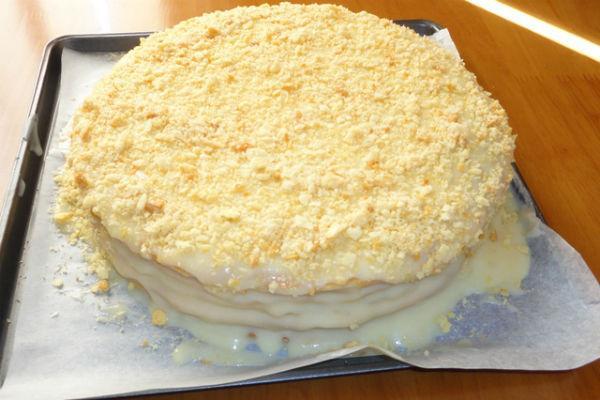
If there are no children in the party, a rum or liqueur cake recipe is perfectly acceptable. In this case, you'll need to stock up on:
- 5 cups of flour;
- 1 glass of cold water;
- butter - 500 g (cold);
- vinegar – 1.5 tbsp;
- salt – ½ tsp.
These were the ingredients for the dough, and now for the cream:
- 1 yolk + 1 whole egg;
- ½ cup milk;
- 1 cup of sugar;
- 300 g butter (already soft);
- 1 tbsp. rum, liqueur or cognac.
The cakes are prepared as follows:
- First, chop ½ cup of flour with butter. Separately, knead the dough by mixing vinegar, salt, water, and 2.5 cups of flour. Roll it out, stuff the chopped butter into the dough, fold it into an envelope, and refrigerate for half an hour.
- Once removed, roll out the dough, fold it again, and refrigerate for another half hour. Repeat this process three more times, with the same time interval.
- After this, bake three large cakes and one small one. Cool them, of course.
- It's time to make the cream: combine the egg, yolk, sugar, and milk. Mix well. Bring the mixture to a simmer over low heat (but do not boil!). Cool. Then, whisking continuously with a mixer, combine with the butter. Lastly, add the vanilla and your chosen alcohol. Layer the cream between the cake layers and decorate the top with crumbs made from a smaller cake layer.
Of course, the options for creating this famous dessert don't end there. We've simply presented three (out of the possible) Napoleon recipes for your consideration. And which one is the best—it's up to you to decide.
Bon appetit!