Everything you need to know about how to cook condensed milk at home: how long to cook it, how to determine if it's ready

Content
- 1 Is it possible to cook condensed milk?
- 2 What kind of condensed milk should I buy for cooking?
- 3 5 ways to cook condensed milk in a can at home
- 4 Features of cooking condensed milk in different packages
- 5 How long should you cook condensed milk in a can to prevent it from exploding?
- 6 How to properly cool boiled condensed milk
- 7 Conclusion
- 8 Frequently asked questions
Making condensed milk yourself is a simple process, but it can be challenging for beginners who aren't familiar with the techniques. Cans can explode during cooking, and the dessert can become overly viscous or, conversely, too runny if undercooked.
Understanding that, How to cook condensed milk, begins with choosing the right base and ends with cooling the finished dessert. It's a step-by-step process that should be approached slowly.
The method for condensing milk was developed by American Gail Borden, whose professional career involved preserving various foods. Through a series of lengthy experiments, Borden devised a method for condensing canned milk in a vacuum-sealed pan by adding sugar and butter. This method was patented in 1853, and this year is celebrated as the birthplace of condensed milk.
Is it possible to cook condensed milk?
Cooked condensed milk is often used as a filling for various desserts. Ready-made boiled condensed milk is available in stores. However, home cooks note that the quality of this product doesn't always meet their expectations.
Therefore, it's safer to make condensed milk at home yourself. This task won't be difficult if you follow the recommendations in our article.
What kind of condensed milk should I buy for cooking?
The challenges of making condensed milk begin when choosing the right product. Not every condensed milk is suitable. And the issue here isn't so much the packaging as the ingredients.
Manufacturers often use vegetable fats and preservatives, which compromise the quality of the finished dessert when cooking condensed milk. Choosing this option can result in a lack of the desired thick consistency and the formation of a gelatinous mass after cooking. The product should contain only natural cow's milk and sugar.
First of all, you can check the label. If it says "whole condensed milk with sugar," the product is suitable for subsequent cooking.
If the label says "condensed milk," avoid it, as it contains additives in addition to traditional ingredients. Furthermore, the milk in this product may have been pre-diluted with water, which further contributes to the low price of the product.
When considering cooking options, it's also worth paying attention to the product's packaging. For example, I don't recommend cooking condensed milk in a flexible bag. This is because without understanding the strength of the packaging, you could accidentally cook it along with the condensed milk, as the bag could simply melt during cooking.
You can also cook condensed milk in a glass jar. It's believed that cooking condensed milk in a tin can is safer, as the cans are less likely to explode. However, using tin cans results in the formation of harmful substances during heating, which settle in the milk. From this perspective, a glass jar makes for safer condensed milk. You can also cook condensed milk in a jar with a ring. The key is to follow the proper procedures, and the jar will not explode.
5 ways to cook condensed milk in a can at home
Condensed milk can be cooked in a variety of utensils. There are classic options, like boiling it in a saucepan, or more modern ones, like using a slow cooker or pressure cooker. Alternative methods include using a microwave or a double boiler. A glass jar or tin can also be used as the base for cooking. There are also recipes that allow you to cook condensed milk without a jar.
The same rule applies to each cooking method: the color of the boiled condensed milk must be was brown in color. This way you can monitor the degree of readiness of the dessert.
Let's take a closer look at the most popular options for preparing boiled condensed milk at home.
In a saucepan
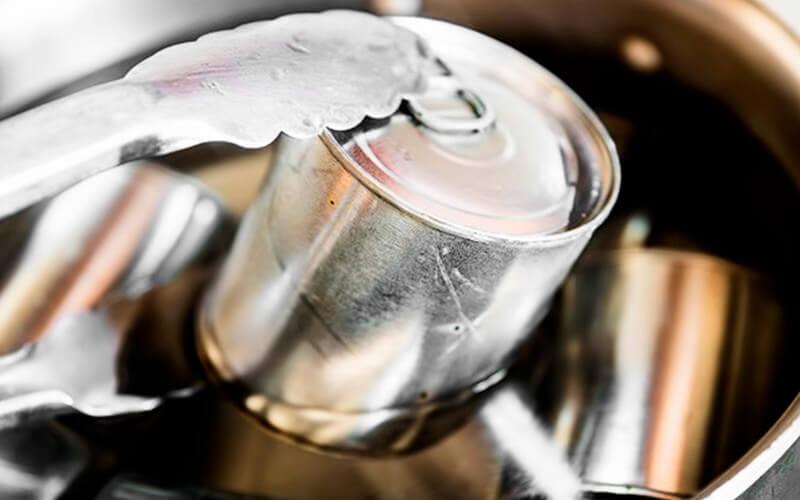
Boiling it in a saucepan on a regular gas stove is the traditional way to make condensed milk. I make condensed milk in a saucepan as follows:
- I choose a deep saucepan that has a fairly thick bottom.
- I fill it with clean water.
- I put it on high heat.
- I lower the jar into the water so that it is completely covered with water.
- I reduce the heat after it boils.
- I add water so that the can of condensed milk is constantly in water.
Depending on the fat content, the dessert will cook for approximately 1.5-3 hours. The higher the fat content of the product, the longer it will take to cook. After cooking, let the jar cool for 1-2 hours. Do not open the jar while it is still hot.
In a multicooker
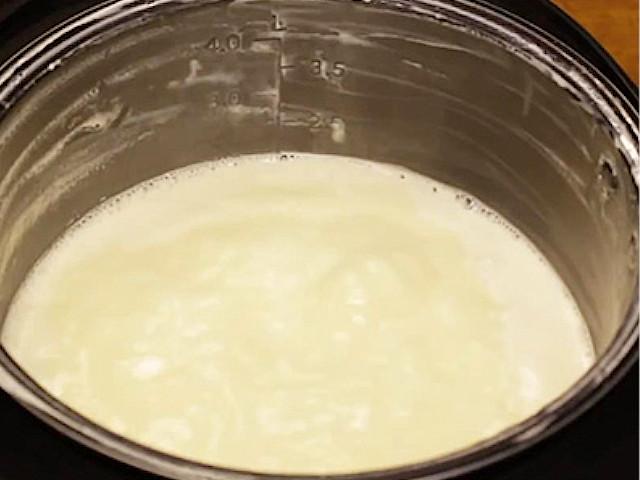
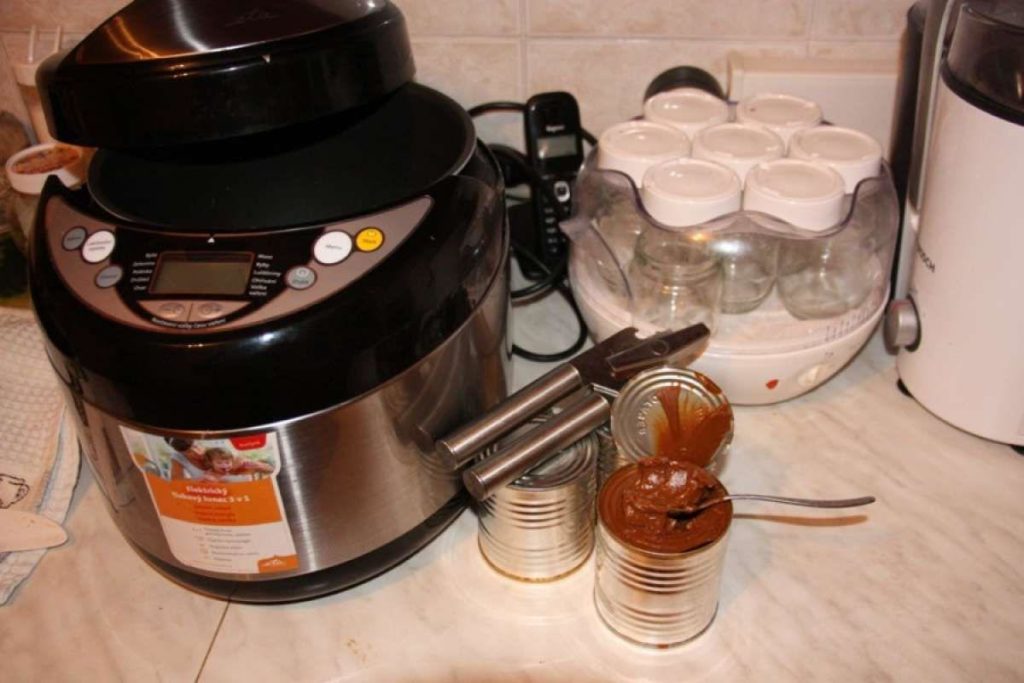
I make this dessert using a Redmond multicooker. Here are the step-by-step instructions:
- I remove the label if a tin can is used in the preparation process.
- I put a cloth napkin on the bottom of the multicooker to avoid scratching the non-stick coating.
- I pour water into the bowl. Cooking condensed milk in a slow cooker has one significant advantage: in this mode, the water boils away more slowly than in a saucepan, so you practically don't have to monitor the amount.
- I set the mode to “Steam cooking”, which helps the water in the multicooker boil quickly.
- I switch to the "Stewing" mode and leave the jar for 2-3 hours. Cooking time affects the thickness of the dessert.
In the microwave
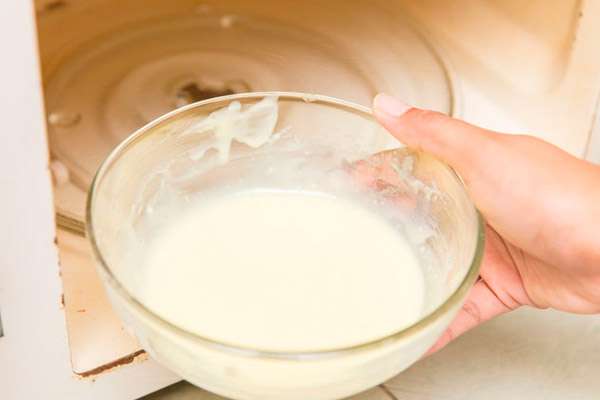
Microwaves make preparing condensed milk quick and easy. The process is accomplished through the following steps:
- Pour the contents from the original packaging into a microwave-safe glass container.
- Run the device for 3 minutes at 400 W power.
- Remove the container and stir the contents so that the condensed milk does not stick.
- Repeat this process about 10 times.
This way, it only takes half an hour to cook the condensed milk until it turns brown. It's important to keep the container covered with a glass lid during cooking. This will help prevent stains on the inside of the microwave.
On an electric stove and on an induction stove
You can also boil condensed milk in a saucepan on an induction or electric stove. This will take about 2 hours. When cooking, use a container made of ferromagnetic materials. Place the can of condensed milk vertically in the saucepan. Cook at minimum power, ensuring a gentle bubbling of the water.
In a pressure cooker
You can also make boiled condensed milk using a pressure cooker. For this recipe, I wrap the jars in plastic wrap and only then transfer them to the bowl. Next, I fill the jars with water until they're completely covered. Then, set the pressure cooker to the "Soup" setting, close the valve, and close the lid. After 20 minutes, leave the jars in the pressure cooker for 2-3 hours on the "Keep Warm" setting. Then, remove the finished dessert, removing any plastic wrap or labels.
Features of cooking condensed milk in different packages
How long to cook homemade condensed milk depends largely on the container used. Each container has its own cooking instructions.
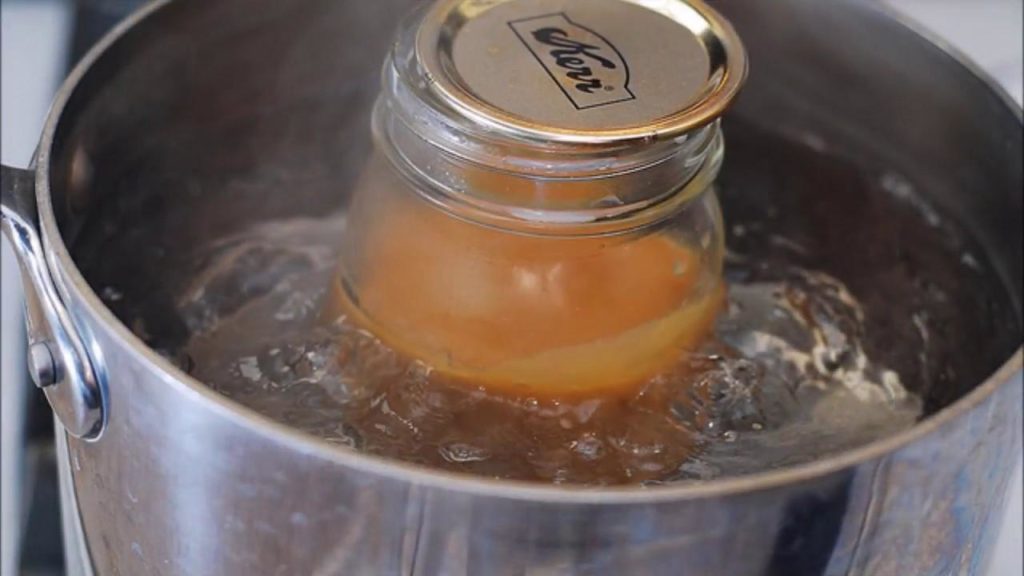
How to cook condensed milk in a glass jar
If you don't buy condensed milk in a can, it's easiest to cook it in a glass container. The cooking process consists of the following steps:
- A protective mat is placed on the bottom of the pan.
- A glass jar of condensed milk is placed on top of it, which should be covered with a lid.
- The glass container is filled with clean water so that the liquid level is slightly higher than the level of condensed milk.
- Turn on low heat, which cooks the product for 3-4 hours.
The main advantage of making condensed milk in a glass jar is that you can directly observe the changes in color and consistency as it cooks. This helps you create a dessert that's sure to please your taste buds.
How to cook condensed milk in a ring-top can
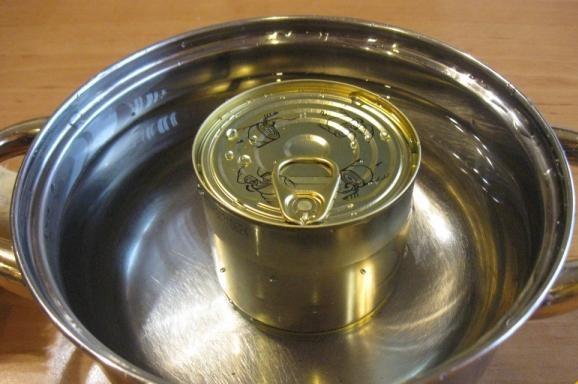
Condensed milk can also be boiled in a can with a ring lid. To do this, completely submerge the can in water and cook the product over low heat without sudden temperature changes. Condensed milk should be boiled this way for about 2-3 hours, constantly adding water as it evaporates.
The longer the cooking time, the thicker and darker the color of the finished dessert. After cooking, I leave the jar in the water until it cools completely. Using cold water for this purpose will cause a temperature drop, which will cause the condensed milk to explode. This is especially true for jars with a ring top.
How to cook opened condensed milk
Opened condensed milk can be cooked in a microwave or a double boiler. The first option allows for faster cooking: it takes about 20-25 minutes, but it requires more time stirring the condensed milk.
The second option takes at least 4 hours. Both options allow you to monitor the product's readiness during cooking, allowing you to create the most suitable dessert. Furthermore, this method allows you to cook a small batch of condensed milk, rather than a whole can, if needed.
How long should you cook condensed milk in a can to prevent it from exploding?
When making condensed milk, beginners sometimes experience jar explosions due to improper preparation techniques. Therefore, the first and most important rule when boiling is to adhere to the cooking time schedule.
This factor determines the color of the finished product. One hour of cooking makes the condensed milk yellowish, while 3.5 hours makes it dark and thick.
If cooking continues for more than 4 hours without enough liquid, the condensed milk in the iron can may explode.
If you cook condensed milk for 1-1.5 hours, the product may gradually become darker in color, but its taste will not change.
The dessert's readiness is determined by the characteristic color change, which ranges from white to brown. The appearance of a dark hue indicates the dish is ready.
Why does condensed milk explode when boiled and how can it be avoided?
Boiled condensed milk explodes in the can if it isn't covered with enough water during cooking. For example, when boiling condensed milk in a saucepan, the water constantly evaporates, resulting in insufficient water.
When adding water, I only add hot water from the kettle, as using cold water disrupts the temperature control and can cause an explosion. Avoid pouring water directly onto the jar. It's best to pour it between the jar and the side of the container to reduce the temperature difference.
Furthermore, deformed cans of condensed milk should not be used for cooking. This rule applies even to products with slightly dented sides or edges. The integrity of such packaging cannot be guaranteed, and the seals may be compromised.
Cooking time for condensed milk for different desserts
Despite the versatility of condensed milk as a product, I recommend choosing a unique recipe for each dessert. This will help you use the condensed milk according to its intended purpose and make your desired dish even more delicious and rich.
For the cream
When making condensed milk cream, boil the condensed milk in a saucepan using a glass jar. Cover the jar completely with water, and simmer the condensed milk for 1.5-2 hours to make the cream.
For the anthill
The condensed milk for the anthill should be thick enough so that a spoon can stand in it, even when the condensed milk is warm. If the spoon isn't stable, the anthill won't hold its shape, causing the dessert itself to be soggy. Thin condensed milk will dampen and even distort the finished cake. To achieve the right consistency for the anthill, simmer the condensed milk for at least 2 hours.

For nuts
The cooking time for condensed milk for nuts is determined by the desired thickness of the product. It's best to cook the condensed milk until it reaches a thick consistency that will firmly bind the nuts. To achieve this, the dessert should be cooked for 2-2.5 hours.
How to properly cool boiled condensed milk
Do not open a can of boiled condensed milk immediately after cooking. Even a small hole in the container will cause the contents to spill out, posing a risk of burns. Therefore, when removing the pan from the stove, let it cool on its own for about 2 hours, cooling simultaneously with the liquid inside. This will prevent an explosion when opening the package and will also make the finished dessert even more delicious. Never cool the can with cold water, as this violates the temperature requirements.
Conclusion
Boiling condensed milk is usually a time-consuming process, but the results are definitely worth it. When preparing for the cooking process, choose only whole, undamaged cans, which will remain submerged in water throughout the cooking process. Condensed milk can be prepared using various methods: choose the one that best suits your desired volume and the time you have available.
Frequently asked questions
If the condensed milk's appearance is acceptable, but you'd like the dessert to be a little thicker, you can return the opened can to the pan of boiling water. Be careful not to let any boiling water leak into the can, as this will ruin the condensed milk. During the cooking process, check the color and consistency every 20 minutes.
You can cook condensed milk without a can in the microwave using a microwave-safe container. Cooking time is approximately 20-30 minutes, with 2-3 minute breaks for stirring.