How to Bake Meringue in the Oven: Temperature, Time, and Drying Mode

Content
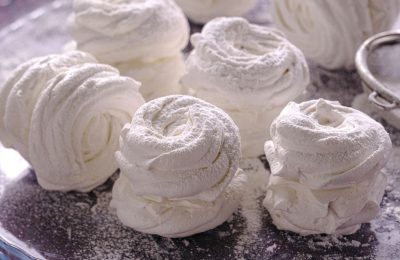
Meringue is a French dessert made from whipped egg whites and sugar, dried in the oven. Bake meringue at 70 to 100 degrees Celsius, depending on your oven.
To make a quality dessert, it's crucial not only to dry the cream correctly but also to maintain the correct proportions and beat the egg whites thoroughly. Below, we'll explore all the nuances of making meringue in more detail.
General recommendations for drying meringues
In addition to the correct temperature and baking time, the quality of the meringue is also affected by how you prepare the meringue cream:
- Meringues should be made from eggs that aren't too fresh; 5-7-day-old eggs are best. It's easy to test whether the egg white is suitable: crack an egg onto a saucer and note its consistency. If it's too runny, don't use it for meringue; you need to whip the egg white so it sits firmly next to the yolk.
- It's also crucial to properly separate the whites from the yolks, ensuring not a single drop of the latter ingredient ends up in the mixing bowl. It's best to use chilled eggs for this, but after you've finished, let the whites sit at room temperature for a while, as warmer eggs are easier to whip into stiff peaks.
- To prepare the cream, use a completely dry container. Wipe it with a cloth soaked in lemon juice or rubbing alcohol to remove any grease. Otherwise, any remaining grease can significantly complicate the process of whipping the ingredients. Prefer stainless steel or glass containers.
- It's best to beat the egg whites with a mixer, starting at the lowest speed. This will allow the oxygen bubbles to be evenly distributed throughout the mixture. Then gradually increase the speed to medium. Don't use the highest setting, as this will make it difficult to achieve the desired creamy consistency. This will cause the mixture to turn white and form stiff peaks. You can add a small pinch of salt at the beginning of the process to help the egg whites whip more easily.
- Use finely ground sugar or powdered sugar, which you can make yourself by grinding large crystals in a coffee grinder. Gradually add this product to the egg white mixture, using a teaspoon. You'll need 50 g of sugar per egg white.
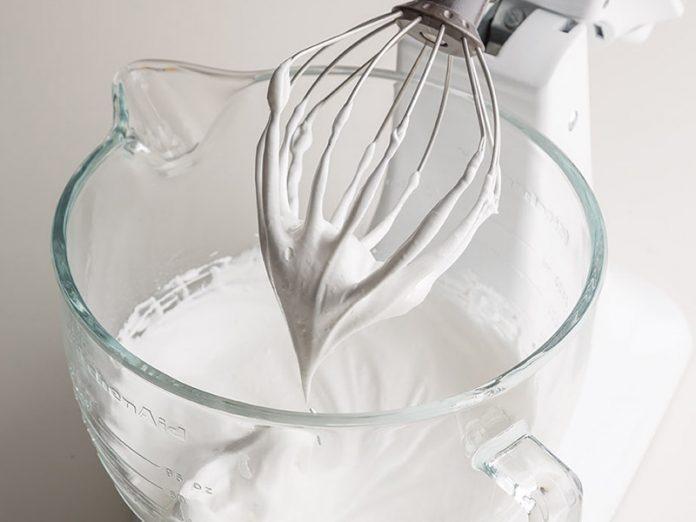
At the end of whipping, you can add a few drops of lemon juice at a rate of 0.5 teaspoon of liquid per 1 protein to help the mixture hold its shape better.
How to bake meringues
Meringues need to be dried at a low temperature, but the exact baking mode and duration should be calculated based on the characteristics of your oven type and the size of the product.
During the first hour of cooking, do not open the door of the appliance to prevent the products from cracking due to temperature changes; they must dry thoroughly.
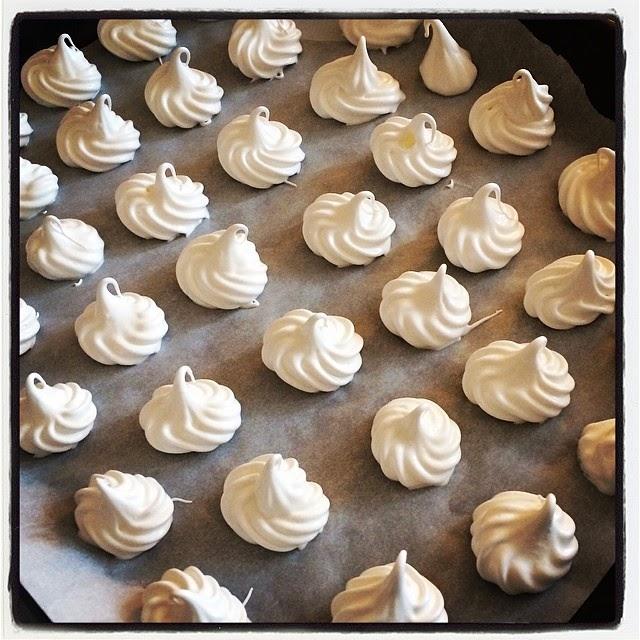
The finished dessert is delicate and airy, yet crisp and crumbly. Completely dried, the meringues peel easily from the parchment.
Next, we will take a closer look at the nuances of baking this protein product in a gas and electric oven.
In a gas oven
While shaping the dough, preheat the oven to 150 degrees Celsius (300 degrees Fahrenheit). After placing the baking sheet with the dough pieces in the oven, reduce the heat to 80–100 degrees Celsius (175–212 degrees Fahrenheit). This will allow the dough pieces to rise quickly without burning. It's best to place the pan on the middle rack for even heat distribution.
Bake the meringues for at least 1.5 to 2 hours, depending on the size of the meringue. It's easy to tell when they're ready: the white color should turn creamy, and the dessert should peel easily from the parchment when completely dry. Leave the finished meringues in the turned-off oven until they've cooled completely.
In an electric oven
If you're baking meringues in an electric oven, I recommend using the oven's special baking mode, "Convection," to circulate hot air throughout the oven, ensuring even baking.
As for the temperature, to prepare the dessert in question, you should preheat the oven to 90-100 degrees, then reduce the heat to 70-90°, the meringue should be baked for about 1.5-2 hours.
The exact baking time and temperature in an electric oven, as well as in a gas oven, depends on the size of the cakes and the specifics of your kitchen equipment. The baking tray should be positioned on the middle rack.
Meringues shouldn't be cooked at too high a temperature, as they're meant to be dried, not baked. Otherwise, the top of the cake will burn and the inside will remain raw.
A simple meringue recipe
To prepare the meringue, you need to prepare the whites of 5 chicken eggs, properly separated from the yolks, and 250 g of granulated sugar.
Step by step process:
1Place the egg whites in a dry bowl and beat with a mixer until stiff peaks form. You can use a whisk, but this will take considerably longer.
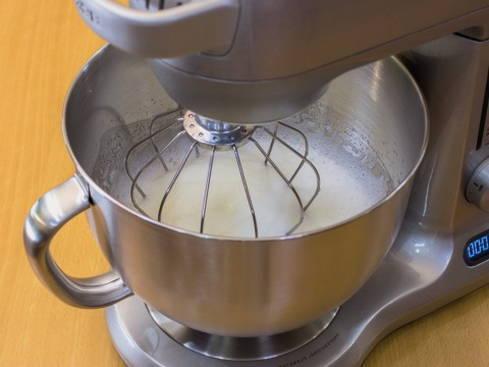
2Then gradually add granulated sugar with a teaspoon, continuing to beat the mixture.
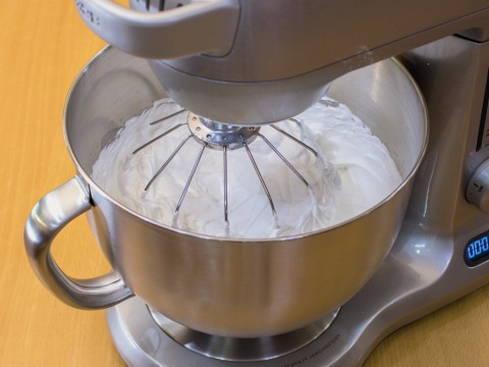
3Do not turn off the mixer until stiff peaks form and hold tightly to the attachment or whisk.
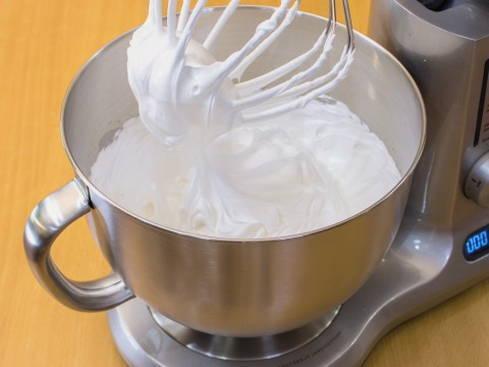
4After this, transfer the resulting sweet mixture into a pastry bag and form small rose-shaped meringues by squeezing the cream onto a parchment-lined baking sheet. You can also use a regular spoon. It's a good idea to additionally grease the parchment with vegetable oil to prevent the meringues from sticking to it when heated.
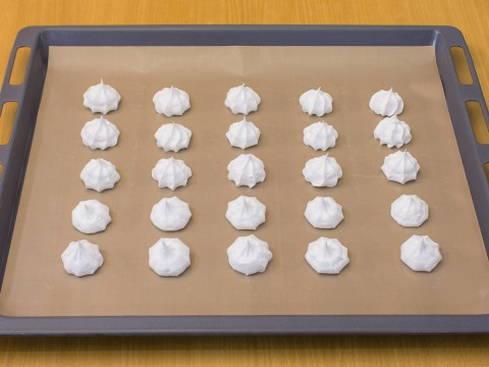
5Place the dish in a hot oven for 1 to 1.5 hours. Bake at 100 degrees Celsius until the meringues are thoroughly dried. When ready, remove the meringues from the oven, and after the dessert has cooled completely, it's ready to serve.
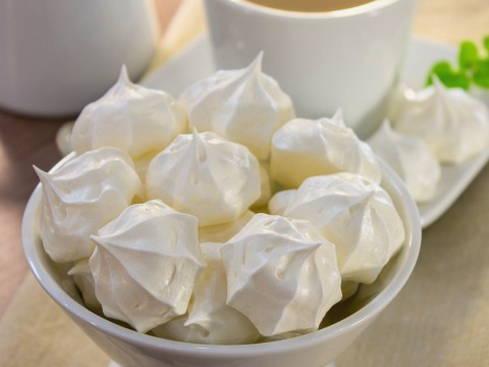
Meringues are quite easy to make and require minimal ingredients. The key is to whip the egg whites properly. To do this, follow the recipe and general guidelines for making the dessert. Place the meringues in a preheated oven to ensure they stay fluffy. Once ready, it's best to leave the meringues in the oven until they cool completely, turning off the heat. This will allow the cakes to be easily removed from the parchment paper without damaging them.