Can you defrost dough in the microwave?

Content
- 1 How to defrost dough properly?
- 2 Defrosting yeast and puff pastry
- 3 Fast and slow methods for defrosting dough
- 4 Can puff pastry be defrosted in the refrigerator?
- 5 VIDEO: How to properly defrost dough?
- 6 Features of choosing a test when purchasing
- 7 How to roll out puff pastry
- 8 Is it possible to refreeze yeast and unleavened dough?
- 9 Freezing at home
Is it possible to quickly defrost puff pastry or yeast dough in the microwave? Yes, but only under certain conditions! It's important to follow them precisely.
How to defrost dough properly?
The fastest and easiest way is microwave ovenCan you defrost dough in the microwave? Of course you can, but it's important to do it correctly. Almost every modern microwave has a defrost setting, and we use that. The main thing is to make sure the dough doesn't overheat. To do this, turn it every 1-2 minutes.
If you have an older microwave without a defrost function, simply set the power to 100 W.
You can use an oven instead of a microwave. Place the dough on a baking sheet and bake in a preheated oven at 70 degrees Celsius (165 degrees Fahrenheit) for about 2 minutes. It's important not to overcook the dough and remove it promptly, otherwise it will spoil.
If you don't want to risk defrosting the dough in the microwave or oven because you're afraid it will spoil, there are gentler methods.
- Place the dough in a plastic bag, tie it tightly, and submerge it in warm water. After about 2 hours, it will be ready to bake.
- If it's winter outside and the radiators are warm, place the unwrapped dough directly on the radiator. It will defrost completely within an hour or two.
- Not in a rush? Thaw the dough at room temperature, covered with a towel. This is the best option, but it will take about 3-5 hours.
- Water bath. Place a pan of water over the stove and place the container with the frozen dough on top. Be careful not to let the dough stick to the surface as it thaws.
Which method is best? It all depends on the type of dough. Also, don't forget about pre-heating: refrigerate it for half an hour before defrosting. This will preserve the nutrients.
Defrosting yeast and puff pastry
Yeast and puff pastry doughs are considered the most delicate and require special care when defrosting. You need to know all the nuances to defrost this type of dough correctly and avoid ruining your baked goods.
Yeast dough
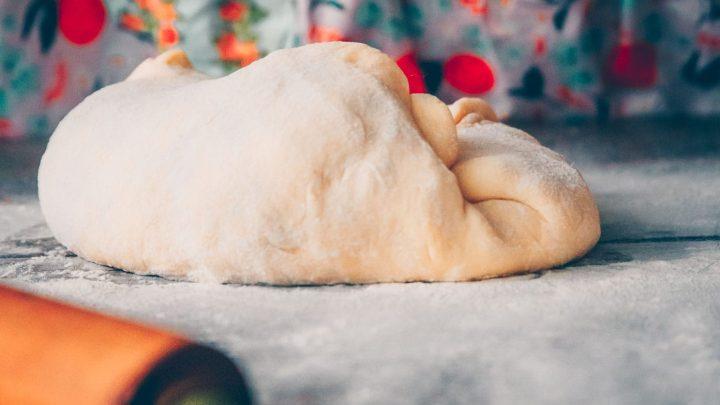
When defrosting yeast dough, the slightest mistake can result in the dough not rising during baking. To avoid this, pay attention to the following when defrosting yeast dough:
- When defrosting in water, wrap the dough in several plastic bags. Maintain the water temperature and don't allow it to cool.
- Place the dough in a container and place it next to a lit burner.
- We strongly advise against defrosting yeast dough in the microwave. Some believe microwave radiation destroys the yeast's beneficial properties. However, if this doesn't bother you, defrost yeast dough as quickly as possible, setting the timer for no more than 2 minutes.
You can't refreeze yeast dough after defrosting!
Puff pastry
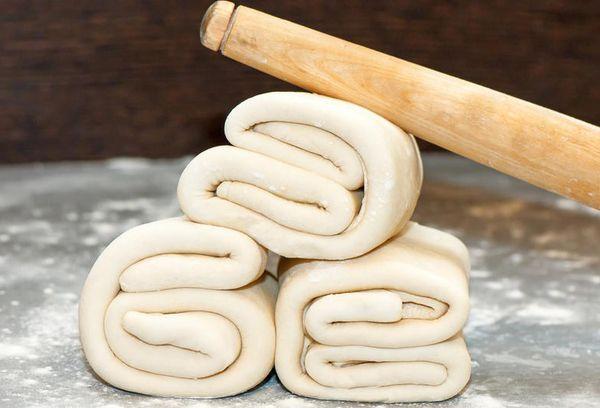
Puff pastry is no less demanding when it comes to properly defrosting than yeast dough. However, there are some nuances. For example, while yeast dough can be carefully defrosted in the microwave, puff pastry should never be defrosted. It's best to simply leave it in a warm place for a few hours. Below are some more helpful tips for defrosting puff pastry.
- Cover it with a towel. This will help prevent a hard crust from forming.
- If the dough is rolled, you can remove the top, already thawed layers and begin working with them. Just be careful, otherwise you'll damage the structure.
- When defrosting on a radiator, wrap the dough in a towel.
Puff pastry can be stored in the refrigerator for up to two days after defrosting. Use rapid defrosting methods only in extreme cases, when absolutely necessary. Rapid defrosting is only recommended for pizza dough or similar items. Otherwise, it's best to defrost the dough naturally at room temperature.
Conditions for defrosting Filo dough
The easiest and safest way to defrost this dough is in the refrigerator: move the dough from the freezer to a shelf away from it overnight, and in the morning you can safely prepare your favorite dishes.
You can defrost it at room temperature without opening the package, as the dough will begin to dry out and become weathered when exposed to air.
How to defrost dumpling dough
Thaw dumpling dough gradually: first in the refrigerator, then at room temperature. Place the dough on the refrigerator shelf, away from the freezer, and defrost for 6-12 hours. The time depends on the volume of the dough. Finally, defrost the dough at room temperature after 2-3 hours.
Following two defrosting stages allows you to restore the product to its original plasticity.
If you don't have time, you can defrost it in warm water, after wrapping it in plastic or two bags to keep it airtight.
How to quickly defrost pizza dough?
Dough for unleavened pies and pizza can be defrosted in a water bath.
How to quickly defrost pizza dough:
- For these purposes, you need to place the dough in a pan, having first placed several paper towels on the bottom.
- Place a lump of dough wrapped in plastic on top. Place the container in a pan of boiling water and set it on low heat.
- From time to time, it is necessary to turn the dough over so that the top layers that are in contact with the walls of the container do not overheat.
Fast and slow methods for defrosting dough
Before quickly defrosting dough, consider slow-cooking options. Although slow-cooking takes longer, it results in the freshest and most elastic dough possible.
Slow methods:
- In the refrigerator. Place the frozen dough, still in its packaging, on a shelf in the refrigerator, as far away from the freezer as possible. Defrosting will take 10-12 hours.
- At room temperature. Place the product on a silicone board, cover with a thin cloth, and leave at room temperature. The mixture will reach the desired temperature in approximately 5 hours.
- In warm water. Place the dough in a plastic bag and place it in a container of warm water. The ends of the bag should remain exposed; avoid allowing water to come into contact with the dough. Defrosting time depends on the volume of dough, but 2-3 hours is usually sufficient.
Among fast The most accessible and safe approaches are the following:
- In the microwave. If your microwave has an auto-defrost feature, use it. Otherwise, use 100 watts of power. Remove the dough from its packaging and place it on a suitable rack. Turn it regularly. Avoid allowing the dough to become hot. Microwave time varies from person to person, but should not exceed 20 minutes.
- On a radiator. The dough can also be defrosted on a radiator. Place it on a rack directly in the packaging. Avoiding the rack to save time is strictly prohibited. The process itself will take no more than 30-40 minutes.
It's worth noting that these approaches aren't universal. Some products require different approaches.
Can puff pastry be defrosted in the refrigerator?
It's best to defrost puff pastry in the refrigerator, as this method ensures more even defrosting. To do this, separate the sheets of pastry, place each sheet on a plate, cover with plastic wrap, and refrigerate for about 4 hours.
VIDEO: How to properly defrost dough?
Features of choosing a test when purchasing
- The packaging must be airtight.
- The freezing method should be indicated on the packaging.
- Look for the number of layers on the packaging. The more layers, the tastier the baked goods will be. For yeast dough, this figure should ideally be 35 layers, and for unleavened dough, 225.
- Pay attention to expiration dates.
- Study the composition and make sure the product is natural.
- Price. Even the cheapest frozen dough can't boast quality or good taste. Choose dough in the mid-price range.
- Avoid buying dough that contains foreign particles. Also, avoid dough that sticks to the packaging.
How to roll out puff pastry
- All movements are carried out in only one direction and with a uniform load on the rolling pin.
Only then will the layer turn out smooth and complete. - First, softened butter or margarine is placed on a sheet of unleavened dough, the edges are folded like an envelope and carefully rolled out into an equilateral rectangle.
- The next step is to connect the opposite sides of the layer in the center, pinch, fold in half with the seam inward and put it in a cool place for half an hour.
- Then the function is repeated again and the semi-finished product is sent back into the cold.
- At the 3rd step, the dough is rolled out into an even layer, folded into four and left in the refrigerator once again for half an hour.
Only after all these procedures can you begin to form the baked goods and fill them with filling.
Tip: Before kneading the puff pastry, remove all ingredients from the refrigerator and let them sit on the kitchen counter for 1 hour. This will allow them to reach room temperature, resulting in a soft, elastic, and tender dough.
Is it possible to refreeze yeast and unleavened dough?
The technology does not allow for refreezing the product. It is believed that this reduces the quality of the confectionery.
Sometimes housewives refreeze dumpling dough, but they advise against freezing yeast dough. Most of the yeast dies, and the dough doesn't rise well.
It's best to use all the dough from the freezer at once, and freeze the finished products if needed. You can bake pies, buns, or pre-made items (pizza bases, crusts, tartlets). These can then be reheated in the microwave or oven.
Freezing at home
It is always important to remember that the quality of homemade dough and products made from it will compare favorably with the quality of store-bought frozen products.
You can make frozen dough yourself at home. It will keep in the freezer for as long as needed, preserving all its nutritional properties. After defrosting, it will look as fresh as if it were just made. You can freeze not only the dough but also the baked goods made from it: pies, buns, and pizza. These products can be stored for several months. Freezing the finished product correctly is very simple. Simply divide it into pieces and wrap them in foil. Wrapping is essential to prevent moisture from entering. Keep the freezer temperature very low for two weeks, then increase it.
It's important to choose flour carefully. The quality of frozen baked goods depends largely on it. Pay attention to its gluten content, which should be around 30%. Finished pieces should be properly spaced in the freezer. For example, yeast dough will expand and expand at first, so the portions should be placed close together. The maximum shelf life of finished products is four months. Refreezing is not recommended.
The product can also be frozen in plastic bags, after sprinkling them with flour and releasing the air from them.
Sources:
- https://mikrovolnovochki.ru/poleznye-sovety/kak-razmorozit-testo-v-mikrovolnovoy-pechi/
- https://obag-store.ru/eda/kak-razmorozit-testo-v-mikrovolnovke.html
- https://heaclub.ru/kak-bystro-i-pravilno-razmorozit-testo
- https://www.dompovarov.ru/sovety/kak-bystro-razmorozit-testo/
- https://8martablg.ru/kak-razmorozit-sloenoe-testo-v-mikrovolnovke/
- https://uborka-v-dome.ru/kulinariya/kak-byistro-razmorozit-testo.html
- https://ProdHelp.ru/produkty/kak-razmorozit-testo-drozhzhevoe.html