Ant Hill Recipe for Beginner Cooks

Content
If you want to make a classic Ant Hill cake, you'll find the recipe, photos, and detailed instructions here. Such a cake It was very popular among housewives during the Soviet era. Our mothers and grandmothers prepared it for the most special occasions, and it was rightfully considered the highlight of the holiday table. Surely, every home has time-tested recipes for this unusual delicacy, and many remember its unforgettable taste from childhood.
There are countless variations of this cake, from the simplest to the most complex and intricate. A housewife's boundless imagination allows her to turn this anthill into a true work of culinary art. For example, there's a well-known recipe for making it using corn sticks mixed with a cream of boiled condensed milk and butter, or with a cream of the same butter and honey, or even with a cream of melted toffee. And some particularly creative pastry chefs have even offered a recipe for this cake made with popcorn!
Some made it from a delicate soufflé made from soft cottage cheese or whipped cream with cherries. Others used mascarpone cream cheese. But that's more like a "Count's Ruins" cake—an entirely different dish.
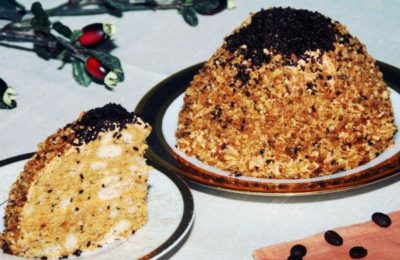
The classic cake (pictured) got its name from its resemblance to an anthill. It also has a second name: anthill. It's also believed that the anthill is so named because the poppy seeds it's decorated with resemble tiny ants.
This incredibly delicious dessert is so simple that even the most inexperienced cook can handle it. Children can even help – trust them to prepare the dough without worrying about them messing it up. The secret to making a classic anthill (photo) is to mince the dough and fry it in oil or bake it in the oven until it's beautifully golden. The finished cake is decorated with poppy seeds, fresh fruit, powdered sugar, cinnamon, and meringue.
The origin of the anthill cake
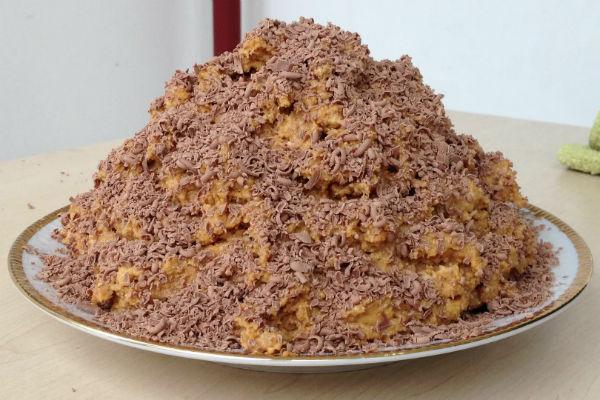
The name of this dessert is self-explanatory. But where did it come from? In fact, the origins of the anthill (pictured) aren't entirely clear. We won't find any exact dates or the names of the "inventors" of this dish. After all, there are dozens of recipes for this cake. Some make it from store-bought cookies mixed with boiled condensed milk. Connoisseurs of culinary delights drizzle it with chocolate icing and decorate it with coconut flakes and wafer crumbs.
According to one theory, the ancestor of this dessert was the Eastern sweet chak-chak. Another hypothesis suggests that the design for this dessert was inspired by the mounds of glory erected in honor of fallen soldiers.
Another theory holds that the anthill recipe derives from the "meat grinder cake," popular in the United States and originating in Pennsylvania among Dutch-German colonists. This dessert was a popular dish at fairs, carnivals, festivals, and sporting events.
This cake is most likely a true folk creation. Otherwise, it's hard to explain why every housewife has her own recipe, time-tested and honed by personal experience. "Anthill" has been and remains a favorite delicacy for generations.
Anthill (photo) is also known in the cuisines of other cultures. In Austria, it's called "strauben," in Slovenia, "flanzati," and in Finland, "tippaleipä." In India, this cake is called "jalebi," but it has a more chewy consistency and is sprinkled with sugar. In Iran, anthill is known as "zulbiya."
How to make an anthill
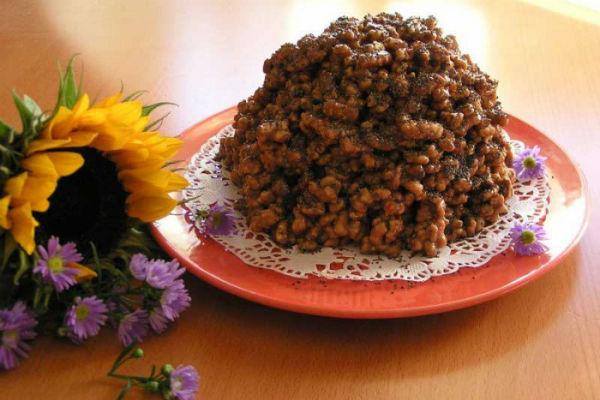
The cream for a traditional anthill cake consists of boiled condensed milk and butter. You can boil the condensed milk yourself, but it's a slow process, and the can risks exploding during the cooking process, leaving you with nothing but cleaning up to do. Therefore, it's more convenient to buy ready-made boiled condensed milk from the store.
So, we will need:
for the test:
- 250 grams of butter (you can use baking margarine);
- Half a glass of sugar;
- A glass of sour cream;
- 750 grams of premium wheat flour.
for the cream:
- 100 grams of softened butter;
- 1 can of boiled condensed milk.
Cooking steps
- Grate butter or margarine on a fine grater and place in a deep bowl.
- Add sugar and sour cream.
- Gradually adding flour, knead the dough with your hands as much as you can. Then place it on a floured surface and knead until it no longer sticks to your hands. You can add more flour as needed.
- Roll the finished dough into a sausage shape and cut it into small pieces so that they pass through the meat grinder more easily.
- We pass the pieces through a meat grinder and place the resulting “braids” on a baking sheet.
- Bake the braids at 160-180 degrees Celsius for 20-30 minutes. Keep a close eye on them—they bake quickly, and you might miss the moment when they start to burn. Remove them from the oven as soon as they're golden brown.
- Place the baked dough in a wide, deep bowl and begin mashing it into small pieces. It's easiest to do this with a potato masher or rolling pin.
- Prepare the cream by mixing softened butter and boiled condensed milk.
- Add the cream to the crumbs and mix well with a spoon.
- Let's create our masterpiece. Using your hands, spread the crumble and cream mixture onto a large plate, pressing it down so it doesn't fall apart, and shape it into a mound of ants. Sprinkle poppy seeds on top for a more realistic look.
- Place in the refrigerator and let it soak for 6-8 hours.
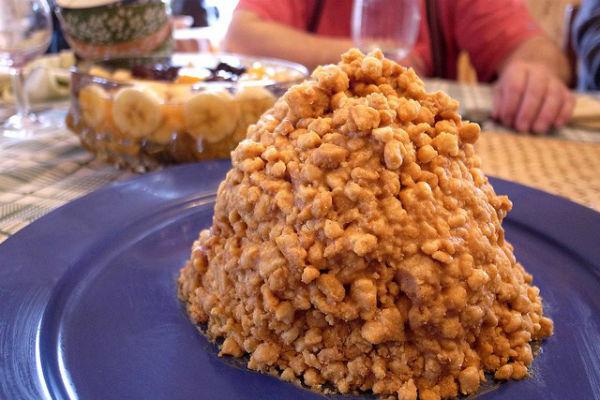
After the specified time, the classic "Anthill" cake with condensed milk (photo) is ready to serve. Guests are sure to appreciate this amazing creation, and the hostess will receive many well-deserved compliments on her skill. Enjoy!