What can replace rice flour?

Content
Rice flour is an ingredient found in many modern recipes. Beginning cooks often wonder what they can substitute for rice flour in a particular dish, and whether it can be substituted for wheat flour at all.
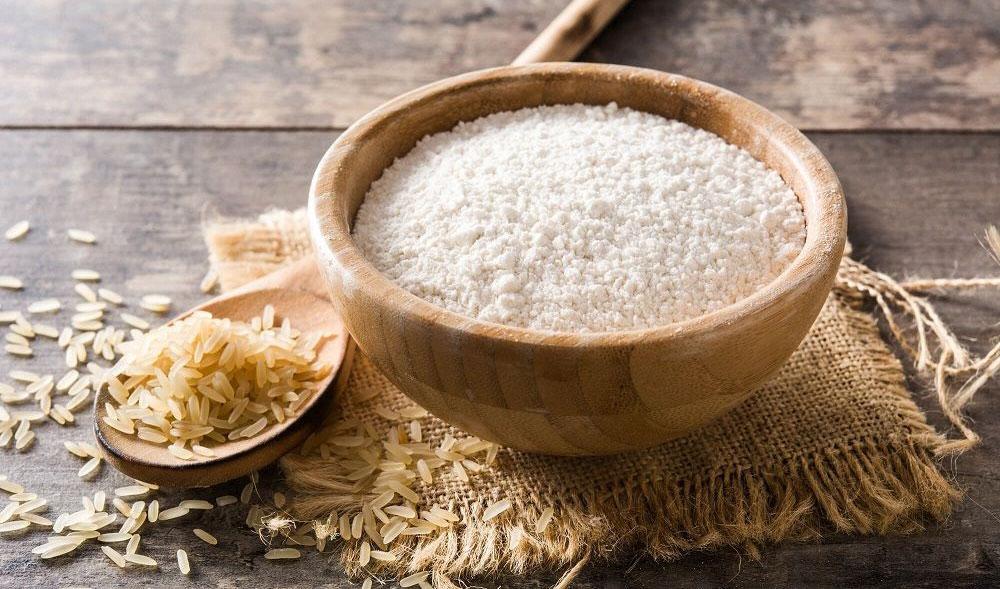
Rice flour and its characteristics
Depending on the characteristics of the raw materials, a distinction is made between:
- white flour (from polished white rice grains);
- brown (from brown rice varieties).
To understand why this ingredient has become so popular in recent years, we suggest taking a closer look at how rice flour differs from wheat flour (obtained by grinding wheat grains).
Most people prefer to use rice flour in baking and various other recipes due to the following properties of the product:
- the absence of gluten, which makes rice flour an ideal product for healthy recipes, as well as dishes for people with gluten intolerance;
- starch content is about 80%, which ensures the elasticity of the dough and the formation of a crispy crust;
- absence of foreign taste and aroma;
- high content of beneficial vitamins and microelements;
- low calorie content (260 kcal per 100 g, compared to 380 kcal in wheat), which makes the product ideal for people losing weight on a diet;
- hypoallergenic.
Rice flour has proven itself to be excellent in casseroles, cheesecakes, pancakes, fritters, and also in the preparation of various desserts, including the famous Japanese cakes Mochi (Mote, Mochi) and Dango, and the Korean dish Tteokbokki.
Can rice flour be substituted with wheat flour?
When considering whether rice flour can be substituted for regular flour, it's important to consider that the product differs significantly in at least two important respects:
- Gluten free makes it almost impossible to prepare yeast dough using only rice flour (rice dough turns out heavy and tough, while wheat dough turns out loose and fluffy).
- High hygroscopicity (ability to absorb more moisture) sometimes results in rice flour-based dishes becoming dry.
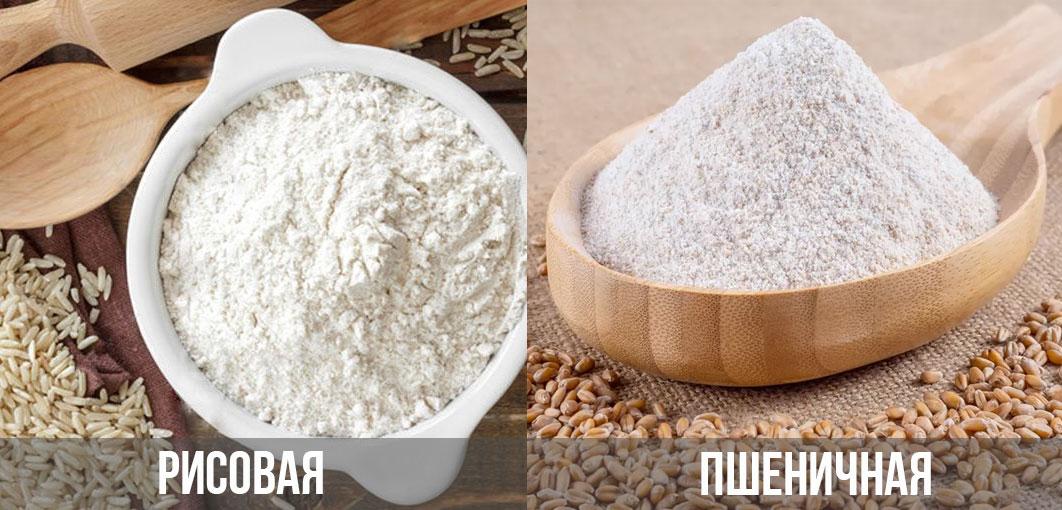
It is also worth understanding that there will be a difference in:
- the texture of the dough itself (the dough will be more porous);
- consistency (the dough will be softer and more fluid);
- the taste of the dish (wheat flour has a characteristic flavor that not everyone likes in desserts);
- calorie content (this option is definitely not suitable for a weight loss period).
Alternative types of flour
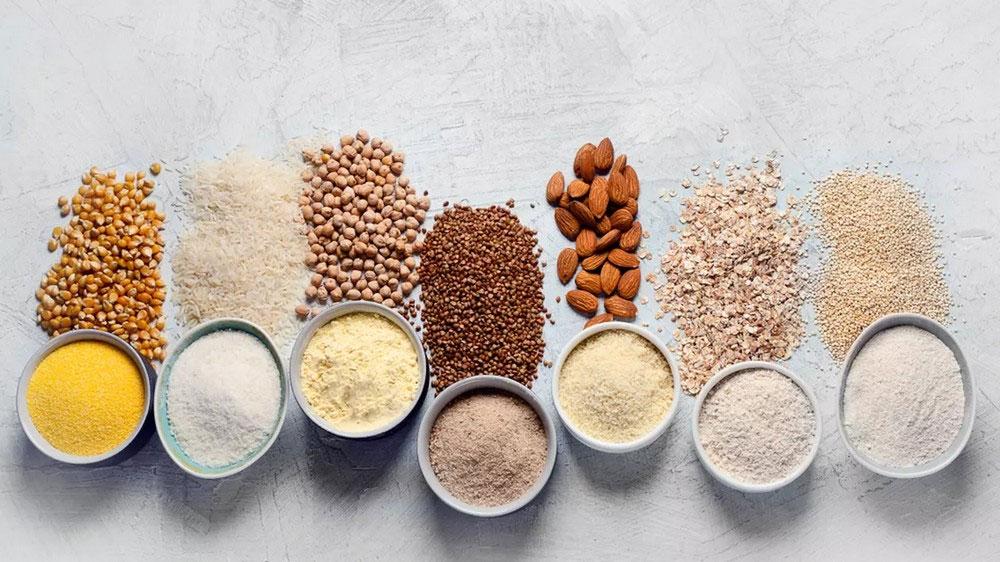
To understand the differences between the most popular types of flour, let's create a comparison table:
| Flour | GI | Caloric content | Gluten | Squirrels | Fats | Carbohydrates |
| Rice | 95 | 260 kcal | — | 6 | 1.5 | 85 |
| Wheat | 45 | 302-380 kcal | + | 11-13 | 1.4-1.5 | 58-70 |
| Rye | 45 | 295 kcal | + | 12 | 2 | 35 |
| Oatmeal | 45 | 375 kcal | +/- | 12 | 6 | 60 |
| Barley | 25 | 300 kcal | + | 9 | 1 | 60 |
| Buckwheat | 40 | 350 kcal | — | 13.8 | 1 | 72 |
| Linen | 35 | 272 kcal | — | 36 | 10 | 5 |
| Pea | 35 | 296 kcal | — | 1.9 | 20 | 65 |
| Corn | 70 | 325 kcal | — | 7 | 2 | 76 |
| Coconut | 35 | 456 kcal | — | 20 | 15 | 60 |
| Almond | 25 | 590 kcal | — | 53 | 21 | 6 |
| Amaranth | 25 | 374 kcal | — | 4 | 20 | 65 |
| Chickpea | 35 | 337 kcal | — | 2.9 | 10.9 | 66 |
| Spelt | 45 | 361 kcal | + (little) | 2.4 | 17 | 67.9 |
| Sunflower | 35 | 494 kcal | — | 29.6 | 39.1 | 18.4 |
| Soy | 25 | 298 kcal | — | 8 | 49 | 22 |
| Spelt | 45 | 318 kcal | + | 1.5 | 12.9 | 63.3 |
For more information on the differences between each type of flour and where it is used, watch this video:
Flour for diabetics
For more detailed information on how to replace rice flour in diabetic dishes, watch this video:
Can rice flour be substituted in mochi?
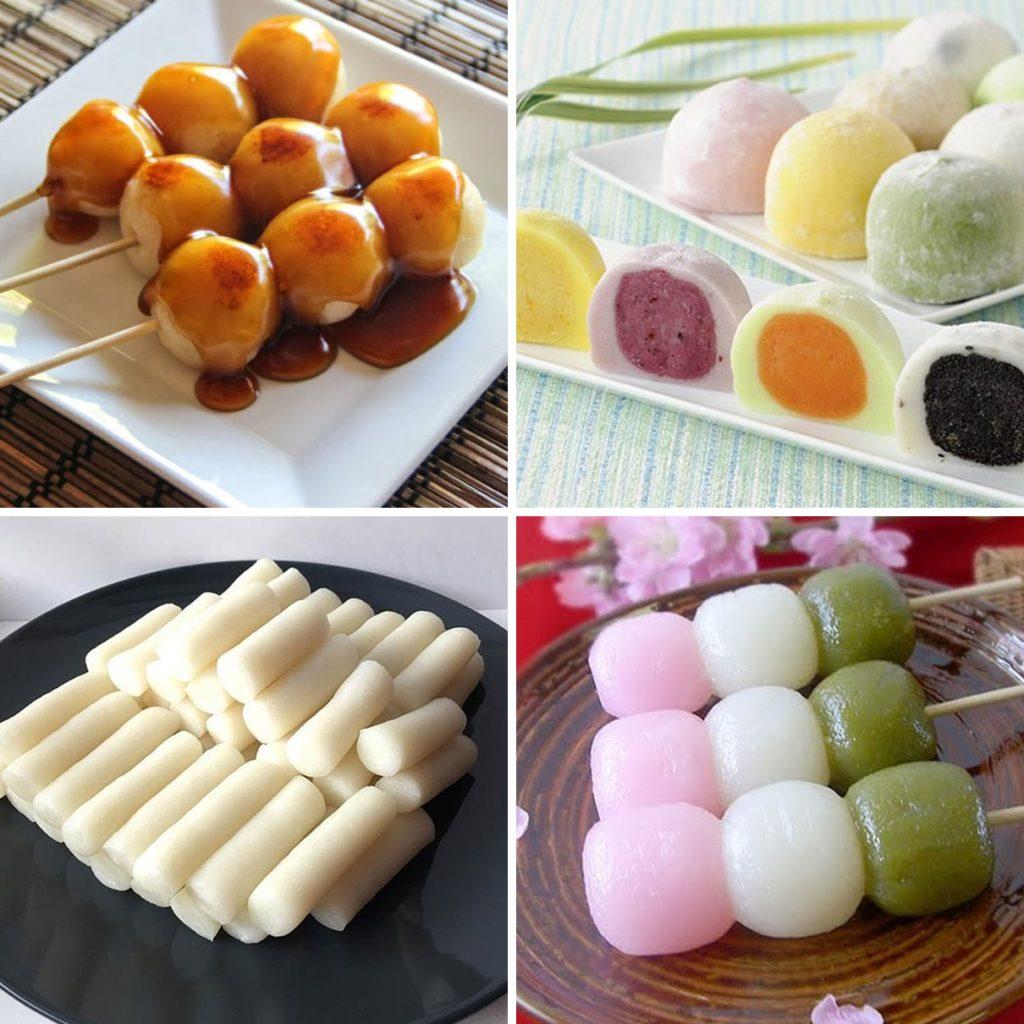
Rice Flour Recipe (Flour for Mochi, Dango, Tteokbokki)
But don't worry, rice flour can be made very easily at home. Watch this video tutorial to learn how to quickly make flour for mochi or dango: