Is it possible to whip egg whites into a thick foam without a mixer or blender?

Content
Fluffy egg white cream is used in many dessert and baked goods recipes. Ideally, a mixer should be used to make it, but one isn't always available. To whip egg whites without a mixer, you can use a whisk, fork, or immersion blender. This will produce a fluffy, stable foam, but the process will take longer.
How to get thick egg white foam
You can make thick egg white foam either mechanically or manually. To do this, you'll need the right utensils, eggs of the recommended freshness and temperature, and the proper technique for separating the whites from the yolks. Below, we'll explore the secrets of making perfect egg white foam in more detail.
Fresh ingredients
To create a strong egg white foam, you need to use fresh eggs, due to their high albumin content. This component is the basis for a fluffy and stable foam. Whipping these egg whites will take a little longer, but the result will be a fluffier cream that will hold its shape for a long time.
I recommend using eggs that have been stored for no more than two weeks. The ideal age for beating chicken eggs is between 5 hours and 1 week.
Not a drop of yolk!
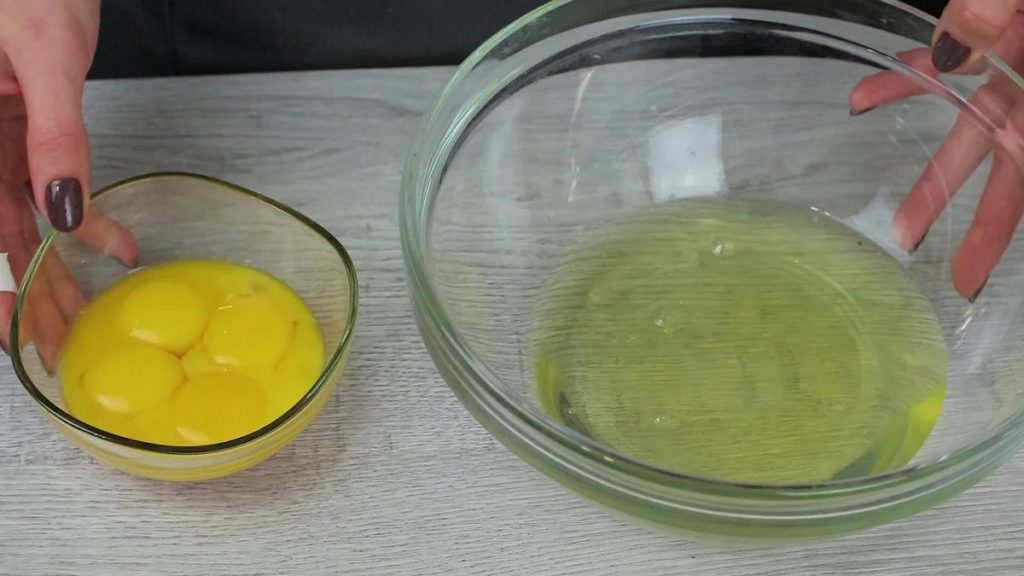
If you want a stable, fluffy foam, be careful not to let the yolk fall into the mixing bowl when separating the whites. Even a drop of this component can ruin the cream.
In cooking, there are 3 ways to separate the yolk.
- Carefully crack the shell in the center with a knife or fork and pour the contents into a clean bowl. Then, scoop out the yolk with your hand or a tablespoon and transfer it to another container, being careful to keep it intact.
- Make a small hole in the top of the shell with the tip of a knife. Then pour the egg whites through the hole into a bowl. If this is difficult, I recommend widening the hole or making another one on the opposite side.
- Divide the shell into two equal halves, allowing some of the white to end up in the bowl. Make sure the yolk is in one of the halves. Then, carefully pour it from one half to the other. Eventually, all the white should end up in the bowl.
Regardless of the method used, I recommend preparing three containers. You'll crack the egg into the first, transfer the yolk into the second, and transfer the white into the third. This will allow you to preserve the whites if one egg is damaged or spoiled.
The right dishes
To create the perfect egg white foam, it's important to choose the right whisking utensil. The material it's made from directly impacts the quality of the finished product.
Before use, the bowl should be thoroughly washed with warm water and salt, then degreased by wiping with a cloth soaked in an alcohol solution, lemon juice or table vinegar, and wiped dry with a paper towel.
When making egg white cream, I recommend using a copper bowl, which evenly distributes the temperature of the ingredients during whipping. This will result in a fluffier and more stable foam. Metal, glass, and ceramic bowls are also suitable.
I strongly advise against using plastic or wooden bowls, as they attract grease.
Plastic utensils contain a film that prevents the formation of air foam.
You also cannot beat egg whites in an aluminum container, as they will turn grayish due to a reaction with this material.
As for the shape of the container, I recommend using a round container with high sides to prevent the ingredients from settling in the corners.
Temperature
The whites separate more easily from the yolk when cold. However, you won't be able to whip a thick, fluffy foam from such a product, especially by hand. Therefore, I recommend using eggs at room temperature.
To do this, take them out of the refrigerator in advance (2–5 hours).
You can also separate the whites using a cold product and leave the resulting mass in the kitchen for a while to warm it up.
An acceptable option is to warm the eggs in not too hot water for 5–7 minutes.
Is it possible to beat eggs without a mixer?
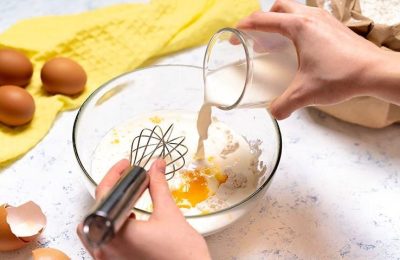
If you don't have a mixer, you can use whatever you have available to whip the egg whites: a fork, a whisk, or a blender with a blade attachment. The advantage of making the cream this way is that you'll be able to fine-tune the peaks to achieve the desired texture.
If you have a blender
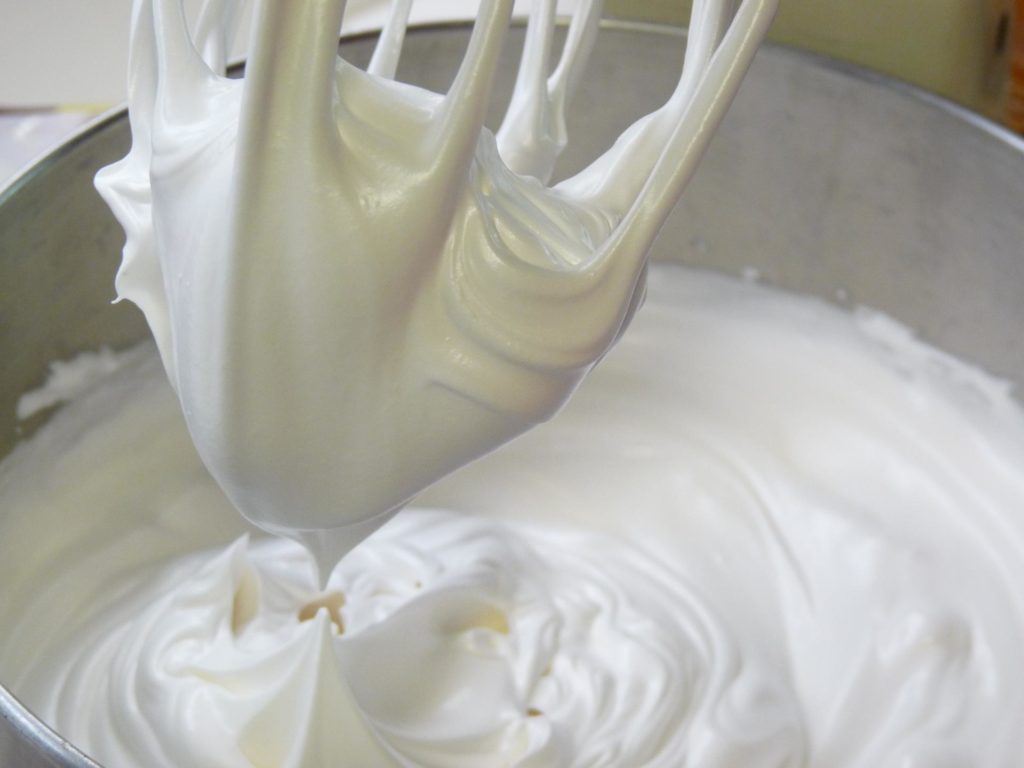
A blender will help you whip the egg whites to stiff peaks, but it shouldn't have a blade attachment, as this will cut the egg whites instead of whipping them. In this case, you'll need an immersion blender, which will help turn the whites into a fluffy, thick foam. This will require more time than whipping with a mixer.
In the video below, you can clearly see the process of making protein cream using a blender.
If there is a whisk
To beat eggs and sugar without a mixer, I recommend using a stainless steel whisk with thin wires. Make vigorous circular movements to incorporate air into the mixture.
Don't leave the egg whites if your hand is tired, as the foam may settle. In this case, I recommend switching hands.
If you are whisking the egg whites by hand without a blender, you can use the whisking technique by vigorously rotating the whisk between your palms.
This video shows the step-by-step process.
If there is only a fork
You can beat the egg whites without a whisk, using a regular fork, but this will increase the cooking time several times. The movements should be as vigorous as possible.
To achieve a firm foam, I recommend using not one, but two forks, with the prongs facing each other. This will significantly speed up the process.
In this video you can clearly see the preparation stages.
How to make meringue without a mixer
To make meringue without a mixer, follow these instructions.
- Separate the whites from the yolks and begin whisking. If using a blender, start with the lowest speed, then increase the speed to medium once the mixture begins to lighten. At this point, you can add lemon juice or salt, but do so carefully, pouring it in or sliding it down the side of the bowl.
- After a while, soft peaks should form, but they won't hold their shape yet. At this point, gradually add sugar while whisking.
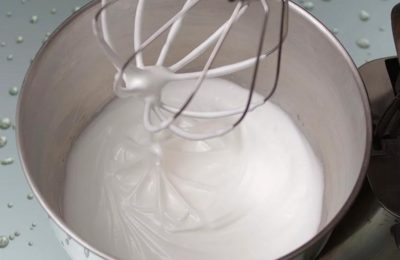
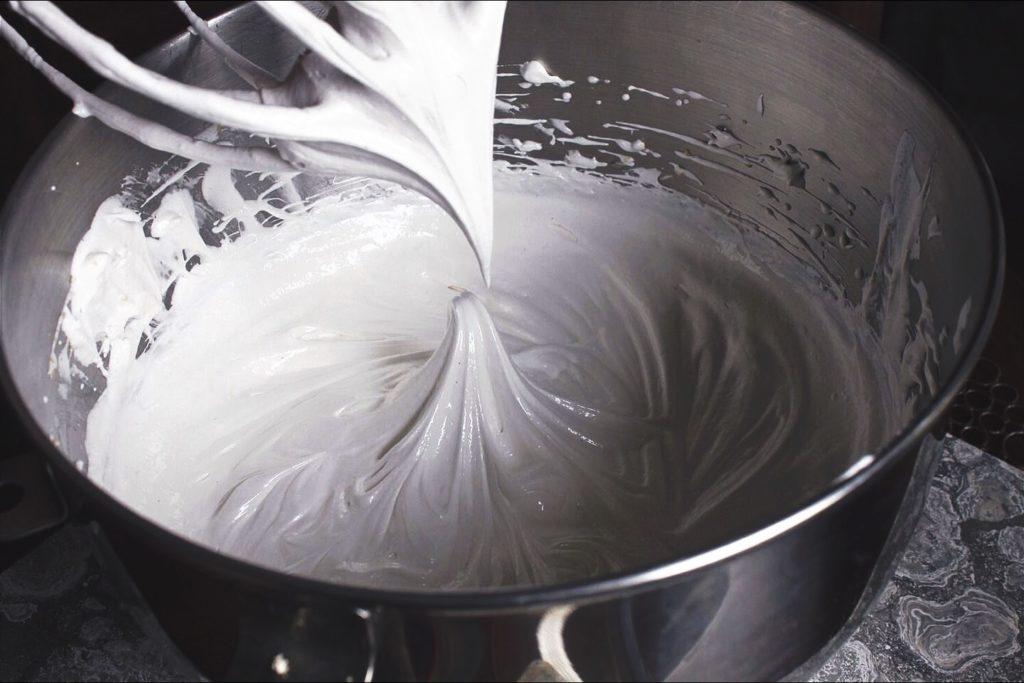
- The thick mixture will then begin to glisten. If, after lifting the tool, the foam stretches out and forms a pointed peak, the meringue is ready.
If the cream becomes grainy and excessively dry, it's likely over-beaten. In this case, I recommend adding fresh egg whites and repeating the process until the desired consistency is achieved.
How to make protein cream without a mixer
To make egg white cream at home without a mixer, you can use a blender (without the blades). If you only have a whisk or a fork, it will take significantly more time and effort.
I recommend whisking the egg whites in a single direction with vigorous, wide-amplitude movements to ensure the mixture is saturated with air without creating unwanted bubbles. Don't pause the process for even a minute, otherwise the foam that forms will settle.
To achieve maximum airiness, I recommend adding a couple of drops of lemon juice or a small pinch of salt to the cream.
To achieve a fluffy and stable foam from egg whites, you can use household tools. However, you'll need time and patience. If you follow all the preparation guidelines and choose the right utensils and ingredients, you'll be able to create the perfect egg white foam.