Why does a sponge cake rise in the oven?

Content
Beginning pastry chefs often encounter the problem of uneven rising of sponge cake batter, where the cake rises like a dome and cracks. Today, we'll take a closer look at why sponge cake rises like a mound when baked in the oven, and we'll also learn how to bake a beautiful, even sponge cake at home.
What's wrong with a "humpbacked" biscuit?
If the sponge cake rises unevenly during baking, forming a high peak exactly in the center of the pan or shifting to the side, the following problems may occur:
- When rising too quickly, the dough cracks in the middle and often falls (sinks), which disrupts the structure of the cake inside.
- A cake that is too tall will not bake well in the oven and the middle may remain uncooked.
- Even if the highly risen cake is baked through, its structure will be too porous and crumbly, which is not always good for the cake.
- An unevenly baked sponge cake will need to be trimmed, so the ingredients listed in the recipe will yield a smaller volume of finished product, and the sponge cake will then need to be divided into layers.
- Too much difference between the height of the baking sides and the central peak will prevent you from getting a tall, beautiful and even sponge cake.
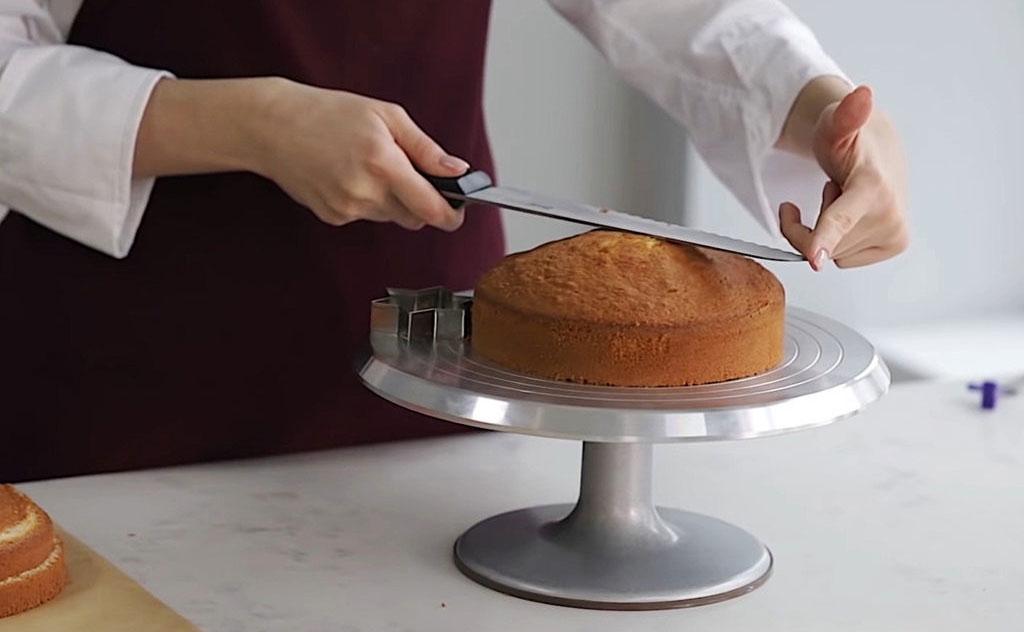
If you've encountered this problem and want to learn how to bake even, beautiful sponge cakes, we recommend analyzing your dough recipe and baking process to understand why your cake is rising and what you can do to ensure it maintains a smooth, even shape after baking and maintains the desired height.
Why does a sponge cake rise in a heap (main reasons)
Experienced pastry chefs identify several main reasons why the center of a sponge cake rises like a dome.
Reason #1 – Incorrect baking temperature
The problem may be either too high a temperature (more than 180℃) or uneven heating of the oven space.
If the temperature is too high, the processes in the dough that are responsible for its rise and the creation of the correct porous structure will proceed too intensively, which will lead to the formation of an unwanted dome.
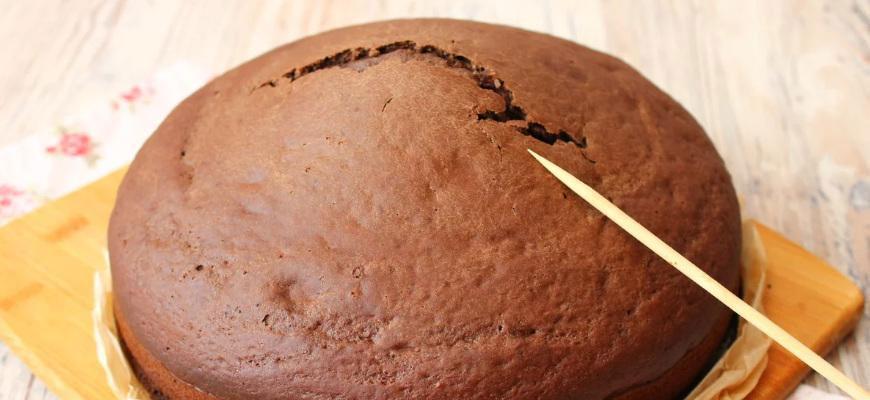
If the heating is uneven, the picture may be even worse: on one side the sponge cake will rise too high, while on the other side a low edge with a denser texture of the cake may form.
Reason #2 – the presence of soda or baking powder in the recipe
If you've always made sponge cakes with water, baking powder, or ready-made baking powder, we recommend checking out other recipes, including many that don't require risers. These recipes still produce soft, tender, and fluffy cakes, but they have a denser texture.
You can prepare the following without soda:
- classic sponge cake;
- French sponge cake;
- Genoise sponge cake and many other options.
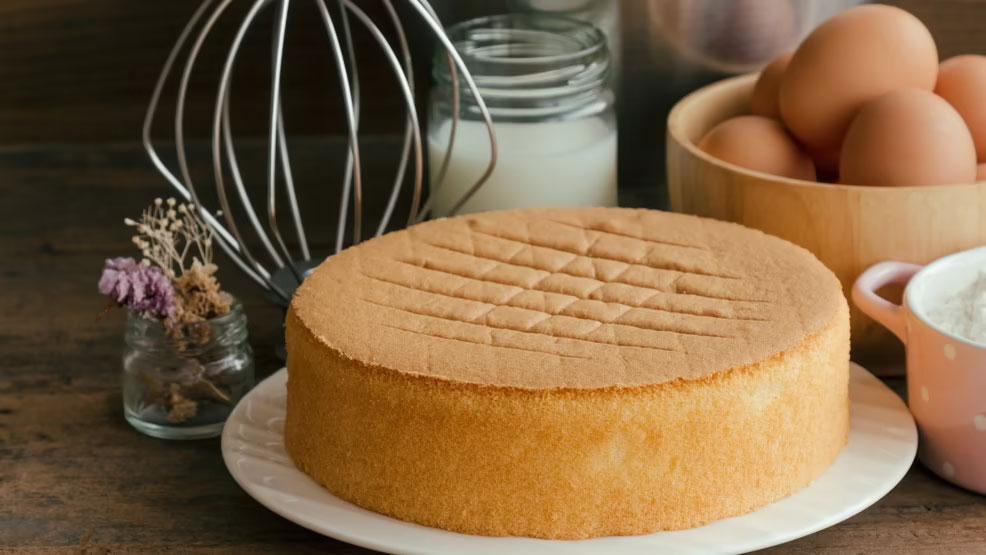
Reason #3 – Over-proofed dough
If the dough sits in a pan or bowl, its top layer will become weathered, causing the biscuit to rise poorly and unevenly.
To follow this important rule, you must:
- Prepare the baking pan before working with the dough;
- Turn on the oven in advance so that by the time the dough is ready it has already reached the required temperature.
Reason #4 – Incorrect baking pan
Our grandmothers' rule of greasing the sides of the pan with butter is no longer relevant. To achieve the perfect sponge cake, you simply need to choose the right pan.
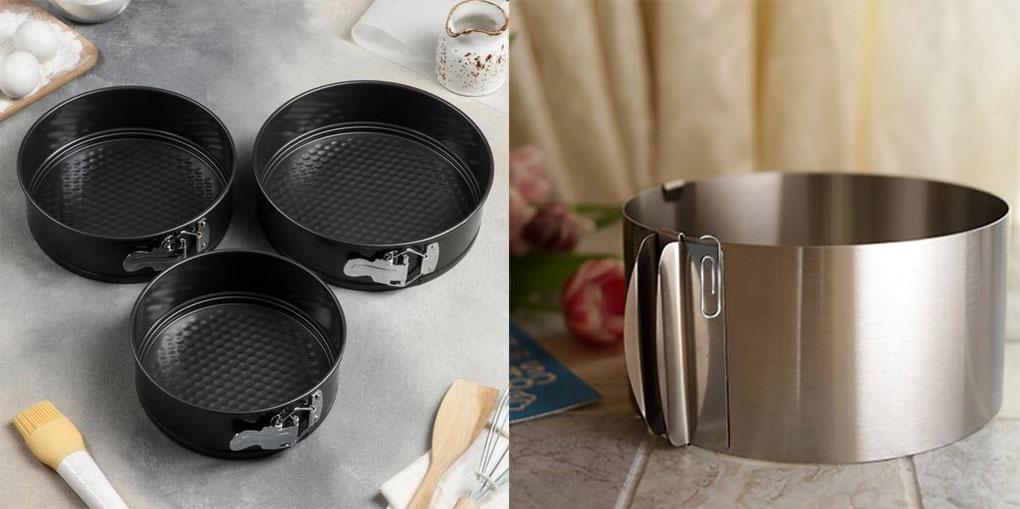
Professionals recommend giving preference to collapsible structures:
- The springform pan is not greased; the bottom is simply lined with silicone-coated parchment paper. This lack of grease allows the dough to cling easily to the sides, forming a tall, even sponge cake. The finished sponge cake is easily removed by running a knife along the sides of the springform pan.
- A metal baking ring with a choice of baking diameters. Baking sponge cakes in it is just as easy as in a springform pan, except each time the ring's bottom is made of foil and lined with parchment paper. Otherwise, the process is very similar to using a springform pan.
Reason #5 – The dough is too thick
Recipes often list ingredients with egg quantities specified in units. However, you can buy eggs of varying sizes at the store, and four small eggs will roughly equal the volume of three large ones. A lack of liquid in the recipe is what causes the incorrect consistency, as the amount of flour typically remains constant.
That's why professional baking recipes specify the amount of egg whites and yolks in sponge cake batter in grams, not pieces. Only by accurately weighing each ingredient can you bake a truly perfect sponge cake, free of peaks and valleys.
Advice from confectioners
Professionals often resort to these tricks to achieve the perfect result:
- Using an additional thermometer in the oven, which will allow you to focus on the actual temperature inside, rather than readings on the stovetop, which are often not accurate enough;
- baking on basic mode (without convection);
- changing the temperature during the biscuit baking process (start baking at a higher temperature, and then reduce it by 10-15℃);
- making a "lid" for the pan from foil, which simply will not allow the dough to rise higher than necessary.