Why do eclairs fall after baking and what to do about it?

Content
Our selection of homemade recipes offers plenty of ideas for making delicious éclairs and profiteroles, but not everyone succeeds in baking beautiful, airy cakes on the first try. In this article, we'll discuss why éclairs collapse after baking and what to do if this happens.
Choux pastry
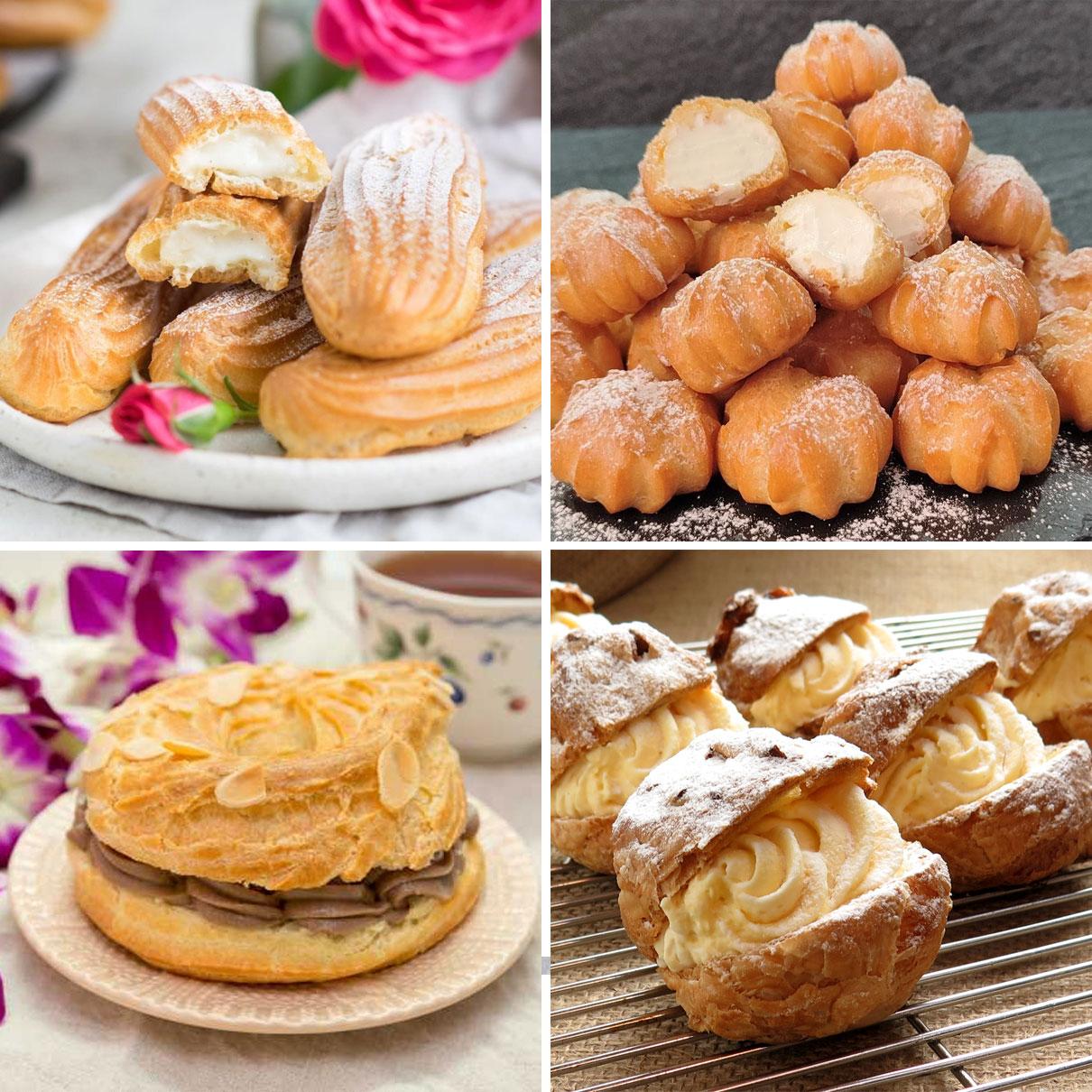
The bakery offers a wide range of pastries made with different types of choux pastry. These include:
- eclairs – desserts in the form of a tube with a cream filling (originally from France);
- profiteroles – balls, up to 4 cm in diameter, which can be filled with either sweet cream or various meat or mushroom fillings;
- shu – small round cakes with cream, with a characteristically cut off top;
- Paris-Brest – fluffy rings made from simple choux pastry;
- Religious – look similar to profiteroles, but are much larger in size.
Since the base for all of these desserts is choux pastry baked in the oven, the problems that arise during the preparation stage will be approximately the same.
Cooking instructions
To understand why eclairs fall so much after baking, let's look at the important nuances of each step:
Preparing the dough
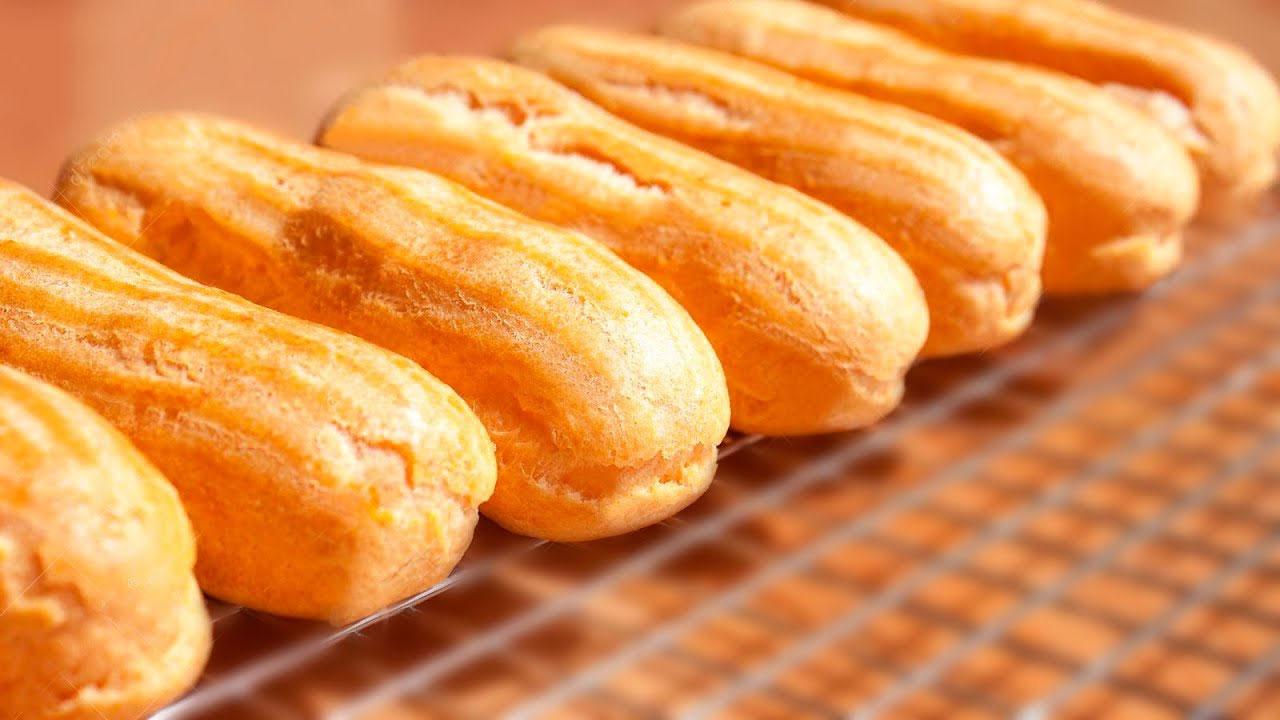
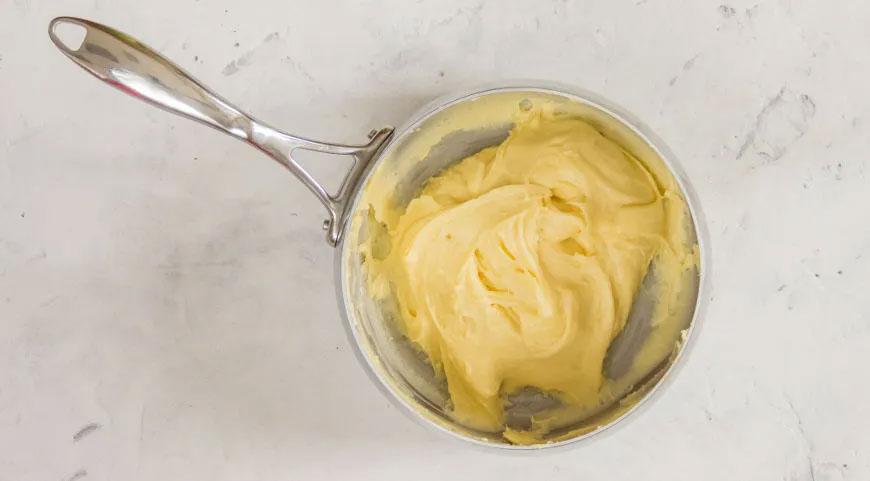
To prevent the dough from sinking in the oven or after baking, it must be:
- the right consistency (not too runny, but not too thick);
- smooth and elastic;
- containing a sufficient amount of moisture.
This is why it's important to use high-gluten flour. A common mistake among beginning pastry chefs is skimping on flour. But with choux pastry, this can be a critical mistake, as low-gluten flour will create a runny consistency after cooking. After piping, this dough will become runny, will not rise properly, and the proper cavity inside the pastry may not form at all.
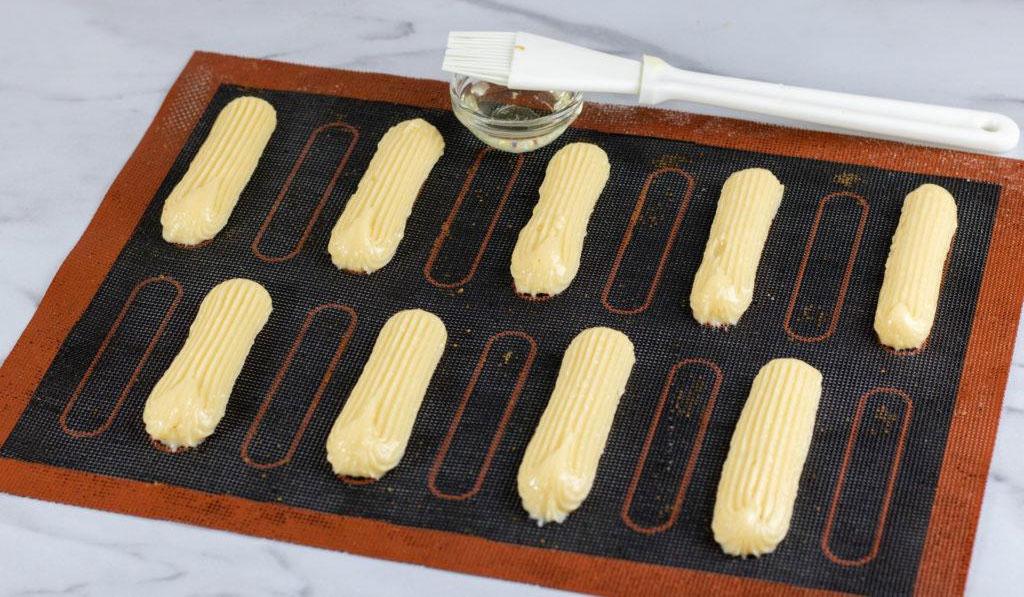
Also, don't leave the éclairs on the broiler for too long before baking. Exposure to air will cause the dough to lose moisture, which can ultimately affect the rising process.
Baking process
Cooking takes 30-40 minutes (depending on the size of the cake placed on the baking sheet):
- the choux pastry must be placed in an oven preheated to 200℃;
- The first 10 minutes you need to bake the cakes at 200℃;
- then the temperature is reduced to 180℃ and baked for another 20-30 minutes.
Why is this so? It's simple: the first 10 minutes allow a dense crust to form, trapping the steam that will form inside the éclair. The remaining 20-30 minutes are precisely what it takes for the steam to build up inside in the right amount, lifting the top layer of dough, creating a beautiful "cap" and a perfect cavity inside the éclair.
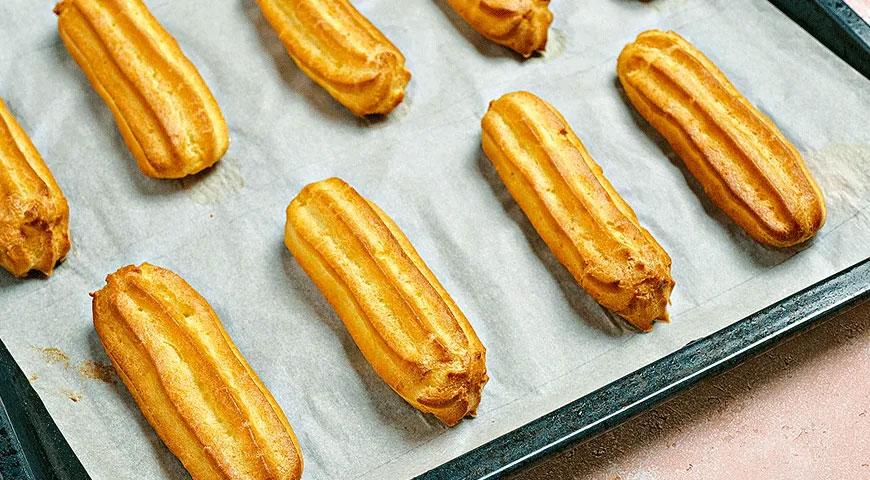
If the technological process is disrupted or the oven for some reason produces the "wrong temperature," the following consequences are possible:
- the dough will not rise at all, the cavity will not form and it will feel like the eclairs are raw inside;
- the dough will crack, steam will escape from the cavity, and the cake will settle while still in the oven;
- the dough rises, but settles immediately after baking.
It would seem that everything is clear with the oven temperature, but why do eclairs sometimes fall immediately after baking, as soon as they are taken out of the oven?
The answer is simple: this effect occurs due to a sudden temperature change. Every homemaker knows that when baking choux pastry, you shouldn't peek into the oven, as opening the door causes a sudden drop in temperature, which is guaranteed to cause the top to collapse. However, few people know that even after turning off the oven, you shouldn't rush to remove the pastries, as even finished éclairs will collapse significantly when suddenly cooled. It's best to let the pastries cool with the oven. This way, the temperature will drop gradually, and the perfect texture of the base for your pastry will be preserved.
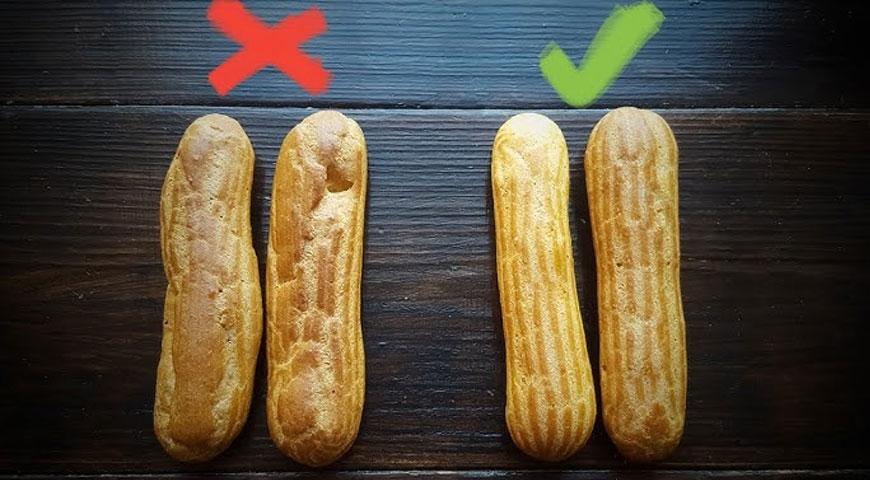
Let's summarize possible errors
What mistakes might you have made?
- Using low gluten flour.
- Violation of the proportions of ingredients specified in the recipe (it is better to use a step-by-step recipe as a basis, in which everything, including eggs, is given in grams, and not pieces, spoons or glasses).
- Low temperature for brewing the dough (the base must be brought to a temperature exceeding 82℃).
- The dough is too liquid (it will spread out when piped and will not rise).
- The dough is too thick (it will rise less easily, won’t bake through, and may remain raw inside).
- The dough has become dry (it was exposed to air at room temperature for too long).
- The oven temperature is not high enough (the dough will not rise well and will not bake through).
- The oven temperature is too high (the crust of the cake will burn, but the dough in the middle may not bake through).
- Temperature fluctuations in the oven (unstable operation of the equipment or opening of the door).
- Removing the baked goods from the oven too quickly (again, a sudden change in temperature is why even ready-made eclairs, as we know, immediately fall).
Now you know how to prevent eclairs from falling, and you can practice again, but this time taking into account the main nuances.